Sharing a County Road With Alabama Log Trucks
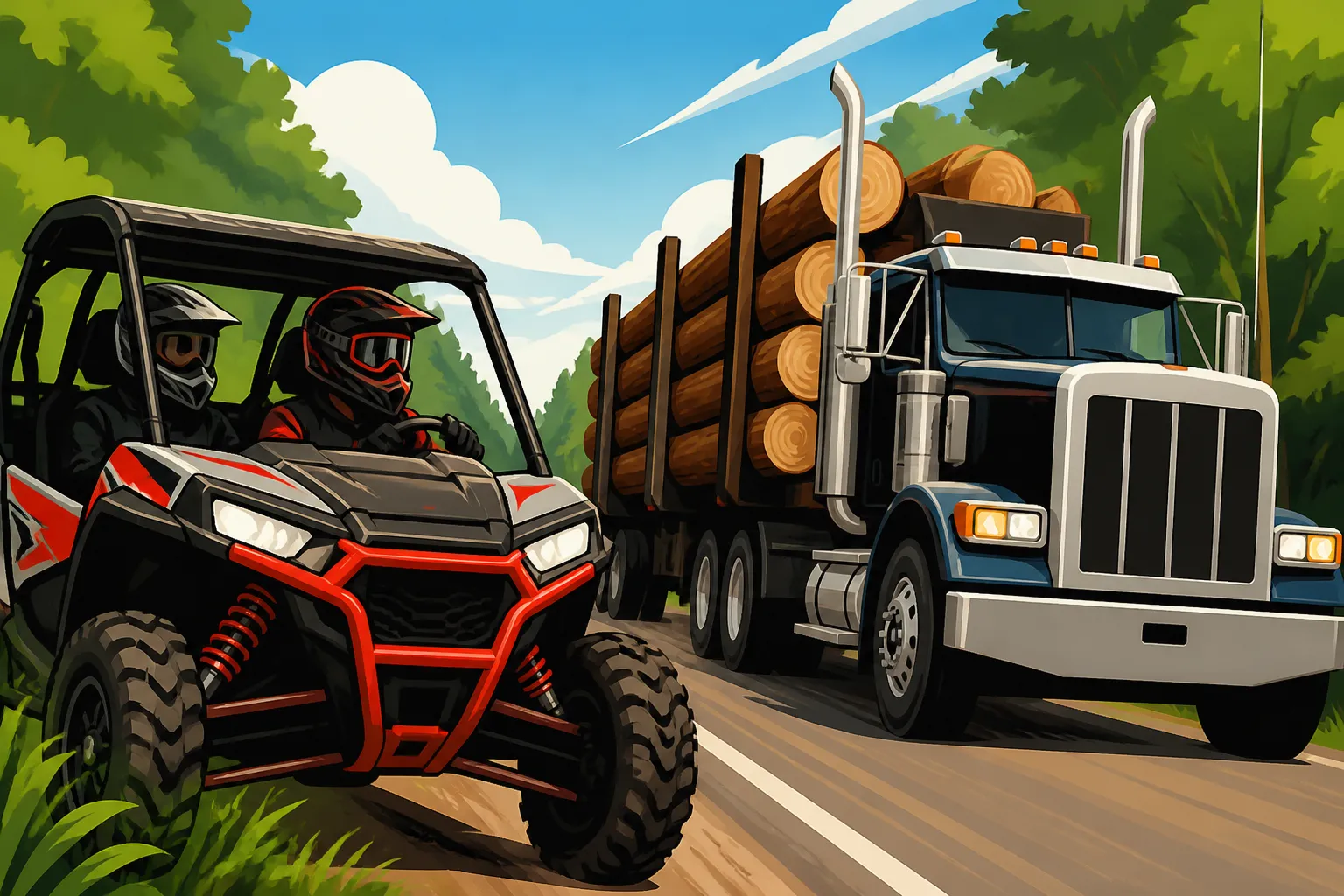
Riding your ATV or UTV through Alabama's beautiful, rural landscapes is an experience like no other, but it comes with a unique set of challenges, especially when those peaceful county roads suddenly transform into industrial thoroughfares for massive log trucks. It’s a genuine heart-stopper when a fully loaded eighteen-wheeler, laden with timber, barrels down a narrow, dusty road you're also trying to navigate. This guide is here to walk you through the very real dangers and offer practical strategies for safely sharing those vital, often unpaved, routes with the giants of the timber industry.
The Harsh Reality of Alabama County Roads
Let's be honest, those charming, winding county roads in Alabama are often far from idyllic. They can be rough, riddled with potholes, and frequently obscured by red clay dust in the dry months. When you throw heavy industrial traffic like log trucks into that mix, the risk factor for anyone on a smaller, open-air machine like an ATV or UTV skyrockets. It's not just about a close call; it’s about understanding the fundamental differences in size, speed, and maneuverability between your machine and theirs, and adapting your riding style accordingly.
Why Log Trucks Are a Major Factor
Log trucks are immense, heavy, and often traveling at speeds that feel disproportionate to the road conditions. These aren't just delivery trucks; they are specialized vehicles designed to haul incredibly dense loads, and they operate on tight schedules. This means drivers are focused on their route, and their sightlines from a high cab can easily miss a smaller vehicle, especially one kicking up its own dust. Think about it: a truck carrying 80,000 pounds of timber takes a much longer distance to stop, and its ability to swerve or react quickly is severely limited. They often hug the center line on blind curves, not out of malice, but because of the sheer length of their trailer and the need to maintain control. It’s a force of nature when one of those rigs comes around a bend, and if you’re unprepared, it can be terrifying. These drivers are professionals, but they operate within the physical constraints of their vehicles and the often-poor condition of rural roads. They might be hauling logs that are much longer than the trailer, requiring even more caution on turns.
Visibility Challenges for ATV and UTV Riders
When you're riding an ATV or UTV, you're close to the ground, which puts you at a distinct disadvantage for visibility, both for you seeing the truck and, crucially, for the truck driver seeing you. Add to that the pervasive red clay dust that billows up on unpaved roads, and you've got a recipe for disaster. This dust can hang in the air for minutes, creating a literal fog that can completely obscure your presence. Imagine you're riding, and you see a massive dust cloud ahead, or worse, behind you. That's not just an inconvenience; it's a warning signal that a very large vehicle is either approaching or has just passed. The truck driver's elevated position doesn't always help; while they can see over some obstacles, a low-slung quad or side-by-side might simply disappear into the shadows or blend with the roadside foliage, especially if the sun is at a certain angle. For this reason, enhancing your visibility becomes paramount, moving beyond mere suggestion to an absolute necessity.
Understanding the Legal Landscape (and Its Gaps)
Many riders mistakenly assume that because a road is unpaved and rural, it's fair game for any off-road vehicle. Unfortunately, that's not always the case in Alabama. While there are specific provisions for [Alabama Farm Use and Road Riding] or crossing a road, riding for extended periods on public county roads usually means your ATV or UTV needs to meet certain requirements that most stock machines simply don't have. This creates a challenging situation: you're trying to share a public road with legal, commercial traffic while potentially operating a machine that isn't fully compliant for road use. This discrepancy can lead to citations, especially if you're involved in an incident. The law is not always intuitive, and what might seem like a common-sense exception for a quick jaunt down the road to a hunting spot often isn't recognized by the letter of the law. Knowing the rules, even the confusing ones, is your first line of defense. Remember to check out [Alabama County Roads Have Their Own ATV Rules?] to get a better handle on the specifics for your area.
Essential Safety Strategies for Sharing the Road
Navigating Alabama's county roads alongside log trucks demands a proactive and defensive approach. It’s not enough to hope they see you; you have to ensure they do and then ride in a way that minimizes risk for everyone. This involves a combination of smart equipment choices, astute riding techniques, and diligent pre-ride checks.
Maximizing Your Visibility
When you're out on those dusty backroads, being seen is non-negotiable. Your machine, by nature, is smaller than most road vehicles, so you need to compensate.
- Lighting: Always run your headlights, even in broad daylight. Consider adding auxiliary lights, especially if your machine's factory lighting isn't particularly bright. Some riders install light bars on the front and rear, ensuring they're visible from both directions. Brands like SuperATV offer a wide range of lighting accessories, from powerful LED light bars to supplemental brake lights, designed to dramatically increase your presence on the trail or road.
- Flags: A brightly colored, tall safety flag mounted on your machine is one of the most effective ways to make yourself noticeable, especially over hill crests or around blind curves. A flag can often be seen before your machine itself, giving truck drivers precious extra seconds to react.
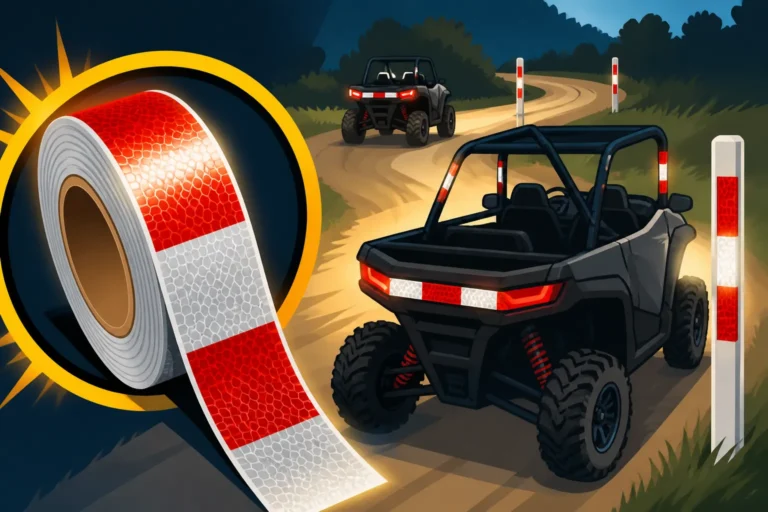
- Reflective Gear: Wear high-visibility clothing – bright oranges, greens, or yellows – and consider adding reflective tape to your helmet, jacket, and the rear of your machine. Every bit of reflected light helps, particularly in low-light conditions, at dawn, or dusk. Even on a sunny day, shadows can play tricks, and reflective materials can make you pop.
Defensive Riding Techniques
Your riding strategy needs to shift from purely off-road exhilaration to road-sharing caution.
- Road Positioning: When you are legally allowed to be on a county road, ride as far to the right as safely possible. However, be mindful of potholes, loose gravel, and steep shoulders that could cause you to lose control. Don't ride so far right that you risk rolling into a ditch.
- Anticipate Truck Movements: Assume every blind curve or hill crest might have a log truck coming the other way. Listen for engine braking, horn blasts, or the distinctive rumble of heavy machinery long before you see it. Watch for dust clouds in the distance. When you see a dust cloud, slow down significantly and prepare to pull over.
- Maintain Distance: If you find yourself behind a log truck, maintain a huge following distance. Not only do they create enormous dust clouds that obliterate visibility, but they can also drop debris from their load. Never try to pass a log truck on a county road; it's simply too risky given their length and your limited speed and protection. If you are going the same direction and they are coming up behind you, be prepared to get off the road entirely until they pass.
- Approach Intersections with Extreme Caution: Rural intersections, especially those with limited visibility, are incredibly dangerous. Stop, look, and listen. Assume a truck might not see you and is not going to stop. For more on this, you might want to review [Crossing a Road on an ATV in Alabama].
Equipment Checks Before You Ride
A breakdown on a desolate county road is inconvenient; a breakdown when a log truck is approaching can be life-threatening. Before every ride that involves shared roads, perform a thorough check of your machine.
- Brakes: Ensure your brakes are in perfect working order. You need maximum stopping power, especially on gravel or dusty surfaces.
- Tires: Check tire pressure and inspect for any damage or excessive wear. A flat tire or blowout at speed is incredibly dangerous. Consider investing in robust, multi-terrain tires if you frequently mix road and trail riding.
- Steering and Suspension: Make sure there's no excessive play in your steering or suspension components. You need precise control to react to changing road conditions or approaching vehicles.
- Fuel and Fluids: Never run low on fuel when you're far from civilization. Check oil and coolant levels.
- Horn: While not a primary defense, a functioning horn can sometimes get a truck driver's attention in a pinch, though it shouldn't be relied upon as your main communication tool.
What to Do When a Log Truck Approaches
Even with all the preventative measures, encountering a log truck on a narrow county road is often unavoidable. Knowing exactly what to do in those moments can make all the difference between a close call and a serious incident. Your actions need to be decisive, predictable, and focused on self-preservation.
Pulling Over Safely
This is your absolute priority. As soon as you detect an approaching log truck, whether by sight, sound, or dust cloud, begin to slow down and look for a safe place to pull completely off the road.
- Early Detection is Key: The earlier you spot the truck, the more time you have to find a safe spot. This could be a wide shoulder, an old logging spur, a field entrance, or even a driveway.
- Get Completely Off the Travel Lane: Don't just pull to the very edge of the road. Get all four wheels (or both sets of tires on a UTV) fully off the paved or graded surface. This gives the truck maximum clearance and minimizes the chance of a close encounter with debris or the truck's air turbulence.
- Stop and Turn Off Your Engine (Optional but Recommended): Once safely off the road, stopping your machine and even turning off the engine can reduce noise and dust, making it easier for you to hear and for the driver to process your presence. It also sends a clear signal that you are yielding completely.
- Beware of Blind Spots: Even when you're off the road, be aware of the truck's blind spots. Avoid parking right next to a fence or dense brush if it further obscures your visibility to the driver.
Communicating with Truck Drivers
While direct communication might be difficult due to distance, dust, and engine noise, there are subtle ways to signal your intentions.
- Eye Contact (If Possible): If the truck driver is close enough and you're pulled over, try to make eye contact. A simple nod or wave can confirm that they've seen you and acknowledge that you're yielding the right-of-way.
- Hand Signals: A clear "all clear" or "you go ahead" hand signal can be helpful if you're visible and have pulled over. However, don't rely on these; assume the driver's focus is on the road and their immense vehicle.
- Lights: As mentioned earlier, keeping your lights on, even when pulled over, helps to mark your position clearly. If you have hazard lights, use them.
Post-Encounter Safety
Once the log truck has passed, don't immediately pull back onto the road.
- Wait for Dust to Settle: Log trucks kick up a tremendous amount of dust. Wait until the dust cloud has significantly dissipated before re-entering the road to ensure you have clear visibility and that no other vehicles are following closely behind the truck.
- Check for Following Vehicles: Always assume there might be a second vehicle, perhaps a pilot car, another truck, or a local resident following the log truck. Take a moment to look both ways and ensure the road is clear before proceeding.
- Re-enter Slowly and Safely: Accelerate smoothly back onto the road, scanning for any new hazards. Remember, the road surface might have been disturbed by the heavy truck, leaving behind fresh potholes or loose gravel.
Legality and Local Nuances
Navigating Alabama's rural roads isn't just about common sense safety; it's also about understanding the specific rules that govern off-road vehicles on public thoroughfares. What might be perfectly acceptable on private land could land you in hot water on a county road, especially when sharing it with commercial traffic.
When Can You Even Be On These Roads?
Alabama’s rules regarding ATVs and UTVs on public roads are quite specific and often misunderstood. Generally, ATVs are not considered street-legal vehicles and cannot be driven on public roads except for very specific circumstances. These typically include:
- Crossing a Road: You might be allowed to cross a public road at a 90-degree angle to get from one private property to another, but this is usually restricted to county roads and only when it's safe to do so.
- Farm Use: Certain agricultural operations may permit the use of ATVs or UTVs on public roads for specific farm-related tasks. This is often contingent on having the machine designated as farm equipment and adhering to speed limits and safety requirements.
- Designated Areas: Some local municipalities or counties might have specific ordinances that designate certain roads or portions of roads where ATVs or UTVs are permitted, often for specific events or access to trails. This is not common for sharing with logging routes, but it’s worth noting.
For anything more than a quick crossing or specific farm duties, you’re generally operating in a legal gray area or outright illegally. This is critical because if you’re involved in an incident, especially with a commercial vehicle like a log truck, your legal standing could be severely compromised. It's not just about avoiding a ticket; it's about avoiding liability in the event of an accident. Dive deeper into this by checking out [Are ATVs Street Legal in Alabama?] and [Alabama ATV Road Rules Explained].
Checking Local Ordinances
The state law provides a framework, but individual counties and even smaller municipalities in Alabama have the authority to enact their own ordinances regarding ATV and UTV use on their roads. What's permissible in Cullman County might be strictly forbidden in Baldwin County. This local variation can be incredibly frustrating for riders who travel across county lines.
- Call Your County Sheriff or Local Police Department: The most reliable way to find out specific local rules is to contact the relevant law enforcement agency. They can clarify what's allowed and what's not on roads within their jurisdiction.
- Consult County Commission Offices: County commission offices often have records of all local ordinances. While they might not be able to offer legal advice, they can direct you to the official documentation.
- Look for Posted Signs: Sometimes, specific roads or areas will have signs indicating restrictions or allowances for OHVs. Always pay attention to these.
Relying on "everyone else does it" is a dangerous strategy. A specific county road that's a main route for log trucks might have stricter enforcement than a dead-end gravel path.
The Role of Law Enforcement
When you’re riding an ATV or UTV on a public road, law enforcement officers have the authority to pull you over and enforce state laws and local ordinances. This means you need to be prepared.
- Proof of Ownership: Always carry proof of ownership, like a bill of sale or any available registration documents. While [Alabama's Voluntary ATV Registration Through ALEA] is not mandatory for all machines, having documentation can help establish your ownership.
- Identification: Have your driver's license or other valid identification with you.
- Compliance Check: An officer might check your machine for basic safety equipment, spark arrestors, or noise levels, especially if local ordinances exist. They will certainly be checking to see if your machine meets any legal requirements for road operation, which most ATVs and UTVs do not. If you are stopped, it’s far better to be prepared and respectful, even if you believe you are in the right. For more on what an officer might ask, read [What an Alabama Officer Can Ask to See].
Understanding and respecting these legal boundaries is crucial, not only for avoiding fines but for ensuring your safety and the safety of others, particularly when sharing roads with commercial vehicles like log trucks.
Road Sharing Safety Measures
Here's a quick comparison of essential safety measures when sharing Alabama county roads with log trucks:
| Safety Category | Action Items | Why It Matters |
|---|---|---|
| Visibility | – Always use headlights (day and night). – Mount a tall, brightly colored safety flag. – Wear high-visibility clothing/gear. – Add reflective tape to helmet/machine. |
Ensures truck drivers see you, especially in dust, shadows, or over crests, compensating for your machine's small size. |
| Defensive Riding | – Ride as far right as safely possible. – Listen for engine braking/horns. – Watch for dust clouds. – Maintain significant following distance. – Never pass a log truck. |
Minimizes direct conflict, provides warning, and allows time to react to the truck's mass and speed. |
| Encounter Protocol | – Detect trucks early (sight, sound, dust). – Slow down and find a safe, wide pull-off area. – Get all wheels completely off the road. – Stop and consider turning off engine. – Wait for dust to settle. |
Prevents head-on collisions, provides maximum clearance for trucks, and ensures clear visibility before re-entering road. |
| Equipment & Readiness | – Perform pre-ride checks (brakes, tires, steering, fuel). – Carry proof of ownership/ID. – Know local road rules for OHVs. |
Ensures your machine is reliable, you are legally prepared, and you understand where you can legally ride. |
Being prepared is about more than just having the right gear, though that helps. SuperATV, for instance, offers heavy-duty tires that can handle rough county roads better, and their comprehensive line of UTV accessories can certainly enhance your machine's durability and road-worthiness where permitted. But ultimately, it's about mindset and making informed, cautious decisions every time you hit those roads. Remember, a quick check of [Alabama Riding Season Considerations] can also help you plan rides when dust or other conditions might be less severe. Staying safe means staying informed and riding smart.
Disclaimer
This article is for general informational purposes only and does not constitute professional advice. Laws, prices and regulations vary by location and change over time. Consult a qualified professional for guidance on your specific situation.