Alabama Noise Complaints About Quads
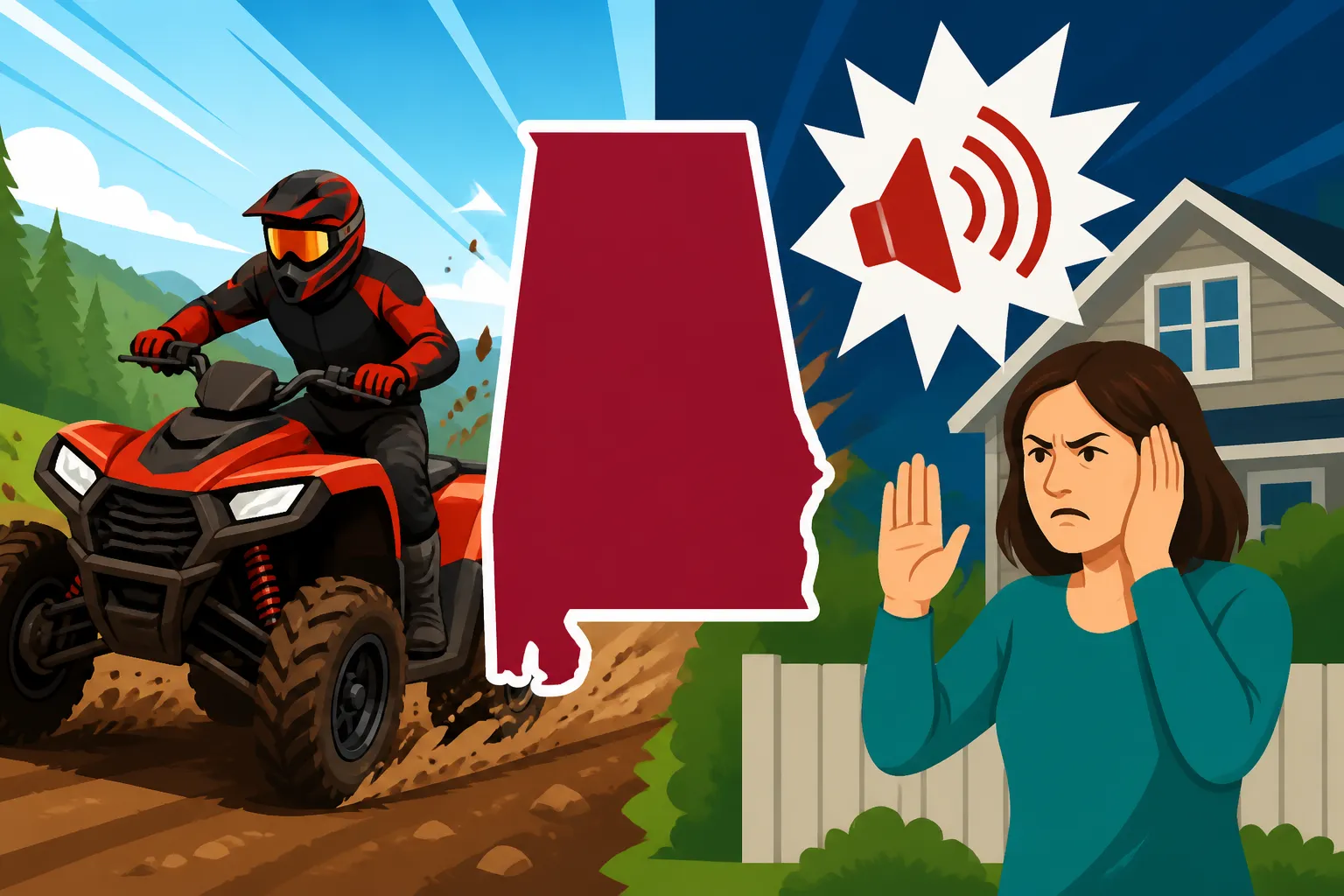
There's nothing quite like the roar of an ATV or UTV engine, signaling adventure and freedom. But for many riders in Alabama, that distinctive sound can quickly turn into a source of frustration, not for them, but for their neighbors. Noise complaints about quads are a very real headache, often leading to unwelcome visits from law enforcement or even new local restrictions that can put a damper on your riding enjoyment. This guide will walk you through why these complaints arise, what Alabama's laws (or lack thereof) say about them, and how you can proactively ensure your passion for off-roading doesn't disrupt the peace and quiet of your community.
Understanding Alabama's Approach to ATV Noise
Unlike some states that have very specific regulations dictating acceptable decibel levels for off-road vehicles, Alabama's approach to ATV and UTV noise is, for lack of a better word, a bit more… general. This can leave riders feeling uncertain about what's allowed and what isn't, and it often means that noise issues are handled on a case-by-case basis, depending heavily on local context and the discretion of law enforcement.
The Absence of a Statewide Decibel Limit
One of the biggest surprises for many ATV and UTV owners in Alabama is learning that there isn't a blanket state law that sets a specific decibel limit for their machines. You won't find a chapter in the Alabama code that explicitly states, "Your quad cannot exceed X decibels at 20 inches from the exhaust outlet." This differs significantly from how motorcycles or passenger vehicles might be regulated for exhaust noise. This absence of a clear, measurable standard means that an officer can't simply pull out a sound meter and issue a ticket based on a number. This often shifts the focus from objective measurement to subjective perception and general public peace ordinances.
This lack of specificity can be a double-edged sword. On one hand, it means riders aren't constantly worried about technical violations of a decibel cap. On the other, it leaves a lot of room for interpretation, which can be less predictable. What sounds fine to you might be a major disturbance to someone else, and without a hard number to point to, arguments about "how loud is too loud" can quickly become subjective and emotional.
General Nuisance Laws and Public Disturbance
So, if there's no specific ATV noise law, how do complaints get handled? This is where general nuisance laws and public disturbance statutes come into play. These are broad laws designed to protect the peace and welfare of the community from anything that causes unreasonable annoyance, inconvenience, or damage. Think of things like excessive barking dogs, loud parties, or construction noise outside of acceptable hours.
When an ATV or UTV is deemed "too loud," especially in a residential area, it's often cited under these general provisions. The legal argument isn't necessarily that your machine exceeds a specific decibel level, but rather that its noise unreasonably disturbs the peace of others. This might hinge on factors like the time of day, the duration of the noise, the proximity to homes, and the overall volume. For instance, riding your high-performance quad with an aftermarket exhaust through a quiet subdivision at 7 AM on a Sunday morning is far more likely to draw a public disturbance complaint than riding it on a designated trail in the middle of the afternoon. These laws are designed to address the impact of your actions on your neighbors, even if your machine itself isn't breaking a specific equipment regulation.
Comparing ATVs to Other Loud Vehicles
It's helpful to put ATV noise into perspective by comparing it to other common sources of loud sounds that people encounter daily. Many people tolerate the sound of a lawnmower, a leaf blower, or even a loud car stereo as part of living in a community. However, ATVs and UTVs often get singled out, sometimes unfairly. Part of this perception comes from the nature of the sound itself – the high-revving engines and often uncorked exhausts can have a sharper, more piercing quality than, say, a diesel truck rumbling by.
Another factor is the context. A loud car stereo passing on a main road is one thing; a quad repeatedly circling a property line or riding down a quiet street is another. The public perception of ATVs can sometimes be negative, with some people viewing them as recreational "toys" rather than essential vehicles, leading to less tolerance for their noise. While a loud motorcycle might also generate complaints, there are often more established road rules and expectations for where and when they operate. ATVs, by their very nature, are designed for off-road use, and when that use spills over into areas where residents expect quiet, that's when problems arise.
Where Noise Complaints Typically Arise
Noise complaints aren't just random occurrences; they tend to bubble up in specific environments where the expectation of quiet clashes with the reality of an off-road machine's sound output. Understanding these hotspots can help riders avoid trouble.
Residential Neighborhoods and Subdivision Streets
This is arguably the most common battleground for ATV noise complaints. Picture a quiet Saturday morning. Folks are trying to enjoy their coffee on the porch, kids are playing, and then suddenly, a quad roars down the street or circles a backyard. Even if you're just riding from your garage to a nearby field, the brief transit through a residential area can be enough to trigger a call to the local authorities. Many neighborhoods have unwritten, or sometimes even written, rules about noise. [Alabama HOA Rules About Side-by-Sides] can be particularly strict, often outright prohibiting the operation of ATVs or UTVs on subdivision streets. Even without formal HOA rules, the general expectation of peace in a residential zone means that a loud machine sticks out like a sore thumb.
The issue is compounded by the fact that ATVs are generally not street legal in Alabama, which means their presence on paved roads is often already a violation. Adding excessive noise to that existing infraction can quickly escalate a friendly warning into a formal citation. Riders need to be incredibly mindful of their impact when operating anywhere near homes, even if it's just for a few moments.
Public Riding Areas and Designated Trails
You might think that if you're at a dedicated off-road park or on a designated trail system, noise shouldn't be an issue. After all, everyone there expects to hear ATVs, right? While it's true that the tolerance for noise is much higher in these environments, complaints can still arise. These might come from other park users who find certain machines excessively loud, or from property owners whose land borders the riding park or trail system.
Many parks, especially those with campgrounds or cabins, have quiet hours. An overly loud exhaust during these times can disturb campers and lead to complaints to park staff. Furthermore, some public riding areas, particularly those managed by state or federal agencies, might have their own specific rules about noise levels, often tied to spark arrestor requirements or general "excessive noise" clauses. Ignoring these rules, even in an area designated for off-roading, can lead to warnings, ejection from the park, or even fines. Always check the rules of any [Alabama ATV Trails: Where to Ride] you plan to visit, as they often address noise.
Rural Properties and Hunting Leases
Even out in the country, where wide-open spaces suggest fewer ears to offend, noise complaints can still become an issue. If you're riding on your own large rural property, or on a [Alabama Hunting Club Lease Riding], you might feel insulated from urban noise rules. However, noise travels, and your closest neighbor could still be well within earshot. A property that seems remote can still have a homeowner a half-mile away who values their solitude.
This is especially true if you're regularly riding at early morning hours, late at night, or if your property borders another that is primarily used for quiet activities like birdwatching or meditation. A prolonged period of high-revving engine noise can easily carry across fields and through woods. Sometimes, these complaints aren't about breaking a specific law but about neighborly disputes that escalate. While you have rights to enjoy your property, being a good neighbor can save you a lot of hassle in the long run. Building good relationships with neighbors, or at least being mindful of their peace, can prevent a minor nuisance from becoming a significant issue that draws in local law enforcement.
The Impact of Aftermarket Modifications on Noise
Let's be honest, part of the fun of owning an ATV or UTV is customizing it. From lift kits to light bars, there's a huge aftermarket industry dedicated to making your machine uniquely yours and performing better. However, some of the most common modifications, particularly those focused on engine performance and exhaust, are also the biggest culprits when it comes to increased noise and subsequent complaints.
Aftermarket Exhaust Systems and Their Effects
If you want to make your quad louder, an aftermarket exhaust system is usually the first stop. Riders often opt for these systems to gain a few extra horsepower, reduce weight, or simply to achieve a "throaty" or more aggressive exhaust note. Companies like SuperATV offer a range of performance parts, and while their products are high-quality, the performance gains from some exhaust systems often come hand-in-hand with a significant increase in decibel output.
Stock exhaust systems are designed by manufacturers to meet a balance of performance, emissions, and noise regulations in various markets. They typically include multiple baffling chambers and catalytic converters (on newer models) to muffle sound effectively. Aftermarket performance exhausts, on the other hand, often feature more open designs, fewer baffles, and sometimes straight-through piping. This allows exhaust gases to exit more freely, which can lead to minor performance improvements, but it definitely leads to a louder machine. That distinctive bark or roar that sounds awesome to you on the trail can be absolutely grating to someone trying to read a book in their backyard. This is where the tension often lies – the desire for performance or a specific sound versus the impact on those around you.
Engine Performance Upgrades and Loudness
While the exhaust system is the primary factor in an ATV's sound profile, other engine performance upgrades can also contribute to overall loudness, even if not directly through the exhaust note. Things like high-performance air intakes can create a more pronounced engine induction sound, a louder "whoosh" or "suck" as the engine breathes. Aftermarket fuel controllers and engine tunes, while not directly increasing noise, might lead to higher RPMs being held for longer, or more aggressive throttle response, which in turn means the engine is operating at louder levels more frequently.
Moreover, if an engine is running improperly after modifications—perhaps running too rich or too lean—it can create backfiring or sputtering sounds that are not only annoying but also indicate potential mechanical issues. While a single engine upgrade might not dramatically increase overall decibel levels on its own compared to an open exhaust, a combination of performance parts can transform a relatively tame stock machine into a veritable roar monster, especially under heavy throttle. This compounding effect is something many riders don't fully consider when piecing together their ultimate performance machine.
Mufflers, Silencers, and Spark Arrestors
Understanding the role of specific components like mufflers, silencers, and spark arrestors is crucial for managing noise. Every ATV or UTV comes from the factory with a muffler, which is the primary device designed to reduce engine exhaust noise. Aftermarket "slip-on" or full exhaust systems either replace or modify this muffler. Some aftermarket systems come with optional silencer inserts or baffles that can be added to reduce noise output, often at the expense of a tiny bit of performance. These inserts can be a fantastic compromise for riders who want some performance but also need to be mindful of noise.
Spark arrestors, on the other hand, have a different primary function: to prevent hot carbon particles from exiting the exhaust and potentially starting wildfires. However, many spark arrestor designs also have a secondary benefit of reducing noise by creating some back pressure and flow restriction. In Alabama, [Alabama Spark Arrestor Requirements] are often a prerequisite for riding on public lands, such as national forests or designated OHV parks. Even if a spark arrestor isn't explicitly required for noise reduction, its presence can contribute to a quieter machine. If your aftermarket exhaust removes or bypasses the spark arrestor, you're not only increasing your fire risk but likely also making your machine significantly louder. Always ensure your machine meets spark arrestor requirements, especially when riding anywhere beyond your private property, as it's a critical safety and, indirectly, a noise-control feature.
How Noise Complaints Are Handled by Authorities
So, someone calls in a complaint about your quad noise. What happens next? In Alabama, how this unfolds can vary depending on where you are and who responds, but there are some common patterns you can expect. It's important to remember that law enforcement officers are typically responding to a citizen's complaint, and their goal is often to mediate a situation and enforce local ordinances, or general state laws if no specific local one exists.
Responding to a Sheriff's Deputy or Police Officer
When a noise complaint is made, a local sheriff's deputy or city police officer will typically be dispatched. If you're riding in a rural area or unincorporated county land, it will likely be the Sheriff's Department. If you're within city limits, it will be the municipal police. When an officer approaches you about a noise complaint, the first thing to do is remain calm and be respectful. Arguing or being confrontational will not help your situation. The officer will usually explain why they are there – that a complaint was made about the noise your ATV or UTV is producing.
They will likely assess the situation: Is your machine running? How loud is it to them? Are you on private property, a public road, or a designated trail? They might ask for your identification and proof of ownership. Since ATVs are generally not street legal, if you're operating on a public road, that's often a separate violation they may address, regardless of the noise. The officer's immediate priority will often be to abate the nuisance, meaning they might ask you to stop riding, move to a different area, or turn off your machine. [Calling an Alabama Sheriff Before You Ride] can sometimes help you understand the local lay of the land, but nothing beats actually talking to an officer face-to-face if they respond to a complaint.
Evidence Collection and Local Ordinances
Without a specific decibel limit law, officers rely on other factors to determine if a noise violation has occurred. This could include their own subjective assessment of how loud your machine is, testimonies from complainants, and any local noise ordinances that might be in effect. Some cities and counties in Alabama have adopted their own specific noise ordinances that define excessive noise or establish quiet hours. [Alabama Local Ordinances on ATV Riding] can range from general prohibitions against "loud and unnecessary noise" to more specific time-based restrictions.
An officer might try to determine if the noise is "unreasonable" given the time and location. They might note the proximity to residences, the duration of the noise, and if you're operating the machine negligently or recklessly. They won't usually have a decibel meter to provide objective proof, so it often comes down to their judgment and whether they believe the noise constitutes a public nuisance or a violation of a specific [Alabama City Ordinance Lookups]. This subjective element can be frustrating for riders, but it's the reality of how these complaints are often handled in the absence of more specific state laws.
Potential Penalties and Citations
The consequences of a noise complaint can range from a polite request to cease riding to a formal citation and fines. If it's a first offense and the officer believes you're genuinely unaware or cooperative, they might simply issue a warning and ask you to stop. However, if the noise is egregious, persistent, or if it's combined with other violations (like riding on public roads where ATVs are prohibited), you could face more severe penalties.
A citation for a public nuisance or disturbing the peace might carry a fine, and you could be ordered to appear in court. Repeated offenses can lead to escalating fines or other legal actions. In some cases, an officer might even impound your machine if it's being operated illegally on public property or if it's deemed a safety hazard. While a "noise ticket" might seem minor, it can add up, and if it's part of a larger pattern of [Alabama Penalties for Illegal Road Riding], it can lead to more significant headaches. Understanding these potential consequences is critical, as ignorance of the law is rarely an excuse.
Proactive Steps to Avoid and Address Noise Complaints
Nobody wants their riding fun cut short by an angry neighbor or a visit from the local sheriff. The good news is that many noise complaints are entirely avoidable with a bit of foresight and consideration. Being a responsible rider means taking proactive steps to minimize your impact on others, even when you're technically within your rights.
Maintaining Your Machine's Stock Exhaust
This is, hands down, the simplest and most effective way to avoid noise complaints. Your ATV or UTV's original exhaust system was engineered by the manufacturer to meet specific noise regulations and provide a balanced performance. It typically includes baffles and other sound-dampening components that keep the decibel levels in check. If you've purchased a used machine with an aftermarket exhaust, consider researching and installing a stock replacement. You might sacrifice a tiny bit of perceived horsepower, but you'll gain immense peace of mind.
Think of it this way: the factory exhaust is designed to be the "quietest" legal option. Any deviation from that, especially towards a "performance" exhaust, almost invariably means increased noise. If you're genuinely concerned about being a good neighbor or avoiding legal trouble, keeping your machine as close to its original sound profile as possible is your best bet. Even if you love the roar of an open exhaust, if you frequently ride near populated areas, a quieter system is a smart investment in your riding future.
Choosing Appropriate Riding Times and Locations
Timing and location are everything when it comes to noise. Even a relatively quiet machine can be considered a nuisance if operated at 6 AM on a Sunday morning or late at night when everyone is trying to sleep. Most people are more tolerant of noise during conventional daytime hours, say from 9 AM to 7 PM. If you're riding early or late, try to stick to areas where noise won't carry, or where there are no nearby residences. [Alabama Riding After Dark] carries its own set of rules and risks, and the added challenge of noise complaints from neighbors is definitely one of them.
Similarly, be mindful of where you ride. If you have direct access to a remote trail from your property, that's ideal. If you have to ride down a quiet residential street to get there, consider trailering your machine to a less populated staging area. Avoid repeatedly circling the same area near a neighbor's house, as repetitive noise can be more irritating than sporadic noise. If you're on your own large property, try to stick to routes that are farthest from property lines, especially if those lines border homes. This consideration for others goes a long way in preventing issues before they even start.
Engaging With Neighbors and Local Communities
Sometimes, the best offense is a good defense – or in this case, the best defense is good communication. If you know you'll be riding your ATV or UTV frequently, especially if you live in an area where neighbors are close, consider talking to them beforehand. A simple conversation can go a long way. Let them know you enjoy riding, explain when you typically ride, and assure them you're mindful of noise. You might even invite them to see your machine or explain why you enjoy the hobby.
This kind of proactive engagement can build goodwill and prevent complaints from escalating. A neighbor who feels heard and respected is far less likely to call the authorities than one who feels ignored or antagonized. They might be more willing to approach you directly with a concern, allowing you to address it before it becomes a formal complaint. Showing that you're a responsible member of the community who cares about others' peace can diffuse tension and help preserve your ability to enjoy your machine without constant worry. This goes hand-in-hand with being aware of [Alabama Noise Rules in a Neighborhood] and showing your willingness to adhere to them.
The Role of Local Ordinances and HOA Rules
While Alabama doesn't have a statewide ATV noise limit, cities, counties, and even private associations can and do enact their own rules. Ignoring these hyper-local regulations is a surefire way to run into trouble, as they can sometimes be far more restrictive than state law.
City and County Authority Over Noise
Many municipalities across Alabama have adopted their own noise ordinances. These city and county laws often fill the void left by state statutes, providing specific guidelines on what constitutes excessive noise, and when it's prohibited. For example, a city ordinance might ban "unreasonable noise" between 10 PM and 7 AM, or it might set specific distance parameters for how far noise can travel. Some ordinances might even define what an "off-road vehicle" is and explicitly restrict its operation or noise output within certain zones, such as residential areas.
These local rules can vary wildly from one town to the next, so what's permissible in one part of Alabama might lead to a ticket just a few miles down the road. It's not uncommon for a county road to have one set of rules, while the adjacent city's portion of that same road has entirely different regulations. If you live or ride frequently in a particular area, it's your responsibility to know the local rules. Getting caught unaware is not an excuse. This is particularly true for [Alabama Rules for Riding a County Road] or [Alabama Rules for Riding a Dirt Road], where different jurisdictions might overlap.
Homeowner Association Rules and Restrictions
If you live in a planned community, subdivision, or any area governed by a Homeowner's Association (HOA), you likely have another layer of rules to contend with. HOAs often have covenants, conditions, and restrictions (CC&Rs) that govern nearly every aspect of property use, and noise is a common target. Many HOAs explicitly prohibit the operation of ATVs or UTVs on common areas, subdivision streets, or even in individual yards if the noise is deemed disruptive. [Alabama HOA Rules About Side-by-Sides] can be very strict, sometimes imposing fines for violations that are separate from any governmental penalties.
The enforcement power of an HOA can be significant. They can issue warnings, levy fines, and in extreme cases, even take legal action to enforce their rules. While you might not agree with all of them, when you purchase property within an HOA, you typically agree to abide by these regulations. Ignoring HOA rules about ATV noise isn't just about avoiding a sheriff's deputy; it's about maintaining good standing within your community and avoiding direct financial penalties from your association. When considering riding your machine on [Alabama Subdivision Streets and Quads], always consult your HOA guidelines first.
Finding Local Rules for Your Area
Given the patchwork of state, county, and city regulations, how do you find out what applies to you? It can be a bit of investigative work, but it's essential.
- Start with your local city hall or county administrative office: These offices usually house copies of all local ordinances. Many jurisdictions also have their ordinances published online. Search for your city or county's official website and look for sections on "ordinances," "code of conduct," "noise," or "recreational vehicles."
- Contact your local law enforcement non-emergency line: While they can't give you legal advice, they can often point you to relevant ordinances or explain how noise complaints are typically handled in your area.
- Check with your HOA: If you live in an HOA-governed community, review your CC&Rs or contact the HOA board or management company directly for their specific rules regarding ATVs, UTVs, and noise.
- Visit specific riding park websites: If you plan to ride at a designated park, their website will usually list all rules, including those related to noise, spark arrestors, and quiet hours.
By taking the time to research these local rules, you're not just protecting yourself from potential fines or conflicts; you're also becoming a more informed and responsible member of the riding community. This diligence can save you a lot of grief and ensure your passion for off-roading remains a source of joy, not contention.
Comparing Noise Sources and Solutions
To help you visualize common noise sources and some effective solutions, here's a quick comparison. This table outlines typical sources of ATV/UTV noise and the corresponding strategies you can employ to mitigate them, helping you stay on good terms with your neighbors and avoid official complaints.
| Noise Source | Typical Impact (Subjective) | Potential Solutions | Notes & Considerations |
|---|---|---|---|
| Aftermarket Performance Exhaust | Loud, aggressive, sharp bark; easily carries long distances. | Reinstall stock exhaust; use a silencer/baffle insert; choose quieter aftermarket options (e.g., from SuperATV, if available for low noise). | Often the primary cause of complaints. Significant performance gains are often marginal for the noise trade-off. |
| Engine Noise (High RPMs) | Whiny, high-pitched, or constant droning; noticeable during aggressive riding. | Ride more conservatively in sensitive areas; perform regular maintenance to prevent rattles/squeaks. | More prevalent with sport quads or aggressive riding styles. Proper tuning can reduce unnecessary revving. |
| Tire Roar on Pavement | Distinctive hum or growl on hard surfaces; more noticeable on knobby tires. | Avoid paved roads if possible; use trailers for transport; consider quieter tires if frequently on pavement. | Not a "motor" noise but can still contribute to overall perceived loudness, especially at speed. |
| General Operation (Dirt/Gravel) | Dust, gravel crunch, occasional wheel spin; adds to the "disturbance" factor. | Ride slowly and smoothly; avoid aggressive maneuvers near homes; stick to designated paths. | Even non-engine sounds can contribute to a nuisance complaint, especially if repetitive or close to homes. |
| Accessories (Stereos, Horns) | Music or loud horn blasts; often perceived as disrespectful. | Keep music volume low or use headphones; use horns only for safety, not recreationally. | Often overlooked, but can quickly escalate a general noise complaint into a specific annoyance. |
Disclaimer
This article is for general informational purposes only and does not constitute professional advice. Laws, prices and regulations vary by location and change over time. Consult a qualified professional for guidance on your specific situation.