Who the Enclosed Cab Exemption Actually Covers
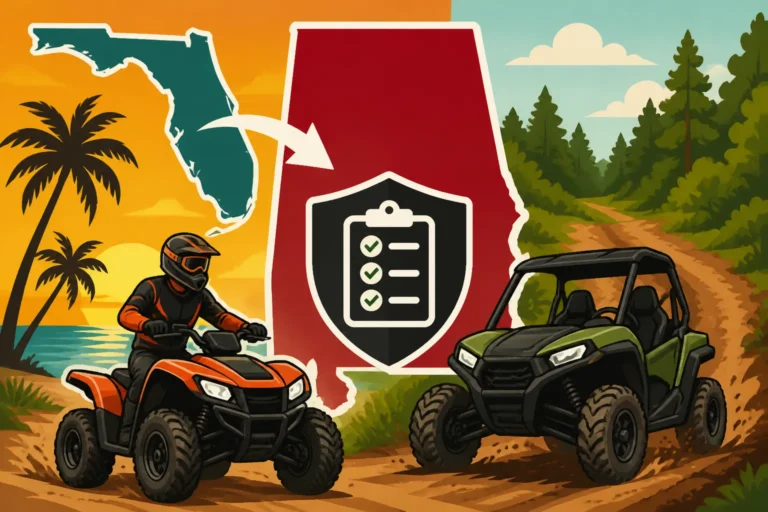
It's incredibly frustrating when you invest in a powerful ATV or UTV, maybe even adding a snazzy enclosed cab to tackle the Alabama elements, only to wonder if you can legally run a quick errand down a public road. You see golf carts zipping around town and think, "My side-by-side feels safer and more robust – why can't I do that?" This guide aims to clear up the widespread confusion surrounding Alabama's road-use laws and exactly who an "enclosed cab exemption" truly covers, saving you from potential tickets and wasted effort on modifications that don't change a thing.
Understanding Alabama's Core Road Use Challenge for ATVs/UTVs
Let's be real, the convenience of taking your ATV or UTV from your property directly to the corner store, or even just crossing a paved county road to get to another section of your land, is incredibly appealing. Many of us dream of a world where our trusty off-road machines could double as short-trip cruisers. The powerful engines, robust suspensions, and even the added safety features like roll cages on UTVs certainly feel like they could handle a paved surface. This desire often leads to questions about how to make them street legal, and modifications like enclosed cabs seem like a logical step toward that goal.
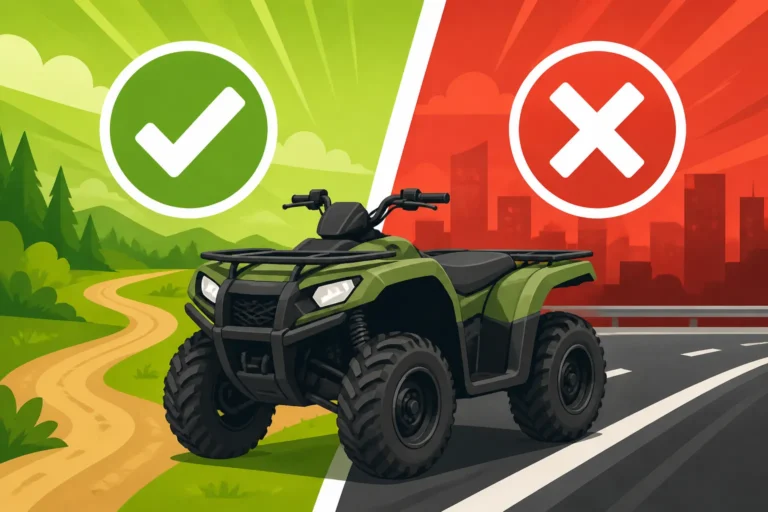
The reality, however, is that Alabama's laws, much like those in many other states, draw a very clear and distinct line between vehicles designed and certified for off-road use and those that can legally operate on public roads. This isn't just about whether a machine looks capable or if it feels safe; it's deeply rooted in specific legal definitions and federal manufacturing standards that most ATVs and UTVs simply don't meet from the factory. It can feel unfair, especially when you consider the sheer capability of modern side-by-sides, but the legal framework is set up with specific safety and design criteria in mind for every vehicle sharing our highways.
The Lure of the Pavement: Why We Wish Our Quads Were Street Legal
Imagine this common scenario: you're out at your hunting camp in the thick woods of the Talladega National Forest, and you realize you're out of ice or need a quick refill on gas for your chainsaw. The nearest convenience store is just a mile or two down a paved county road. Hauling out your truck and trailer, loading the UTV, driving to the store, unloading, running the errand, and then reversing the whole process just to get back to camp feels like an absurd waste of time and effort. If only you could just hop on your side-by-side, grab what you need, and be back in minutes. This kind of practical need is often what sparks the question about street legality. Whether it's for farm chores that require crossing a state highway, getting to a nearby fishing spot, or simply avoiding the hassle of a truck and trailer for quick hops, the allure of road-legal off-road vehicles is strong for Alabama owners.
The wish extends beyond just convenience. For some, it’s about accessibility. Perhaps you live just off a main road, and your property gates open directly onto pavement. Being able to access that land with your ATV without having to trailer it up just to cross the street would make daily life so much easier. The idea that a mere cab enclosure could unlock this freedom is an understandable hope, given how intuitive it feels to associate an enclosed space with a more "car-like" experience.
Off-Road by Design, Not by Accident: The Fundamental Differences
The core issue stems from how ATVs and UTVs are designed and classified from the moment they roll off the assembly line. They are purpose-built for rugged terrain, soft surfaces, and low-speed maneuverability over obstacles. Think about their tires: typically large, knobby, low-pressure designs meant for grip in mud, sand, or dirt, not for sustained high speeds on asphalt. Their suspension systems are designed for absorbing shocks from uneven ground, often with significant travel, which can make them feel unstable at higher road speeds compared to a vehicle with a lower center of gravity and stiffer, more road-tuned suspension.
Beyond these obvious physical characteristics, there's a deeper regulatory layer. These machines are manufactured and sold under classifications that specifically exclude them from meeting federal motor vehicle safety standards (FMVSS) for highway use. This means they often lack crucial safety features required for cars and trucks, such as laminated safety glass windshields (if they have a windshield at all), wipers, specific lighting configurations (headlights, tail lights, turn signals that meet federal brightness and visibility standards), passenger restraints designed for collisions, and crashworthiness testing. Even if you modify your machine with aftermarket parts, you're essentially adding features to a chassis that was never intended, or legally certified, for road performance and safety.
The Federal Motor Vehicle Safety Standard (FMVSS) 500 Explained
When we talk about whether an ATV or UTV can be driven on Alabama's public roads, we inevitably run headfirst into a federal standard: 49 CFR 571.500. This isn't just a suggestion; it's a critical set of requirements that vehicles must meet to be considered "street legal" in the traditional sense, or as a Low-Speed Vehicle (LSV). It's the benchmark against which almost all road-going vehicles are measured. Without meeting this standard, a vehicle simply doesn't qualify for highway use, regardless of how many bells and whistles you bolt onto it. This standard outlines everything from braking performance and lighting specifications to occupant protection and crash integrity.
Alabama, like other states, generally defers to these federal guidelines for what constitutes a legal road vehicle. This means that while state laws might dictate where and when certain vehicles can operate, the fundamental design and safety certifications are usually rooted in federal regulations. Understanding this is key to grasping why your off-road machine, even with an enclosed cab, usually isn't going to cut it for street legal status.
Alabama's 49 CFR 571.500 Standard: What It Demands
Let's break down what the 49 CFR 571.500 standard actually demands for vehicles to be classified as Low-Speed Vehicles (LSVs) – a category that sometimes gets confused with beefed-up ATVs or UTVs. An LSV, by definition, is a four-wheeled vehicle with a gross vehicle weight rating of less than 3,000 pounds and a top speed of no more than 25 miles per hour (but not less than 20 mph). Crucially, to meet this standard, it must be equipped with very specific safety equipment designed for road use. We're talking about headlamps, stop lamps, turn signal lamps, tail lamps, reflex reflectors, parking brakes, a rearview mirror (or mirrors, if required), a windshield (which must be made of safety glass), seat belts, and a vehicle identification number (VIN) that confirms it was manufactured to this standard.
These aren't just cosmetic additions. Each component must meet specific performance criteria. For example, the headlamps must illuminate the road in a certain way, and the turn signals must be visible from specific angles. The windshield isn't just any piece of plexiglass; it has to be safety glass that shatters into dull pieces or remains intact upon impact. The seat belts must be proper three-point restraints, not just lap belts, and be anchored to a structure designed to withstand crash forces. These are fundamental safety elements that are inherently built into the vehicle during its manufacturing process, not simply added on later. This critical detail is often overlooked by owners hoping to convert their off-road machines.
Why a Standard Quad Can Never Pass the Standard: An Impossible Hurdle
Here's the harsh truth that many ATV and UTV owners find hard to swallow: a standard quad or side-by-side, even with extensive modifications, will almost certainly never meet the full requirements of 49 CFR 571.500. It's not just about adding lights, mirrors, or even a windshield. The entire vehicle architecture is different. An off-road machine is designed with a high ground clearance, an open frame, and components that prioritize durability in rough terrain over crashworthiness on asphalt.
Consider the frame itself. It's built for torsional rigidity and impact absorption off-road, not for controlled crumple zones that protect occupants in a head-on collision with another vehicle at road speeds. The braking system, while powerful for off-road use, may not be engineered for the specific stopping distances and fade resistance required by federal highway standards. Tires, as mentioned earlier, are wrong. Even if you install street-legal tires, the underlying suspension geometry and steering might not be appropriate for sustained highway speeds. Perhaps most importantly, the machine lacks the manufacturer's certification (the VIN stamping) that indicates it was designed and tested to meet these exacting federal standards from the get-go. Aftermarket modifications, no matter how comprehensive, cannot retroactively grant this federal certification. It's a fundamental difference in how the vehicle is produced and legally classified, not just a list of parts.
What an "Enclosed Cab Exemption" Doesn't Mean for Most Off-Roaders
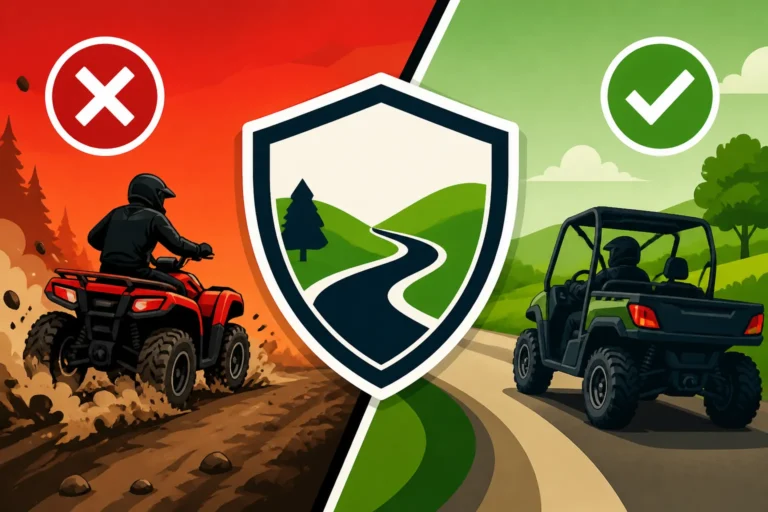
This is where a lot of the confusion regarding enclosed cabs comes in. It's a natural assumption: if cars have enclosed cabs and are street legal, and my UTV now has an enclosed cab, then surely it must be closer to being street legal, right? Unfortunately, that's not how the law works for the vast majority of ATVs and UTVs you see in Alabama. Adding an enclosed cab to your off-road vehicle, whether it's a hard cab, a soft cab, or anything in between, typically does absolutely nothing to change its legal classification for public road use in Alabama. It remains an off-road vehicle.
The idea of an "enclosed cab exemption" often gets conflated with specific rules that apply to entirely different vehicle categories, like certain types of farm equipment or, more commonly, factory-built Low-Speed Vehicles (LSVs) that already meet federal safety standards. It's easy to see how this misunderstanding can arise, especially when different types of vehicles have varying rules. However, for your typical recreation or utility ATV or UTV, that aftermarket cab is primarily for comfort and protection from the elements, not for legal compliance on paved roads.
The Myth of the Aftermarket Cab Making You Street Legal
Let's address this head-on: adding an aftermarket enclosed cab to your ATV or UTV will not, by itself, make your machine street legal in Alabama. This holds true whether you've got a basic soft-sided enclosure or a full, hard-cab system complete with a glass windshield, doors, and a roof, perhaps even from a reputable brand like SuperATV. While these additions significantly enhance your riding experience by protecting you from rain, wind, dust, and cold, they do not transform the fundamental legal classification of your off-road vehicle.
The core issue remains the federal safety standards (FMVSS) we discussed earlier. Your machine, even with a fantastic cab, was not originally manufactured to meet those standards. It doesn't have the appropriate crash-tested chassis, the certified braking system for road speeds, or the specific safety glass and lighting requirements from the factory. A county sheriff or state trooper isn't looking at your cab when they pull you over for illegal road use; they're looking at the vehicle's inherent design, its VIN, and whether it has a license plate issued for highway travel, which is generally impossible for a standard ATV/UTV. The cab is simply an accessory, no different in the eyes of the law than adding a winch or upgraded tires when it comes to road legality.
Purpose of an Enclosed Cab on an ATV/UTV: Comfort, Not Compliance
So, if an enclosed cab doesn't make your machine street legal, what is its purpose? Primarily, it's about comfort and protection for the rider and passengers. Alabama weather can be unpredictable, ranging from scorching summer heat to chilly winter mornings, often with sudden downpours. An enclosed cab provides a much-needed barrier against these elements. It keeps you warmer in winter, dryer in the rain, and helps reduce dust and debris from hitting you directly, especially if you're riding through fields or dusty trails.
Beyond environmental protection, these cabs can also offer a sense of security and containment, particularly on UTVs with roll-over protection structures already in place. They can reduce noise, making communication easier, and offer a more comfortable environment for longer rides or work tasks. For those who use their machines for hunting, farming, or other utility purposes, the ability to store gear in a drier, more protected space is a significant advantage. Companies like SuperATV produce a wide array of these accessories precisely because they enhance the practical utility and comfort of off-road machines, not because they confer any kind of street-legal status. It's about making your off-road adventures and work tasks more enjoyable and manageable, not about transitioning your machine onto public asphalt.
When an Enclosed Cab Truly Matters: Dedicated Low-Speed Vehicles
Now, let's talk about the specific instances where an enclosed cab does play a role in how a vehicle is treated under Alabama law, especially concerning helmet requirements. This is where the crucial distinction lies: it's not about an aftermarket cab on an ATV or UTV, but about factory-built, purpose-designed Low-Speed Vehicles (LSVs). These are vehicles that were manufactured from the ground up to meet the federal safety standards (FMVSS 500) and are explicitly designed for limited road use, typically on roads with speed limits of 35 mph or less.
An LSV is a very different beast from your standard side-by-side or quad. It comes from the factory with the necessary safety features already integrated and certified, and its VIN reflects this classification. When Alabama law discusses exemptions related to enclosed cabs, it is almost exclusively referring to these specific types of vehicles, not to modified off-road machines. This is why you see golf carts and similar purpose-built LSVs operating on city streets where ATVs and UTVs are typically prohibited.
Defining a Low-Speed Vehicle (LSV) in Alabama
In Alabama, a Low-Speed Vehicle (LSV) is a specific category of motor vehicle, distinct from an ATV or UTV, that is defined by federal and state regulations. For a vehicle to be an LSV, it must meet the federal standard 49 CFR 571.500. This means it has four wheels, a maximum speed capability of 20-25 mph, and a gross vehicle weight rating of less than 3,000 pounds. Crucially, it must be equipped with all the safety features mandated by that federal standard: headlamps, stop lamps, turn signal lamps, tail lamps, reflex reflectors, parking brake, a rearview mirror (or mirrors), a windshield (made of safety glazing material), seat belts, and a VIN that identifies it as an LSV.
These vehicles are not just off-road machines with added lights; they are manufactured to a different specification entirely, intended for use on public roads with lower speed limits. Golf carts, for instance, are sometimes allowed on public roads under specific local ordinances and may be modified to meet LSV standards, or they might operate under different, more lenient local rules entirely. The key takeaway is that an LSV is a designated class of vehicle, not just any vehicle with an added cab or street-legal kit. [Alabama LSV Requirements Explained] provides more detail on this often-misunderstood category.
Built from the Ground Up for the Street: The LSV Difference
The fundamental difference between an LSV and an ATV/UTV is its origin and intended purpose. LSVs are literally built to be legal on certain public roads. Their chassis, braking systems, steering, and electrical components are all designed, tested, and certified to meet the specific requirements of 49 CFR 571.500. This is reflected in their Vehicle Identification Number (VIN), which clearly indicates its manufacturing compliance. When you purchase a genuine LSV, you're buying a vehicle that already has the federal stamp of approval for limited street use.
In contrast, an ATV or UTV is built for rough terrain and lacks this foundational certification. Any "street legal kit" or aftermarket enclosed cab for an ATV/UTV from a company like SuperATV adds accessories, but it doesn't change the underlying federal classification or grant the necessary certifications that an LSV possesses from the factory. While such kits can include turn signals, horns, and mirrors, they cannot, for example, change the metallurgy of the frame to meet crash test standards or certify the braking system for highway performance. The vehicle would still be considered an off-road vehicle operating illegally on public roads. [Why a Street Legal Kit Will Not Make It Legal] dives deeper into this distinction.
The Helmet Exemption for True LSVs with Enclosed Cabs
Here's the critical point where an "enclosed cab" truly makes a difference in Alabama law, particularly regarding helmets: it applies to certified Low-Speed Vehicles that have a factory-installed, fully enclosed cab. Alabama's helmet law, as written, primarily applies to motorcycles and similar open-air vehicles. While it’s always wise to wear a helmet when riding an ATV or UTV, especially on private land where rules might be more lenient, the mandatory helmet requirement often doesn't extend to occupants of fully enclosed LSVs.
The thinking here is that a properly designed and crash-tested enclosed cab (as found on a factory-built LSV) offers a level of occupant protection that mitigates the need for a helmet, similar to how car occupants are not required to wear helmets. This is a specific provision for LSVs that meet all federal safety standards, including seat belts and a safety-glass windshield, not a blanket exemption for any machine with a bolted-on cab. So, if you're driving a legitimate LSV with a proper, factory-installed enclosed cab, you generally would not be subject to Alabama's helmet laws that apply to open-air vehicles. This is very different from an ATV or UTV where even a high-quality aftermarket cab offers weather protection and comfort but doesn't change the vehicle's classification or exemption status. For more on this, check out [Does an Enclosed Cab Get You Out of a Helmet?].
To summarize the key differences, consider this table:
| Feature/Category | Typical ATV/UTV (with aftermarket cab) | Low-Speed Vehicle (LSV) (factory-built with enclosed cab) |
|---|---|---|
| Intended Use | Off-road recreation, utility, farm work | Limited public road use (35 mph or less) |
| Federal Certification | Not certified for highway use (not FMVSS 500 compliant) | Factory-certified to meet FMVSS 500 |
| Top Speed | Varies widely (often 40+ mph) | Capped at 20-25 mph |
| Tires | Knobby, low-pressure off-road tires (even with street-legal upgrades) | DOT-approved street tires |
| Windshield | Optional, often plastic or non-safety glass | Required, safety glazing material (e.g., laminated glass) |
| Seat Belts | Often lap belts or no belts on older models; some UTVs have 3-point | Required, 3-point seat belts designed for road impact |
| Lighting | Basic headlights/tail lights; aftermarket turn signals/horn available | Full suite of DOT-compliant lights (head, tail, stop, turn signal, reflectors) |
| Helmet Requirement | Generally recommended, often mandated by parks or land owners; some specific public land rules exist that are not helmet-specific. | Generally exempt when operating in a vehicle with a factory-enclosed cab |
| Street Legal Status | Generally not street legal in Alabama | Is street legal on designated roads in Alabama |
| Cost of Cab | Added aftermarket expense (e.g., from SuperATV) | Integrated into the vehicle's original manufacturing cost |
Ultimately, for most Alabama ATV and UTV owners, the dream of making your off-road machine street legal through an enclosed cab is just that – a dream. The legal pathway to street legality is much more complex and almost always involves starting with a vehicle that was designed and certified for road use from the factory, rather than modifying an off-road machine. Understanding this distinction can save you a lot of time, money, and potential legal trouble. If you're looking for street-legal options, explore [Alabama Low-Speed Vehicle Rules] or consider vehicles specifically manufactured to meet [Alabama's 49 CFR 571.500 Standard].
Disclaimer
This article is for general informational purposes only and does not constitute professional advice. Laws, prices and regulations vary by location and change over time. Consult a qualified professional for guidance on your specific situation.