Alabama Rules for Riding a Power Line Cut
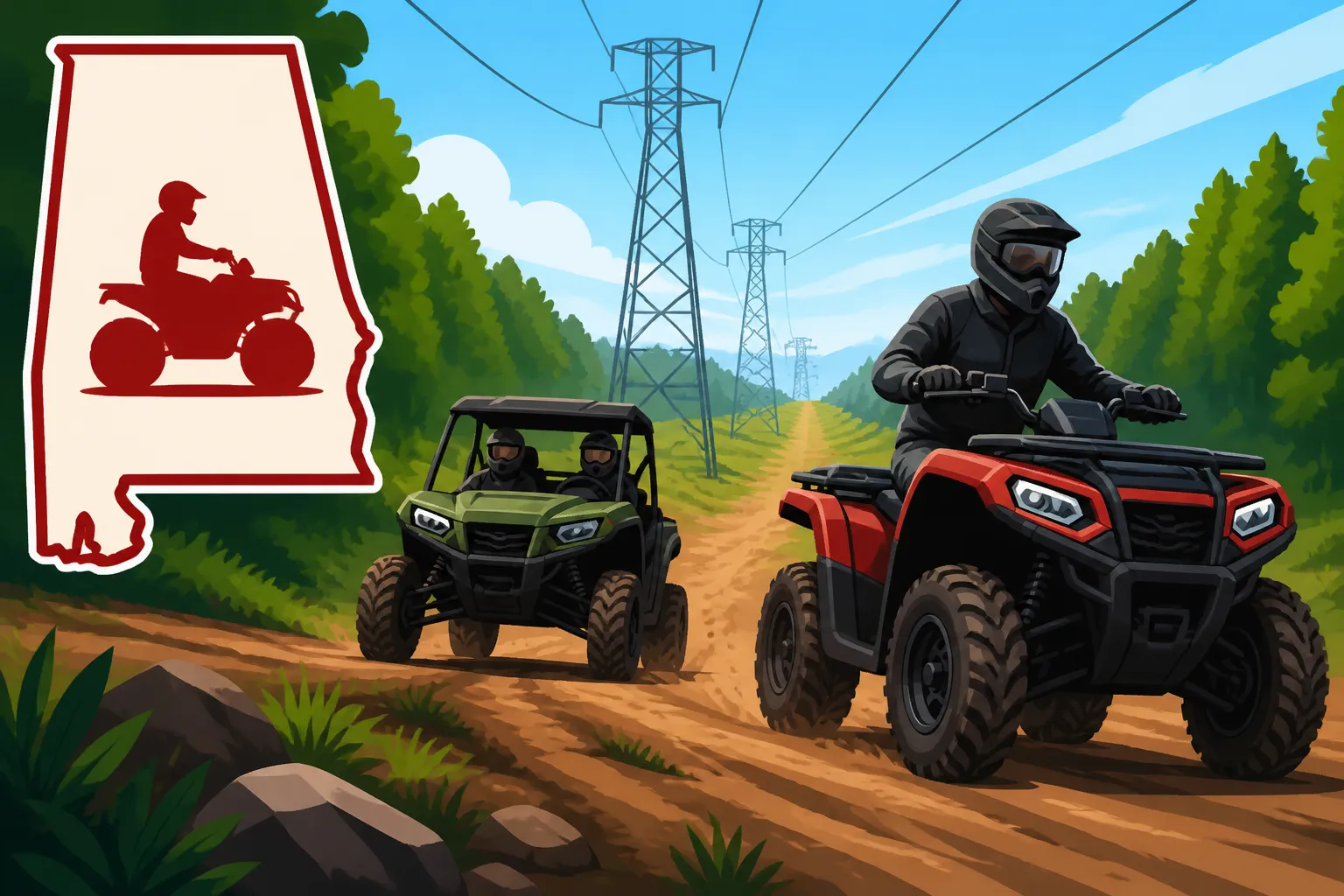
Many Alabama ATV and UTV riders feel a magnetic pull to those long, clear ribbons of land stretching across the countryside—the power line cuts. They look like open invitations, a perfect spot to air out the machine, test the suspension, and just enjoy a wide-open ride without the tight confines of wooded trails. But that wide-open feeling can quickly turn into a legal headache if you don't understand the complex rules of engagement. This guide will walk you through the realities of riding on power line cuts in Alabama, helping you understand ownership, permissions, and why that seemingly open path might actually be off-limits.
The Allure and Legalities of Power Line Cuts in Alabama
There's something undeniably appealing about a power line cut for off-road enthusiasts. These corridors often slice through dense woods, offering expansive views and a different kind of riding experience than your typical winding forest trail. It's easy to see why they catch the eye of anyone looking for a new adventure.
Why Power Line Cuts Are Appealing and Why They're Tricky
Imagine cruising along a wide, relatively flat stretch, feeling the wind, and seeing the horizon. Power line cuts can offer exactly that – long, often grassy or gravel paths that seem to go on forever. They might have gentle rolling hills, small ditches to navigate, or even some muddy sections after a good rain, providing a varied terrain that's different from the purpose-built trails at a park. For many, it's the sense of freedom, the feeling of exploring a less-traveled path that draws them in. You might even spot some unique wildlife taking advantage of the open habitat.
However, this very appeal masks a significant legal challenge: ownership and access. Unlike a designated trail at an OHV park, a power line cut isn't explicitly set up for recreational riding. That means the land isn't necessarily open to the public just because it's clear of trees and has utility poles. The biggest frustration here is that what looks like an open road is often private property, or property with very specific limitations on use, leaving riders confused and vulnerable to trespassing charges. It's a common misconception that if a path isn't fenced or clearly marked "No Trespassing," it's fair game. In Alabama, that's simply not the case.
Understanding Land Ownership Along Power Lines
This is where it gets really important and often quite confusing for riders. When you see a power line, it's natural to assume the power company owns all the land directly underneath it. But more often than not, that's not how it works. Power companies, like Alabama Power or local electric cooperatives, typically own an easement over the land. Think of an easement as a legal right to use someone else's property for a specific purpose—in this case, for constructing, maintaining, and operating power lines. They need access to keep the lines clear of trees and to perform repairs, but they don't necessarily own the land outright.
So, who does own the land? In many instances, the land under a power line cut is still privately owned by individuals, families, or corporations (like timber companies). In other cases, the power line might traverse public lands such as state forests, wildlife management areas, or even federal lands like [Alabama's National Forests]. The crucial takeaway here is that the underlying ownership dictates who has the authority to grant permission for recreational riding, not the utility company that holds the easement. The utility company usually has no interest in allowing recreational use on their easements because of the massive liability risks involved. This means if you ride on a power line cut without confirming the actual landowner and securing their permission, you're likely trespassing, even if the power company is fine with their crews driving along it.
Navigating Permission: Private, Public, and Utility-Owned Land
This is the make-or-break section for anyone hoping to ride a power line cut in Alabama. Assuming you can ride somewhere just because it looks accessible is a recipe for trouble. Proper permission is paramount, and it looks different depending on who actually owns the land beneath those wires.
Private Land: The "Always Ask" Rule
If a power line cut crosses private property, and it often does, the only way to legally ride it is with explicit permission from the landowner. We've all seen those power line cuts that seem to stretch across farms, through large timber tracts, or even behind residential areas. It can be tempting to just hop on and ride, especially if there are no fences or "No Trespassing" signs immediately visible. But Alabama law is pretty clear: without permission, you're trespassing. This isn't just a minor infraction; [Alabama Trespass Law for Riders] carries real penalties, including fines and, in some cases, even the impoundment of your ATV or UTV. Imagine having your prized machine hauled away simply because you didn't take the time to ask. The frustration of dealing with that aftermath far outweighs the momentary thrill of a quick ride.
Getting permission isn't always easy, but it starts with respect. You need to identify the landowner. Sometimes, this can be done through county tax assessor maps, or by simply asking folks in the immediate area. When you do approach a landowner, be polite, explain what you'd like to do, and offer assurances that you'll respect their property. Carrying a copy of [Written Permission From an Alabama Landowner] is ideal, outlining exactly what you're allowed to do, where, and when. This protects both you and the landowner. Many landowners are wary of granting access due to liability concerns or past bad experiences with riders who left trash or damaged property. Building trust takes time, and sometimes, despite your best efforts, the answer might still be no. It's a tough pill to swallow when you see that perfect stretch, but respecting a "no" is crucial to maintaining good relations within the riding community.
Public Lands and Utility Easements
Even when a power line crosses public land, like a Wildlife Management Area (WMA) or a National Forest, you cannot automatically assume you have permission to ride your ATV or UTV on the power line cut. These lands have their own specific regulations regarding off-road vehicle use, and power line corridors are rarely designated as official trails. For example, within [Alabama's National Forests], ATV riding is typically restricted to specifically designated routes, and power line cuts are generally not among them. The same goes for WMAs; while you might be able to use your machine for game retrieval during hunting season in some areas, riding for recreation on undesignated paths, including power line cuts, is usually prohibited. Always check the specific rules for the public land you're interested in before you even consider heading out. Ignorance of the rules won't save you from a citation from a game warden or forest ranger.
Regarding utility easements themselves, the utility company's primary concern is maintaining infrastructure, not facilitating recreation. They are responsible for safety and liability within their easements. Because of the inherent risks associated with ATVs and UTVs (and the potential for property damage or injury), most utility companies have a blanket policy against granting recreational riding access on their easements. They see it as an unnecessary liability. You might try contacting customer service for companies like Alabama Power or your local electric co-op, but don't be surprised if you're met with a firm denial. Their priority is the power grid, not your weekend ride. This can be one of the most frustrating aspects for riders, as the land appears unused and perfect for riding, yet remains legally off-limits.
| Access Type | Who Owns the Land? | Who Grants Permission? | Typical Likelihood of Access | Key Action for Riders |
|---|---|---|---|---|
| Private Land | Individual, family, business | Landowner | Low to Moderate | Always seek explicit, written landowner permission. |
| Public Land | State or Federal agency | Land Management Agency (e.g., USFS, DCNR) | Very Low to None | Check specific area regulations; rarely permitted. |
| Utility Easement | Underlying landowner | Underlying landowner (not utility) | Very Low to None | Permission from underlying landowner needed; utility will likely deny recreational use. |
Safety and Responsibility on Power Line Cuts
Beyond the legalities, riding on power line cuts presents a unique set of safety considerations that riders often overlook. The very nature of these areas—cleared, sometimes remote—can lull riders into a false sense of security, leading to dangerous situations.
Unique Hazards of Power Line Corridors
Power line cuts aren't manicured trails. They are primarily maintained for utility access, which means they can hide a variety of hazards. You might encounter hidden stumps, deep ruts from utility vehicles, erosion channels, or even exposed pipes and cables that aren't visible until you're right on top of them. The ground can be inconsistent, ranging from soft sandy patches to hard-packed clay, and after rain, that famous [Alabama Red Clay and What It Does] can make for a slick and challenging ride. There's also the potential for active utility work, with heavy equipment, open trenches, or personnel unaware of recreational riders. Running into a utility crew unexpectedly can be extremely dangerous.
Visibility can also be an issue, especially if the path is overgrown in sections or if you're riding too close to dusk. While you might be focused on the path ahead, power lines themselves represent a danger due to electrocution risk if you were to somehow contact a downed line, though this is rare. Still, it's a stark reminder of the serious business happening above your head. [Alabama Rules for Riding After Dark] are already stringent for public areas, but even on private land, poor lighting increases the risk of hitting unforeseen obstacles. It's not just about what you can see; it's about what you can't see that poses a threat. Always wear appropriate safety gear, including a sturdy helmet, gloves, and eye protection. While [Why the Helmet Statute Was Written for Motorcycles] means the law might not apply to ATVs in the same way, a helmet is your best defense against head injury, no matter where you ride.
Environmental Impact and Ethical Riding
Responsible riding isn't just about following the law and staying safe; it's also about being a good steward of the land. Power line cuts, precisely because they are often less regulated than dedicated trails, are particularly vulnerable to environmental damage from irresponsible riding. Spinning tires and aggressive maneuvers, especially on wet red clay, can cause significant erosion. This not only damages the land but can also lead to sediment runoff into streams and rivers, harming aquatic ecosystems. Staying on established two-track paths and avoiding excessive mud bogging in sensitive areas is crucial.
Beyond erosion, litter is a pervasive problem. Leaving trash behind, whether it's empty drink bottles, snack wrappers, or broken machine parts, pollutes the environment and creates a negative impression of ATV riders. If landowners or utility companies continually find trash on their property, they are far less likely to grant access in the future. Additionally, [Alabama Noise Complaints About Quads] can become an issue if you're riding power line cuts that run near residential areas. Being mindful of your machine's exhaust noise, especially during early mornings or late evenings, helps maintain positive community relations. We all want places to ride, and protecting those opportunities means showing respect for the environment and the people who live near these areas.
Alternatives and Best Practices for Alabama Riders
Given the complexities and potential pitfalls of riding power line cuts, many riders find it much more rewarding and less stressful to seek out legal, designated riding areas. There are fantastic options across Alabama that offer miles of trails, amenities, and peace of mind.
Seeking Approved Riding Areas
Instead of navigating the murky waters of power line cut access, consider the wealth of approved off-road parks and trails available in Alabama. These places are specifically designed for ATV and UTV riding, offering varied terrain, safety standards, and clear rules. For instance, [Stony Lonesome OHV Park in Alabama] in Cullman County boasts over 150 miles of trails suitable for all skill levels, from beginner-friendly paths to challenging rock crawls. It's a fantastic place to spend a day or even a weekend, with camping options available. Similarly, [Minooka Park Riding in Alabama] in Jemison offers another great option with plenty of trails for different machine types. These parks often have amenities like restrooms, wash stations, and sometimes even repair shops, making for a much more enjoyable and worry-free experience.
Another avenue to explore is riding within [Alabama WMA Riding Rules], but remember, these are typically restricted to designated roads or during specific hunting seasons for game retrieval, not general recreation. Always check the specific WMA regulations, as they can vary greatly from one area to another. Joining [Alabama ATV Clubs Worth Joining] can also open doors to private land access through organized rides or club-owned properties, and it's a great way to meet fellow riders and learn about new legal spots. These clubs often have relationships with landowners or organize events on private property where access is pre-arranged and legal.
Equipping Your Machine for Diverse Terrain
Regardless of where you end up riding in Alabama, having your machine properly equipped makes a huge difference in both safety and enjoyment. For the varied terrain you might encounter, whether it's a rocky hill climb at an OHV park or a muddy section in a WMA (where permitted), certain upgrades are invaluable. For instance, robust skid plates can protect your undercarriage from hidden rocks and stumps, saving you from costly repairs. Companies like SuperATV offer a wide range of protective gear, lift kits, and tires designed to tackle Alabama's diverse landscapes.
Speaking of tires, choosing the right ones for [Alabama Red Clay and What It Does] and other varied surfaces can significantly improve traction and control. Mud-specific tires might be great in the muck, but a more all-around tread might serve you better on mixed terrain. Additionally, if you do find yourself on a long, remote trail (with permission!), a winch can be a lifesaver for getting unstuck or helping a buddy. And don't forget about visibility: bright LED lights are essential for [Alabama Lighting on a Machine at Night], even if you only plan to ride during the day, as unexpected delays can leave you riding in low light. These thoughtful upgrades aren't just for performance; they contribute to a safer, more reliable off-road experience, no matter the legal path you choose.
Disclaimer
This article is for general informational purposes only and does not constitute professional advice. Laws, prices and regulations vary by location and change over time. Consult a qualified professional for guidance on your specific situation.