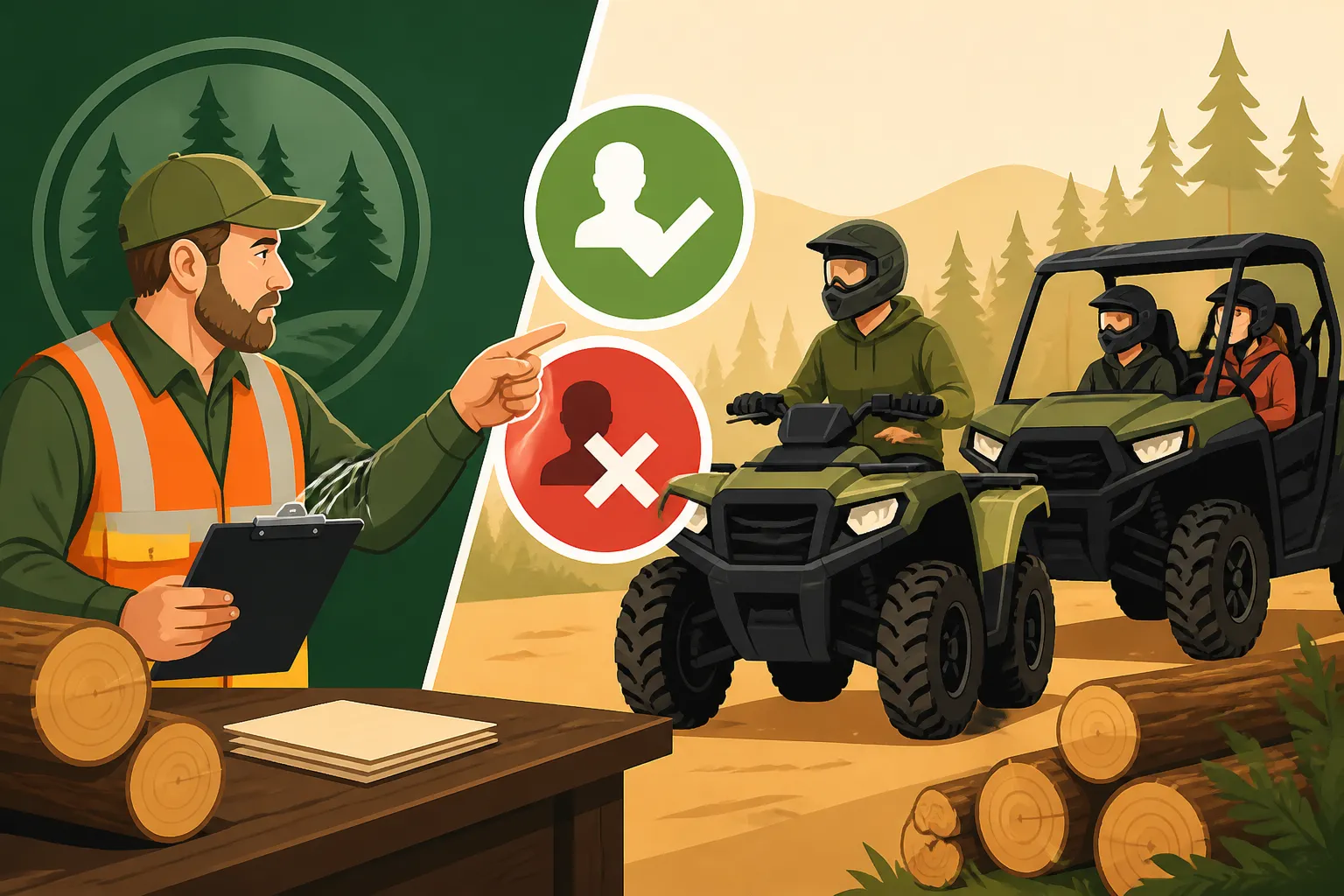
How a Timber Company Decides Who May Ride
It's a dream for many riders across Alabama: vast stretches of timber company land, often crisscrossed with old logging roads and trails, just begging for an ATV or UTV adventure. But the reality is, this isn't public parkland, and gaining access isn't as simple as just showing up. Many folks get frustrated trying to figure out if riding is even an option, and if so, how to go about it the right way. This guide is here to shed some light on the often-confusing world of timber company land access and explain how these companies decide who gets to ride, and why.
Understanding Timber Company Land and Access
When you look at a map of Alabama, you'll see huge tracts of land owned by timber companies. These aren't just pretty forests; they are working landscapes, managed for specific economic purposes. Many riders, seeing what looks like open land, mistakenly assume it might be open for recreational use. However, understanding the core business of these companies is the first step to understanding their access policies.
The Business of Timber: Beyond Recreation
For a timber company, every acre of land serves a primary purpose: growing trees for harvest. This means their operations involve everything from planting saplings and managing growth to road construction, harvesting, and hauling logs. These activities are carefully planned, often on tight schedules, and represent significant investments. While the land might offer picturesque views, its role is fundamentally industrial. Think of it less like a public park and more like a private farm or factory floor, just on a much grander, greener scale. This focus on commercial forestry means that any recreational use is, at best, a secondary consideration, and often, an unwelcome distraction or potential liability.
Why Access Is Strictly Controlled
With such large landholdings, you might wonder why timber companies don't just open them up. The answer boils down to a few critical factors: liability, operational interference, and resource protection. Every person who steps foot on their property without authorization represents a potential legal risk for the company. If someone gets hurt on their land, even if they were trespassing, the company could face significant legal challenges. Furthermore, unauthorized riders can disrupt active logging operations, damage young trees, create fire hazards, or interfere with sensitive wildlife management areas. They might even inadvertently create new trails that lead to erosion problems. Imagine if someone decided to drive their ATV through a field of newly planted soybeans; it’s a similar concept, just with trees. Protecting their assets and preventing costly disruptions is paramount.
Common Avenues for Accessing Timber Land
Despite the strict controls, there are indeed ways to gain legal access to timber company lands, though they are usually specific and limited. It's rarely a free-for-all, open-door policy, but more of a structured agreement for certain activities.
Hunting Leases and Their Limitations
By far the most common way to get permission to ride an ATV or UTV on timber company land in Alabama is through a hunting lease. Many timber companies lease large tracts of their land to hunting clubs or individuals for seasonal hunting. These leases almost always include specific provisions for the use of off-road vehicles. Typically, this means ATVs and UTVs can be used for activities directly related to hunting, such as scouting, planting food plots, retrieving game, or traveling between hunting stands. However, it's crucial to read these leases very carefully. They often contain strict rules: limitations on where you can ride (e.g., only on designated roads, not off-trail), when you can ride, and what kind of machines are allowed. For example, some leases might prohibit wide side-by-sides on certain trails to prevent damage, while others might restrict riding during certain logging operations. It's rarely a green light for joyriding; it's permission tied directly to the hunting activity. You'll often find clauses that specify that [Alabama Hunting Club Lease Riding] is strictly for hunting purposes and not general recreation.
Written Permission and Permitting Systems
Beyond hunting leases, some timber companies, particularly smaller or regionally focused ones, might offer individual written permissions or have a formal permitting system for specific, non-hunting recreational access. This is much less common for general ATV riding and more likely for activities like timber cruising, surveying, or very specific environmental studies. If such a system exists, it will likely be very structured, require a detailed application, proof of insurance, and adherence to a strict set of rules. You might need to specify your route, duration, and purpose, and only on certain designated roads, similar to [Alabama Rules for Riding a Timber Road]. Even then, permission might be temporary or limited to periods when no active logging is occurring. It's a formal process, not a casual request, and having [Carrying a Landowner's Written Permission on a Ride] is non-negotiable.
Specific Use Agreements
Occasionally, timber companies will grant access through specific use agreements that are not recreational in nature. These might include access for utility companies to maintain power lines, for landowners to access landlocked parcels, or for research purposes. In such cases, the ATV or UTV use is incidental to the primary purpose of the agreement. For instance, a power company crew might use UTVs equipped with specialized gear from a company like SuperATV to reach remote transmission lines, but this access is granted under a formal contract for critical infrastructure maintenance, not for leisure. These agreements are highly customized and generally not applicable to the average recreational rider.
Factors Influencing a Company's Decision
When a timber company considers any request for access, whether for hunting or other uses, they weigh a multitude of factors. Their decision isn't arbitrary; it's based on a careful assessment of risks, responsibilities, and the impact on their primary business.
Safety, Liability, and Risk Assessment
This is almost always the number one concern. Timber operations can be dangerous, with heavy machinery, falling trees, and active hauling routes. Introducing recreational riders into this environment significantly increases the risk of accidents, injuries, or even fatalities. Companies must consider their legal liability if a rider is injured on their property, even if they have signed a waiver. They have to assess the financial cost of potential lawsuits, the cost of increased insurance premiums, and the resources required to monitor compliance. This is why many companies opt for a blanket "no recreational access" policy – it's often the simplest way to mitigate these enormous risks. They might also worry about riders interfering with or damaging expensive equipment.
Environmental Impact and Land Stewardship
Timber companies, despite their commercial focus, often have dedicated teams for land stewardship and environmental compliance. They manage sensitive ecosystems, protect water quality, and adhere to various state and federal regulations concerning wildlife and natural resources. Unauthorized ATV use can lead to erosion, stream degradation, habitat disruption, and the spread of invasive species. For example, excessive riding on wet clay can create deep ruts that accelerate runoff, damaging roads and water bodies. This concern for environmental impact is a significant reason for restricting recreational riding, as it can directly conflict with their long-term land management goals.
Operational Disruptions and Conflicts
As mentioned, timber land is a working environment. Active logging operations, silviculture work (like herbicide application or prescribed burns), road construction, and even regular maintenance can be severely disrupted by the presence of recreational riders. Imagine a logging crew having to halt operations because someone is riding their side-by-side through a felling zone, or the logistical nightmare of coordinating around unexpected riders on a main haul road. These disruptions can lead to costly delays, missed deadlines, and increased operational expenses. Timber companies also need to consider potential conflicts between different user groups, such as hunters and loggers, or even different groups of riders. For instance, some heavy-duty SuperATV components might be designed to handle rough terrain, but a company might not want such aggressive riding tearing up newly planted areas.
How to Approach a Timber Company for Riding Permission
If, after understanding all these challenges, you still believe you have a legitimate reason to seek access, approaching a timber company requires a strategic and respectful approach. It's not about demanding access, but proposing a mutually beneficial solution.
Researching the Company and Its Policies
Before you even think about calling or writing, do your homework. Identify the specific timber company that owns the land you're interested in. Look up their website, if they have one. Many larger companies will explicitly state their recreational access policies, often in an FAQ section or under "Land Management." They might have a dedicated contact person or department for land inquiries. Understand their core business, their land management philosophy, and any existing public access programs they might offer (e.g., hunting leases). Don't approach a company that explicitly states "no recreational access" hoping to be the exception; it's a waste of both your time and theirs. You might find information on [Alabama Timber Company Land Access] or similar topics.
Crafting a Request and Proposing Solutions
If you find a company that seems open to the idea, or at least doesn't have a blanket ban, your request needs to be professional, clear, and proactive in addressing their concerns. Instead of simply asking, "Can I ride my ATV on your land?", frame it as, "I am seeking permission to ride my ATV/UTV for [specific, limited purpose] on [specific area/road] during [specific dates/times]."
Consider including:
- Your purpose: Is it for scouting a hunting area (under a separate lease agreement), accessing a remote property you own, or specific research? General recreation is a tough sell.
- Your commitment to safety: Mention you will wear appropriate safety gear, stick to designated routes, and be aware of logging operations.
- Proof of insurance: Offer to provide proof of liability insurance for your vehicle and yourself.
- Environmental responsibility: Explain how you will minimize your impact, such as [Treading Lightly on Erodible Alabama Clay] and respecting marked boundaries like [Posted Land and Purple Paint in Alabama].
- Waiver of liability: Be prepared to sign any liability waivers the company requires.
Example Table: Elements of a Strong Access Request
| Element | Why It Matters | What to Include |
|---|---|---|
| Clear Purpose | Shows you're not just joyriding; reduces perceived risk. | "Accessing hunting stand," "surveying boundaries," "timber cruising." |
| Specific Location/Route | Helps company assess impact and potential conflicts. | "Old logging road leading to Tract X," "along main fire break from Point A to B." |
| Defined Timeframe | Prevents open-ended access; allows coordination with operations. | "October 15 – December 31," "Weekends only, daylight hours," "Single day on X date." |
| Safety Assurance | Addresses their primary liability concern. | "Will wear helmet/PPE," "Aware of heavy equipment," "Will yield to all operations." |
| Insurance Proof | Mitigates financial risk for the company. | "Copy of my ATV liability insurance policy," "Offer to add company as 'additional insured'." |
| Environmental Plan | Shows responsibility; aligns with their stewardship goals. | "Will stick to established roads," "Pack it in, pack it out," "No littering." |
| Willingness to Sign Waivers | Legal protection for the company. | "Prepared to sign all required liability waivers." |
| Contact Information | Essential for follow-up and verification. | Name, phone, email, mailing address. |
Equipment and Preparedness Considerations
If you are lucky enough to gain permission, ensure your ATV or UTV is properly equipped and you are prepared for the terrain. Companies will expect you to be self-sufficient and not create additional problems for them. For instance, a reliable winch from SuperATV could be invaluable if you get stuck on an old logging road. Carrying essential tools, a first-aid kit, and communication devices is paramount, especially in remote areas where cell service is spotty. Ensure your machine meets any width or weight restrictions they might impose. [Alabama Rules for Towing With a UTV] might also be relevant if you're hauling stands or supplies. Remember, even with permission, you are a guest on their working land, and respecting their rules and property is crucial for maintaining that privilege and potentially opening doors for others in the future.
Disclaimer
This article is for general informational purposes only and does not constitute professional advice. Laws, prices and regulations vary by location and change over time. Consult a qualified professional for guidance on your specific situation.