Does Alabama Require a Spark Arrester on an ATV?
There's nothing quite like hitting the trails on your ATV or UTV, feeling the Alabama red clay beneath your tires, and enjoying the great outdoors. But amidst all that fun and adventure, a common question often sparks up (pun intended!) among riders: "Do I actually need a spark arrester on my machine?" This isn't just a technical detail; it’s a critical piece of the puzzle for staying safe, compliant, and protecting our beautiful Alabama landscapes from the devastating threat of wildfires. This guide is here to cut through the confusion and explain exactly what you need to know about spark arresters for your off-road adventures in the Heart of Dixie.
The Basics of Spark Arresters and Why They Matter
Let's get down to brass tacks: what is this "spark arrester" thing, and why does it keep coming up in discussions about off-road riding? It might sound like a complicated engine part, but its purpose is surprisingly straightforward and incredibly important, especially when you consider the dry leaves and pine straw that often blanket our Alabama trails.
What Exactly Is a Spark Arrester?
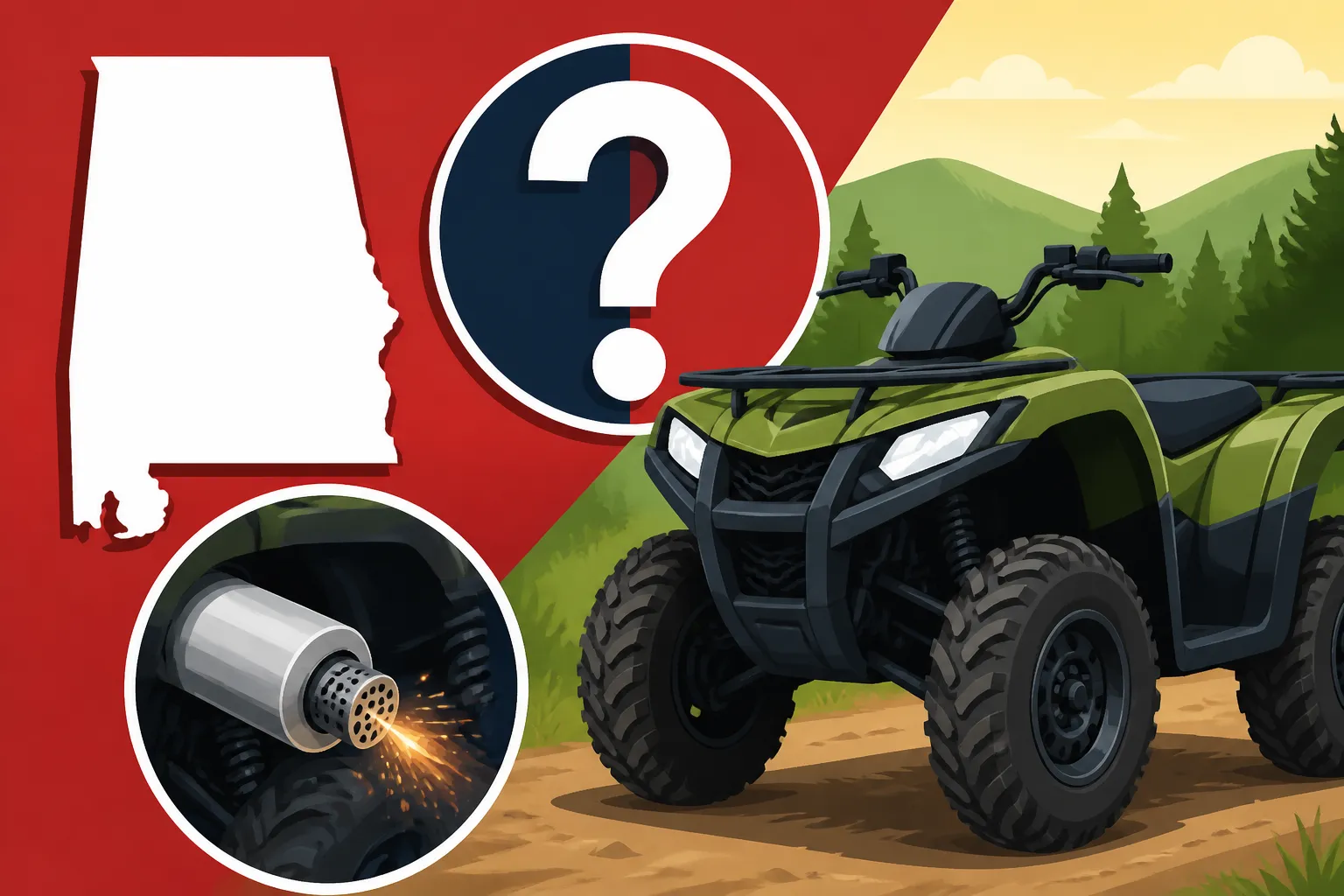
At its core, a spark arrester is a safety device designed to prevent hot carbon particles – essentially tiny, incandescent embers – from exiting your ATV or UTV's exhaust system. Think of it like a specialized filter for your exhaust. These particles are a natural byproduct of combustion in your engine, and while small, they can retain enough heat to ignite highly flammable materials.
Most spark arresters consist of a metal screen or a series of baffles and chambers built into the muffler. The design works by either trapping these hot particles in a mesh screen, allowing them to cool and extinguish before they can escape, or by forcing the exhaust gases into a centrifugal path that flings the heavier, hot particles against the arrester's walls, causing them to lose energy and cool down. Without one, these tiny fire-starters could fly out of your exhaust pipe like miniature projectiles, landing on dry grass, leaves, or other combustible debris along the trail. It’s a simple piece of technology, but it's a vital guardian against accidental fires.
The Real Risk of Wildfires from ATVs
In Alabama, where our summers are long and often dry, and our forests are abundant with fuel for a fire – from fallen branches to bone-dry leaf litter – the risk of a wildfire starting from a recreational vehicle is very real. Your ATV's exhaust system operates at extremely high temperatures. If you stop for a break and your hot muffler rests against a pile of dry pine needles or tall, brittle grass, it can easily ignite. But even while you're moving, those unarrested sparks can fly out, land in a tinder-dry area, and within minutes, you could have a serious problem on your hands.
A small spark, seemingly insignificant, can quickly escalate into a raging inferno, especially on a windy day. The devastation can be immense, destroying not just precious forest land and wildlife habitats, but also potentially threatening homes, farms, and livelihoods. Beyond the immediate destruction, wildfires contribute to air pollution, erode soil, and can take decades for ecosystems to recover. As responsible riders who love and cherish Alabama's natural beauty, understanding and mitigating this risk is not just about following a rule; it's about being good stewards of the land and protecting our communities.
Alabama's Rules and Regulations Regarding Spark Arresters
Navigating the legal landscape for ATVs and UTVs in Alabama can feel a bit like sifting through a pile of fallen leaves – there's a lot there, and it's not always neatly organized. When it comes to spark arresters, the rules aren't as straightforward as you might hope for the entire state, but there are definitely specific scenarios where they are absolutely required.
Public Land Requirements: State and Federal
Here's where the rubber meets the road: if you plan on riding on any public land in Alabama, especially federal lands like our beautiful National Forests, you absolutely need a U.S. Forest Service approved spark arrester on your machine. While Alabama state law itself might not have a sweeping mandate covering every single acre of land in the state, federal regulations are very clear for the properties they manage.
The U.S. Forest Service, which oversees areas like the Talladega National Forest or the Bankhead National Forest, requires all off-highway vehicles (OHVs) operating on designated trails and roads to be equipped with a spark arrester that is approved by the U.S. Forest Service and maintained in effective working order. This requirement is non-negotiable and is strictly enforced. The primary reason, as we discussed, is wildfire prevention. These federal lands are often vast and remote, making fire suppression difficult and costly. If you're caught riding on federal land without one, you could face significant fines, your machine could be impounded, and you might even be banned from the area. It's crucial to check the specific rules for any federal property, especially if you plan to get an [Alabama National Forest Riding Permits] or visit a Wildlife Management Area (WMA) overseen by state agencies. Even if the state's WMA rules don't explicitly mention it, being on any public ground, especially during dry seasons, means a spark arrester is an absolute must for safety.
Private Property and Designated OHV Parks
When it comes to riding on private property, the rules shift considerably. If you own the land, or have explicit permission from the landowner, the decision to use a spark arrester is largely yours – though from a fire safety standpoint, it's always highly recommended. However, many private landowners, especially those with large tracts of timber or agricultural land, may set their own rules to prevent fires, and that often includes a spark arrester requirement. It’s always best to ask permission and inquire about any specific rules before you ride on someone else’s land.
The situation changes again when you visit one of Alabama's fantastic designated Off-Highway Vehicle (OHV) parks. Places like [Stony Lonesome OHV Park in Alabama] or Minooka Park almost universally require spark arresters on all machines entering their trails. These parks are responsible for the safety of all riders and the protection of their property, which means minimizing fire risk is a top priority. When you sign a [Alabama Private Park Waiver Forms] upon entry, you're often agreeing to abide by their safety regulations, which can include helmet rules, age restrictions, and, yes, mandatory spark arresters. Park staff will often conduct visual checks at the gate, or rangers might perform spot checks on the trails. They might also have specific [Alabama Private Park Helmet Rules] or even [Alabama Sound Limits on Public Land] that influence exhaust modifications. Failing to comply can result in immediate expulsion from the park, and you could lose any fees you've paid. It’s always smart to check the park’s specific regulations on their website or call ahead before you hitch up the trailer and head out.
Practical Advice for Alabama ATV & UTV Owners
So, you understand the "why" and "where" of spark arresters. Now, let's talk about the "how." What steps can you take to ensure your machine is compliant and that you're riding safely and responsibly in Alabama? It's often simpler than you might think, but it does require a little attention to detail.
Checking Your Machine and Staying Compliant
First things first: does your ATV or UTV already have a spark arrester? Most modern machines from reputable manufacturers come equipped with one straight from the factory. You can usually confirm this by checking your owner's manual – it will often explicitly state whether a spark arrester is installed and may even include diagrams. Another common way to tell is to look at the muffler itself. Many U.S. Forest Service approved spark arresters will have a specific stamp or etching on the muffler body or end cap, often with the letters "USFS" and a date or model number. If you don't see this, or if you're unsure, it's worth a quick call to your dealer or a visit to an experienced ATV mechanic.
If your machine doesn't have one, or if you've replaced your stock exhaust with an aftermarket system that doesn't include one, you'll need to install an aftermarket spark arrester. Aftermarket parts manufacturers like SuperATV offer a range of universal spark arresters and exhaust systems that meet federal requirements. When purchasing, always look for products explicitly advertised as "USFS approved." Installation can be a DIY project for those comfortable with basic tools, or a quick job for a mechanic. Beyond installation, regular maintenance is key. Spark arresters, especially screen-type ones, can become clogged with carbon buildup over time, reducing their effectiveness and potentially restricting exhaust flow. Your owner's manual will provide a recommended cleaning schedule, usually involving removing the screen and brushing out the carbon. This simple maintenance step ensures your arrester is always doing its job.
Consequences of Not Having a Spark Arrester
Ignoring spark arrester requirements isn't just a minor oversight; it can lead to some pretty significant headaches and expenses. As mentioned, if you're caught on federal lands without an approved and functional spark arrester, you could face hefty fines. These aren't just a slap on the wrist; they can easily run into hundreds of dollars. On top of that, law enforcement or park rangers have the authority to ticket you, impound your machine, and even force you to leave the riding area. That means your day of fun turns into a costly, frustrating experience with a long ride home (without your quad!).
The financial penalties extend beyond just the ticket. Should your machine be responsible for starting a wildfire due to a missing or faulty spark arrester, the liability costs could be astronomical. You could be held responsible for the entire cost of fighting the fire, property damage, and environmental restoration, which can quickly amount to hundreds of thousands or even millions of dollars. Imagine being held personally accountable for wiping out acres of forest or destroying someone's property – it's a sobering thought. This potential for immense liability alone should be reason enough to ensure your machine is compliant. Ensuring your exhaust system, perhaps with an aftermarket setup from a reputable brand like SuperATV, is compliant is a small price to pay for peace of mind and avoiding these severe consequences. Even if the law is silent on private land, the moral and financial consequences of starting a fire are immense.
Beyond the Spark Arrester: Fire Safety on the Trail
While a properly installed and maintained spark arrester is your first line of defense against wildfires, it’s not the only piece of the fire safety puzzle. Responsible riding encompasses a broader awareness of your surroundings and preparedness for potential hazards, especially when you're out exploring Alabama's beautiful, wild places.
Essential Fire Prevention Tips
Think beyond just the exhaust. Your ATV or UTV generates a lot of heat, not just from the muffler. Catalytic converters, engine blocks, and even hot brakes can ignite dry vegetation. One of the simplest and most effective prevention tips is to avoid parking or stopping your machine in areas where dry grass, leaves, or other flammable debris could come into contact with hot components. If you need to stop for a break, try to find a clear patch of dirt or pavement.
Beyond that, carrying a small, U.S. Forest Service approved fire extinguisher is a smart move, particularly during dry [Alabama Riding Season Considerations]. It can be the difference between a small flare-up and a raging inferno. Regularly inspect your machine for any leaks of fuel or oil, as these can also be major fire hazards. Be mindful of the conditions: if Alabama is experiencing a severe drought or there are active fire restrictions in your area (which are sometimes announced as [Alabama Fire Restrictions in Dry Months]), it might be best to postpone your ride or choose a wetter riding location. Even something as simple as carrying a shovel can help contain a small ground fire if you act quickly.
Responsible Riding and Trail Etiquette
Ultimately, fire safety is deeply intertwined with overall responsible riding and good [Alabama Trail Etiquette Locals Expect]. It's about respecting the land, other riders, and the communities surrounding the trails. If you're on public land, always stick to designated trails and routes. Going off-trail not only causes environmental damage and erosion – especially on sensitive [Alabama Red Clay and What It Does] – but it can also lead you into areas with unseen hazards or extremely dry vegetation, increasing fire risk.
Always be aware of your surroundings. If you see smoke or signs of a fire, report it immediately to the authorities (e.g., park rangers, local fire department, or the Alabama Forestry Commission). When riding in a group, encourage everyone to practice fire-safe habits. Ensure all your equipment, including your spark arrester, is in good working order before you even leave your driveway. Being prepared, mindful, and respectful ensures that our incredible off-road opportunities remain open and safe for everyone to enjoy for years to come.
| Location Type | Spark Arrester Required? | Primary Reason | Enforcement Body |
|---|---|---|---|
| Federal Public Lands | Yes (USFS Approved) | Wildfire Prevention | U.S. Forest Service, Park Rangers |
| State Public Lands (WMAs) | Often Recommended/Implied | Wildfire Prevention / Agency Rules | Alabama Wildlife & Freshwater Fisheries |
| Designated OHV Parks | Yes (Park Specific) | Park Safety & Liability | Park Staff, Owners |
| Private Property (Owned) | Recommended | Personal Safety & Liability | Landowner (Self-Regulation) |
| Private Property (Permitted) | Often Yes | Landowner Rules / Fire Prevention | Landowner, Lease Holder |
This article is for general informational purposes only and does not constitute professional advice. Laws, prices and regulations vary by location and change over time. Consult a qualified professional for guidance on your specific situation.