Alabama Lighting on a Machine at Night
Riding your ATV or UTV after the sun dips below the horizon in Alabama can be an incredible experience – the air cools, the woods take on a different, mysterious feel, and familiar trails look entirely new under the stars. But that magical feeling can quickly turn to anxiety or even danger if you can't see where you're going, or worse, if others can't see you. This guide is here to illuminate the crucial role of proper lighting for night riding on your off-road machine in Alabama, from understanding what's legally expected to making smart upgrade choices for your safety.
Why Proper Lighting Matters for Night Riding in Alabama
When you're out there on the trails or working on your property in the dark, lighting isn't just a convenience; it's absolutely fundamental to a safe and enjoyable experience. The challenges of navigating Alabama's varied terrain at night are significant, and without adequate illumination, you're rolling the dice with your safety and the well-being of others.
Visibility for Your Safety
Imagine cruising down a familiar trail after dark. That small rut you easily navigated during the day becomes a potential axle-breaker, a fallen limb an unseen projectile, and a sudden dip in the terrain an unexpected launch ramp. Your factory headlights, while fine for basic visibility, often create a tunnel vision effect, leaving the periphery shrouded in deep shadows. You need to see more than just what's directly in front of your tires.
The diverse landscape of Alabama – from the dense pine forests of the south to the rocky hills of the north – presents unique challenges. Hidden roots, washed-out creek crossings, mud holes, and the ever-present red clay can all become treacherous traps in low light. Then there's the wildlife. Deer, coyotes, and even smaller critters can dart across your path with little warning. A powerful lighting setup allows you to identify these hazards sooner, giving you precious extra seconds to react, brake, or steer clear. Without that wide, clear view, you're essentially driving blind for significant portions of your ride, risking not just damage to your machine, but serious injury to yourself or your passengers. This isn't just about spotting a tree directly ahead; it's about discerning the subtle changes in terrain that indicate a drop-off, a steep climb, or an obstacle partially obscured by shadows.
Making Yourself Seen by Others
While seeing where you're going is paramount, ensuring that others can see you is just as vital. Whether you're sharing a trail with other riders, passing through an area where hunters might be present, or briefly using a private road that neighbors also traverse, being visible can prevent costly and dangerous encounters. The low light conditions amplify every risk factor, and the unexpected appearance of an ATV or UTV can catch anyone off guard.
Consider the dust stirred up by multiple machines on a dry Alabama evening. Even with your own lights blazing, that dust cloud can render your machine invisible to others following behind or approaching from another direction. Similarly, fog rolling in off a creek or deep shadows cast by tall trees can swallow your machine whole. Rear lighting is just as critical as front lighting here. A bright, clearly visible taillight, or even an additional rear-facing light bar, can alert others to your presence long before they're upon you. This is especially true in areas like hunting camps or multi-use trails where various activities might be happening simultaneously. Good etiquette, and indeed good safety, dictates that you make every effort to be seen, thereby minimizing the chance of startling another person or, worse, being involved in a collision with an unsuspecting individual, be it another rider, a pedestrian, or someone operating a farm tractor on adjacent land. You'll often find that seasoned riders are keenly aware of [Alabama Trail Etiquette Locals Expect] when riding after dark.
Specific Lighting Requirements for ATVs and UTVs in Alabama
Understanding the letter of the law when it comes to ATV and UTV lighting in Alabama can feel a bit like sifting through a stack of old property deeds – confusing and sometimes contradictory depending on where you're riding. The rules vary significantly based on whether you're on public land, private property, or attempting a brief road crossing. It's crucial to distinguish between what's legally mandated and what's simply smart for your safety.
Public Land and Designated Trails
For machines operating on public lands or designated OHV (Off-Highway Vehicle) trails in Alabama, there's a general expectation for basic lighting, especially if you're out [Alabama Riding After Dark]. While Alabama's off-road vehicle statute doesn't go into hyper-specific lumen counts or beam patterns, it implies that if your machine is being operated after sunset, it should be equipped with functional headlights and taillights. These are typically the lights that came installed on your machine from the factory. Think about it: any park ranger or deputy performing [Alabama Equipment Checks by Deputies] after dusk will be looking for at least basic illumination.
However, "functional" often means "bare minimum." The factory lights on many ATVs and UTVs are primarily designed to meet basic safety standards, not to provide optimal visibility for challenging night riding. They might cast a narrow beam, leaving you guessing about what lies in the wider periphery. For instance, if you're riding at a place like Stony Lonesome OHV Park, or within certain [Alabama Public Use Designated Areas] or [Alabama WMA Riding Rules], while they might not specify "X amount of light," they certainly expect you to be safely visible. Relying solely on standard headlights for serious night trail riding can lead to rapid fatigue, slower reaction times, and increased risk of accidents due to unforeseen obstacles. You'll definitely want to assess if your stock lighting truly gives you the confidence to tackle varied terrain in the dark.
Private Property and Farm Use
When you're exclusively operating your ATV or UTV on private property in Alabama, the state's specific lighting regulations for off-road vehicles generally take a backseat to common sense and personal safety. There's far less legal oversight concerning lighting when you're on your own land or land where you have explicit permission to ride. This freedom, however, comes with a personal responsibility to ensure your own safety and the safety of anyone else on your property.
If you're using your machine for [Alabama Farm Use and Road Riding] or just enjoying your acreage in the evening, the emphasis shifts from legal compliance to practical utility. For example, checking fences, tending to livestock, or retrieving game after dark requires adequate lighting not just to drive, but to actually perform tasks. While the law might not mandate a certain number of floodlights on your UTV for pulling a trailer of feed, a prudent operator will ensure they have sufficient illumination to prevent accidents, especially in unfamiliar or uneven sections of their property. Many farmers find that additional work lights or a robust light bar make tasks significantly safer and more efficient, reducing the chances of hitting a stump or a hole that could damage their machine or cause injury. The general rule for [Alabama Private Use on Your Own Property] is that you're in charge, but good lighting is always a smart investment.
Limited Road Use and Crossing
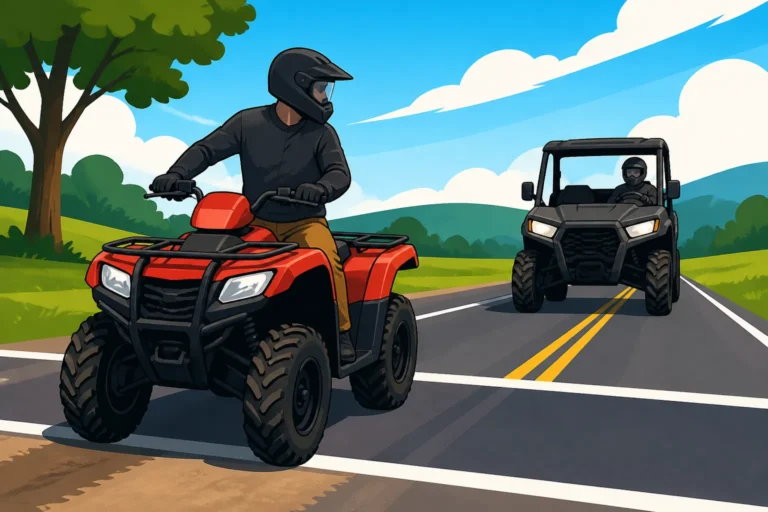
This is where things can get particularly tricky in Alabama. While ATVs and UTVs are generally not street legal in the state, there are very limited circumstances where they might briefly interact with public roads, such as a quick crossing to access another part of your property or a designated trail. It's vital to understand that this limited interaction does not suddenly make your off-road machine a road-legal vehicle. In fact, most standard ATVs and UTVs lack the necessary safety features to meet the federal motor vehicle safety standards (FMVSS) required for street legality. For a deeper dive into the overall regulations, you might want to read [Alabama ATV Road Rules Explained].
If you are crossing a public road, even for a short distance, having functional headlights and taillights is absolutely imperative. Visibility during these brief moments is critical to avoid collisions with cars, trucks, or other vehicles on the road. Many jurisdictions might expect you to have at least the basic factory lighting to be seen. However, it's a fine line: adding an array of bright aftermarket lights won't magically make your machine street legal, and in some cases, improperly aimed, excessively bright lights could even draw unwanted attention or create a hazard for oncoming traffic. The core issue of whether you can legally ride on the road isn't solved by lights alone. The best advice is to minimize road interactions and ensure that if you absolutely must [Crossing a Road on an ATV in Alabama], your machine's existing lights are in perfect working order.
Upgrading Your Machine's Lighting for Better Safety and Visibility
Once you've experienced night riding with stock headlights, you quickly realize their limitations. Upgrading your lighting isn't just about adding more bling; it's a critical safety enhancement that transforms your night riding experience, allowing you to see further, wider, and with greater clarity. It empowers you to navigate challenging trails with confidence, avoid unexpected hazards, and extend your riding hours long after the sun has set.
Types of Aftermarket Lights
The world of aftermarket off-road lighting is vast and innovative, offering solutions far beyond what factory setups provide. These upgrades can drastically improve your vision and visibility.
- LED Light Bars: These are perhaps the most popular upgrade. LED light bars come in various lengths, from short 6-inch bars to massive 50-inch arrays, and offer incredible brightness while being energy-efficient. They can be mounted on your bumper, roof, or A-pillars, providing a broad spread of light (flood pattern), a focused beam for distance (spot pattern), or a combination of both. A good quality light bar from a brand like SuperATV can cut through the darkest Alabama woods, illuminating obstacles far down the trail and across a wide path.
- Pod Lights (Cubes): These smaller, square or round LED lights are versatile. They're excellent for filling in dark spots that a light bar might miss, acting as ditch lights, backup lights, or even rock lights mounted under your machine to illuminate the terrain directly beneath you for technical crawling. Their compact size makes them easy to mount in tight spaces.
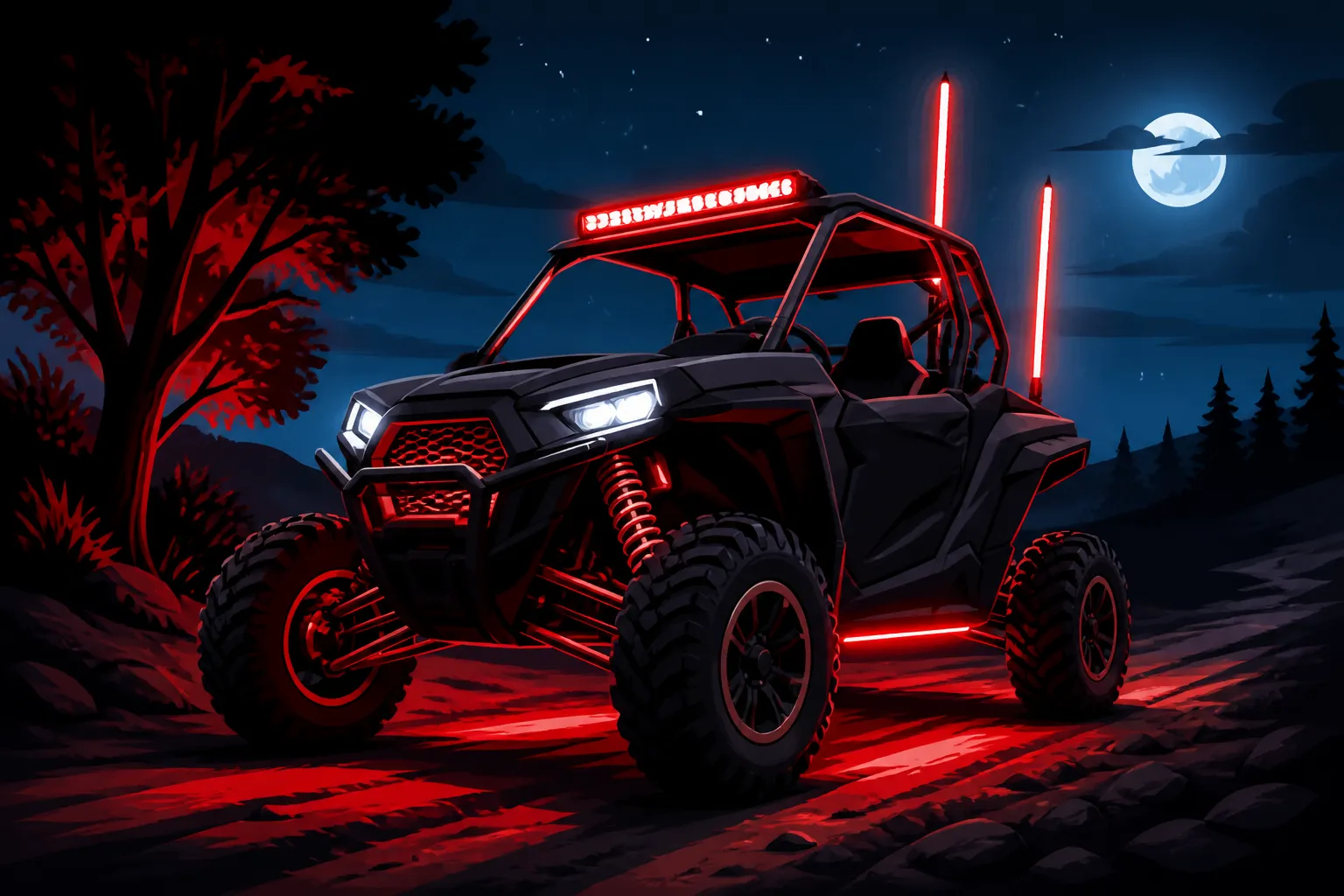
- Whip Lights: While not primarily for illuminating the trail ahead, whip lights are fantastic for making your machine visible to others, especially in dusty conditions or hilly terrain where you might disappear from view temporarily. These tall, flexible, often colorful LED whips stand high above your machine, signaling your presence to other riders and increasing overall safety in group settings.
- Rock Lights: As the name suggests, these small, durable LED lights are typically mounted in the wheel wells or along the frame. They cast light directly onto the ground around and under your machine, which is invaluable for technical rock crawling or navigating extremely uneven terrain at slow speeds. They allow you to see exactly where your tires are going and what obstacles they're about to encounter.
- Work Lights: These are typically flood-pattern lights, often mounted to a roll cage or rear bumper, designed to illuminate a specific area for tasks like loading gear, making trailside repairs, or setting up camp after dark.
Each type of light serves a unique purpose, and often, a combination of these will provide the most comprehensive lighting solution for your specific riding needs.
Installation Considerations and Best Practices
Adding aftermarket lighting isn't just about bolting it on; proper installation is crucial for performance, reliability, and safety. Cutting corners here can lead to electrical issues, damaged components, or even fire.
- Wiring Harnesses and Fuses: Always use a dedicated wiring harness that includes a relay and an appropriately sized fuse. This protects your machine's electrical system from overloads and short circuits. Never tap directly into existing wiring without understanding the load capacity. A quality harness from SuperATV will come with everything you need and clear instructions.
- Battery Draw and Alternator Capacity: High-power LED lights can draw significant current, especially if you're running multiple accessories. Ensure your machine's charging system (battery and stator/alternator) can handle the additional load. For some older machines or extensive setups, you might need to consider a heavy-duty battery or even an upgraded charging system to prevent your battery from draining prematurely.
- Mounting Locations: Choose mounting locations that offer maximum light output without obstructing your view or being excessively vulnerable to damage from impacts or low-hanging branches. Roof mounts provide a wide, unobstructed beam, while bumper mounts illuminate closer terrain. A-pillar mounts are great for "ditch lights" that spread light to the sides. Always ensure mounts are secure and vibration-resistant.
- Aiming Lights: Proper aiming is critical. While a light bar provides massive illumination, if it's aimed too high, it can blind oncoming riders or even reflect intensely off dust or fog, hindering your own vision. Aim them to provide maximum usable light on the trail without pointing skyward or directly into the path of others. Experiment in a safe, open area at night to find the optimal angle.
- Switches: Use marine-grade, weather-sealed switches, ideally with illumination, to control your aftermarket lights. Mount them in an easily accessible but protected location on your dash or console.
Additional Visibility Accessories
Beyond active lighting, there are other accessories that can significantly boost your visibility and safety when riding at night in Alabama.
- Reflective Tape: Applying high-quality reflective tape to strategic locations on your machine (e.g., roll cage, bumpers, fenders) or even your helmet can make you much more visible to others, especially if your active lights temporarily fail or if another rider's lights catch your reflection. This simple, inexpensive addition can be a lifesaver.
- Headlamps for Riders: It's always a good idea for every rider to carry a personal headlamp. If you need to dismount for a trailside repair, check a map, or navigate off your machine for any reason, a headlamp frees up your hands and provides immediate, portable light. It's an essential item for any night rider's kit.
- Mirrors: While not directly lighting, good mirrors allow you to see what's behind you, which is crucial for safety in any riding condition, but especially at night when visual cues are limited. Knowing if another rider is approaching or if your trailer is tracking correctly can prevent incidents.
By strategically upgrading your lighting and adding these visibility accessories, you transform your night riding capabilities, making it a safer, more enjoyable, and less stressful experience on Alabama's diverse terrain.
Legal Ramifications of Inadequate Lighting in Alabama
While the primary concern for most riders is personal safety, neglecting proper lighting for night operation in Alabama can also lead to unwelcome legal and financial consequences. It's not just about avoiding a crash; it's about avoiding fines, liability issues, and potentially impacting your insurance claims.
Potential Citations and Penalties
Operating an ATV or UTV on public lands or designated trails in Alabama after dark without functional or adequate lighting can result in a citation. While the state's off-road vehicle statute may not detail every single lumen, local law enforcement, park rangers, or deputies have the authority to enforce safe operating practices. If your machine is deemed unsafe for night operation due to insufficient lighting, you could face fines. These penalties, while perhaps not as severe as those for major traffic violations, can still be a significant hassle and expense.
Imagine you're enjoying a late ride, and a deputy pulls you over for an equipment check. If your lights are out or barely visible, especially if you're in an area with a history of incidents, they may issue a warning or a ticket. This isn't just a theoretical possibility; deputies patrolling parks and designated public riding areas often conduct these checks to ensure compliance and safety. For a broader understanding of what might constitute a violation, you can look at the general category of [Alabama Penalties for Illegal Road Riding], as the spirit of enforcement around safety equipment often carries over to public off-road use. The point is, taking your chances with dim or non-existent lights after dark could mean more than just a bad ride – it could mean a costly citation.
Accident Liability
This is arguably the most significant legal risk associated with inadequate lighting. If you're involved in an accident while riding at night without proper illumination, even if you believe the other party was at fault, your lack of sufficient lighting could be used against you. Alabama operates under a "contributory negligence" doctrine in some contexts, meaning that if you are found to have contributed any degree to an accident, you may be barred from recovering damages. While this is a complex legal area and not always applied strictly in every instance, it highlights the potential for serious legal challenges.
For example, if you collide with another rider on a trail, or even a piece of farm equipment on a private road, and your machine's lights were either off, extremely dim, or poorly aimed, the argument could be made that you weren't sufficiently visible, thus contributing to the accident. This could shift a significant portion of the blame onto you, even if the other party also made mistakes. The ability to demonstrate that you made every reasonable effort to be seen and to see your surroundings, including having robust lighting, can be a critical factor in determining liability in court. This could lead to lawsuits, substantial personal injury claims, and significant financial burdens.
Insurance Implications
The aftermath of an accident often involves filing an insurance claim. If you've been riding at night with inadequate lighting, your insurance company might scrutinize the circumstances more closely. While a lack of specific lighting "requirements" might not automatically void your policy, it could complicate your claim or even lead to a reduction in payouts. Insurers look for negligence, and if it can be argued that your machine was not safely equipped for the conditions (i.e., riding at night without proper lights), they might argue that you were operating negligently.
For instance, if you have a comprehensive policy that covers theft or damage from an accident, and the incident occurred at night with minimal lighting, the claims adjuster might question whether you took reasonable precautions. While the details depend heavily on your specific policy and the incident, it's not unheard of for insurance companies to factor in operational safety when assessing claims. Therefore, investing in proper lighting isn't just about protecting yourself physically; it's also about protecting your financial interests in the event of an unfortunate incident. For related information, you might find articles like [Alabama Insurance for a Road-Legal Machine] or [Insuring a Machine With No Title] useful, as they touch on the broader landscape of ATV/UTV insurance.
| Lighting Type | Primary Use | Pros | Cons | Best for |
|---|---|---|---|---|
| Factory Headlights | Basic forward illumination | Standard on all machines, meets minimums | Often dim, narrow beam, limited visibility | Mild conditions, very slow speeds, clear nights |
| LED Light Bars | Wide, powerful forward illumination | Extremely bright, various beam patterns | Can be expensive, high power draw (some units) | Fast trail riding, open areas, deep woods |
| Pod Lights (Cubes) | Spot illumination, ditch/work lights | Versatile, compact, focused light | Smaller beam, less overall coverage than bars | Filling gaps, specific task lighting, rock crawling |
| Whip Lights | 360-degree visibility for other riders | Highly visible, can be colorful | No forward illumination, can get caught on branches | Group rides, dusty conditions, making your presence known |
| Rock Lights | Illumination directly under machine | Crucial for technical terrain, precise | No forward visibility, specific mounting | Slow, technical crawling, extreme obstacle navigation |
| Reflective Tape | Passive visibility for other riders | Inexpensive, always on, no power needed | Only visible when hit by other light sources | Supplemental safety, emergency visibility |
Disclaimer
This article is for general informational purposes only and does not constitute professional advice. Laws, prices and regulations vary by location and change over time. Consult a qualified professional for guidance on your specific situation.