Eye Protection Worth Wearing on Red Clay
Riding ATVs and UTVs across Alabama's beautiful, diverse terrain is an incredible experience, but anyone who's spent more than five minutes on a trail knows the brutal reality: that iconic red clay doesn't just stick to your tires, it kicks up in a relentless, gritty cloud that can quickly turn a fun ride into a blinding, dangerous ordeal. This guide is all about protecting your most precious sense – your vision – from the unique challenges of our state's signature red dirt, helping you understand why robust eye protection isn't just a good idea, but an absolute necessity for every ride.
The Unique Challenges of Alabama's Red Clay for Riders' Eyes
Let's be real, Alabama's red clay is gorgeous in pictures, especially after a fresh rain. But when you're out there on the trails, carving through it with your quad or side-by-side, that very same beauty becomes a major hazard for your eyes. It's not like riding on fine sand or dark loam; red clay has a particular density and staining quality that creates some distinct problems that riders often underestimate until they're literally blinded. The frustrations are real, from trying to wipe smeared goggles to dealing with embedded grit, and it can seriously dampen your enjoyment, not to mention your safety.
How Red Clay Impacts Visibility and Eye Safety
The biggest issue with Alabama's red clay, beyond its sheer abrasive nature, is how it affects visibility. When dry, it pulverizes into an incredibly fine, almost talc-like dust that hangs in the air, especially in a group ride. You might think a simple pair of sunglasses will do the trick, but that dust finds its way around and under, irritating your eyes and clouding your vision. When it's wet, or even just damp, that clay transforms into a thick, sticky mud that splashes with surprising force. A splash of wet red clay isn't just a temporary inconvenience; it can completely obscure your vision in an instant, and once it dries on your lens, it's incredibly difficult to remove without smearing, often requiring a full stop and meticulous cleaning.
Beyond just obscuring your vision, those tiny particles of red clay can also cause physical damage to your eyes. Imagine riding at speed, and a small pebble or a gritty chunk of clay hits your unprotected eye. It’s not just painful; it can cause scratches, irritation, or even more serious injury. Even the prolonged exposure to fine dust can lead to chronic dryness and discomfort, especially if you're out on a long ride on a dry, windy day. We often talk about [Alabama Red Clay and What It Does] to our machines, but it does just as much to our eyes if we're not careful.
The Grit and Grind: Why Standard Eyewear Falls Short
Many riders start out with a pair of cheap safety glasses or even regular sunglasses, thinking they're good enough. But experience quickly teaches you otherwise, especially here in Alabama. Those flimsy glasses often don't seal properly around your eyes, allowing dust, grit, and even small bugs to sneak in. They fog up easily with exertion, leaving you peering through a cloudy film. And when wet clay hits them, it smears instantly, leaving streaks that are harder to see through than the mud itself. The problem isn't just about blocking what's coming at you; it's about maintaining clear, consistent vision throughout your ride, regardless of how much the trail throws at you.
Furthermore, standard eyewear usually lacks the impact resistance needed for off-road riding. Branches, rocks, and other debris can be kicked up by your own tires or those of riders in front of you. A cracked or shattered lens from insufficient eyewear could lead to serious eye injury, not just a ruined ride. This isn't just about comfort; it's about preventing a trip to the emergency room. Investing in purpose-built eye protection is a non-negotiable step for anyone serious about enjoying Alabama's trails safely.
Essential Types of Eye Protection for Alabama ATV Riders
When you're gearing up for a ride on Alabama's trails, especially with that notorious red clay, the right eye protection isn't just a suggestion—it's paramount. You need gear that stands up to the elements, provides clear vision, and most importantly, protects your precious eyesight. There's a reason why seasoned riders swear by specific types of eyewear, and it's because they've learned the hard way what works and what doesn't.
Goggles: Your First Line of Defense
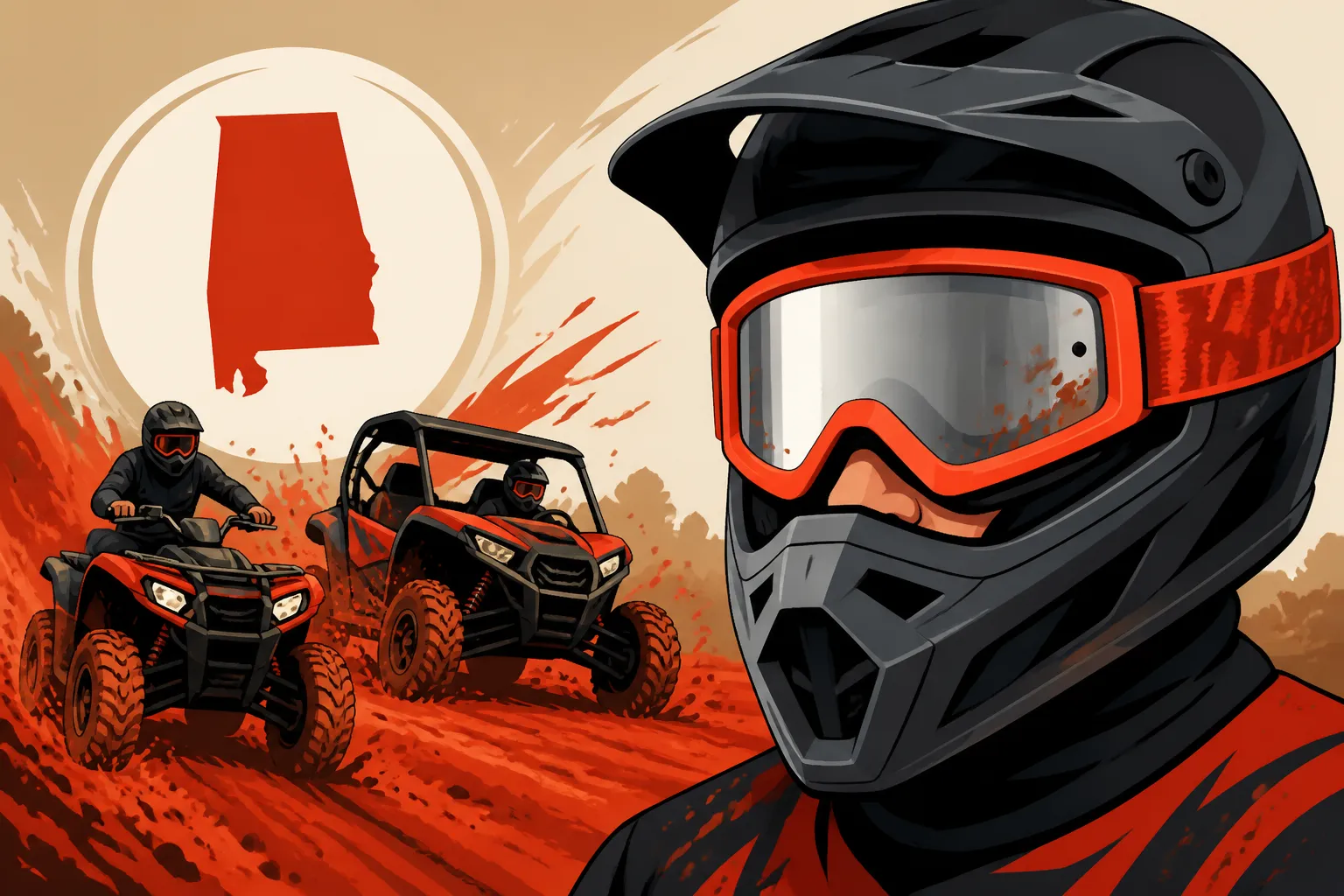
For most ATV and UTV riders, a good pair of off-road riding goggles is the absolute gold standard for eye protection. They offer a comprehensive seal around your eyes, preventing even the finest red clay dust from sneaking in. This tight seal is crucial, especially when you're following another rider on a dry trail, where the dust clouds can be incredibly thick. Goggles also excel at protecting against mud splashes, branches, and airborne debris. Think about that moment when you hit a deep mud puddle after [Alabama Riding After Heavy Rain] – without goggles, you'd be seeing red, literally, for a while.
Modern riding goggles come with a host of features designed specifically for the demands of off-road riding. Many feature anti-fog coatings to keep your vision clear even when you're working up a sweat. They often have multiple layers of foam padding for a comfortable fit that also helps absorb sweat and keep dust out. And perhaps most importantly, their lenses are typically made from durable, impact-resistant polycarbonate, offering superior protection against impacts that might shatter regular glasses. Brands like SuperATV offer a range of goggles designed with these features in mind, ensuring you get the robust protection you need.
Helmets with Visors: An Integrated Solution
While goggles provide dedicated eye coverage, many riders opt for a full-face helmet that includes an integrated visor. These helmets offer an all-in-one solution, protecting not only your eyes but also your entire face and head. The visor acts as a shield against wind, dust, and debris, and often offers a wider field of view compared to some goggle setups. For UTV riders, especially those in a cab, a helmet with a visor might feel more comfortable and less restrictive than goggles.
However, it's important to note that not all helmet visors are created equal, especially when it comes to the relentless onslaught of red clay. While they offer good protection from direct frontal impacts and wind, fine dust can still get underneath or around the edges of some visors. Fogging can also be a more pronounced issue with visors, especially on humid days or during intense exertion, as the enclosed space can trap moisture. Some visors come with anti-fog treatments or pinlock inserts, which can significantly mitigate this problem. If you choose a helmet with a visor, make sure it’s specifically designed for off-road use and offers excellent sealing and ventilation. Even if [Alabama Helmet Rules on Private Land] might be relaxed, your safety shouldn't be.
Eyewear for Specific Conditions (Dust, Glare, Rain)
Beyond your primary eye protection, considering specific conditions can further enhance your riding experience and safety.
For dusty conditions, which are all too common in Alabama's dry spells, a tear-off or roll-off system on your goggles can be a game-changer. These systems allow you to quickly peel away a dirty outer layer or advance a clean film across your lens, instantly restoring clear vision without stopping. It’s an invaluable feature when you’re riding in a group and constantly battling the dust cloud.
For glare, especially when riding through open fields or on bright sunny days, polarized or tinted lenses can reduce eye strain and improve contrast, helping you spot trail hazards more easily. Different lens tints are designed for different light conditions, from clear for low light or night riding to dark tints for bright sun.
And for rainy or muddy rides, water-repellent coatings can help shed water and mud more effectively, keeping your vision clearer. While a basic pair of goggles or a helmet visor is a great start, a little customization for the conditions you most frequently encounter can make a significant difference in your comfort and safety.
Choosing the Right Features for Your Eye Protection
Selecting the perfect eye protection isn't just about picking the first pair of goggles you see. It's about understanding the specific features that will serve you best on Alabama's trails, especially given the challenges of our red clay. Getting this right means the difference between a ride where you're constantly squinting and wiping, and one where your vision is consistently clear, allowing you to focus on the trail ahead.
Lens Tints and Coatings for Varying Light
The right lens tint can dramatically improve your visibility and comfort. Think about how often the light changes on an Alabama trail—from dappled sunlight under a canopy of trees to wide-open fields, then possibly into an overcast afternoon. A single clear lens won't cut it for every scenario.
- Clear lenses are your go-to for low-light conditions, riding after dark, or heavily overcast days. They offer maximum light transmission and are essential when visibility is already naturally reduced. If you find yourself frequently riding into the evening, especially if you're venturing out on a deer camp machine, a clear lens is a must.
- Grey or smoke tints are excellent for bright, sunny days, reducing glare and eye strain without distorting colors too much. They're like sunglasses for your goggles.
- Amber or rose tints are fantastic for enhancing contrast in flat light, hazy conditions, or when riding in wooded areas where shadows can play tricks on your eyes. They make obstacles pop more clearly against the often monotonous greens and browns of the trail.
- Mirrored or iridium coatings not only look cool but also provide an extra layer of glare reduction, reflecting harsh light away from your eyes. They can be a good choice for extremely bright conditions.
Many riders invest in multiple lenses that can be swapped out quickly to match the day's conditions. Some goggles, including those from brands like SuperATV, make lens replacement a straightforward process, letting you adapt on the fly. Don't forget coatings like anti-fog and scratch-resistant treatments, which are crucial for maintaining clarity and durability in the gritty environment of [Alabama Red Clay and What It Does].
Fit, Comfort, and Ventilation: Beyond the Lens
Even the best lens won't do you any good if your eye protection is uncomfortable or constantly fogs up. Fit is paramount. Goggles should sit snugly but comfortably on your face, creating a seal that keeps dust out without pinching or causing pressure points. Look for multi-layer foam padding, which not only cushions your face but also wicks away sweat and prevents fine particles from creeping in. The strap should be adjustable and ideally have silicone grippers to keep it securely in place on your helmet, even over rough terrain.
Ventilation is another critical factor, especially with Alabama's humidity. Poorly ventilated goggles will fog up rapidly, leaving you effectively blind. Look for goggles with ample vents that allow air to circulate without letting dust and debris in. Some designs incorporate small, filtered vents to achieve this balance. When choosing [Choosing a Helmet When Alabama Does Not Require One], remember that good ventilation is key for eye protection integration, too. Consider how your goggles will integrate with your helmet—there should be no significant gaps, and they should fit comfortably within the helmet's eyeport without being squished.
Maintenance and Care for Longevity
Taking care of your eye protection is just as important as choosing it in the first place. Red clay, mud, and dust are abrasive, and improper cleaning can quickly scratch lenses, reducing their effectiveness and lifespan. Always rinse off heavy mud and grit with clean water before wiping. Use a soft, microfiber cloth specifically designed for optics, and never use harsh chemicals or paper towels, which can scratch delicate coatings. Allow your goggles to air dry completely after cleaning, especially the foam, to prevent mildew and odor.
Regularly inspect your goggles for any signs of wear, such as stretched straps, deteriorating foam, or scratched lenses. Replacing a scratched lens is often far more cost-effective than buying a whole new pair of goggles and ensures you maintain optimal vision. For tear-off systems, always carry a fresh stack, and check your roll-off film before each ride. Proper care not only extends the life of your gear but, more importantly, ensures that your eye protection is always ready to perform when you need it most, keeping your vision clear and safe on every Alabama adventure.
Comparing Eye Protection Options
To help you decide which option is best for your riding style and the specific conditions you face on Alabama's red clay trails, here's a quick comparison of the common types of eye protection:
| Feature/Consideration | Off-Road Goggles | Full-Face Helmet with Visor | Standard Safety Glasses / Sunglasses |
|---|---|---|---|
| Primary Use | Dedicated off-road riding, aggressive trails | Integrated head and face protection, versatile riding | Casual riding, light dust, limited protection |
| Red Clay Protection | Excellent seal against dust/mud, impact resistant | Good frontal protection, potential for dust ingress | Poor seal, minimal dust/mud protection, easily smeared |
| Fog Resistance | Often feature anti-fog coatings/vents | Variable, may require pinlock inserts or coatings | Prone to fogging, especially with exertion |
| Lens Options | Wide range of interchangeable tints, tear-offs/roll-offs | Limited interchangeability, less accessory support | Limited options, usually fixed tint |
| Impact Protection | High, impact-resistant polycarbonate lenses | High, integrated into helmet structure | Low, less impact resistant |
| Comfort/Fit | Adjustable strap, multi-layer face foam | Depends on helmet fit, internal padding | Variable, often gaps around eyes |
| Ventilation | Designed for airflow | Integrated into helmet design | Poor |
| Cost | Moderate to High | Moderate to High (as part of helmet) | Low |
| Internal Link Example | [Alabama Riding Season Month by Month] | [Alabama Park Rules for Helmets] | [Alabama Rules for a Child Passenger] |
Choosing the right eye protection is a personal decision, but for the rugged, unpredictable nature of Alabama's off-road riding, always prioritize safety and clear vision. Consider taking an [Alabama ATV Safety Course Options] to learn more about comprehensive riding safety. The minimal investment in quality gear like goggles or a proper helmet with a good visor far outweighs the risks of an eye injury or a ruined ride. Stay safe out there, and enjoy those trails!
Disclaimer
This article is for general informational purposes only and does not constitute professional advice. Laws, prices and regulations vary by location and change over time. Consult a qualified professional for guidance on your specific situation.