Alcohol on a Hunting Trip
There's nothing quite like the camaraderie of a hunting trip in Alabama, especially when you're gathered around a campfire after a long day in the woods, swapping stories and planning for tomorrow's hunt. For many, that tradition might include a cold beverage or two. However, when those good times involve your ATV or UTV, things can get complicated, and fast. The lines between enjoying your private land, navigating public hunting areas, and operating a powerful machine can blur, leading to serious legal trouble and dangerous situations. This guide aims to clear up the confusion surrounding alcohol consumption while operating ATVs and UTVs on hunting trips in Alabama, helping you stay safe, legal, and focused on the hunt.
The Risky Combination: Alcohol, ATVs, and Alabama Hunting
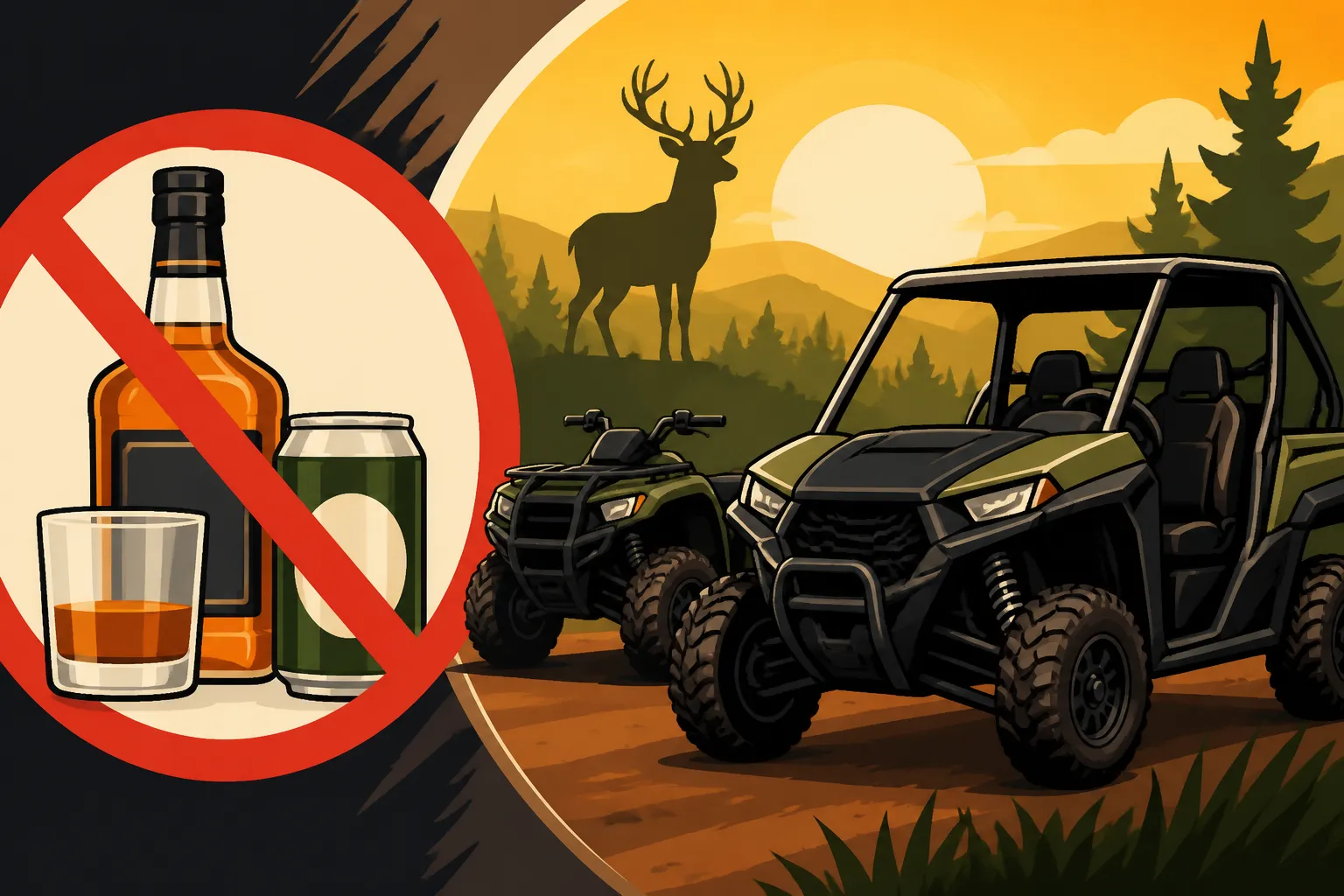
It's a scene as old as hunting itself: friends and family heading to a deer camp, setting up for a weekend of chasing game, and unwinding in the evenings. For many, this includes adult beverages. The problem arises when the activities overlap, specifically when alcohol is consumed before or during the operation of an ATV or UTV, whether for scouting, retrieving game, or just moving around camp. Many riders assume that because they're "off-road" or on private property, the rules about impaired driving don't apply. This simply isn't true in Alabama, and it's a dangerous misconception that can ruin a hunting trip, or worse.
Imagine you've just celebrated a successful hunt with a few beers back at camp. Now, it's time to retrieve your prize, and your trusty side-by-side is the perfect tool for the job. You hop on, feeling confident, perhaps a little giddy from the hunt and the celebration. But your reaction time is subtly dulled, your judgment isn't as sharp, and that familiar trail suddenly seems a bit more challenging. This isn't just a hypothetical; it's how many accidents happen. The powerful nature of these machines, combined with uneven terrain, can make even a small amount of alcohol a significant hazard. The consequences can range from damaging your machine or your SuperATV accessories to serious injury for yourself or your passengers.
It's not just about what's illegal; it's about what's safe. Hunting itself requires focus, keen senses, and quick decision-making, whether you're stalking a buck or navigating dense timber. Introducing alcohol into that equation while operating heavy machinery just doesn't make sense from a safety perspective. Even if you feel fine, your body's ability to react to an unexpected ditch, a sudden animal crossing your path, or a slick patch of mud is compromised.
Alabama's DUI Laws and Off-Road Machines: Beyond the Pavement
One of the biggest misconceptions riders have in Alabama is that "DUI" only applies to cars on paved roads. This couldn't be further from the truth. Alabama's impaired driving laws, often referred to as DUI (Driving Under the Influence), are quite broad and explicitly extend to many types of vehicles, including ATVs and UTVs. This means that if you operate your quad or side-by-side while impaired by alcohol or drugs, you can face the same severe penalties as someone driving a car on a highway. The specific statute defines "vehicle" in a way that includes most off-road machines, closing what many assume to be a loophole. This is critically important information for anyone planning a hunting trip, as even on private land, you're not immune from these laws.
When we talk about [Alabama DUI Law and Off-Road Machines], it's vital to understand the scope. You might be deep in the woods on your hunting lease, miles from the nearest paved road, or simply driving your UTV from one deer stand to another on your own property. If an incident occurs—perhaps an accident, or if law enforcement is called to the property for another reason—and you are found to be impaired while operating your machine, you can be charged. This isn't some obscure law; it's a direct application of existing statutes designed to prevent impaired operation of any motor vehicle that poses a risk. This comprehensive approach means that the fun and freedom of off-road riding don't come with an exemption from responsible operation.
Furthermore, Alabama also has laws regarding Boating Under the Influence (BUI), which can apply to certain amphibious or specialized vehicles if they are operating on navigable waters. While less common for typical ATVs and UTVs, it underscores the state's commitment to preventing impaired operation across various modes of transportation. The bottom line is that impairment, regardless of the vehicle type or location, is taken seriously. Ignorance of the law is never a valid defense, and the repercussions of an ATV or UTV DUI can be life-altering, affecting your driving privileges, financial stability, and even your freedom.
Public vs. Private Land: Where Do the Rules Apply?
Many ATV and UTV enthusiasts believe that if they are on private land, particularly their own property or a leased hunting tract, the state's laws regarding alcohol and vehicle operation don't apply. This is a common and dangerous assumption. While riding on your own land offers more freedom than public trails, it does not grant immunity from Alabama's DUI laws or other public safety regulations. If you are operating a motor vehicle—which an ATV or UTV certainly is—while impaired, you can still face charges, especially if an accident occurs, or if local law enforcement is called to the property for any reason.
Consider a scenario on a hunting club lease: After a successful morning hunt, members gather for lunch, and a few celebratory beers are consumed. Later, one member decides to drive their UTV to check a game camera down a remote trail on the leased property. If they have an accident and local authorities respond, or if another club member reports impaired operation, that individual could absolutely face [Alabama Impaired Riding Rules] consequences. The fact that it's private land doesn't nullify the law. The legal principle is generally that if the property is accessible to the public, or if law enforcement can access it in the course of their duties, the laws apply. Even if it's strictly private, an accident causing injury could lead to charges.
For those riding on public lands, such as designated trails within national forests or state-run parks, the rules are even clearer. These areas are under direct state and often federal jurisdiction, and all laws, including DUI statutes, are strictly enforced. [Alabama Public Use Designated Areas] often have explicit rules posted regarding alcohol consumption and vehicle operation. Similarly, if you're riding on a Wildlife Management Area (WMA), you'll find very specific regulations. [Alabama WMA Riding Rules] are usually quite strict, focusing on safety, wildlife protection, and responsible recreation. Alcohol consumption while operating a machine would almost certainly lead to citations, and possibly the loss of your hunting and WMA privileges.
Here's a quick overview of how Alabama's DUI laws generally apply:
| Location Type | DUI Laws Apply? | Common Scenarios | Potential Consequences |
|---|---|---|---|
| Public Roads/Highways | Yes, unequivocally | Crossing a road, riding on a shoulder | Full DUI penalties, vehicle impoundment |
| Designated Public OHV Areas | Yes, unequivocally | Riding trails at Stony Lonesome OHV Park | DUI, park expulsion, fines |
| Wildlife Management Areas | Yes, unequivocally | Scouting or retrieving game in a WMA | DUI, loss of hunting/WMA privileges, fines |
| Private Land (Leased/Owned) | Yes, generally | Moving between deer stands, joyriding on property | DUI (especially if accident/incident occurs), civil liability |
| Forest Service Roads (Open to Public) | Yes, unequivocally | Accessing a hunting spot on federal land | DUI, federal penalties, fines |
Remember, the goal of these laws isn't to prevent you from having a good time, but to ensure everyone's safety. A hunting trip should be memorable for the right reasons, not for a preventable accident or a costly legal battle.
Responsible Recreation: Planning Your Hunting Trip Safely
Given the risks and legal implications, responsible recreation is paramount when planning a hunting trip that involves both ATVs/UTVs and alcohol. The best approach is to separate the activities entirely. If you plan to consume alcohol, designate a sober operator for your ATV or UTV, or simply park the machine for the night. Think of it like a designated driver, but for your off-road machine. This simple act can prevent accidents, injuries, and serious legal trouble. You might even consider upgrading your machine's utility features with reliable components from a brand like SuperATV to make it more efficient for game retrieval, reducing the temptation to rush or take risks.
When you're out in the field, particularly on public lands or WMAs, it's a good idea to focus purely on the hunt and the safe operation of your vehicle. Keep your mind clear for [Alabama Rules for Riding to a Deer Stand] or navigating unfamiliar terrain. [Alabama Game Retrieval by Machine] needs your full attention, especially if you're traversing rough ground with a heavy load. It's not just about avoiding a DUI; it's about minimizing the chances of any incident that could spoil your trip. A small mistake, easily made when judgment is clouded, can lead to a machine rollover, getting stuck, or even a fall that results in serious injury in a remote location.
For hunting clubs or groups that traditionally enjoy adult beverages, establishing clear rules beforehand can save a lot of headaches. This might include a policy that once alcohol is consumed, all ATVs and UTVs are parked until the next morning, or that only designated, sober operators handle the machines. For landowners or those with [Alabama Landowner Permission Forms], clearly communicating these expectations to guests can prevent misunderstandings. Preparing your machine with proper lighting from SuperATV for twilight or night operations, or ensuring you have all the necessary recovery gear, should always be done with a clear head.
Finally, remember that your hunting license and any specific WMA permits you possess ([Alabama WMA Permits for Riders]) come with responsibilities. Operating an ATV or UTV while impaired could lead to these privileges being revoked, impacting your ability to enjoy future hunting seasons. Consider taking a voluntary ATV safety course, which can reinforce good riding habits and highlight the dangers of impaired operation. Ultimately, making a conscious decision to separate alcohol consumption from ATV/UTV operation on your hunting trip is the smartest and safest choice for everyone involved.
Disclaimer
This article is for general informational purposes only and does not constitute professional advice. Laws, prices and regulations vary by location and change over time. Consult a qualified professional for guidance on your specific situation.