Can You Drive an ATV on the Road in Alabama?
Oh, the age-old question that every ATV and UTV owner in Alabama grapples with! You've got this awesome machine, perfect for tearing up the trails or getting work done on your land, and sometimes, just sometimes, you wish you could zip down the county road to a neighbor's house or to the local store. It's a common desire, and the frustration of feeling like your versatile vehicle is confined can be real. This guide is here to clear up the confusion, lay out the facts, and explain exactly where you can (and, more importantly, can't) legally drive your ATV or UTV on the roads in our beautiful state.
The Short Answer: Generally No, But With Nuances
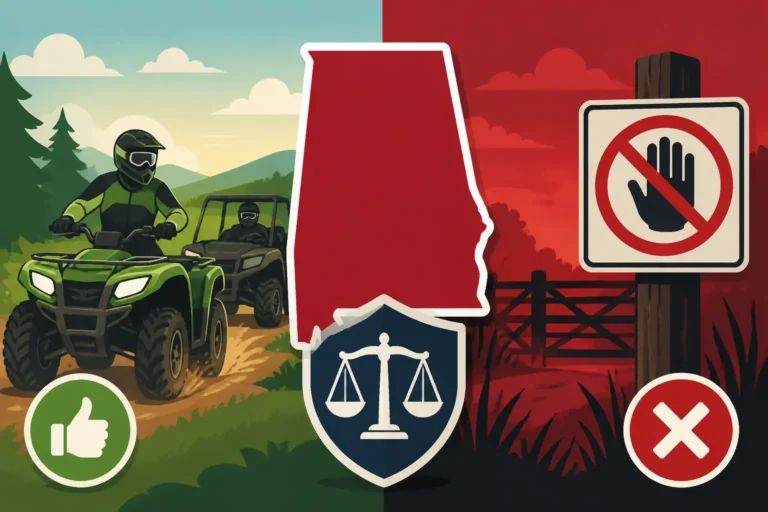
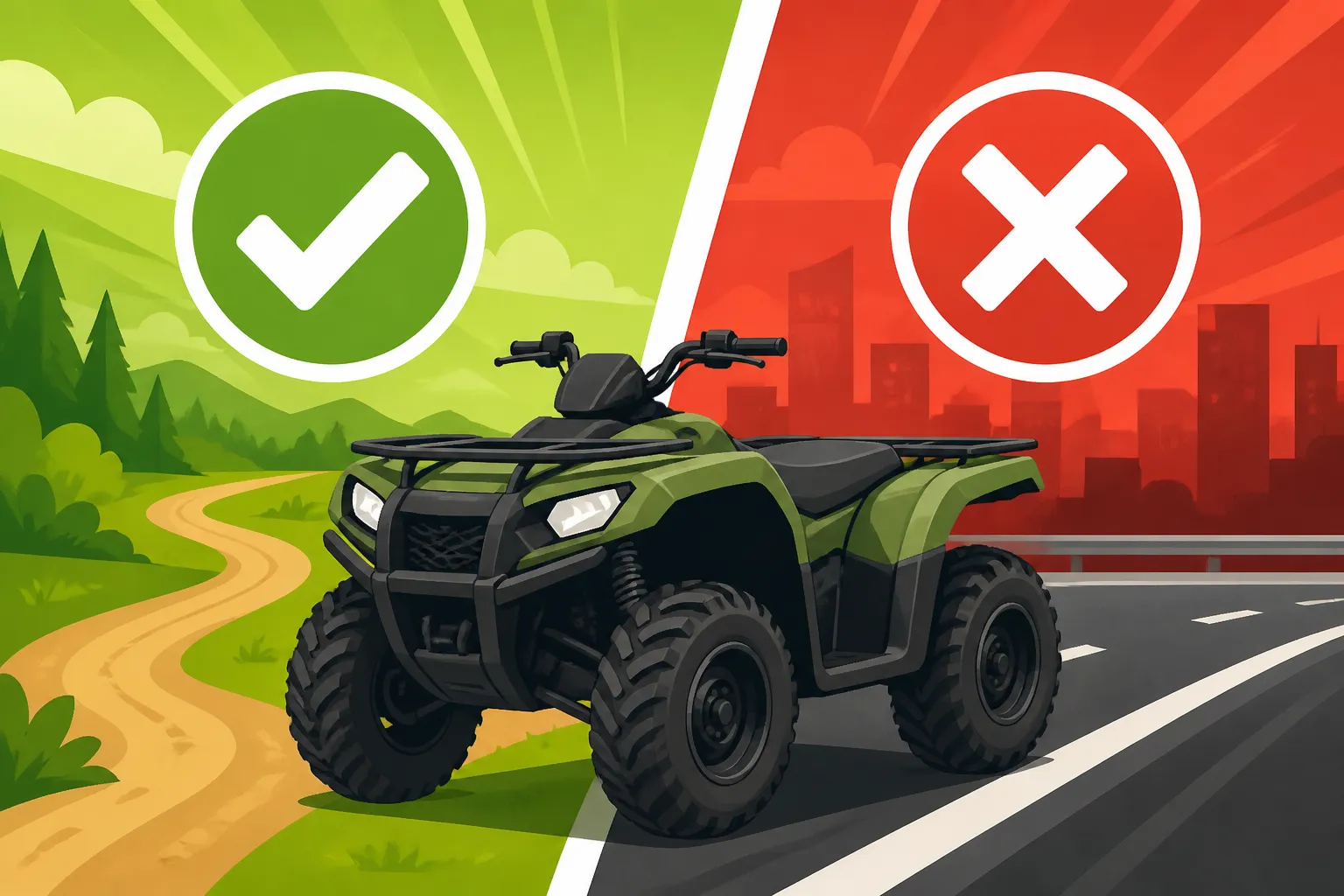
Let's cut right to the chase, because I know you're eager for a clear answer: as a general rule, no, you cannot legally drive your ATV or UTV on public roads in Alabama. I know, I know, it's not the answer many of us want to hear, especially when you see folks driving golf carts around town or hear whispers about "farm use." But the law makes some pretty clear distinctions that we need to understand to stay safe and out of trouble.
Why the Blanket "No" Exists
The main reason for this seemingly harsh stance boils down to how ATVs and UTVs are designed and classified under Alabama law, and more broadly, under federal regulations. Your quad or side-by-side is built for off-road performance: powerful engines, knobby tires, high ground clearance, and suspension systems meant to absorb bumps, not provide smooth highway travel. They're missing fundamental safety features that are mandatory for vehicles allowed on public roads, such as specific lighting requirements, certified tires, crashworthiness standards, and often, proper mirrors or turn signals.
Think about it this way: a vehicle intended for public road use has to meet stringent Federal Motor Vehicle Safety Standards (FMVSS) set by the National Highway Traffic Safety Administration (NHTSA). These standards cover everything from brake performance and headlight brightness to occupant protection in a crash. ATVs and UTVs are simply not manufactured to these standards because their intended use is off-highway. They don't have anti-lock brakes, airbags, or crumple zones designed for high-speed collisions with other road vehicles. Trying to operate one on a road meant for cars and trucks puts you, your passengers, and other motorists at significant risk. It's why manufacturers explicitly state "for off-road use only" right on the machines.
The Key Distinctions in Alabama Law
Alabama law explicitly defines an ATV as a "motor vehicle designed for off-road use, having three or more wheels, an engine, and intended for use by a single operator or a single operator and a passenger." Similarly, a UTV (often referred to as a "recreational off-highway vehicle" or ROV in the statute) is defined as a motor vehicle for off-road use with four or more wheels, a steering wheel, non-straddle seating, and other specific characteristics. The critical phrase in both definitions is "designed for off-road use." This distinction is the bedrock of why they generally can't be on the street.
Our state's statutes create a clear separation between vehicles that are "highway legal" and those that are not. Unlike cars, trucks, and even motorcycles, ATVs and UTVs don't have a Vehicle Identification Number (VIN) that certifies them as compliant with federal highway safety standards. They aren't issued traditional license plates, which are a direct indicator of meeting those standards. Instead, for those manufactured as of model year 2026, they will receive a certificate of title, and all eligible machines can apply for a voluntary off-road registration through the Alabama Law Enforcement Agency (ALEA) for either private or public use, but neither of these make the machine street legal. These records are about ownership and identification for off-road purposes, not about granting permission to drive on a paved highway. [Why Alabama Issues an Ownership Record, Not a Plate]
Specific Situations Where Road Use Might Be Permitted (or Misunderstood)
Now, while the general rule is "no roads," there are a few very specific, limited exceptions and common misunderstandings that need to be addressed. These aren't loopholes to exploit, but rather narrow circumstances where the law makes allowances.
Crossing a Road or Highway
This is perhaps the most commonly misunderstood aspect of ATV and UTV road use. Many riders believe that if they can cross a road, they can ride on it for a short distance. This is incorrect. Alabama law does allow for an ATV or UTV to cross a public road or highway, but only under very strict conditions. The primary purpose for crossing must be to get from one section of off-road property to another, and the crossing itself must be done safely and efficiently.
When you cross, you must do so as directly and perpendicularly as possible. You need to yield the right-of-way to all oncoming traffic, stop completely before entering the roadway, and ensure maximum visibility. Think of it like a pedestrian crossing the street—you wouldn't walk down the middle of the road, would you? You cross from one side to the other. There is no provision in the law that allows you to drive down the shoulder, even for a short distance, to reach a crossing point that might be more convenient or safer. It is strictly about traversing the road to continue off-road travel. Any deviation from this direct crossing, such as riding parallel to the roadway, could result in a citation. For more details on these specific rules, you might find [Crossing a Road on an ATV in Alabama] helpful.
Farm Use Exclusions
Ah, the "farm use" exemption. This is another area rife with confusion, and it’s critical to understand its precise scope. Alabama law does provide an exclusion for vehicles, including ATVs and UTVs, when they are being "used as equipment for bona fide farm use." This is not a blanket permission to drive your quad down the road if you live on a farm. The key phrase here is "bona fide farm use."
This exemption typically applies when the machine is directly engaged in farming operations—like moving feed, checking fences, hauling tools, or transporting personnel between fields on a working farm. If your machine is equipped with implements, for example, for spraying or tilling, it clearly fits the bill. The intent of the law is to allow farmers to use their necessary equipment to conduct their agricultural business without undue burden. However, if you're driving your side-by-side into town to pick up groceries, even if you live on a farm, that's generally not considered "bona fide farm use" and would likely not fall under this exclusion. Local law enforcement has discretion here, and they'll be looking to see if the activity is genuinely agricultural. It's always a good idea to ensure your machine looks like it's being used for farm work if you're relying on this exemption. For more information, check out [Alabama Farm Use and Road Riding].
Local Ordinances and Designated Areas
In some very rare instances, a specific county or municipality might pass a local ordinance that allows for limited ATV or UTV use on certain public roads. This is exceptionally uncommon for standard ATVs and UTVs, and when it does happen, it's typically for golf carts or very specific Low-Speed Vehicles (LSVs) within defined community boundaries, often for historical districts or planned communities. These ordinances are usually highly restrictive, specifying speed limits, times of day, and which roads are permissible.
It's crucial not to assume that because you heard about a town allowing golf carts on the street, your UTV is also welcome. The legal definitions and requirements for golf carts and LSVs are different from those for ATVs and UTVs. You must verify if such an ordinance exists, and more importantly, if it specifically includes ATVs and UTVs as defined by state law, not just other types of vehicles. If you're planning to rely on a local ordinance, you should contact the specific city or county clerk's office and get the details in writing. Don't rely on hearsay or what a friend of a friend told you. Ignoring this could lead to a costly ticket. For more on how local rules can vary, see [Alabama Local Ordinances on ATV Riding].
What About "Street Legal Kits" and Low-Speed Vehicles?
This is where a lot of off-road enthusiasts get hopeful, seeing all sorts of "street legal kits" advertised online. It's tempting to think that by adding a few accessories, you can transform your trail machine into a road warrior. Unfortunately, it's not that simple, and it usually won't work in Alabama.
The Federal Standard Barrier
The biggest hurdle for making an ATV or UTV street legal is the lack of Federal Motor Vehicle Safety Standards (FMVSS) compliance. These are the safety standards that all vehicles sold for highway use in the United States must meet from the factory. Think about it: headlights must meet specific brightness and beam patterns, brakes must be able to stop the vehicle within a certain distance, and the chassis must withstand crash tests. ATVs and UTVs are exempt from these standards because they are classified as off-highway vehicles.
Alabama's law reflects these federal standards. If a vehicle isn't manufactured and certified to meet FMVSS, it generally cannot be licensed or operated on public roads. The state is essentially saying, "We can't put a vehicle on our public roads that hasn't met the federal government's basic safety requirements." This is why even if you bought an ATV or UTV from SuperATV or another manufacturer and it came with some road-like features, it still wouldn't automatically qualify. [Alabama's 49 CFR 571.500 Standard] is the specific federal regulation often referenced, and it's a high bar.
Why a Kit Alone Isn't Enough
You can buy a fantastic "street legal kit" from companies like SuperATV that includes turn signals, a horn, a rearview mirror, and perhaps even a license plate bracket. These kits are often excellent quality and are designed to make your machine safer and more visible in situations where you might encounter brief road use, like crossing or very limited farm work. They can also be great for enhancing safety in private parks where you might be sharing trails with other vehicles.
However, simply adding these aftermarket parts, even top-quality ones from SuperATV, does not change the fundamental classification of your ATV or UTV. It doesn't make it suddenly compliant with FMVSS. The vehicle's original manufacturer certification is what truly matters. Unless the vehicle was manufactured from the ground up to meet LSV (Low-Speed Vehicle) standards or full highway standards (which most ATVs and UTVs are not), adding a kit won't make it legal for general road use in Alabama. It's a common misconception, and while the intention behind adding safety features is admirable, it won't allow you to cruise down Main Street without risking a ticket. For a deeper dive into why these kits don't confer legality, explore [Why a Street Legal Kit Will Not Make It Legal].
| Feature/Requirement | Standard ATV/UTV | Low-Speed Vehicle (LSV) | Golf Cart (Standard) |
|---|---|---|---|
| Intended Use | Off-road | Public roads (limited) | Recreational/Private |
| FMVSS Compliance | No | Yes (specific LSV standards) | No |
| Top Speed (approx.) | Varies, often 40-70+ mph | 20-25 mph | 15-20 mph |
| Steering | Handlebars (ATV), Steering wheel (UTV) | Steering wheel | Steering wheel |
| Seating | Straddle (ATV), Bench (UTV) | Bench or bucket | Bench |
| License Plate | No (Title/Registration Decal only) | Yes | No |
| Basic Road Legality in AL | Generally No (exceptions apply) | Yes (on roads < 35 mph) | Generally No (local ordinances vary) |
Understanding the Penalties and Risks
Riding your ATV or UTV on public roads in Alabama when not legally permitted carries significant risks, not just for your wallet but also for your safety and potential legal entanglements. It's important to be fully aware of the consequences before deciding to take a chance.
Potential Fines and Court Costs
If you're caught riding your ATV or UTV illegally on an Alabama public road, you could face a citation. The specific charges can vary, but generally, it would involve operating an unregistered vehicle (if not registered even for off-road use), operating a vehicle not equipped for highway use, or other traffic violations. These aren't just minor slaps on the wrist. Fines can be substantial, and you'll often incur additional court costs. Depending on the county and the discretion of the officer, your machine could even be impounded, leading to towing and storage fees that quickly add up.
Beyond the immediate financial hit, receiving a traffic citation could have other implications, such as points on your driver's license (if you have one) or an increase in your vehicle insurance rates for your other vehicles. It's a hassle that nobody wants, involving court dates, time off work, and significant stress. Law enforcement officers are well-versed in the laws regarding ATVs and UTVs, and they're often quite vigilant about keeping these machines off public roadways due to the safety concerns. For a comprehensive look at the legal consequences, consider reading [Alabama Penalties for Illegal Road Riding].
Insurance Implications
This is a critical area that many riders overlook. Your ATV or UTV insurance policy is typically written for off-road use. If you have an accident while operating your machine illegally on a public road, your insurance company may deny coverage for damages to your machine, medical expenses, or liability claims. Imagine getting into a collision with a car while riding your UTV on a county road. Not only could you be seriously injured, but you could also be held personally liable for the damages to the other vehicle, medical bills for its occupants, and any legal fees that arise.
An off-road policy is designed for off-road risks: rollovers on trails, impacts with trees, or collisions with other off-road vehicles. It is not designed to cover the unique and often more severe risks associated with highway travel, especially when your vehicle doesn't meet the necessary safety standards for that environment. Before you ever consider venturing onto a public road, even for a quick hop, you should absolutely confirm with your insurance provider whether such an action would be covered. More often than not, the answer will be a resounding "no," leaving you personally responsible for all costs. To understand more about what your policy might cover, refer to [Can You Insure an Alabama ATV for Road Use?].
So, while the temptation to take your ATV or UTV on Alabama's public roads can be strong, the reality is that the law generally prohibits it. With very limited exceptions for direct crossing or bona fide farm use, these machines are meant for the trails, fields, and designated off-road areas. Stick to those places, stay safe, and enjoy your ride!
Disclaimer
This article is for general informational purposes only and does not constitute professional advice. Laws, prices and regulations vary by location and change over time. Consult a qualified professional for guidance on your specific situation.