Posted Land and Purple Paint in Alabama
It’s a common scenario for ATV and UTV riders in Alabama: you’re out exploring, maybe on a rural county road or near a power line cut, and you see signs or markings that leave you scratching your head. What exactly do "No Trespassing" signs mean for off-road enthusiasts, and what's the deal with that distinctive purple paint? This guide will demystify Alabama's laws regarding posted land and the increasingly common purple paint markers, helping you understand where you can legally ride and how to avoid costly misunderstandings.
Understanding Posted Land: What "No Trespassing" Really Means
When you see a "No Trespassing" sign, it's pretty clear cut, right? For most folks, the message is simple: stay out. But for ATV and UTV riders, especially those new to exploring Alabama's vast landscapes, the nuances can sometimes be confusing. Alabama is rich with diverse terrain, from dense forests to open fields, and distinguishing between public access and private property isn't always as straightforward as a chain-link fence. The fundamental principle, however, is that all land is considered private unless it is clearly designated as public property, like a state park, national forest, or a public riding area.
The Legal Basis of Posted Land
In Alabama, property owners have the right to protect their land and privacy. When they put up "No Trespassing" signs, they're exercising that right and giving you formal notice that you are not welcome on their property. This isn't just a polite request; it carries legal weight. Ignoring these signs, even if you believe you're not causing harm or just "passing through," can lead to serious legal repercussions. It doesn't matter if there's no fence, no gate, or if the land appears unused or abandoned. If it's posted, it's off-limits. Understanding [Alabama Trespass Law for Riders] is crucial for any off-road enthusiast.
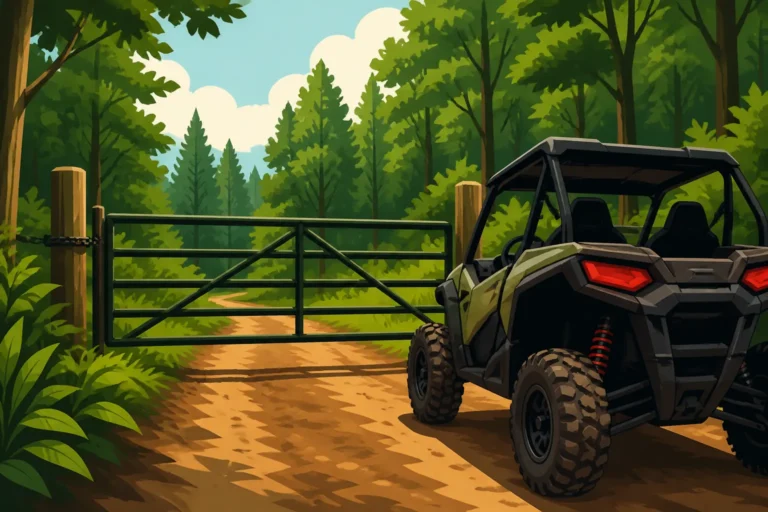
These signs serve as a clear communication from the landowner. They typically need to be visible and maintained to be effective in a legal sense, usually placed at reasonable intervals along the property boundary. The idea is to make it abundantly clear to anyone approaching the property that entry is forbidden. For off-road riders, this often means slowing down, paying close attention to your surroundings, and never assuming that an unmarked trail is a public right-of-way.
Common Misconceptions About Private Property
One of the biggest misconceptions riders have is that if land isn't fenced or has an old, overgrown logging road, it must be public access. This is simply not true in Alabama. Many landowners, especially those with large tracts of timberland or agricultural property, might not have extensive fencing, but their property remains private. Another common mistake is believing that if you can't immediately identify the owner, the land is fair game. This is a dangerous assumption that can quickly lead to trouble.
Think about a sprawling tract of land used by a local hunting club. They might not have fences everywhere, but they certainly don't want unauthorized vehicles tearing up their deer plots or disturbing wildlife. Similarly, large timber companies own vast acreage, and while they might have logging roads, these are almost universally private roads, not public trails. These companies often have their own specific rules, and ignoring them could result in fines or even having your machine impounded. You might be surprised by [What a Posted Sign on a Fence Actually Means] beyond the basic message.
Alabama's Purple Paint Law: A Clear Boundary Marker
Beyond traditional "No Trespassing" signs, Alabama law provides landowners with another distinct and legally recognized way to mark their private property: purple paint. This relatively simple solution is an increasingly popular and effective method for clearly delineating private land, especially in rural areas where fences might be impractical or difficult to maintain. As an ATV or UTV rider, recognizing this marker is just as important as reading a "No Trespassing" sign.
What the Law Says About Purple Paint
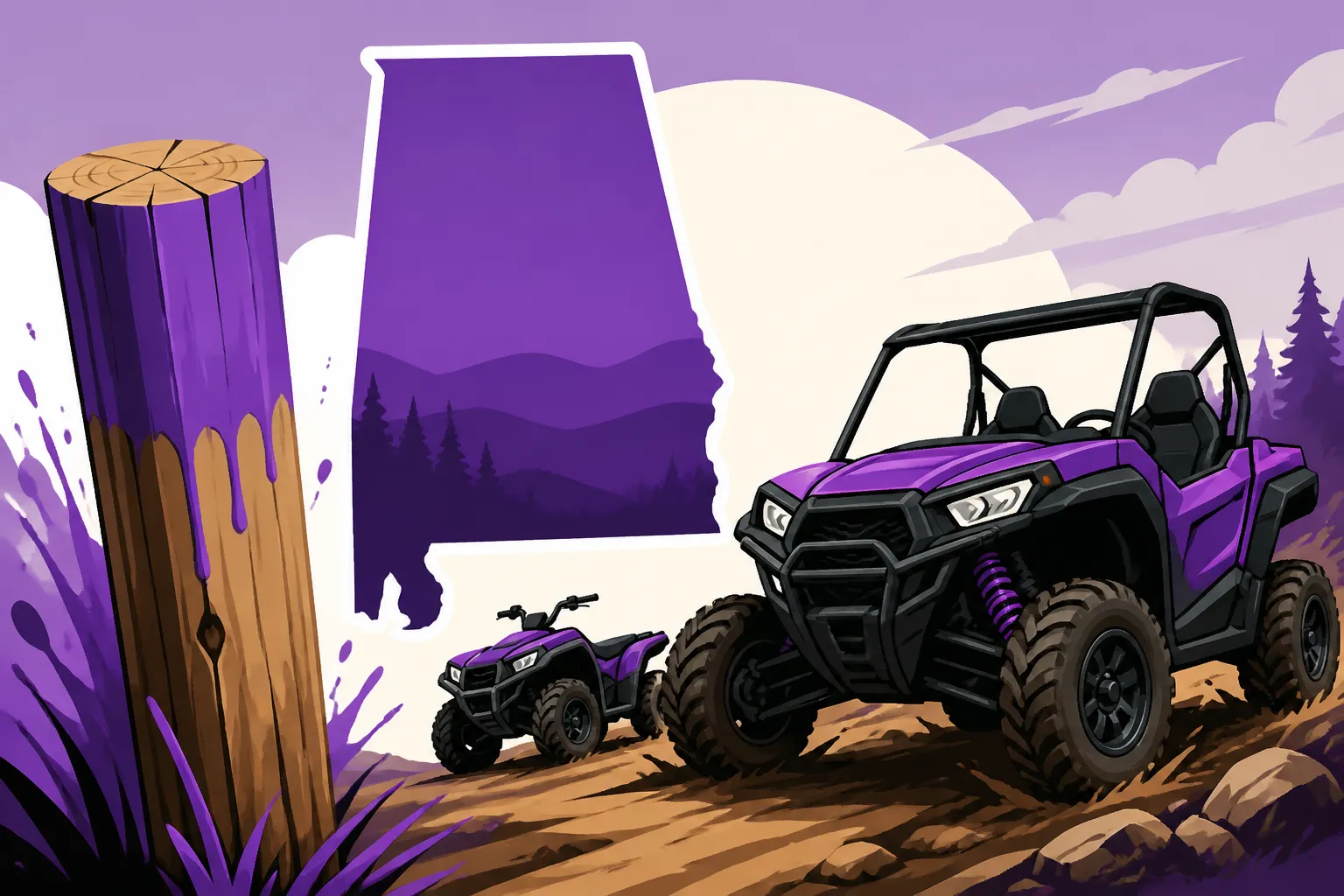
Alabama's purple paint law states that purple paint marks on trees or posts can signify that land is posted against trespassing. This means that if you see purple paint, you are legally on notice that the property is private and entry is prohibited without permission. The law intends to make it easier for landowners to protect their property and for individuals to clearly identify boundaries without needing to post physical signs that can fade, be stolen, or be damaged.
The paint marks are typically required to be visible, placed at certain intervals, and at a specific height above the ground. While the exact specifications can vary slightly, the general idea is for them to be easily seen by someone approaching the property boundary. Often, you'll see purple bands painted around trees or vertical stripes on fence posts. It's a system designed for clarity, and ignorance of these markings is not a valid defense if you're found trespassing. This is why paying close attention to these seemingly small details can save you a lot of grief.
Where to Expect Purple Paint
You're most likely to encounter purple paint on rural and undeveloped properties, especially those that are forested, used for hunting, or agricultural. Landowners with large acreages, who might find it difficult to erect and maintain numerous physical signs, often prefer the durability and visibility of purple paint markers. Timber companies, for instance, frequently use purple paint to mark their extensive land holdings, making it clear where their private property begins.
Consider the example of an ATV trail that seems to follow the edge of a forest. One side might be public land, but the other could be private property marked with purple paint. If you cross that painted boundary, even inadvertently, you are trespassing. It's especially critical when navigating areas where different types of land meet, like national forest boundaries adjacent to private timberland. Always assume the purple paint means "stay out" unless you have explicit, written permission from the landowner to be there. This simple rule is essential to staying on the right side of the law.
Securing Permission: The Key to Legal Private Land Riding
The desire to explore new trails and ride exciting terrain is perfectly natural for ATV and UTV enthusiasts. However, the vast majority of those appealing trails across Alabama's beautiful landscapes are on private property. The absolute best way to enjoy these areas legally and responsibly is to obtain permission from the landowner. It might seem like a hassle, but establishing a good relationship with property owners can unlock incredible riding opportunities and ensure you're always riding within the bounds of the law.
Why Written Permission is Paramount
While a verbal agreement might feel sufficient, especially with someone you know, always strive for written permission. A handshake agreement is notoriously difficult to prove in court, should any issues arise. Written permission, on the other hand, provides a clear, undeniable record of your right to be on the property. This document should ideally include:
- The landowner's full name and contact information.
- Your full name and contact information.
- A clear description of the property you are allowed to access (e.g., specific parcel numbers, physical address, or clearly defined boundaries).
- The dates or duration for which the permission is valid.
- Any specific conditions or restrictions (e.g., areas off-limits, time of day for riding, speed limits, specific trails, number of riders, no hunting, no campfires).
- A statement indicating permission to operate ATVs/UTVs.
- Signatures of both parties.
Having this document with you while riding acts as your legal shield. If a game warden, sheriff's deputy, or even the landowner questions your presence, you have tangible proof. This also helps prevent misunderstandings, as everyone is clear on the terms. Remember, carrying [Landowner Permission Forms] can save you a lot of potential headaches and show that you're a responsible rider.
How to Approach Landowners for Permission
Asking for permission can feel daunting, but a polite, respectful approach often yields positive results. Here are some tips:
- Identify the Landowner: This can sometimes be the trickiest part. Local county tax assessor offices or GIS mapping systems can often help you identify property owners by location. If you see active farming or logging, you might be able to find contact information for the farm manager or timber company.
- Make a Formal Request: Don't just show up unannounced. A polite letter or a phone call explaining your interest in riding their property, assuring them of your respect for their land, and outlining your commitment to responsible riding practices (e.g., staying on designated trails, packing out trash, avoiding sensitive areas) can go a long way.
- Offer Something in Return: While not always necessary, offering to help with light maintenance, checking fences, or even just keeping an eye on the property can be a persuasive incentive for a landowner. This demonstrates you're not just looking for a place to play but are a considerate individual.
- Respect Their Decision: If a landowner declines your request, accept it gracefully. There could be many reasons for their decision (safety concerns, hunting leases, environmental factors), and pushing the issue will only create animosity.
Establishing a reputation as a respectful and responsible rider in your community can open doors to more private land access. Also, be aware that some large landowners, like timber companies, may have strict policies against recreational riding due to liability concerns or existing leases. For example, knowing [How a Timber Company Decides Who May Ride] can inform your approach. Sometimes, joining a local ATV club can connect you with landowners who are already open to responsible group rides.
| Type of Permission | Pros | Cons | Best Use Case |
|---|---|---|---|
| Verbal | Easy to obtain, quick to arrange | Difficult to prove, prone to misunderstanding, no legal standing | Quick, short-term access with close friends/family |
| Written | Legally binding, clear terms, protects both parties | Requires more effort, can be restrictive, needs specific details | Ideal for regular access, long-term arrangements, new landowners |
The Real Consequences of Trespassing on Alabama Land
While the thrill of discovering a new, untouched trail might be tempting, trespassing on private property in Alabama carries significant legal and financial risks that far outweigh any momentary enjoyment. Ignoring "No Trespassing" signs or purple paint isn't just a minor infraction; it can lead to immediate complications and long-term consequences that can affect your wallet, your freedom, and your ability to enjoy off-road riding in the future.
Legal Penalties: Fines, Impoundment, and More
In Alabama, trespassing is typically classified as a misdemeanor offense. The exact penalties can vary depending on the specific circumstances, such as whether you damaged property, were engaged in other illegal activities, or if it's a repeat offense. However, you can generally expect:
- Fines: These can range from a few hundred dollars to more substantial amounts, especially if there's property damage involved. These fines don't include court costs, which can quickly add up.
- Vehicle Impoundment: This is one of the most immediate and frustrating consequences for an ATV or UTV rider. Law enforcement has the authority to impound your machine if you're found trespassing. Getting it back involves paying impoundment fees, storage fees, and potentially other administrative costs, which can easily run into hundreds or even thousands of dollars. Imagine your machine sitting in a tow yard while you scramble to pay the fees!
- Criminal Record: A misdemeanor conviction, while not as severe as a felony, still goes on your criminal record. This can have implications for future employment, housing, and even your ability to travel.
- Civil Suits: Beyond criminal charges, the landowner can pursue civil action against you for damages. This could include compensation for damaged crops, fences, environmental harm, or even just the disruption and cost of their time dealing with your trespass.
These consequences underscore the importance of understanding and respecting private property boundaries. It's not just about avoiding a ticket; it's about avoiding a cascade of problems that can quickly turn a fun day of riding into a legal nightmare. For more detailed information, check out [Alabama Trespass Penalties for Riders].
Damaging the Rider Community's Reputation
Beyond personal legal troubles, trespassing by a few irresponsible riders casts a negative shadow on the entire ATV and UTV community. When landowners experience property damage, littering, or disturbance from unauthorized riders, it solidifies their perception that all off-road enthusiasts are disrespectful. This makes it increasingly difficult for any rider, even the most responsible ones, to gain permission to ride private land. It also contributes to public and legislative opposition to creating new legal riding areas.
Responsible riders are ambassadors for the sport. Every time a rider respects private property, seeks permission, and leaves no trace, they help build trust and foster positive relationships. Conversely, every act of trespassing erodes that trust, leading to more "No Trespassing" signs, more purple paint, and fewer places for everyone to ride. Whether you're riding a powerful sport quad or a utility UTV equipped with SuperATV accessories for your property, remember that your actions reflect on the entire community. Let's work together to show landowners that ATV and UTV riders are respectful, responsible, and worthy of their trust.
Disclaimer
This article is for general informational purposes only and does not constitute professional advice. Laws, prices and regulations vary by location and change over time. Consult a qualified professional for guidance on your specific situation.