Alabama Rules for Riding After Dark
There’s a unique appeal to riding your ATV or UTV after the sun dips below the horizon in Alabama. Maybe you’re out for a late hunt, retrieving a deer, or just enjoying the cooler temperatures and quiet stillness that night brings to the woods or open fields. However, the allure of after-dark riding often bumps up against a confusing tangle of rules, safety concerns, and plain common sense. This guide is here to clear up the darkness, exploring where you can legally and safely ride your off-road machine once the stars come out in the Heart of Dixie.
Are ATVs and UTVs Allowed on Alabama Public Roads After Dark?
Let’s get straight to the point on this one, because it’s a major area of confusion and frustration for many off-road enthusiasts. The desire to simply hop on your quad or side-by-side and drive down a county road after dusk might seem reasonable, especially if you’re just trying to get from one private parcel to another. Unfortunately, in Alabama, the answer is almost universally no for most standard ATVs and UTVs, whether it's day or night. The "after dark" aspect simply compounds an existing prohibition.
The Fundamental Ban on Road Use
The biggest hurdle for taking your ATV or UTV on public roads in Alabama, regardless of the time of day, is that these machines are generally not designed or certified for highway use. Alabama law, like many states, relies on federal standards to determine what vehicles can be driven on public roads. Our state statutes incorporate [Alabama's Federal Standard Barrier to Road Use], which essentially states that for a vehicle to be street-legal, it must meet specific Federal Motor Vehicle Safety Standards (FMVSS). Most off-road vehicles, fresh from the factory, simply do not. They lack the necessary safety equipment, crashworthiness, and emissions controls required for public highway operation.
What this means for riders is that the vast majority of ATVs and UTVs you see out there—the sport quads, utility side-by-sides, and youth models—fall into the category of [Alabama Machines That Cannot Be Plated]. They are built for dirt, mud, rocks, and trails, not for sharing asphalt with cars and trucks. The dangers of operating an unlit or inadequately lit off-road machine on paved roads, especially at night, are amplified significantly. Drivers of conventional vehicles often aren't expecting a smaller, sometimes slower, and often less visible vehicle like an ATV or UTV on the road, making nighttime encounters particularly perilous. The lack of standard turn signals, brake lights, and reflective markers present on street-legal vehicles makes them hard to see until it's too late.
Lighting Requirements for Road Use (and Why They Don't Apply to ATVs)
Traditional street-legal vehicles have very specific lighting requirements: headlights with high and low beams, tail lights, brake lights, turn signals, and often side marker lights and reflectors. These are crucial for visibility to other drivers, particularly after dark or in inclement weather. When you delve into [Alabama's 49 CFR 571.500 Standard], you'll quickly realize that the safety standard for low-speed vehicles (LSVs) – the closest parallel many UTVs might aspire to, but rarely meet – mandates extensive lighting and safety features. Standard ATVs, with their often single headlight and basic taillight, are miles away from meeting these comprehensive requirements.
While you might see a growing market for aftermarket lighting solutions, including impressive LED light bars, auxiliary lights, and even signal kits (you might find some really robust options from a company like SuperATV), it’s vital to understand that simply adding these components does not magically transform your off-road machine into a street-legal vehicle in Alabama. These accessories significantly improve your visibility off-road and are excellent for tackling challenging trails or tasks in the dark, but they don't fulfill the legal definition or safety standards for public road use. The issue isn't just having lights; it's about the entire vehicle being certified to meet a comprehensive set of federal safety standards, something that a dealer-sold ATV or UTV is not. There are very few exceptions, such as briefly [Crossing a Road on an ATV in Alabama], but even these exceptions come with strict guidelines and do not permit general travel, especially not after dark.
Riding After Dark in Designated Public OHV Areas and WMAs
While public roads are largely off-limits, designated off-highway vehicle (OHV) parks and Wildlife Management Areas (WMAs) present a different set of rules for after-dark riding. Here, the focus shifts from road legality to safety, park regulations, and responsible land use.
Park-Specific Rules and Operating Hours
Dedicated OHV parks in Alabama, such as [Stony Lonesome OHV Park in Alabama] near Bremen or [Minooka Park Riding in Alabama] in Jemison, are fantastic resources for riders. They offer miles of trails designed for off-road vehicles. However, these parks almost always have strict operating hours. For the vast majority of days, riding after dark is simply not permitted. The gates typically close at a set time, and staff want everyone off the trails before sundown. This isn't just about convenience; it's a critical safety measure. Navigating unfamiliar or challenging terrain in the dark significantly increases the risk of accidents, getting lost, or encountering unforeseen obstacles.
However, there can be exceptions. Some parks might host special "night rides" or allow after-dark trail access for campers staying within the park boundaries. If you're camping at a park that offers it, you might be able to ride a designated loop near your campsite, but accessing the full trail system might still be restricted to daylight hours. It is absolutely crucial to check the specific park's website, call ahead, or review their posted rules before you even consider riding after hours. These rules can vary significantly, and violating them could lead to fines, expulsion, or even a ban from the park. Also, keep in mind that many [Alabama Parks Closed Midweek] or have seasonal hour changes, so always verify current schedules.
Lighting and Safety Gear for Public Land
Even if a designated park or area does permit after-dark riding, adequate lighting and safety gear become paramount. Your machine's stock headlights might be perfectly fine for daylight riding, but they often fall short when tackling dark, winding trails. Imagine a tight turn through the trees, a sudden drop, or a deep mud hole; stock lighting may not illuminate these obstacles until you're right on top of them.
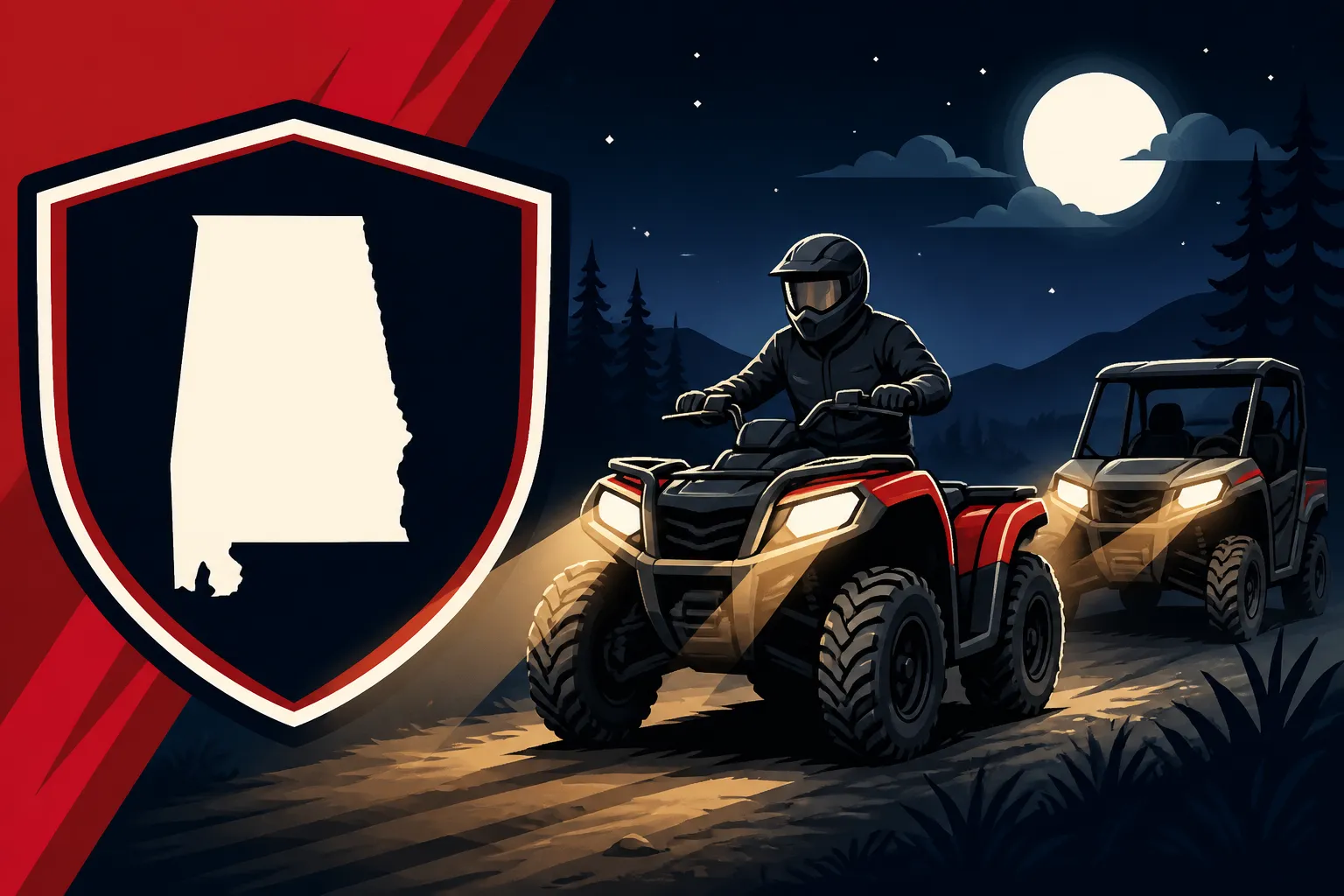
This is where investing in auxiliary lighting can make a world of difference. LED light bars, spot lights, or floodlights mounted on your front bumper, roof, or even a helmet can provide a much broader and brighter field of vision. Companies like SuperATV offer a huge range of robust lighting solutions that can turn night into day on the trails, significantly enhancing safety and enjoyment. Beyond forward illumination, consider adding additional tail lights or reflective tape to the rear of your machine for greater visibility to other riders, especially in group settings. Proper [Alabama Lighting on a Machine at Night] is not just a recommendation; it’s a necessity for night operations.
And, of course, the general safety rules still apply, often with increased urgency. [Are Helmets Required for ATV Riders in Alabama?] The state's helmet law for ATVs is nuanced, but regardless of legality, wearing a DOT-approved helmet with a clear visor or separate eye protection is non-negotiable for night riding. You need to protect your vision from low-hanging branches, dust, and insects, all of which are harder to see after dark. Gloves, long sleeves, and sturdy boots provide additional protection from unexpected bumps and scrapes.
Wildlife Management Area (WMA) Considerations
Alabama’s WMAs are managed primarily for hunting, fishing, and conservation. While some allow limited OHV use, the rules for riding in a WMA, especially after dark, are typically very stringent and almost always tied to specific hunting activities. General recreational riding after sundown is usually prohibited. [Alabama WMA Riding Rules for Quads] often specify designated roads or trails for machine use and restrict use to specific periods, primarily during hunting seasons for game retrieval.
For example, you might be allowed to use your ATV or UTV to retrieve a harvested deer after legal shooting hours, but only on designated access roads and under specific WMA regulations. Even then, you’d need proper WMA permits and licenses. [Alabama Hunting Season and Trail Access] dictates when you can even be in these areas, and unauthorized night riding for recreation is a quick way to get a citation. Always check the specific regulations for the W WMA you plan to visit, as rules can vary considerably between areas. An area biologist can be a great resource for clarification on OHV use and after-dark policies.
Navigating Private Property After Sundown
When it comes to riding after dark, private property offers the most flexibility, but it’s still crucial to prioritize safety, common courtesy, and adherence to any local ordinances. This is where most Alabama riders will experience after-dark enjoyment on their ATVs and UTVs.
Landowner Permission and Safety Protocols
If you own the land, you generally have the freedom to ride your ATV or UTV on it whenever you wish, day or night. This is a significant advantage for many Alabamians who use their machines for hunting, farming, or simply enjoying their acreage. Common scenarios include riding your quad out to a [Alabama Rules for Riding to a Deer Stand] well before dawn, or using your side-by-side to check on livestock or access remote parts of your property after dusk.
However, if you're riding on someone else's private property, whether it's a friend's land, a hunting lease, or timber company property, [Written Permission From an Alabama Landowner] is absolutely non-negotiable. This is important for daytime riding, but even more so for nighttime, as any noise or unexpected activity could easily be misinterpreted. Always make sure you have explicit permission to ride at night and that you understand any specific conditions or areas where the landowner does not want you to operate your machine after dark. Communication is key; let them know your plans, especially if you anticipate being out late. It's also a good idea to inform someone reliable of your route and estimated return time, even on familiar private land, just in case something goes awry.
Essential Gear and Practices for Night Riding on Private Land
Even on private property that you know like the back of your hand, riding after dark introduces a new layer of challenge. Familiar landmarks disappear, shadows play tricks, and obstacles become harder to spot. Therefore, equipping your machine properly and practicing safe riding habits are paramount.
As mentioned before, powerful forward lighting is your best friend. Your stock lights might not cut it. Consider upgrading to a brighter LED headlight, or adding an auxiliary light bar. A good quality light bar from a company like SuperATV can provide immense illumination, turning dark trails into clear paths, allowing you to react to unexpected obstacles like downed trees, washed-out sections, or wildlife. A small, handheld spotlight can also be incredibly useful for spotting deer, checking trail markers, or performing quick repairs.
Here are some practices to embrace for [Alabama Riding After Dark] on private land:
- Know Your Terrain: Even if it’s your property, take it easy. What looks like a small rut in daylight can become a wheel-eating ditch at night.
- Ride Slower: Reduce your speed significantly. Your reaction time is naturally slower in the dark, and depth perception is diminished.
- Ride with a Buddy: There’s safety in numbers. If one machine breaks down or a rider is injured, the other can assist or go for help.
- Carry Essential Tools: A flashlight (separate from your machine’s lights), a small toolkit, first-aid kit, and a fully charged cell phone are crucial.
- Dress Appropriately: Even if it's hot during the day, temperatures drop at night. Dress in layers and wear reflective clothing to be visible to others, even if they're on foot.
Local Noise Ordinances and Neighborly Relations
Even on your own private property, your enjoyment of after-dark riding can impact your neighbors. [Alabama Noise Complaints About Quads] are a real concern, especially in areas where residential properties are close to rural land. The distinct sound of an ATV or UTV engine, particularly a sportier model, can carry a long way in the quiet of the night. This can lead to tension with neighbors and, in some cases, attract the attention of local law enforcement if noise ordinances are in place.
Before you plan regular late-night rides, especially if you live near a residential area, it's wise to consider your neighbors. Many communities have general quiet hours, and even without a specific ordinance targeting OHVs, excessive noise can fall under broader disturbance laws. Being a good neighbor means being mindful of the sounds your machine makes, particularly after 9 or 10 p.m. If you're riding on a hunting lease or timber land, similar considerations apply if nearby landowners live close by. [Alabama HOA Rules About Side-by-Sides] might also be a factor if your property falls within a homeowners' association with specific guidelines on noise or vehicle operation. A little common courtesy goes a long way in maintaining good relationships and preventing unwanted attention.
After-Dark Riding Rules by Location Type in Alabama
| Location Type | Permitted? | Key Considerations & Equipment |
|---|---|---|
| Public Roads | NO (with rare, limited exceptions for crossing) | ATVs/UTVs are generally not street-legal. Lack of FMVSS compliance, inadequate lighting for highway visibility. High risk of citations and accidents. |
| Designated OHV Parks | RARELY (only with explicit park permission or special events) | Check park-specific operating hours. General recreation after dark usually prohibited. If permitted, mandatory powerful auxiliary lighting, helmets, and reflective gear. Ride slower, know the terrain. |
| Wildlife Management Areas | USUALLY NO (limited to specific hunting-related tasks like game retrieval, during specific seasons and with permits) | Recreational riding after dark is typically forbidden. Strictly adhere to WMA rules and permit requirements. Adequate lighting essential for safety and visibility during permitted activities. |
| Private Property (Owned) | YES (at owner's discretion) | Full control over rules, but prioritize safety. Highly recommend auxiliary lighting (e.g., light bars from SuperATV), helmet, protective gear. Be mindful of terrain changes at night. Inform others of your plans. |
| Private Property (Leased/Permitted) | YES (with explicit landowner permission) | Absolutely require [Written Permission From an Alabama Landowner] for night riding. Communicate plans. Follow landowner's rules. Safety equipment as for owned private property. Be aware of [Alabama Noise Complaints About Quads] to maintain good neighbor relations. |
Ultimately, riding your ATV or UTV after dark in Alabama can be an incredibly rewarding experience, offering a different perspective on your favorite trails or property. But it’s an experience that demands respect for the law, adherence to safety protocols, and a healthy dose of common sense. Always prioritize your safety, ensure your machine is properly equipped, and be a good steward of the land, whether public or private.
Disclaimer
This article is for general informational purposes only and does not constitute professional advice. Laws, prices and regulations vary by location and change over time. Consult a qualified professional for guidance on your specific situation.