Which Half of the Statute Applies to You
Let's face it, trying to figure out where you can legally ride your ATV or UTV in Alabama can feel like trying to solve a riddle wrapped in a mystery, all while blindfolded. One minute you think you've got it, the next you hear a new anecdote from a buddy, and suddenly you're back to square one, scratching your head. This guide is here to cut through that confusion, helping you understand the two main categories of off-road vehicle statutes in Alabama – public use and private use – and which set of rules applies to you when you hit the trails or your back forty.
Unraveling the Fundamental Divide: Public Versus Private Use
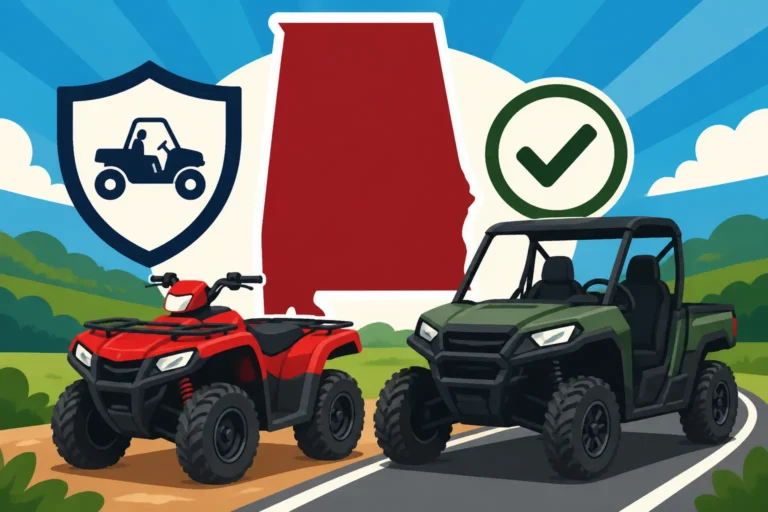
The core of Alabama's off-road vehicle laws, and frankly, the source of much of the confusion, revolves around a simple distinction: are you using your machine for public purposes or strictly on private property? This isn't just a philosophical question; it dictates everything from whether you need to register your machine to where you can actually put tires to dirt without risking a citation. Many folks assume "off-road" means "no rules," but that couldn't be further from the truth, especially when you venture beyond your own fence line.
What "Public Use" Really Means for Your Machine
When the Alabama statute talks about "public use," it's generally referring to operating your ATV or UTV on public lands or properties that are open to the general public. This includes designated trails in state parks, national forests (where permitted), and even crossing certain roads. If your machine is going to touch any ground that isn't exclusively yours or doesn't belong to someone who has given you express permission, you're likely falling into the "public use" category.
This is where the rules start to get a bit more robust, and honestly, a lot more frustrating for many riders. For public use, you're expected to have your machine registered with the Alabama Law Enforcement Agency (ALEA), a process that involves a fee and gets you a registration decal. You also need to adhere to specific safety regulations, which can include things like [Alabama ATV Age Rules] for younger riders, and understanding the specific [Alabama Public Use ATV Registration Explained]. It's designed to create a baseline of accountability and fund some of the administrative oversight of these activities. For instance, if you're planning a weekend trip to Stony Lonesome OHV Park in Cullman County, you'll definitely be operating under public use rules, and your machine better be registered.
The Realm of "Private Use" and Personal Property
On the flip side, "private use" refers to operating your ATV or UTV exclusively on private property. This is your own land, your hunting lease, a friend's farm, or any other private property where you have explicit permission to ride. The distinction here is crucial because it significantly lessens the state's direct oversight.
If you strictly ride on your own land, say a vast timber tract you own near Selma, or you only use your side-by-side for chores around the farm, you generally don't have to register it with ALEA for state-level purposes. This is a voluntary choice, but many still opt for registration for theft recovery purposes or peace of mind. While the state takes a step back on registration, it doesn't mean it's a total free-for-all. Things like reckless endangerment, noise ordinances, and general liability still apply. You can't just tear through your neighbor's property or cause a nuisance, even if you're technically on private land. The rules are much more about common sense, property rights, and local noise restrictions than state vehicle code.
The Reality of Riding on Alabama Roads and Public Lands
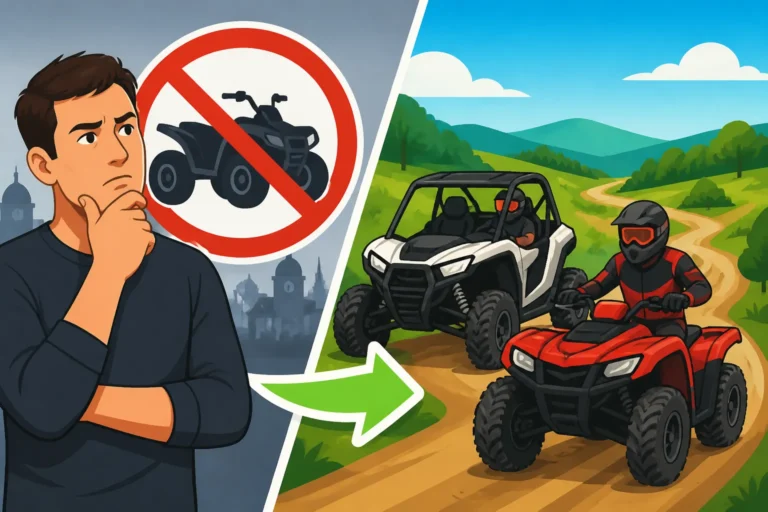
This is often the biggest sticking point for ATV and UTV owners in Alabama. The desire to ride from your house to a nearby store, or cruise down a county road to access a different part of your property, is strong. Unfortunately, the state's stance on this is generally quite strict, and it's a common source of tickets and frustration for riders who don't fully understand the law.
Why Most ATVs and UTVs Aren't Street Legal
The simple truth is that most factory-built ATVs and UTVs are not designed or certified for street use in Alabama. They don't meet the stringent Federal Motor Vehicle Safety Standards (FMVSS) that are required for any vehicle to be licensed and operated on public roads. This isn't just about having headlights or brake lights; it's about crashworthiness, emissions, specific tire standards, and a host of other engineering requirements. As a result, your average quad or side-by-side cannot be registered with a license plate for street use. The statute is pretty clear on [Alabama's Federal Standard Barrier to Road Use], outlining why these machines just don't fit the bill.
Many companies, like SuperATV, offer aftermarket parts and accessories that can enhance your machine, such as windshields, mirrors, and turn signals, which might look like they make your UTV street legal. However, adding these components, while making your machine safer and more versatile for off-road use, does not magically transform it into a street-legal vehicle under Alabama law. The core issue lies in the factory certification, not just the accessories you bolt on. So, while a new light bar from SuperATV might be great for night riding on your hunting lease, it won't get you a license plate.
Limited Exceptions and Crossing Roads
There are, however, very specific and limited circumstances where an ATV or UTV might legally interact with a public road:
- Crossing Roads: You can often cross a public road, but it must be done safely, perpendicularly, and only if allowed by local ordinance. This isn't for joyriding; it's typically to get from one section of private property to another. Think of it as carefully crossing the street, not driving on it. You must yield to all traffic, and it's usually at designated crossings or where visibility is clear.
- Farm Use: Machines used exclusively for bona fide agricultural purposes might have some allowances for road use, especially for short distances between fields. However, these exceptions are narrow and require the machine to be actively engaged in farm work. [Alabama Farm Use and Road Riding] delves into this in more detail, but don't confuse taking your UTV to town for supplies with legitimate farm use on a public road.
- Emergency or Law Enforcement: Naturally, emergency vehicles and law enforcement use of ATVs/UTVs are exempt from these general prohibitions.
- Low-Speed Vehicles (LSVs): This is where a lot of confusion arises. Alabama does allow for a category of vehicles called Low-Speed Vehicles, which can be street legal. However, an LSV is typically purpose-built as such from the factory, meeting specific federal standards (e.g., maximum speed of 25 mph, seatbelts, headlights, turn signals, etc.). Converting a standard ATV or UTV into an LSV is usually not feasible or legal, because it still wouldn't meet the original manufacturing certification required. [Alabama LSV Requirements Explained] outlines what these vehicles entail, and it's generally not your typical side-by-side.
Navigating Public Trails and Designated Areas
Alabama does have public riding opportunities, but these are typically confined to designated off-road parks or specific trails within national forests or state lands where off-highway vehicle (OHV) use is explicitly permitted. These areas are fantastic for enjoying your machine, but they come with their own set of rules.
For example, places like Stony Lonesome OHV Park or Minooka Park have entry fees, specific operating hours, and rules regarding helmets, passenger limits, and sometimes even vehicle width or tire types. If you're planning a trip, always check the park's specific regulations beforehand. In national forests, riding is usually restricted to [Designated Routes on Federal Ground], and you'll need to check with the local Forest Service office to understand what's open and what permits might be required, such as [Alabama WMA Permits for Riders]. You can't just blaze your own trail through federal land; doing so can lead to hefty fines and environmental damage. The key here is designated areas, meaning marked trails that are explicitly open for OHV use.
| Feature / Scenario | Private Use (Your Land/Permission) | Public Use (Designated Trails/Roads) |
|---|---|---|
| Registration | Voluntary (often recommended for proof of ownership) | Mandatory for public lands (ALEA registration) |
| Road Use | Generally prohibited; exceptions for farm use or direct crossings | Generally prohibited; very limited exceptions (LSV, farm, crossing) |
| Safety Gear (Helmets) | No state mandate (but highly recommended for safety) | Varies by park/trail rules; often required for minors or certain areas |
| Operating Age | Parent's discretion (still liable for minors) | Specific [Alabama Rules for a Teen Rider] and youth minimums may apply |
| Enforcement | Primarily local law enforcement (nuisance, trespass, reckless) | State and local law enforcement (registration, safety, road violations) |
| Common Pain Point | Liability if someone gets hurt; neighbor disputes | Confusion over street legality; limited road access |
Riding on Private Land: Your Domain, Your Rules (Mostly)
For many ATV and UTV enthusiasts in Alabama, private land is their primary playground. This could be your own sprawling farm, a hunting lease you share with friends, or simply a buddy's large backyard. While the rules are generally more relaxed here compared to public spaces, it's not a complete free-for-all. There are still crucial responsibilities and considerations that come with riding on private property.
Landowner Permission and Posted Property
First and foremost, if it's not your land, you must have explicit permission from the landowner. This might sound obvious, but many riders get into trouble by assuming implied permission or by simply not knowing who owns a particular tract. A handshake agreement with a neighbor is often enough, but for larger or more complex arrangements, like a hunting lease, it's always best to get it in writing. This protects both you and the landowner. [Alabama Landowner Permission Forms] can be a great idea to have on hand for this very reason.
Be acutely aware of "posted" land. In Alabama, posted signs, fences, and even purple paint marks on trees or fence posts are legally recognized ways for a landowner to prohibit trespassing. Riding on posted land without permission is trespassing, a legal offense that can result in fines, and in some cases, your machine being impounded. Just because a gate is open or a trail looks inviting doesn't mean you have the right to ride there. Always err on the side of caution and seek permission if you're unsure.
Safety and Responsibility on Private Grounds
While state-level registration might be voluntary for private use, and helmet laws for adults generally don't apply on private property, personal responsibility for safety remains paramount. You are still accountable for your actions and the safety of anyone riding with you.
Imagine you're out riding with a new side-by-side from SuperATV, loaded with all the bells and whistles, on your friend's sprawling property. If someone gets hurt due to your negligence or a poorly maintained machine, you could still face serious legal consequences. Encourage all riders, especially minors, to wear helmets and appropriate safety gear, even if not legally mandated. Teach younger riders about [Alabama Rules for a Ten-Year-Old Rider] and [Alabama Rules for a Fourteen-Year-Old Rider], emphasizing safe speeds and avoiding stunts. It's also important to understand [Alabama Accident Reporting for an ATV Crash], even on private land, especially if injuries are involved. Setting clear rules for your property or lease, such as no riding after dark without proper lighting, or limiting alcohol consumption while riding, can prevent accidents and maintain good relations with your neighbors.
When the Lines Blur: Local Ordinances and Gray Areas
The Alabama state statute provides the broad framework, but when you zoom into specific cities and counties, things can get even more complicated. Local governments often have the authority to enact their own ordinances, which can either restrict or, in rare cases, slightly expand the rules for ATV and UTV operation within their specific jurisdictions. This is where the lines really start to blur and can cause significant headaches for riders.
Checking Your City and County's Specific Rules
Just because state law generally prohibits ATVs on public roads doesn't mean a small town in Alabama hasn't created a specific ordinance allowing golf carts or even certain UTVs on its less-trafficked streets. These are typically enacted to cater to local residents, often in communities where golf carts are a common mode of short-distance transport. However, it's crucial to understand that these local ordinances do not override the state's broader FMVSS requirements for full road legality. They are usually very specific, designating certain streets, setting speed limits, and requiring certain equipment like lights or mirrors.
Before you ever consider riding your UTV on a town street, even if you heard a rumor it's allowed, you absolutely must check with the specific city or county clerk's office. Don't rely on hearsay or what "everyone else does." A quick phone call can save you a hefty ticket. Ask directly about [Alabama City Ordinance Lookups] or [Do Alabama County Roads Have Their Own ATV Rules?]. Get the specific ordinance number if possible, and read it for yourself. This due diligence is your best defense against inadvertently breaking the law.
The Importance of Understanding Legal Definitions
Much of the confusion stems from how different machines are legally defined. Is your two-seater really an "ATV" or a "ROV" (Recreational Off-Highway Vehicle, which often includes UTVs/side-by-sides)? Alabama's statute offers distinct definitions, and these definitions can impact everything from weight limits to how the vehicle is categorized for registration. For example, [Alabama's ATV and ROV Legal Definitions] clearly outlines the distinctions, and it's not always intuitive.
Furthermore, vehicles like golf carts are explicitly excluded from the off-road vehicle chapter, having their own set of rules, often at the municipal level. Understanding [Why a Golf Cart Is Not an ATV in Alabama] is important, as mistaking one for the other can lead to legal trouble. Your local county tax assessor or ALEA's registration division can often clarify how your specific machine is classified, which then informs which "half" of the statute applies to you. When you're dealing with a state that separates titling and registration between different agencies, as Alabama does, it's easy to see why confusion reigns. But taking the time to understand these definitions is your best tool for staying on the right side of the law.
Disclaimer
This article is for general informational purposes only and does not constitute professional advice. Laws, prices and regulations vary by location and change over time. Consult a qualified professional for guidance on your specific situation.