What Counts as a Designated Public Area in Alabama
It's incredibly frustrating when you just want to take your ATV or side-by-side out for a spin, but the rules about where you can actually ride in Alabama feel as clear as mud. Navigating the legal landscape of off-road vehicle use can be confusing, especially when terms like "public land" get thrown around without much clarity. This guide is here to cut through the confusion and help you understand exactly what counts as a "designated public area" for ATV and UTV riding in Alabama, so you can ride confidently and legally.
Understanding "Designated Public Area" in Alabama
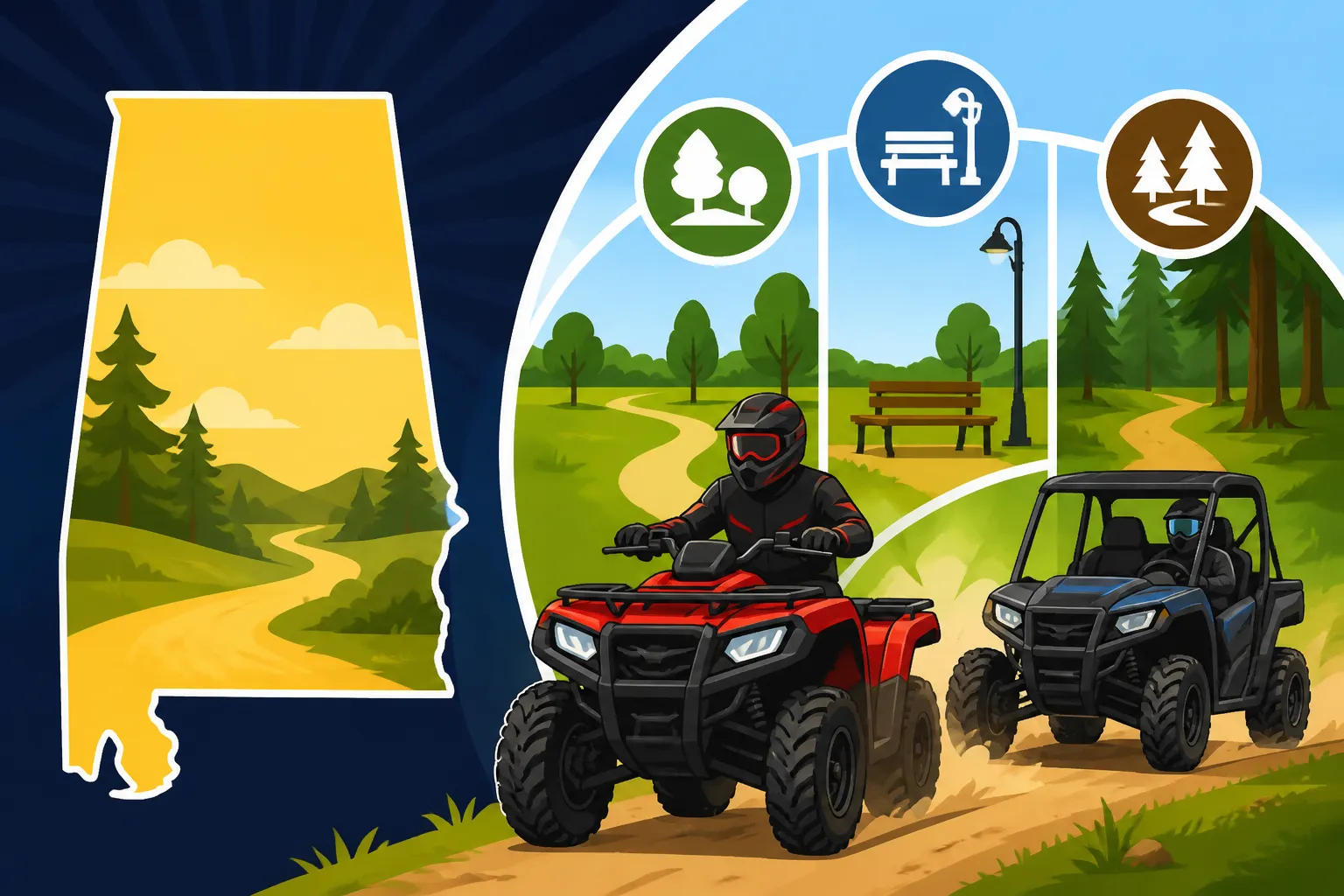
When it comes to off-road vehicles like ATVs and UTVs, the phrase "designated public area" isn't just a casual term for any piece of land that isn't privately owned. In Alabama, it refers to specific locations that have been explicitly set aside and approved for off-highway vehicle (OHV) use. This distinction is absolutely critical because it directly impacts where you can legally ride without risking fines, trespassing charges, or even the impoundment of your beloved machine. Simply put, not all public land is open to OHVs.
Imagine pulling up to what looks like an inviting patch of woods, part of a vast national forest or maybe even a state-owned tract. Your first thought might be, "Great, public land, let's ride!" But if that specific area hasn't been designated for OHV use, you're actually in violation. The state defines and manages these areas very carefully, often through various agencies, and they expect riders to know the difference. The intent is to concentrate OHV use in areas that can handle the environmental impact, ensure rider safety, and prevent conflicts with other land users.
This concept becomes even more important when you consider the common desire to ride closer to home. Many people live near stretches of what appears to be public access land, such as utility easements, old logging roads, or abandoned tracks. However, unless there's an official sign or published map explicitly stating it's an OHV trail, these are usually off-limits. It’s a nuanced but vital difference that keeps you on the right side of the law and helps preserve access to the places we can ride.
The Critical Distinction from General Public Land
The key to understanding "designated public area" is to realize it's a subset of "public land." All designated public areas are public land, but not all public land is designated for OHV use. This distinction is often the source of much confusion and frustration for riders. For instance, Alabama has vast stretches of national forests and wildlife management areas (WMAs) that are undeniably public land. Yet, riding an ATV or UTV willy-nilly through these areas is typically illegal.
These lands are managed for a variety of purposes: timber production, wildlife habitat, hiking, hunting, fishing, and conservation. Allowing uncontrolled OHV access could disrupt these other uses, damage sensitive ecosystems, or create safety hazards for hikers and hunters. Therefore, the managing agencies—whether it's the U.S. Forest Service or the Alabama Department of Conservation and Natural Resources—will explicitly mark or publish maps indicating where OHVs are permitted, if at all. These might be specific designated trails, roads, or staging areas.
Think of it like this: a public library is public property, but you can't just set up a picnic in the middle of the reading room because it's not designated for that activity. Similarly, a beautiful, sprawling WMA might be public, but only specific, approved trails or roads might be open to your quad. Always look for official signage, maps, or specific regulations before you unload your machine. Failing to do so can lead to a really bad day on the trails, resulting in citations or even having your machine towed.
Why This Definition Matters for Riders
Understanding what constitutes a "designated public area" isn't just about avoiding a ticket; it's about being a responsible rider, protecting natural resources, and ensuring the continued availability of riding opportunities for everyone. When riders ignore these designations and venture onto undesignated public lands, it often leads to negative consequences that can impact the entire OHV community.
For example, unauthorized riding can lead to soil erosion, damage to fragile habitats, disturbance of wildlife, and conflicts with other outdoor enthusiasts. These issues frequently result in public outcry, which can then lead to stricter regulations, trail closures, or even outright bans on OHV use in certain areas. Every rider who respects the "designated public area" rule helps to maintain a positive public perception of the sport and strengthens the argument for creating and preserving more legal riding opportunities. It’s a collective responsibility that impacts the future of off-roading in Alabama.
Furthermore, riding in non-designated areas often means you’re far from established emergency services or trail patrols. Should an accident occur, help might be harder to reach, putting you and your riding partners at greater risk. Stick to the designated paths, and you're not only staying legal but also often riding in safer, more managed environments. [Alabama WMA Riding Rules] are a perfect example of how specific public lands have very particular rules you need to follow.
Public Roads Versus Designated Off-Road Trails
This is perhaps the biggest area of confusion for many riders, especially those new to the sport or new to Alabama. The desire to take your ATV or UTV on a quick run down a county road or even just across a paved road to another trail is understandable. However, Alabama law is quite clear: public roads, including paved highways, county roads, and even most unpaved dirt roads maintained by the state or county, are generally not designated public areas for ATV or UTV use.
The state's legal framework for off-road vehicles (ORVs) distinguishes sharply between vehicles designed for highway use and those intended solely for off-road recreation. Standard ATVs and UTVs do not meet the Federal Motor Vehicle Safety Standards (FMVSS) required for street-legal operation. This means they lack essential safety features like proper headlights, taillights, turn signals, mirrors, and often tires that are rated for highway speeds and conditions. Attempting to modify a standard machine with an [Alabama UTV Street Legal Conversion] kit usually won't make it legal for road use because the underlying chassis and safety ratings aren't designed for it.
The law is in place to protect riders and other motorists. An ATV, with its stability challenges on pavement and lack of collision protection, is simply not engineered for sharing asphalt with cars and trucks. Even a quick jaunt to the gas station can result in a significant fine and potential legal trouble. This applies even if the road seems deserted or if you're just trying to get from one part of your private property to another across a public right-of-way.
Why Public Roads Are Generally Off-Limits
The primary reason public roads are off-limits to most ATVs and UTVs in Alabama boils down to safety and federal regulations. The National Highway Traffic Safety Administration (NHTSA) sets stringent Federal Motor Vehicle Safety Standards (FMVSS) that all vehicles designed for public road use must meet. These standards cover everything from braking systems and lighting to crashworthiness and emissions. Standard ATVs and UTVs, as manufactured, are specifically designed for off-road use and do not meet these federal requirements. [Alabama's Federal Standard Barrier to Road Use] is a huge hurdle.
For instance, an ATV’s tires are typically knobby and designed for traction on dirt, mud, and rocks, not for stable, high-speed travel on paved surfaces. The suspension is built for absorbing bumps and jumps, not for the smooth, controlled handling needed on a highway. And while many side-by-sides are now equipped with features like seatbelts and roll cages, they still fall short of the crash protection offered by a standard automobile. These machines are incredibly fun and capable in their intended environment, but that environment is almost never a public road.
Local law enforcement agencies across Alabama are well aware of these rules and often patrol areas where riders might be tempted to use public roads. Ignorance of the law is not a valid defense, and a traffic stop can quickly escalate to a hefty fine, especially if you're riding without proper [Alabama Registration for a New Resident] or proof of ownership.
Exceptions to the Road Rule: When Can You Cross or Ride?
While the general rule is "no ATVs on public roads," there are a few very specific, limited exceptions in Alabama. It's crucial to understand that these are exceptions, not loopholes, and they come with their own set of rules and restrictions.
One common exception is crossing a paved public road. In many jurisdictions, you might be allowed to cross a public road to get from one piece of private property to another, or to connect two legal off-road trails. However, this crossing must usually be done at a right angle, as directly and quickly as possible, and only when traffic permits. You cannot travel along the road for any distance. Even then, local ordinances can further restrict this, so it's always best to check with the local sheriff's department or city hall before attempting this. [Crossing a Road on an ATV in Alabama] has very specific stipulations.
Another potential exception can be found with farm equipment. Farmers sometimes use ATVs or UTVs as utility vehicles for agricultural purposes. Alabama law may allow these machines to operate on public roads for short distances when directly involved in agricultural operations, such as moving between fields. However, these vehicles must typically display an orange slow-moving vehicle sign, be operated during daylight hours, and adhere to specific safety requirements. This exemption is strictly for bona fide farm use and does not extend to recreational riding. [Alabama Farm Use and Road Riding] explains this in more detail.
Lastly, some municipalities in Alabama have passed local ordinances that permit the use of golf carts or sometimes even specific types of UTVs on certain low-speed public streets within their city limits. These are rare and highly localized. They usually apply to very specific types of vehicles (often low-speed vehicles, or LSVs, which are distinct from typical UTVs) and typically require specific permits, insurance, and compliance with local speed limits. Always verify with the specific town or county for their exact rules before assuming any road is open to your machine. [Alabama City Ordinance Lookups] are a vital step here.
| Type of Public Land | General ATV/UTV Permissibility | Key Considerations |
|---|---|---|
| Public Roads (Paved/Dirt) | Generally Forbidden | – Not FMVSS compliant for street use. – Exceptions for direct crossing or farm use (very limited). – Local ordinances may allow specific LSVs in towns. – High risk of fines, impoundment. |
| Designated OHV Parks/Trails | Permitted | – Explicitly designed and managed for OHV use. – Requires park fees, waivers, specific safety gear (e.g., helmets). – Examples: Stony Lonesome OHV Park, Minooka Park. – Rules vary by park (e.g., width limits, age limits). |
| National Forests (USDA Forest Service) | Highly Restricted | – OHV use is typically limited to designated roads or trails, if any. – Often restricted to specific seasons or for administrative/hunting purposes only. – Requires checking a specific forest's motor vehicle use map. – Can You Ride an ATV in Alabama's National Forests? is a good starting point. |
| Wildlife Management Areas (WMAs) | Highly Restricted | – OHV use is usually limited to main access roads or for specific game retrieval during hunting seasons. – Requires specific WMA permits and often a hunting license. – Rules vary significantly by WMA. – Check current [Alabama WMA Riding Rules] before visiting. |
| Utility Easements/Power Lines | Generally Forbidden | – Often private property with a utility company easement. – Requires express permission from the landowner and the utility company. – Trespassing risk. – Not "public access" for recreation without designation. |
| Abandoned Railroad Beds | Generally Forbidden | – Often private property or owned by a railroad company, even if tracks are removed. – Significant trespassing risk. – Not designated public areas unless explicitly converted into a public multi-use trail by an agency (rare for OHVs). |
| Timber Company Land | Generally Forbidden | – Private property, even if seemingly open. – Requires explicit, often written, permission or a hunting lease that specifically grants ATV access. – Signs like "No Trespassing" or purple paint indicate private land. Alabama Timber Company Land Access is strict. |
Where You Can Legally Ride Your ATV or UTV
So, with all the restrictions, where can you legally and confidently ride your ATV or UTV in Alabama? The answer lies primarily in private property with permission and officially "designated public areas" that are explicitly set up for off-highway vehicle recreation. These are the places where you can truly let loose and enjoy your machine without constant worry about legal ramifications.
Alabama boasts some fantastic opportunities for off-road enthusiasts, but it requires knowing where to look and understanding the specific rules for each location. It’s not just about finding an open field; it's about finding a place where your type of machine is welcomed and where the riding is managed for safety and sustainability. This is where your research and planning really pay off.
Many riders choose to stick to private land, like their own property or land belonging to friends or family who have given explicit permission. This offers the most freedom, but even on private land, you still have responsibilities regarding noise, environmental impact, and rider safety. For those looking for more extensive trail systems and organized riding, designated OHV parks are the way to go.
Dedicated Off-Highway Vehicle (OHV) Parks
These are the quintessential "designated public areas" for ATVs and UTVs in Alabama. Dedicated OHV parks are designed, maintained, and managed specifically for off-road recreation. They offer miles of marked trails, varying terrains, and often amenities like camping, restrooms, and wash stations. When you pay an entrance fee and sign a waiver at one of these parks, you know you're in a legitimate, legal riding environment.
Alabama is home to some excellent OHV parks. For example, [Stony Lonesome OHV Park in Alabama] is a prime example. Located in Bremen, Cullman County, it offers over 150 miles of trails for ATVs, UTVs, dirt bikes, and even 4×4 vehicles. They have specific rules about helmets, passengers, and sound limits, but within those guidelines, you're free to explore. Another popular spot is [Minooka Park Riding in Alabama] in Jemison, Chilton County, which provides a challenging environment over its 420 acres, complete with rock crawling and mud holes. These parks are usually overseen by county commissions or private entities, and they have clear boundaries and operating hours.
These parks typically require riders to sign a waiver, pay a day-use or membership fee, and often adhere to specific safety rules such as wearing a helmet (even if the state doesn't universally mandate it, the park likely will). [Alabama Private Park Waiver Forms] are standard procedure. They are fantastic places to bring your [Alabama Youth Quad] and teach younger riders in a controlled environment. Even if you've got a heavily customized side-by-side with SuperATV aftermarket parts, these parks are built to handle the fun and abuse.
National Forests and Wildlife Management Areas (WMAs)
While these are undoubtedly public lands, their rules regarding ATV and UTV use are much more restrictive than dedicated OHV parks. For national forests and WMAs in Alabama, ATV access is typically limited to designated roads or trails for very specific purposes, and often only during certain seasons. You cannot simply ride wherever you please.
In national forests, such as the Talladega National Forest or the Bankhead National Forest, most forest roads are open to licensed vehicles, but not necessarily to ATVs or UTVs unless they are explicitly marked on a Motor Vehicle Use Map (MVUM) as being open to ORVs. Many roads are gated, and off-road travel beyond designated routes is strictly prohibited. It's crucial to obtain and study the current MVUM for the specific forest district you plan to visit, as rules can change. [Calling the National Forest District Office Before You Ride] is always a good idea.
Wildlife Management Areas (WMAs) also have highly specific rules. These areas are primarily managed for hunting, fishing, and wildlife conservation. ATV use is generally limited to access roads for activities like hunting or game retrieval. Many WMAs require a WMA permit in addition to a hunting license, and some have daily check-in/check-out procedures. Riding for pure recreation is often not permitted, or it's restricted to specific times of the year outside of hunting seasons. Always check the specific regulations for the WMA you intend to visit before you go. The [Alabama WMA Riding Rules] can be quite complex and vary significantly from one area to another. This is not the place for open trail riding unless explicitly stated.
Navigating Local Ordinances and Conflicting Information
One of the most challenging aspects of understanding "designated public areas" is that rules aren't always uniform across Alabama. While state law provides a general framework, individual counties and cities often have the authority to enact their own ordinances, especially regarding things like noise, trespass, and even limited road use for certain types of vehicles. This means what's legal in one county might be forbidden just a few miles down the road.
This patchwork of regulations can be incredibly frustrating for riders who might travel across county lines for different riding spots or even for those who just want to know if they can ride their UTV to the neighborhood store. The lack of a single, centralized resource that covers every local rule means riders often have to become their own legal researchers, calling local authorities or scouring municipal websites.
It's also not uncommon to find outdated or conflicting information online, adding another layer of confusion. A forum post from five years ago might mention a trail that's now closed, or a local news article might misinterpret state law. This is why always seeking the most current and official sources is paramount.
How Local Ordinances Impact ATV/UTV Use
Local ordinances primarily impact ATV and UTV use in a few key ways:
- Road Use Exceptions: While state law generally restricts ATVs from public roads, some small towns or rural counties might have specific ordinances that allow certain types of off-road vehicles (often golf carts or specific UTVs that meet Low-Speed Vehicle requirements) on designated low-speed streets within their jurisdiction. These are rare and very specific, typically requiring special registration or permits. [Alabama Golf Cart Rules Compared to ATVs] highlights how different these vehicles are treated.
- Noise Restrictions: Many communities have noise ordinances that apply to all vehicles, including ATVs and UTVs. While you might be riding legally on private land, if your machine is excessively loud and disturbs neighbors, you could still face a citation. This is especially true in suburban areas or near residential developments.
- Trespass Enforcement: Local law enforcement officers are the primary responders for trespass complaints. If you're riding on undesignated public land or private property without permission, they are the ones who will issue citations or potentially impound your machine. Understanding [Alabama Trespass Law for Riders] is critical, as local nuances can be important.
- Specific Prohibitions: Some communities might explicitly ban OHV use on certain public properties, such as city parks or greenways, even if they seem like open spaces. This is why it’s always important to look for signage or inquire locally.
Always check with the county sheriff's office or the city clerk's office for the most up-to-date and accurate information regarding local rules in the specific area you plan to ride. Don't rely on hearsay or old forum posts.
Verifying Information and Avoiding Common Pitfalls
The best way to verify what counts as a designated public area and to avoid common pitfalls is to be proactive and thorough in your research. Here's a quick guide:
- Check Official Park Websites: For dedicated OHV parks like Stony Lonesome or Minooka, always visit their official websites for the most current operating hours, fees, rules, and trail maps. Look for any updates on trail closures due to weather or maintenance.
- Contact Land Management Agencies: If you plan to ride in a national forest, contact the specific district office of the U.S. Forest Service. For WMAs, reach out to the Alabama Department of Conservation and Natural Resources, specifically the Division of Wildlife and Freshwater Fisheries, or the area biologist for the WMA you're interested in. They can provide current MVUMs or WMA maps and explain specific regulations.
- Call Local Law Enforcement: For questions about county roads, city streets, or local trespass laws, call the non-emergency line of the county sheriff's office or the city police department. They are the authorities who will enforce these rules.
- Look for Clear Signage: In any area, always look for official signs. "No Trespassing," "Private Property," "No OHVs," or "Designated OHV Trail" signs are your clearest indicators. If there's no sign explicitly permitting OHV use, assume it's not allowed.
- Understand "Purple Paint Law": In Alabama, purple paint marks on trees or posts often indicate private property, acting as a "no trespassing" sign. Respect these markers, as [Posted Land and Purple Paint in Alabama] carries legal weight. Even if you're exploring a new area with your SuperATV equipped UTV, these markers are critical to observe.
- Don't Assume: Never assume that because one area of public land allows ATVs, all similar public lands do. Each park, forest, or WMA has its own specific set of rules.
By taking these steps, you can confidently differentiate between general public land and a true "designated public area" for your ATV or UTV, ensuring a fun, safe, and legal riding experience. This diligence will help preserve future riding opportunities for everyone in the Yellowhammer State.
Disclaimer
This article is for general informational purposes only and does not constitute professional advice. Laws, prices and regulations vary by location and change over time. Consult a qualified professional for guidance on your specific situation.