Alabama Alcohol Rules While Riding
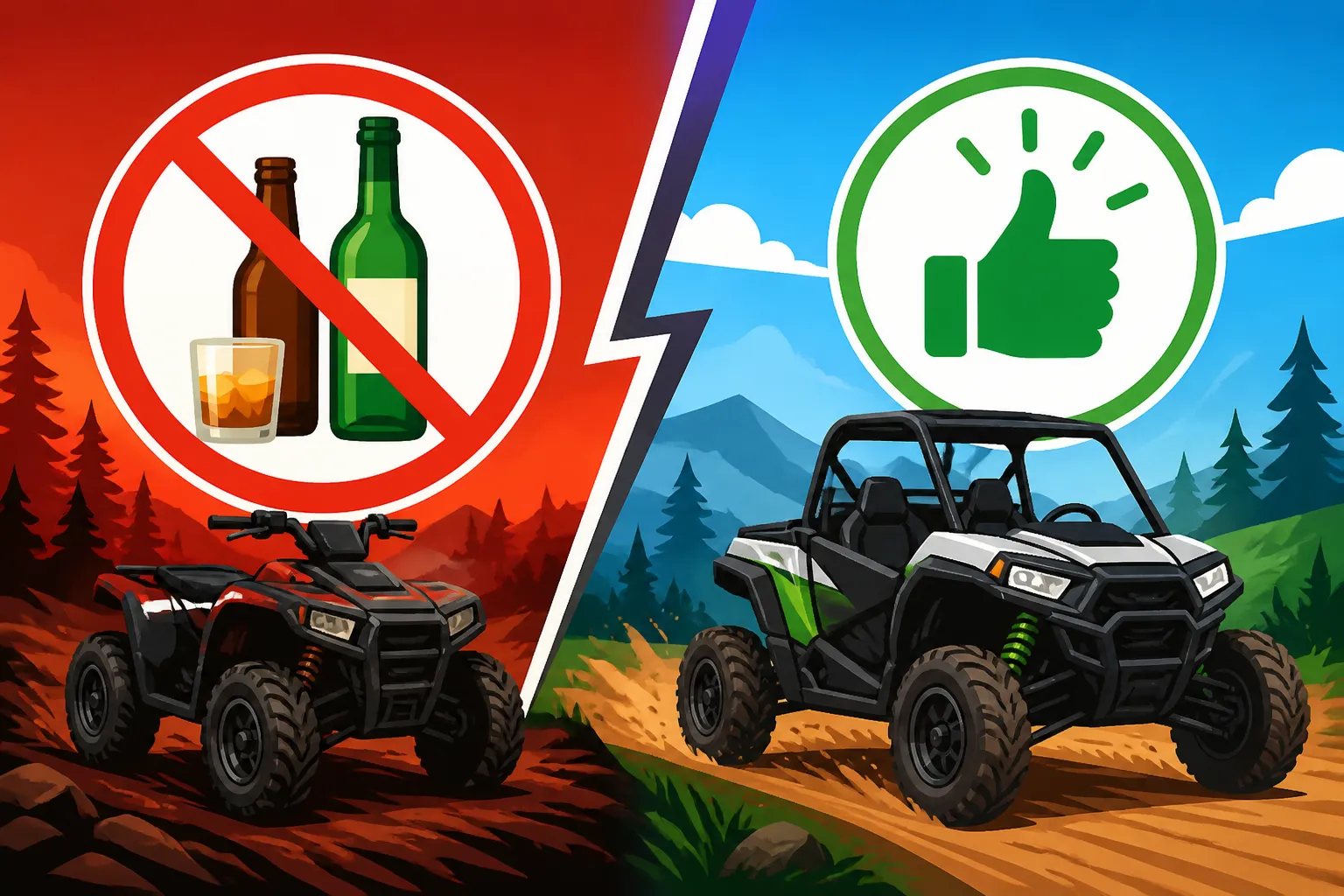
Alcohol and an ATV or UTV are a risky combination, but the rules can be confusing when a ride moves between private land, a trail, a hunting area, and a road. The safest practical rule is simple: do not operate after drinking. Here’s how Alabama’s DUI rules and property-specific restrictions can affect a ride, and what to do instead.
How Alabama DUI Rules Can Apply to an ATV or UTV
Alabama’s DUI law prohibits driving or being in actual physical control of a vehicle while under the influence of alcohol or another substance that impairs safe operation. An ATV or UTV is not automatically outside that concern because it is an off-road machine. Whether a particular machine and location fall under a specific provision can depend on the facts, including where the machine is being operated and how the law defines the vehicle involved.
For road use, the issue is especially clear: an ATV or UTV operated on a public road may bring ordinary traffic laws into play, including DUI rules. Alabama generally does not make a standard ATV or UTV street legal simply because it has lights, mirrors, or a registration decal. For the limits on road use, see Can You Drive an ATV on the Road in Alabama? and Alabama Rules for Riding a County Road.
Off-road use should not be treated as a loophole. A rider may assume that a private trail, farm, hunting lease, or riding park is beyond the reach of DUI rules. That assumption can be unsafe and legally unreliable. The details of the location, the machine, and the circumstances matter. If alcohol is involved, do not try to resolve the uncertainty by riding anyway.
A DUI concern is also not limited to a rider who is visibly falling off the machine. Alabama law addresses both driving and actual physical control. A person who has been drinking and is seated at the controls, ready to operate, could face questions even if the machine has not traveled far. Moving the ATV only a short distance or taking a quick trip back to camp is not a dependable way to avoid risk.
For a deeper look at how impaired-operation rules can intersect with off-road vehicles, see Alabama DUI Law and Off-Road Machines and Riding Under the Influence Anywhere. The practical takeaway is the same: plan the ride so that anyone who drinks is not responsible for operating a machine.
Alcohol use and DUI are separate issues
A rider may face different rules for consuming or possessing alcohol than for operating while impaired. For example, age, the type of property, posted conditions, and the rules of a park or land manager can all matter. A place may prohibit alcohol entirely, even when state law does not impose a general ban on having a drink there.
Likewise, a person can break a property rule without meeting the legal definition of DUI, and a person can create a DUI issue even if the property allows alcohol. Treat these as separate questions:
- Is alcohol allowed at this location?
- Is the rider legally permitted to possess or consume it?
- Is the rider operating or in control of a vehicle after drinking?
- Do additional rules apply because the ride is on a road, public land, or a managed recreation area?
A “yes” to the first question does not make riding after drinking safe or lawful. Permission to bring alcohol to a campsite, for instance, is not permission to operate a side-by-side after consuming it.
Underage riders and passengers
Alcohol laws can apply to possession and consumption regardless of whether someone is driving. An underage rider who drinks may face a separate problem from any issue involving operation of the ATV or UTV. A parent or adult supervising young riders should not assume that a youth-focused ride, private property, or a group setting removes those concerns.
Passengers also affect safe operation. An impaired passenger can distract the driver, interfere with controls, or behave unpredictably. And a sober passenger does not make an impaired driver safe. Follow the machine’s designed seating capacity and the park’s passenger rules; see Alabama Rules for a Child Passenger and Alabama Park Rules for Passengers.
The Riding Location Changes Which Rules You Need to Check
Alabama alcohol rules for a ride are not just a question of state DUI law. The landowner or managing agency may set additional conditions. Before heading out, identify every place the group expects to ride and check its current requirements. A route that starts at a private campground and enters public land, for example, may be subject to more than one set of rules.
| Where you ride | What to check | Practical approach |
|---|---|---|
| Public road or road crossing | Road-use restrictions and traffic laws, including DUI rules | Do not ride after drinking; confirm whether the route is lawful for the machine |
| Private off-road park | Park rules for alcohol, riders, passengers, and conduct | Read the current rules and waiver before unloading |
| Wildlife management area | Area-specific access and riding rules, permits, and seasonal restrictions | Check the area’s official information before the trip |
| Private farm or hunting lease | Landowner permission and any written conditions | Ask whether alcohol is allowed and keep operation separate from drinking |
| Campground or trail-adjacent lodging | Alcohol, quiet-hour, and vehicle policies | Do not assume campground permission extends to the riding area |
Public roads and crossings
A trail ride may include a short road segment or a highway crossing. That small section does not become an exception just because the rest of the outing is off-road. Check whether the machine is allowed on the road at all, and never treat a crossing as harmless if the operator has been drinking. A registration record or an out-of-state decal does not necessarily make a machine legal on an Alabama road.
A rider planning to cross a highway should review Alabama Rules for Crossing a Highway. If the route requires riding along a public road, verify the rule for that specific road and machine rather than relying on what other riders do.
Private parks and campgrounds
A privately operated park can impose its own conditions on alcohol, riding, and conduct. Those conditions may be stricter than a general state rule. A park might restrict alcohol in riding areas, prohibit riding after drinking, limit alcohol in certain facilities, or require a person who violates the rules to stop riding or leave. The exact policy can vary, so read the park’s current rules rather than relying on a previous visit or a friend’s recollection.
Review the admission terms and waiver before your group arrives. Alabama Private Park Alcohol Rules and Alabama Private Park Waivers and Rules explain why park-specific conditions deserve a separate check. If the group is camping as well as riding, check campground rules too; permission to drink at a campsite does not authorize an impaired ride back to it.
Wildlife management areas and other public land
Public land can have area-specific conditions, seasonal closures, designated routes, or permit requirements. Alcohol policy is only one part of the check. Confirm that riding is allowed in the area and on the route you plan to use, and find out whether any restrictions apply on the day of your visit.
For a WMA trip, start with Alabama WMA Riding Rules for Quads and Which Permits to Carry on an Alabama WMA. Do not assume that permission to hunt, camp, or access a tract automatically allows riding everywhere on it. A group should also make sure the person who will operate the machine stays sober throughout the ride.
Farms and hunting leases
Private land does not eliminate the need for clear rules. A landowner or hunting club may prohibit alcohol, restrict it to a camp area, or set conditions that go beyond state law. If the trip involves a lease or permission from an owner, ask about the rules before arriving. Keep any written permission with the group and make sure it covers riding, not only hunting access.
If the outing is connected to a hunt, alcohol can complicate safe handling of firearms as well as machine operation. Do not mix drinking with driving, game retrieval, or firearm use. For related access considerations, see Alabama Hunting Club Riding Rules and Alabama Game Retrieval Rules.
A Safer Plan for a Ride That Includes Alcohol
The easiest way to avoid confusion is to decide in advance that drinking and operating will not happen on the same outing. If a group plans to drink at camp or after riding, designate a sober operator and keep the machines parked once alcohol is served. Do not rely on a rider to judge their own impairment.
Use a plan that covers the full trip, not just the first ride of the day:
- Choose the operator before the group drinks. Make sure that person will remain alcohol-free for the entire period they may need to operate.
- Separate riding time from drinking time. If there is no reliable way to keep a designated operator sober, finish riding before alcohol is opened.
- Secure the machines after the last ride. Park them where nobody will be tempted to make a short trip, move a trailer, or retrieve equipment while impaired.
- Arrange another way to get around. Plan for a sober driver, walking route, or other safe option that does not involve operating an ATV or UTV.
- Check the land manager’s rules. Review park, campground, WMA, lease, and event conditions before the trip.
- Make the plan clear to the group. A simple agreement before arrival is easier to follow than an argument after someone has been drinking.
Do not use a consumer breathalyzer or a feeling of sobriety as permission to ride. A device reading is not a legal determination, and impairment can affect judgment before a rider recognizes it. Waiting until someone “feels fine” does not establish that they are safe to operate.
The same caution applies to a sober passenger trying to supervise an impaired operator. A passenger cannot reliably prevent a rollover, collision, or loss of control once the machine is moving. If the driver has been drinking, the ride should not begin.
Consider the consequences beyond a citation
An alcohol-related collision can create consequences well beyond a possible criminal charge. A rider could injure a passenger, another trail user, or a person working on the property. The crash may also lead to questions from law enforcement, the land manager, an insurer, or the machine’s owner.
Insurance coverage depends on the policy and circumstances. Do not assume that a policy will cover every loss if the operator was impaired or violated a park’s rules. Review the policy terms before the riding season, and report a serious crash as required. Insurance After an Off-Road Collision in Alabama covers some of the questions that can arise after an incident.
A group should also avoid pressuring someone who has been drinking to “just move it a little.” A short trip can still lead to a collision, injury, or legal problem. If a machine blocks a route or needs to be moved, ask a sober person to handle it, or wait until it can be moved safely.
What to Do if Alcohol Becomes an Issue During the Trip
If someone has been drinking and wants to ride, stop the ride before the machine moves. Keep the keys with a sober adult, explain the plan calmly, and arrange a safe alternative. If the person is already operating, do not put yourself in danger by trying to grab the controls or block a moving machine. Get help from park staff or law enforcement when needed.
If an officer or park employee asks questions, stay calm and follow lawful directions. Do not lie about who was operating, move the machine to hide what happened, or try to coach passengers on a story. If a citation or arrest occurs, write down the relevant details as soon as it is practical: where the machine was, who was present, what rules were posted, and what the officer or staff member said. A qualified Alabama attorney can advise on a specific case.
After a crash, prioritize medical help and scene safety. Do not leave an injured person without assistance, and do not move an injured rider unless there is an immediate danger that makes it necessary. For reporting considerations, see Alabama Accident Reporting for an ATV Crash.
For trip planning, a short checklist is usually enough:
- Confirm that the machine and route are allowed at the location.
- Read the current alcohol and conduct rules for the park or land manager.
- Choose a sober operator, or end riding before drinking begins.
- Keep underage riders away from alcohol and ensure a responsible adult supervises them.
- Park the machines securely when riding is over.
- Arrange a sober way back to camp, lodging, or home.
The rules can vary with the land, the machine, and the circumstances, but the safest decision does not: do not operate an ATV or UTV after drinking. Check the requirements for each place you visit, and keep alcohol and riding as separate parts of the trip.
Disclaimer
This article is for general informational purposes only and does not constitute professional advice. Laws, prices and regulations vary by location and change over time. Consult a qualified professional for guidance on your specific situation.