Alabama Private Park Alcohol Rules
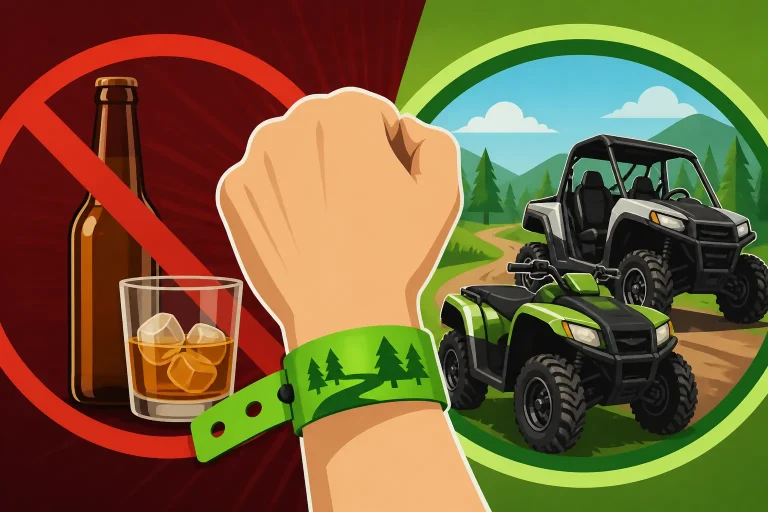
Alabama private off-road parks set many of their own alcohol rules, so permission at one park does not carry over to another. The key distinction is where drinking is allowed and whether anyone who has been drinking will operate a machine. Check the park’s current policy before you go, and make a sober-riding plan for everyone in your group.
How alcohol rules work at a private park
A private park can set conditions for admission and use of its property. Those conditions may cover whether alcohol is allowed at all, where it may be consumed, and what happens if a visitor breaks the rules. A park’s policy is separate from state or local laws that may also apply.
That means “private land” should not be treated as a blanket permission to drink or ride after drinking. The park may prohibit alcohol even where a visitor assumes it would be allowed. And permission to have a drink at a campsite does not mean it is acceptable to ride a quad or side-by-side after drinking.
Rules can differ between parks, and sometimes between different areas within the same property. A park might allow alcohol at a campsite but prohibit it on trails, in a day-use area, or at an organized event. Another might ban it throughout the property. The policy may also address possession, not just consumption.
| What to check | Why it matters |
|---|---|
| Whether alcohol is allowed anywhere on the property | Some parks prohibit it entirely; others set location-based rules. |
| Whether the policy covers possession and consumption | A rule may restrict bringing alcohol onto the property, even if no one drinks while riding. |
| Where the rule applies | Campsites, trails, parking areas, and event spaces may have different conditions. |
| What the park does after a violation | Staff may ask a visitor to stop, leave, or follow another consequence set by the park. |
| Whether the policy changes for events | Group rides and special events may have additional restrictions. |
Read the park’s current visitor rules, waiver, and reservation information before traveling. If the wording is unclear, ask the park directly and describe your situation: for example, whether you plan to camp overnight, attend a group event, or bring alcohol for use at a campsite. A quick confirmation can prevent a long drive ending at the gate.
Policies may be shared through a park website, reservation system, posted signs, or paperwork given at check-in. If those sources do not match, ask staff which rule applies before unloading. Alabama Private Park Waivers and Rules explains why it is worth understanding a park’s terms before signing or riding.
Drinking and operating an ATV or UTV
The safest rule is simple: do not operate an ATV or UTV after drinking alcohol. Alcohol can affect judgment, balance, coordination, reaction time, and the ability to assess changing trail conditions. Those effects matter on uneven ground, around other riders, near steep slopes, and when a machine is carrying passengers or towing equipment.
A quiet campground or a slow trail does not remove the risk. A rider may need to react suddenly to another machine, a fallen branch, an unexpected rut, or a person walking near the trail. Side-by-sides can feel more stable than quads, but their size and weight do not make an impaired driver safe.
Do not rely on a park’s alcohol policy as a measure of whether riding after drinking is lawful. A park allowing alcohol in a designated area is not saying that it is legal to operate a machine after drinking. State and local rules may apply separately, and the legal consequences depend on the circumstances and the laws in force. If you need a legal answer about a specific incident or law, get advice from a qualified Alabama attorney.
Plan a clear separation between drinking and riding
A practical plan makes it less likely that someone will make a poor decision later:
- Choose a designated sober operator before anyone begins drinking.
- Keep people who have been drinking off the machines, including for short trips around the property.
- Arrange a sober driver for any trip beyond the park as well.
- If you are camping, park machines for the night before drinking starts.
- Keep keys with the designated sober person if that helps prevent an impulsive ride.
- Make sure passengers and other group members know the plan.
A person who has been drinking should not be asked to “just move” a machine to another site or ride a short distance to the campground. Those trips still involve operating the machine, and they can create the same immediate risks. If a machine needs to be moved, ask a sober person or park staff for help.
The rule also matters for passengers and group organizers. A passenger should not pressure an impaired person to drive, and a group leader should not treat a drink-and-ride plan as acceptable simply because the group is on private property. For more on the broader issue, see Riding Under the Influence Anywhere.
What to confirm before you arrive
Do not assume that a policy you remember from a previous visit is still current. Rules can be updated, and policies at a neighboring park may be completely different. Check the specific property where you plan to ride, including any campground or event area you intend to use.
Look for clear answers to these questions:
- Is alcohol prohibited throughout the property, or allowed in certain places?
- Does the park restrict bringing alcohol onto the property, or only drinking it?
- Are there separate conditions for campsites, trails, parking areas, or events?
- Does the park have a rule about open containers?
- Are there additional restrictions for overnight guests or minors?
- What should you do if the policy is unclear or a staff member gives a different instruction?
Ask the park about the written rule rather than relying on social media comments or a friend’s memory. If a group organizer has reserved a site or event space, ask that person to share the current rules with everyone attending. The park’s instructions may apply to the whole group, not just the person who made the reservation.
Keep the answer practical. If the park permits alcohol only in a particular area, make sure your group can get there without anyone operating a machine after drinking. If the park does not allow alcohol, leave it at home rather than trying to interpret a vague rule at the entrance. When in doubt, follow the stricter instruction until the park clarifies its policy.
Alcohol is only one part of a park’s visitor rules. Review requirements for helmets, passengers, minors, pets, noise, and camping as well. Alabama Private Park Helmet Rules, Alabama Park Rules for Passengers, and [Alabama Private Park Camping Rules] cover other policies that may affect your plans. Check Alabama Park Admission Fees for a separate look at what to confirm about entry costs; admission does not guarantee an exception to conduct rules.
If someone violates the park’s alcohol policy
If park staff tell someone to stop drinking, move to a permitted area, or leave, take the instruction seriously. Do not argue on the trail or try to avoid staff by moving to another part of the property. A private park may make continued access conditional on following its rules, and a visitor who refuses an instruction could lose permission to remain.
If someone has been drinking, keep that person away from the controls of every machine. Do not let them ride to a campsite, parking area, or exit. Ask a sober person to assist, or contact park staff for help with a safe way to handle the situation. If there is an immediate safety emergency, contact emergency services.
After a disagreement, write down what happened and keep any relevant paperwork, such as a reservation confirmation or signed waiver. If the issue concerns a park policy, ask management to explain the rule and how it is applied. If the incident involves a citation, injury, or possible legal violation, speak with a qualified professional rather than relying on informal advice from other riders.
The best way to avoid trouble is to decide before arrival that alcohol and riding will not overlap. Confirm the park’s policy, tell your group what it is, and set up transportation that does not depend on someone who has been drinking. That approach protects the riders, passengers, other visitors, and the park’s access arrangements.
Disclaimer
This article is for general informational purposes only and does not constitute professional advice. Laws, prices and regulations vary by location and change over time. Consult a qualified professional for guidance on your specific situation.