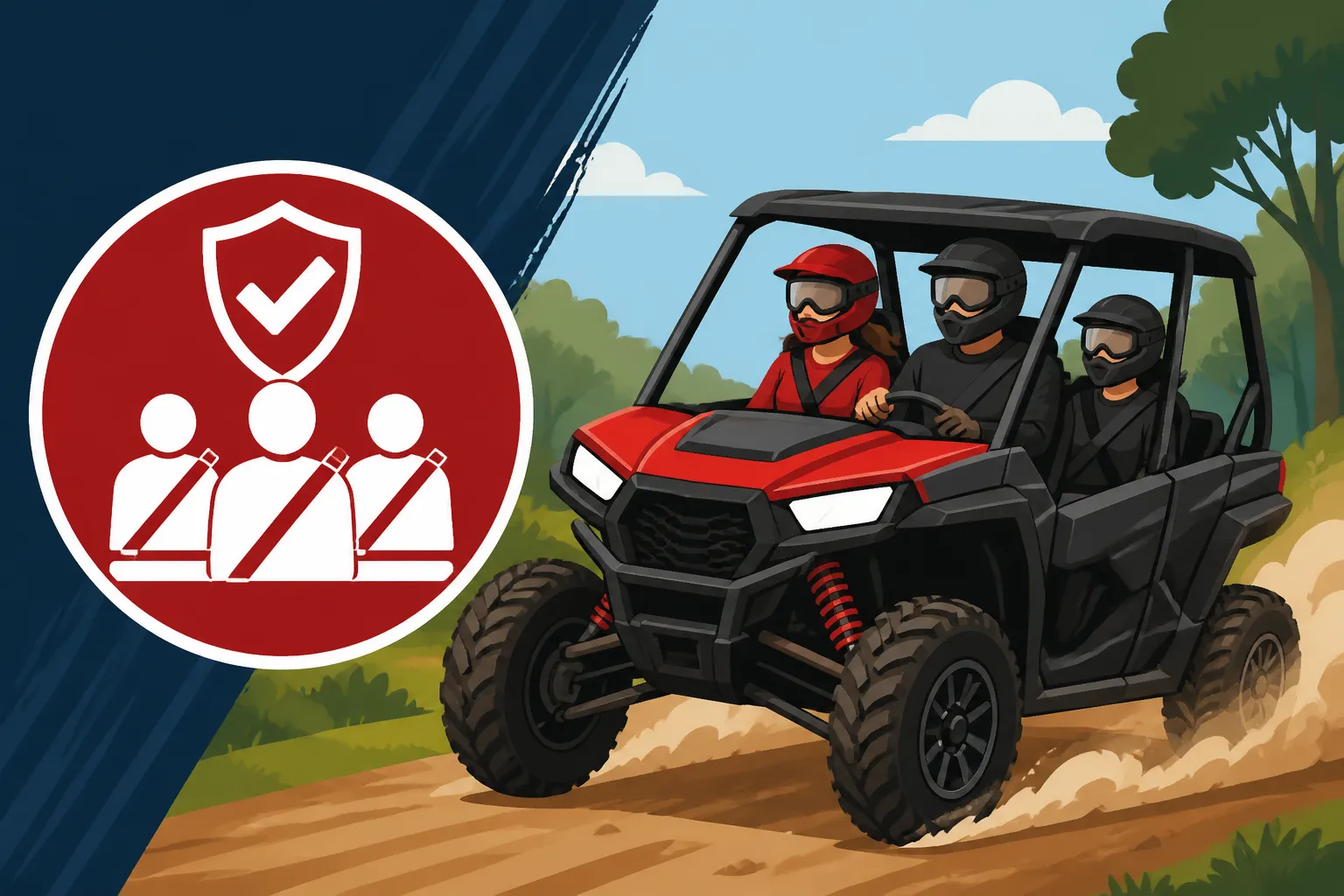
Alabama Park Rules for Passengers
A passenger can turn a straightforward trail ride into a problem if the machine, rider, or park rules do not allow two-up riding. Alabama does not have one passenger policy for every private off-road park, so check the specific park’s requirements before you load up. The key is to match the passenger to the machine and confirm the park’s rules on age, seating, gear, and supervision.
Start With the Machine and Its Seats
A park’s passenger policy is only one part of the decision. The machine must also be designed to carry the number of people riding it. A two-person side-by-side with individual seats and seat belts is different from a quad designed for one rider.
Never treat an open space on a rack, fender, or cargo bed as a passenger seat. Those surfaces are for carrying equipment, not people. A passenger needs a proper seat and a secure way to hold on or stay restrained, depending on the machine’s design. On a quad, that generally means a seat intended for two, passenger footrests, and handholds. On a side-by-side, use the designated passenger seat and its seat belt.
The safest rule is to carry only the number of people the manufacturer intended the machine to carry. A park may enforce a similar rule, but its approval does not make an unsuitable machine safe. For more on seating and machine design, see Carrying Only the Passengers the Factory Intended and Riding Two Up on a Single-Seat Quad in Alabama.
Before bringing a passenger, check the owner’s manual or the manufacturer’s specifications. Look for the stated seating capacity and any instructions about passenger weight, age, or riding position. If you cannot confirm that a quad is built for two, assume it is a single-rider machine until you verify otherwise. A passenger sitting behind the driver can shift the machine’s balance, affect steering, and make it harder to control on a slope or uneven ground.
| Machine or setup | Passenger check | Practical takeaway |
|---|---|---|
| Single-seat quad | No second seat or passenger equipment | Do not carry a passenger |
| Two-person quad | Confirm it has a passenger seat, footrests, and handholds | Follow the manual and the park’s rules |
| Side-by-side | Confirm the passenger has a designated seat and working restraint | Use the seat belt as directed |
| Cargo rack or bed | Not a passenger seat | Carry gear there, not a person |
| Youth machine | Check the manufacturer’s capacity and the park’s age policy | Do not assume a child-sized machine is suitable for two |
A passenger also changes how the machine handles. Added weight can affect braking, turning, acceleration, and stability. On a quad, a passenger who leans the wrong way can make a turn more difficult. On a side-by-side, passengers need to stay seated and use restraints rather than leaning out or reaching toward the ground. These issues matter on gentle trails as well as steep, muddy, or rocky sections.
Check the Park’s Rules Before You Go
Private parks can set their own admission and riding requirements. Rules may differ between parks and can change, so do not rely on a friend’s memory or assume a policy at one location applies everywhere. Check the park’s current written rules, rider information, waiver, or admission instructions before you travel. If the passenger policy is unclear, contact the park and ask directly.
Ask about the points that can affect whether your passenger may ride:
- Whether the park permits passengers on the type of machine you plan to bring
- Whether the park requires a passenger seat, footrests, handholds, or other equipment
- Whether it sets a minimum passenger age or height
- Whether a child must ride with a parent or another responsible adult
- Whether the park has separate rules for quads and side-by-sides
- Whether passengers need their own waiver, wristband, or other check-in
- Whether the park requires particular protective gear
- Whether passenger rules differ by trail, event, or riding area
Some rules are easy to miss in a general admission page. Look for a separate waiver or a list of machine requirements. A signed waiver does not necessarily mean every passenger is allowed on every machine; the park may still enforce capacity, age, or equipment requirements at check-in or on the trail. The details of Alabama Private Park Waiver Forms and Alabama Private Park Insurance Rules can help you understand why paperwork and admission rules matter, but the park itself is the source for its current passenger policy.
Age is especially important when a child is riding. A parent should not assume that a child can ride just because the child fits on the seat. A park may set its own minimum age, require a specific type of supervision, or apply different rules to different machines. Read Alabama Private Park Minimum Ages and Alabama Park Rules for Minors for related issues, then confirm the policy with the park you plan to visit.
It is also worth separating a park’s rule from a general legal requirement. A park can impose conditions for access to its property even when those conditions are more specific than the statewide rules that apply to a ride elsewhere. Likewise, a policy at one private park does not automatically govern a public trail or another private property. For broader background, see Alabama ATV Age Rules and Alabama Park Rules for Helmets.
If you are visiting with several riders, check passenger rules for each machine before the group leaves home. One machine may be approved for two people while another is not. A group can lose riding time if the park turns away a machine that does not meet its requirements, or if a passenger arrives without the required equipment or completed paperwork.
Prepare the Passenger, Not Just the Machine
A passenger needs to know how to ride safely before the machine starts moving. A quick conversation at the trailhead is useful, but it is better to explain the basics somewhere quiet before you enter busy or uneven terrain.
For a quad passenger, explain how to sit, where to place feet, and how to hold on. Ask the passenger to keep feet on the intended footrests and hands on the designated handholds or the rider, as the manufacturer instructs. A passenger should move with the rider through turns rather than suddenly leaning away or shifting weight. Do not let a passenger put a foot down to brace the machine; that can lead to injury or a loss of control.
For a side-by-side passenger, explain how the seat belt works and when it must remain fastened. Keep arms and legs inside the vehicle, stay seated, and do not climb out while the machine is moving. Passengers should not distract the driver or try to help steer unless the machine is specifically designed for that role. Follow any instructions printed on the vehicle and the park’s posted rules.
Protective equipment should fit the passenger and suit the ride. A helmet is a sensible part of off-road preparation, and a park may require one. Eye protection, gloves, long sleeves, long pants, and sturdy footwear can also help reduce exposure to dust, branches, and debris. Check Alabama Park Rules for Helmets for the park-policy side of the issue, and confirm the exact gear requirements with the location.
For children, fit matters as much as having the gear. A helmet that shifts, blocks vision, or cannot be fastened securely is not a good fit. If you shop through Amazon or another retailer, check the product details and sizing guidance carefully, and make sure the helmet is intended for the type of riding. A child’s helmet should be fitted and fastened before the ride, not handed over at the gate as an afterthought.
Do a simple passenger check before each ride:
- Confirm the machine’s stated seating capacity.
- Check that the passenger seat, footrests, handholds, seat belt, or other safety equipment are present and working.
- Make sure the passenger meets the park’s age and other eligibility rules.
- Fit and secure the passenger’s protective equipment.
- Explain how to sit, hold on, and respond to stops and turns.
- Choose a route and speed appropriate for the least experienced person on the machine.
Start slowly, even if the passenger has ridden before. A short, easy section gives the driver a chance to see whether the passenger can stay in position and follow instructions. Stop if the passenger is frightened, uncomfortable, or unable to keep a safe riding position. A park’s permission to ride is not a reason to continue if the setup feels unstable.
What to Do When the Rules Are Unclear
If a park’s website or posted rules do not answer a passenger question, call or message the park before setting out. Ask a specific question rather than relying on a broad one. For example: “Can a child ride as a passenger on this two-person quad, and what age or equipment rules apply?” That gives staff a chance to explain any conditions tied to the machine or passenger.
Describe the machine accurately. State whether it is a quad or side-by-side, how many seats it has, and whether the passenger has a designated seat and safety equipment. If the park asks for a model or other details, have those available. Do not describe a cargo bed or rack as a seat; that can create a dangerous misunderstanding.
If staff give you an answer, check whether it applies to the date and location of your visit. A general answer about the park may not cover a special event, a restricted area, or a change in operating rules. When possible, save the current written policy or the message you received so you can refer to it during check-in.
If the passenger does not meet the park’s minimum age or the machine does not have an appropriate seat, do not try to work around the rule. Leave the passenger off the machine, use a suitable machine if available, or make a different plan. The same principle applies when the manufacturer’s capacity is unclear: verify it before carrying anyone.
Passenger rules are one piece of a safe park visit. Also review the park’s helmet, minor, waiver, and trail requirements, and confirm that your machine is allowed on the routes you intend to ride. For related planning, see Alabama Private Park Minimum Ages, Alabama Park Rules for Minors, and Alabama Park Rules for Helmets.
Disclaimer
This article is for general informational purposes only and does not constitute professional advice. Laws, prices and regulations vary by location and change over time. Consult a qualified professional for guidance on your specific situation.