Alabama Park Rules for Minors
Taking a minor to ride in Alabama involves more than choosing a machine and buying a day pass. Private parks can set their own age, supervision, helmet, passenger and waiver rules, and public-land requirements may be different. Confirm the rules for your specific destination before you load up, especially if the child will ride independently or as a passenger.
Start With the Rules for the Place You’re Visiting
There is no single set of admission rules that applies to every Alabama riding area. A privately operated OHV park can have its own conditions for minors, while public land follows the rules of the agency managing it. Even two private parks may handle youth riders differently.
That matters because “minor” does not automatically tell you what a park will require. One park might set a minimum age for operating a machine, another might allow younger children only with direct adult supervision, and a third might have separate requirements for passengers. These are examples of policies to check, not statewide standards.
Before planning around a child’s age, identify the type of land where you intend to ride:
- Private off-road park: Ask the park about its admission conditions, youth rider rules, waiver process and machine restrictions.
- Public land or a wildlife management area: Check the managing agency’s current rules, permit requirements and any area-specific restrictions. A private park pass does not grant access to public land.
- A trail or property managed by another organization: Confirm who manages it and which rules apply. A trailhead, nearby campground and riding route may not all have the same operator.
For a private park, start with its official rules or contact the office directly. Rules posted online can be incomplete or out of date, and a quick call can clarify whether an adult must ride alongside the child, stay in a particular area, or remain on site. A child who meets the park’s age requirement may still need a properly sized machine, safety gear and a signed waiver.
You can use Alabama Private Park Minimum Ages to understand why a park’s age policy needs to be checked separately, and Alabama Supervision at a Private Park for the questions to ask about adult oversight. If the family plans to ride beyond a private park, check the rules for that land separately rather than assuming that park admission or a waiver covers it.
A useful starting point is this comparison:
| Where the family rides | What to verify for a minor |
|---|---|
| Private OHV park | Minimum ages, supervision, waiver, helmets, passengers, machine limits and park permits |
| Wildlife management area | Current access rules, required permits or licenses, open areas, season restrictions and youth requirements |
| National forest or other public land | Which routes are open, applicable permits, vehicle rules and any age or safety requirements |
| Private property | The landowner’s permission and any conditions they set; permission does not override other applicable laws |
The table is a checklist, not a substitute for the rules of the particular park or public area. Ask the land manager about the actual route and riding activity, not just whether the location is generally “open.”
Confirm Age, Supervision and Passenger Rules
A child’s age can affect whether they may operate a machine, ride as a passenger, or enter a park at all. Those are separate questions. Do not assume that a park allowing a child to ride means it allows that child to drive, or that a child old enough to operate one machine is old enough to operate every machine on the property.
When you contact the park, give the staff the child’s age and the make or type of machine, if you know it. Ask whether the policy changes based on engine size, vehicle type, riding area, experience or whether the child is accompanied by an adult. Some facilities may set different rules for a quad and a side-by-side, or for a beginner area and more difficult trails. Do not treat these examples as universal park policies; they are reasons to ask for the exact rule.
Ask what “supervision” means
The word can be interpreted in practical ways that matter on a busy or spread-out property. A park may require an adult to be present, to ride with the child, to remain nearby, or to supervise a group from another machine. Confirm the park’s definition instead of relying on a general understanding.
Ask follow-up questions such as:
- Must the parent or guardian ride too, or is being present at the park enough?
- Does the adult need to be on the same route or within sight?
- Can another adult supervise the child, and does the park require written permission?
- Are there restrictions on children riding alone, even within a group?
- Does the park have a beginner area or routes recommended for inexperienced riders?
If a teenager is riding with a group, set an agreed meeting point and make sure the adult knows which trails the group plans to use. A child may be permitted to ride under the park’s policy but still need close supervision for practical safety.
Treat passengers as a separate issue
Passenger rules deserve their own check. A park may have requirements about who can ride in a passenger seat, which machines can carry passengers, or whether a child is allowed to ride in a particular seat. A child’s ability to reach a footrest, hold on and use the installed restraint system is also a safety issue, regardless of whether the park permits the ride.
Before bringing a passenger, ask the park whether the vehicle and seating arrangement are allowed. Then check the machine manufacturer’s instructions for its intended number of occupants. Do not put a child on a single-seat quad or in a seat that is not designed for a passenger. For more on this distinction, see Alabama Park Rules for Passengers.
Age rules, supervision rules and passenger rules can be stricter at a private facility than what a family expects from riding on its own property. For related background, [Alabama Rules for Young Riders] addresses youth riding considerations, but the park’s own admission policy still needs to be confirmed.
Check Waivers, Helmets and Required Documents
Many parks require paperwork before a rider enters the riding area. A parent or legal guardian may need to complete or sign documents for a minor. The park may require every rider to sign, even if a parent is also signing for a child. Ask who must be present to sign and whether the form must be completed at the gate or in advance.
A waiver does not mean a child is allowed to ride any machine or on any trail. It is a separate condition of entry. Read it carefully, and ask the park if you are unsure what the form covers or whether a parent, guardian or other adult can complete it. Do not assume that a form signed during a previous visit remains valid. The park can explain its own process; see Alabama Private Park Waiver Forms for more on the questions to raise.
Ask about helmets and other protective gear
Helmet requirements can differ between parks and may also depend on the riding activity or vehicle. Ask whether the park requires a helmet for every rider and passenger, whether it has any other equipment rules, and whether the child’s specific helmet is acceptable. A park’s minimum requirement is not a complete safety checklist.
A properly fitting helmet is especially important for a child. Check that it is designed for the type of riding, fits securely and is in good condition. A helmet that is too loose or can shift over the eyes may not provide a reliable fit. Eye protection, sturdy footwear and gloves can also help protect riders from debris and contact with the machine, even when a facility does not list each item as an admission condition.
If you are buying youth equipment, try it on and check the fit rather than choosing by age label alone. Amazon may be one place to compare available sizes and product descriptions, but confirm that the helmet is appropriate for off-road riding and fits the child correctly; a product listing cannot replace a fit check. For park-specific requirements, review Alabama Private Park Helmet Rules.
Ask whether permits or proof are needed
A private park may have its own entry or riding permit process. Public land may have separate access permits, licenses, or area rules. These are not interchangeable: a park pass does not automatically satisfy public-land requirements, and a public-land permit does not guarantee admission to a private riding area.
If your destination includes a wildlife management area, forest route or other public property, identify the managing agency and ask what the minor needs to carry. Confirm whether permits are required for the child, the supervising adult, or both. Also ask whether the permit applies to the tract and activity you have planned. Alabama Permit Questions Riders Ask can help frame those questions, while Alabama Visitors From Out of State is useful if your family is traveling in from another state.
Keep any required paperwork accessible during the visit. Depending on the destination, that might include a park confirmation, proof of admission, permit information, signed forms or identification requested by the facility. Do not assume a photograph of a document will be accepted; ask the park or land manager what format it recognizes.
Make a Plan Before the Family Leaves Home
The easiest way to avoid a frustrating arrival is to get answers before the machine is on the trailer. Rules can affect whether a child can ride at all, what vehicle they can use, whether an adult must accompany them and what gear must be brought. Confirming the details also helps you avoid making a long drive only to discover that a form, age condition or permit is missing.
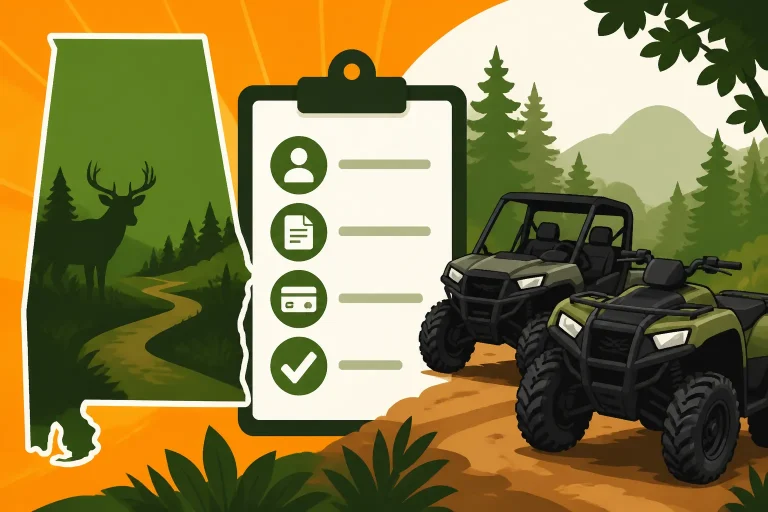
Use this checklist when you call or review the destination’s official rules:
- Identify the land manager. Confirm whether the riding area is privately operated or public land, and check the rules for the actual trails you plan to use.
- Give the child’s age and riding role. Say whether the child will operate a machine or ride as a passenger. Ask about any age or vehicle-specific limits.
- Clarify adult supervision. Find out whether the adult must ride, stay nearby, accompany the child on the trail or meet another condition.
- Confirm the vehicle and route. Ask whether the child’s machine is allowed and whether the park has beginner areas or restrictions on certain trails.
- Check passenger rules. Verify that the machine is designed for the number of occupants and that the park permits the planned arrangement.
- Ask about waivers. Confirm who signs for a minor, who must be present and whether paperwork can be completed before arrival.
- Verify protective gear. Check helmet and equipment requirements, then bring correctly fitting gear even if the park’s list is short.
- Check permits and access conditions. For public land, confirm which permits or licenses apply to the child and supervising adult. For a private park, ask about its own admission process.
- Check the day’s operating information. Confirm that the area is open and that planned trails are available. Weather, maintenance or temporary restrictions can change the day’s options.
- Save the answers. Keep the park’s contact information and any written instructions where the adults in the group can find them.
If an answer is unclear, ask the facility to point you to its current written policy or explain how staff apply it at the gate. Avoid relying on an old social media post, a friend’s recollection or a rule from another park. A policy that works for one family’s teenager may not apply to a younger child, a different machine or a different riding area.
Finally, set expectations with the child before arrival. Explain where they may ride, who they must stay with, what to do if separated and when they must stop. Agree on a simple check-in plan, especially if the park has multiple trail systems. Adult supervision is not just a condition to satisfy at admission; it is how the group keeps track of a young rider and responds if conditions change.
Disclaimer
This article is for general informational purposes only and does not constitute professional advice. Laws, prices and regulations vary by location and change over time. Consult a qualified professional for guidance on your specific situation.