Alabama Supervision at a Private Park
A family ride at a private Alabama park can go smoothly until the gate attendant asks who is supervising the children. Statewide rules and park policies are not the same thing, and a parent’s idea of “keeping an eye on them” may not match the park’s. Here’s how to confirm the supervision requirements and plan a ride that fits them.
What supervision means at a private park
A private off-road park can set operating rules for its property, including rules for minors, adult supervision, machine use, passengers, and access to trails. Those rules may be stricter than what a family expects, and they can differ from one park to another. Do not assume that one park’s policy applies at another.
“Supervision” can mean several different things:
- A parent or guardian must be present at check-in.
- An adult must remain at the park while a minor rides.
- An adult must ride with the minor or stay close enough to monitor them on the trail.
- A child may ride only on a particular type or size of machine.
- A minor may be allowed to ride only on certain trails or under particular conditions.
These are examples of policies a park might use, not a single rule that applies to every private park in Alabama. The park’s current written rules control access to that property. Ask the park to explain what it means by supervision before you arrive, especially if the child will ride separately from the adult.
Supervision is also not the same as permission to ride. A minor may have a parent with them and still be too young for a park’s minimum age, too small for a particular machine, or unable to meet a rule about passengers or equipment. Check the venue’s [Alabama Private Park Minimum Ages] and Alabama Park Rules for Minors before making a reservation or packing the trailer.
It helps to think of the requirements in three layers:
| Layer | What it covers | What to confirm |
|---|---|---|
| Park policy | Entry, age limits, supervision, trails, machine and passenger rules | Current rules for the specific park |
| Alabama law | Requirements that apply based on the activity and location | Whether any state rule applies to your planned ride |
| Adult judgment | Whether the child can safely manage the machine and conditions | Skills, size, fatigue, terrain, and ability to follow instructions |
A park policy sets the conditions for riding there; it does not replace applicable law or a parent’s safety decisions. Likewise, a parent’s presence does not automatically override a venue’s age limit or operating rule. When answers seem unclear, ask the park to point to the written policy or explain how staff apply it.
Confirm the policy before you travel
A quick phone call or email can prevent a wasted trip. Ask about the specific child, machine, and riding plan rather than asking only, “Do you allow kids?” A general yes may not answer whether a particular age, machine, passenger arrangement, or level of adult involvement is allowed.
Use this checklist:
- Give the child’s age and riding experience. Ask whether the park sets a minimum age for entry, riding, or particular trails. If age limits differ by activity, get the distinctions in writing.
- Describe the machine. Explain whether the child will operate a youth ATV, a full-size ATV, or ride as a passenger in a side-by-side. Include the number of seats and who will operate it.
- Ask what supervision requires. Does the responsible adult have to be a parent or guardian? Must that adult ride, remain on the property, or stay with the child? Is supervision required continuously?
- Ask whether the child may ride independently. Some parks may require an adult to be on the same trail or close by; others may define supervision differently. Do not infer the answer from a general admission policy.
- Check trail and machine restrictions. A child might be allowed on the property but not on every trail or machine type. Ask whether the rules change for difficult terrain, group rides, or passenger use.
- Confirm paperwork. Ask who must sign the waiver, whether a parent or guardian must be present, and what identification or other documents are required.
- Check protective equipment and conduct rules. Ask what the park requires for helmets, eye protection, footwear, and passengers. Review Alabama Park Rules for Helmets and Alabama Park Rules for Passengers as related planning topics, then confirm the park’s own policy.
- Ask whether anything changes on the day. Weather, trail conditions, events, or temporary closures may affect where minors can ride. Confirm access close to your visit.
If a staff member gives a verbal answer, follow up with a brief message summarizing the details: the child’s age, machine, and proposed supervision arrangement. That creates a useful record of what you asked and what the park told you. If the website and a staff member appear to disagree, ask which policy is current and whether the answer applies to the day you plan to visit.
Do not wait until the group is at the gate to disclose that a child is riding. The park may not admit a minor who does not meet its conditions, and a last-minute change of machine or adult can create safety problems as well as logistical ones.
Choose a supervision plan that matches the ride
Even when a park allows a child to ride, the adult’s job is more than being somewhere on the property. The right level of supervision depends on the child’s judgment, experience, machine, terrain, and ability to respond when something goes wrong.
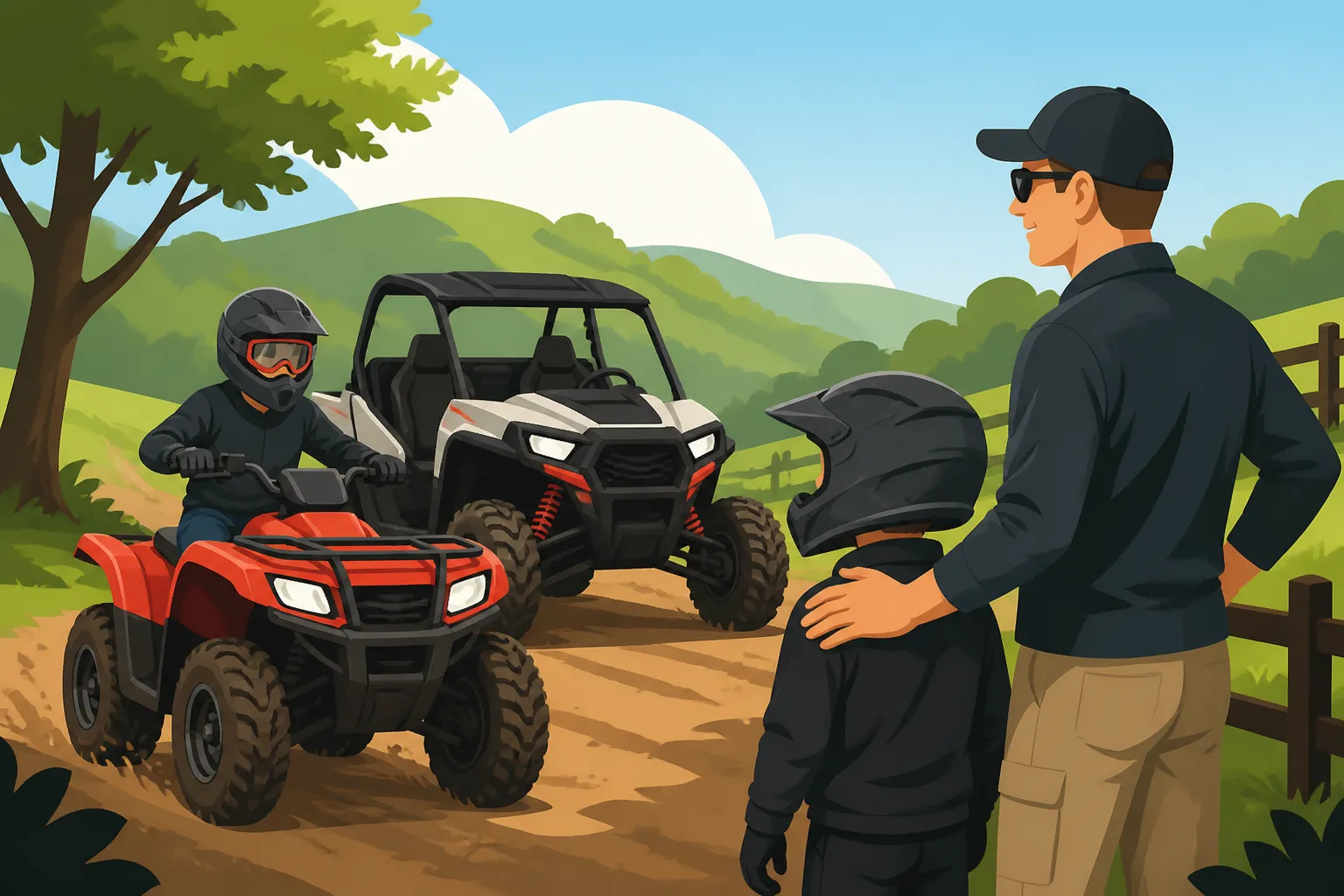
For a new or young rider, close supervision is usually the safer starting point. That may mean choosing an easy area, keeping the adult within direct sight, and agreeing on a stop signal and meeting point before the ride begins. The child should know not to follow another group, take an unfamiliar trail, or continue alone if they become separated.
For an experienced teen, a park may allow more independence, but it still helps to make the plan specific. Agree on which trails are allowed, who the teen rides with, how often the group checks in, and what to do if a machine stops or someone is hurt. A teen’s confidence is not a reliable substitute for demonstrated control and sound decisions.
A responsible adult should be able to focus on the child rather than treating supervision as a formality. If the adult is riding far ahead, managing several children spread across different trails, or distracted by other responsibilities, it may be difficult to intervene promptly. Consider splitting the group so each rider has an adult who can actually monitor them.
Before leaving the staging area, cover a few basics:
- Show the child how to stop safely and where to wait if they lose sight of the group.
- Agree on a turnaround point and a check-in plan.
- Tell them to stop and seek help rather than attempting a steep or unfamiliar section.
- Make sure they know the park’s emergency contact or how to get staff assistance.
- Recheck protective gear and fit, particularly if the child has grown since the last ride.
- Keep the first ride short enough to account for fatigue, heat, and changing attention.
If a child rides as a passenger in a side-by-side, verify that the machine has a proper seat for that passenger and that the park allows the arrangement. A passenger’s age, size, ability to remain seated, and ability to use the restraint system all matter. Never treat a child riding in a passenger seat as a replacement for supervision.
Gear choices deserve attention too. A helmet that is available is not necessarily a helmet that fits correctly. Check the park’s equipment rules and the manufacturer’s fit instructions, and do not rely on a product listing alone. If you buy equipment online through a retailer such as Amazon, verify the exact model, sizing, seller, and return conditions before the ride.
Alabama’s lack of a statewide mandatory ATV safety course does not mean a park cannot set its own training or experience expectations. A course can also help a new rider build skills, but it does not authorize riding where a park’s rules prohibit it. See Alabama Safety Course Options and A Voluntary Safety Course Worth Taking in Alabama when deciding whether instruction would help your child.
Paperwork, waivers, and what to do if plans change
A parent or guardian may be asked to complete paperwork for a minor before the child can ride. Do not assume that a grandparent, family friend, or older sibling can sign in place of a parent. Ask who must be present and sign, whether forms need to be completed in advance, and whether each minor needs a separate form. Which Parent Has to Sign for a Minor and Alabama Private Park Waiver Forms cover those questions in more detail.
Read the waiver and rules rather than treating the signature as a routine check-in step. The documents may describe park conditions, prohibited conduct, risks, and what the park expects from adult companions. A signed form does not make an unsafe supervision plan sensible, and it does not guarantee that every situation is covered. If a provision is unclear, ask the park for an explanation before signing.
Make sure the adult who is expected to supervise will actually be present and able to do so. If a child’s parent is arriving later, or the designated adult has to leave early, ask the park whether another named adult can take over and what the process requires. Do not assume that a change in who is responsible is acceptable without checking.
If the child is not allowed to ride after you arrive, do not try to solve the problem by lending them a different machine or taking them onto a trail outside the park’s rules. Ask staff what options are permitted. The answer may be that the child can observe but not ride, use a different area, or return another day with the required adult or paperwork.
If staff stop a ride because they believe a child is not being supervised, bring the group to a safe stop and discuss the concern calmly. Ask what rule applies and what needs to change before riding resumes. Do not argue with staff while a machine is moving or take the child onto another trail to avoid a restriction. If the rule cannot be met safely, end the ride.
The clearest plan is one the child understands and the park accepts: an eligible rider, an appropriate machine, an adult who can provide the required level of supervision, and paperwork completed before riding. Confirm those details directly with the park, because supervision requirements are venue-specific and can change.
Disclaimer
This article is for general informational purposes only and does not constitute professional advice. Laws, prices and regulations vary by location and change over time. Consult a qualified professional for guidance on your specific situation.