Alabama Safety Course Options
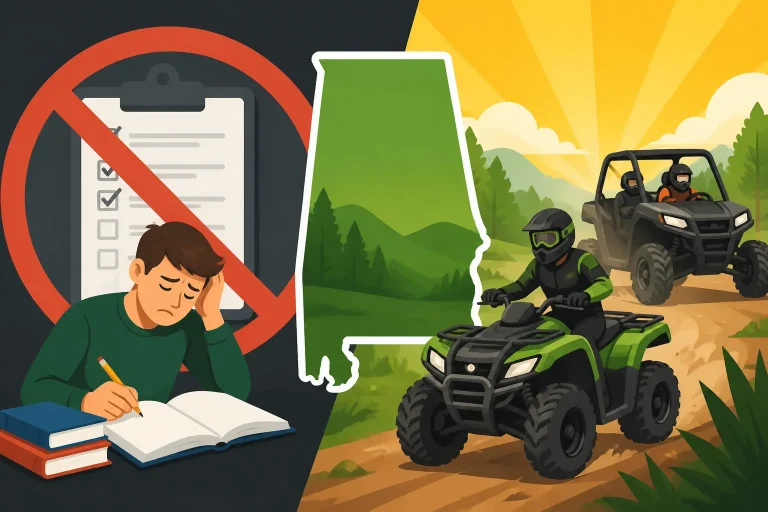
If you ride an ATV or UTV in Alabama, a safety course can help you build skills and avoid common mistakes—but it may not be clear whether training is required or which kind is useful. Alabama does not require a general ATV safety course for riders. The right option depends on your machine, experience and where you plan to ride.
Is an ATV or UTV safety course required in Alabama?
Alabama does not have a statewide requirement that every ATV or UTV rider complete a safety course before riding. Taking a course is voluntary, though it can be valuable for new riders, young riders and anyone moving to a different type of machine. For the distinction between a legal requirement and a safety recommendation, see Alabama Has No Mandatory ATV Safety Course.
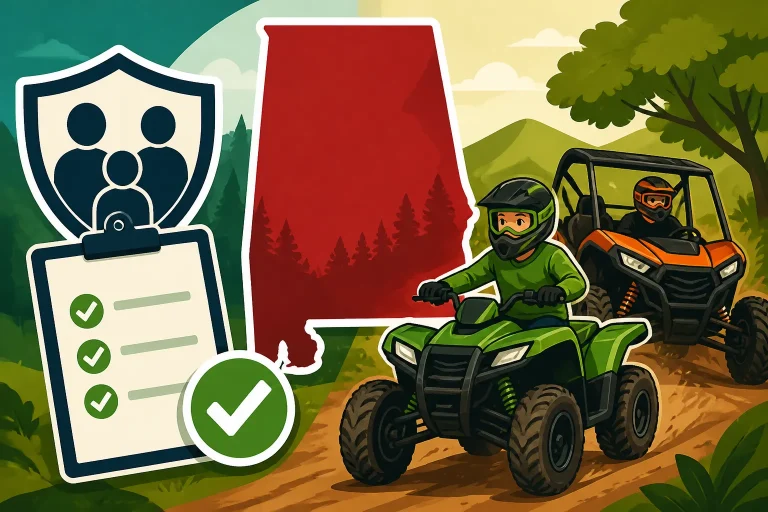
Course completion also does not give you permission to ride everywhere. It does not replace a landowner’s approval, a riding area’s waiver or rules, or permits that apply to a particular public area. A training certificate is evidence that you completed training; it is not a general riding permit, vehicle registration or road license.
There can also be rules that come from the place where you ride rather than a statewide course requirement. A private park may set its own minimum age, supervision, helmet or rider-training conditions. Before booking a course for a child—or taking one to a park—check the park’s current rules and ask whether it recognizes a particular certificate. Alabama Private Park Age Minimums explains why a park’s age policy may matter separately from state law.
For young riders, training is only one part of a safe plan. Match the machine to the rider’s size and ability, supervise closely, and follow the manufacturer’s passenger and operating instructions. A course cannot make an oversized or unsuitable machine safe for a child. The state-specific considerations are covered in [Alabama Rules for Young Riders].
Safety course options for Alabama riders
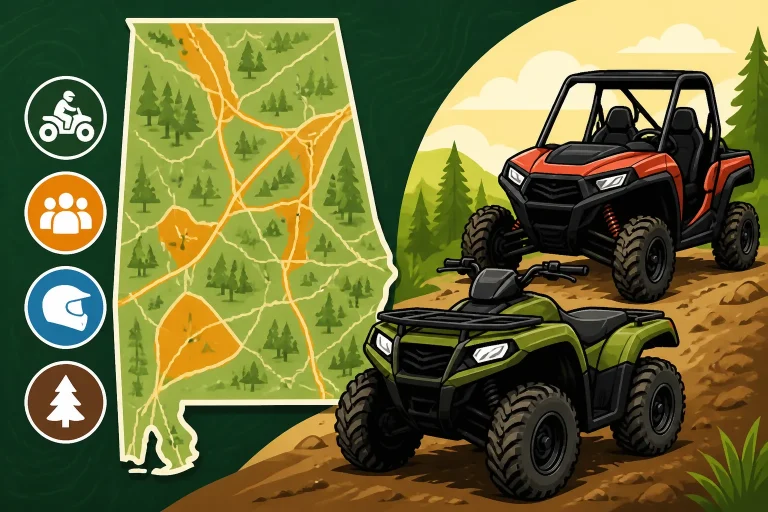
The most useful course depends on whether you want an instructor to observe your riding, need basic knowledge before a first outing, or are looking for machine-specific guidance. Options generally fall into a few categories. Availability, course format and eligibility can vary, so confirm details directly with the provider before you enroll.
Instructor-led, hands-on training
A hands-on course is a strong choice for a first-time rider because it combines instruction with supervised practice. An instructor can cover basic controls, starting and stopping, turning, braking, shifting weight and choosing a safe path. The practical portion lets a rider try those skills in a controlled setting and get feedback before encountering uneven ground, changing traction or other people on a trail.
The ATV Safety Institute (ASI) offers ATV rider training through participating providers. Look for an instructor-led option that fits the machine and rider, and confirm what the course actually includes. A class designed for a conventional ATV may not be the best match for someone who primarily rides a side-by-side. Ask whether the instructor provides training for that machine type and whether participants use their own equipment or a course machine.
Before registering, check:
- The minimum age and any parent or guardian requirements.
- Whether the course is for ATVs, UTVs or both.
- What equipment the rider must bring, including a helmet and eye protection.
- Whether the class includes practical riding or is classroom-only.
- Whether the course requires a particular machine size or operating experience.
- What document, if any, participants receive after completing the course.
A hands-on class can be especially helpful when a rider has never practiced emergency braking, controlled turns or riding over small obstacles. It is not a substitute for gradually building experience. Skills learned in a training area still need to be applied conservatively on trails and private land.
Online learning
Online safety courses can be a convenient way to learn basic concepts before riding. Depending on the provider, lessons may cover protective equipment, machine controls, terrain, risk awareness, passenger safety and riding etiquette. Online learning can also help an experienced rider review fundamentals or give a family a starting point for discussing safe habits.
The main limitation is that an online course cannot watch a rider operate a machine. It cannot correct a poor body position, assess how someone handles a turn or provide supervised practice. If a rider has never used an ATV or UTV, an online course is better treated as preparation than as a replacement for practical instruction.
Check the provider’s description before enrolling. Some online programs offer a completion record; others are educational resources without a formal certificate. Do not assume that an online certificate will satisfy a park, event organizer or land manager. Alabama Online Safety Courses covers the kinds of questions to check when comparing online options.
Dealer, manufacturer and riding-area instruction
A dealer or manufacturer may be able to point a new owner toward orientation or training related to a machine. This can be useful for understanding controls, safety features, maintenance checks and operating instructions for a specific model. Ask whether the session is formal rider training or an equipment walk-through; those serve different purposes.
Some private riding areas may offer instruction, youth sessions or beginner orientation, while others may only provide posted rules and a waiver. Do not assume every park runs a course, or that a park’s orientation is a recognized safety certificate. Contact the location before making plans and ask what riders are expected to know before arriving.
| Option | What it can help with | Main limitation | Best next step |
|---|---|---|---|
| Instructor-led course | Practicing basic skills with feedback | Dates, locations and machine types vary | Confirm the course covers your machine and rider |
| Online course | Learning safety concepts at your own pace | No observed riding practice | Check whether it provides a certificate and who accepts it |
| Dealer or manufacturer orientation | Understanding a specific machine’s controls and features | May not include structured rider training | Ask what is taught and whether practical instruction is included |
| Park or local-area instruction | Preparing for that location’s terrain and rules | May be limited to the park or may not be available | Ask the park what training it offers and requires |
For a closer look at common training content and how it helps on the trail, see What an ATV Rider Course Teaches. A voluntary class can be worthwhile even when no law requires it; A Voluntary Safety Course Worth Taking in Alabama discusses why riders may choose training.
How to choose a course that fits your ride
Start with the machine and the rider, not just the course title. “Off-road safety” can describe anything from an online overview to supervised riding practice. If the rider uses a side-by-side, ask specifically about UTV instruction. If the rider is a child, check the age range, supervision policy and any equipment requirements before paying or traveling.
Then consider the rider’s experience. Someone who has never used a machine may benefit most from hands-on instruction. A rider who has experience but is new to a particular model can start with the operator’s manual and a machine orientation, then seek practical instruction if needed. A more experienced rider may use an online course as a refresher, but should still be realistic about unfamiliar terrain and conditions.
A useful checklist when comparing courses:
- Confirm the machine type. Make sure the training applies to an ATV or UTV like the one the rider uses.
- Check the rider requirements. Ask about age limits, adult supervision, prior experience and any restrictions on participants.
- Find out whether there is practical riding. A course with instructor feedback offers something an online lesson cannot.
- Ask about gear. Confirm whether the course supplies helmets or other equipment, or whether the rider must bring properly fitting gear.
- Clarify what completion means. Ask what certificate or record is issued and whether a specific park or organization accepts it.
- Review the schedule and conditions. Outdoor training may be affected by weather, machine availability or site rules.
- Use the manual as a companion. Read the manufacturer’s operating instructions for the exact machine; a general course cannot cover every model-specific control or warning.
If the goal is to ride with a group, ask the organizer whether it has a training standard or recommends a particular course. If the goal is to satisfy a private park’s condition, get the park’s answer directly before enrolling. A course certificate that is useful for one setting may not meet another organization’s requirements.
Training is also not a reason to skip basic preparation. Riders should check the machine before each outing, wear suitable protective gear, carry a way to contact help when practical, and ride at a speed that leaves room to react. New skills should be practiced on manageable terrain rather than tested for the first time on a steep, crowded or unfamiliar trail.
Courses, permits and riding access are separate
Safety training and legal access answer different questions. A course helps a rider learn how to operate more safely. Permits and access rules determine whether the rider may use a specific area, trail or piece of private land. Completing training does not automatically satisfy those separate requirements.
For example, riding on a wildlife management area can involve area-specific requirements and rules. Check the current conditions for the tract you intend to visit, including which permits apply and where machines may travel. Alabama WMA License Requirements and Which Permits to Carry on an Alabama WMA explain why training and WMA access paperwork should not be confused.
Likewise, a public riding area may have its own operating rules, and a private landowner may limit where and when a machine can be used. A safety certificate does not override posted restrictions or replace permission. If you are visiting from another state, do not assume that a course card or home-state credential grants access in Alabama. Review What Visiting Riders Need to Ride Legally in Alabama and check the rules for your intended riding location.
A practical plan is to handle these questions separately:
- Training: What skills does the rider need, and is an instructor-led course available?
- Machine: Is the ATV or UTV appropriate for the rider, and have its controls and limits been reviewed?
- Location: Is the route open to that kind of machine, and do local rules restrict riding?
- Permission and permits: Does the land manager, park or landowner require documentation or permission?
- Equipment and conduct: What protective gear, passenger limits and trail rules apply?
For many Alabama riders, the sensible choice is to take a voluntary course—preferably with supervised practice if the rider is new—then verify access requirements for each place they plan to ride. That approach keeps the value of training clear without mistaking it for a permit or a blanket authorization to ride.
Disclaimer
This article is for general informational purposes only and does not constitute professional advice. Laws, prices and regulations vary by location and change over time. Consult a qualified professional for guidance on your specific situation.