Quiet Hours at a Park Campground
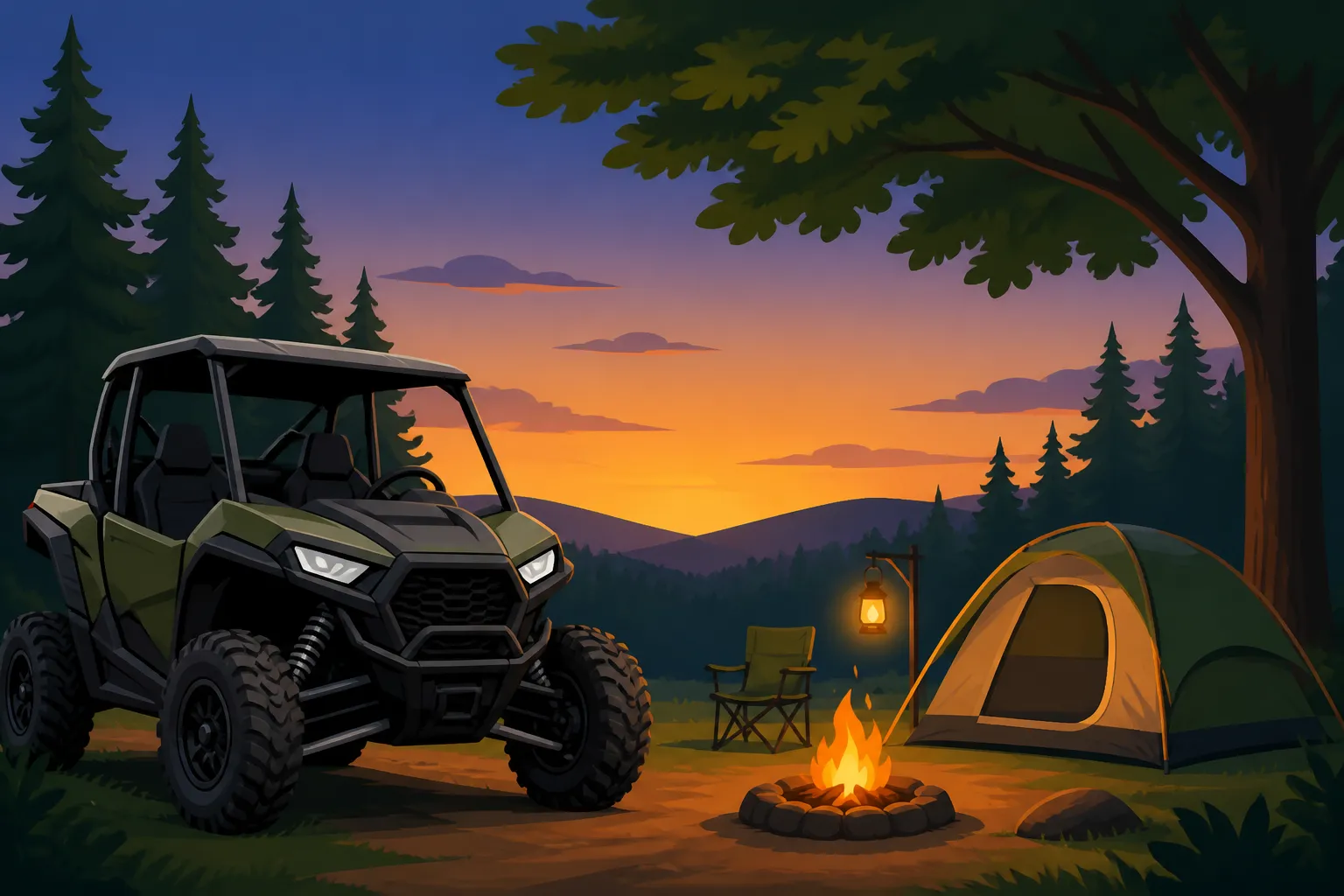
Quiet hours can be a source of friction when an ATV or UTV trip includes camping: one group wants to unload after a long drive, while nearby campers are ready to sleep. The rules differ by campground, so do not assume a familiar schedule applies everywhere. A little planning around arrival, generators, conversations, and morning starts helps you follow the park’s rules and keep the trip enjoyable.
What Quiet Hours Mean at an ATV Campground
Quiet hours are periods when a campground asks guests to keep noise low. The exact hours, what counts as disruptive noise, and how staff handle complaints depend on the property. A private off-road park may set its own campground rules; a public campground may have a different set of rules or procedures. The posted rules, reservation information, and instructions from staff are the ones to follow.
Quiet hours usually do not mean that every sound must stop. Normal movement around a campsite may be unavoidable, but loud conversations, music, engines, and repeated vehicle trips can disturb people nearby. Even sounds that seem modest to your group may carry across an open campsite or through a quiet campground at night.
For riders, the biggest adjustment is often separating trail activity from camping activity. A park may allow riding during its operating hours but restrict machine use near campsites at other times. Campground quiet hours are not permission to ride slowly or quietly after the trails close. Likewise, permission to camp does not automatically mean you can run a generator, play music, or unload machines whenever you arrive.
Keep these distinctions in mind:
- Quiet hours are a campground rule, not a trail schedule. Check both sets of rules if you plan to ride and camp.
- A machine’s muffler does not make late-night use considerate. Starting, moving, or revving an ATV or UTV can still wake nearby campers.
- Quiet hours may apply even if your campsite is away from the main loop. Sound can travel farther than expected, especially at night.
- The person who made the reservation is responsible for the whole group. Make sure guests know the rules before they arrive.
Campground policies can also cover conduct beyond noise, such as alcohol, pets, fires, and visitors. Review the venue’s full Alabama Private Park Camping Rules before arrival rather than relying on a quiet-hours sign alone. If the campground has specific policies on alcohol or dogs, check those directly in Alabama Private Park Alcohol Rules and Alabama Park Rules for Dogs.
A park’s riding access, admission, waiver, or permit requirements do not replace its campground rules. Public-land access rules can vary by area, and a riding permit does not by itself establish what is allowed at a nearby campground. If you are combining a park stay with other riding, check the rules for each place separately.
Plan Arrivals, Riding, and Camp Setup Around the Rules
The easiest way to avoid a quiet-hours problem is to settle the important details before driving to the park. Confirm the campground’s quiet-hours schedule, gate or check-in procedure, and any restrictions on moving machines after a certain time. Ask whether late arrivals are allowed and what to do if you reach the property after the office closes. Do not assume that a reservation guarantees access at any hour.
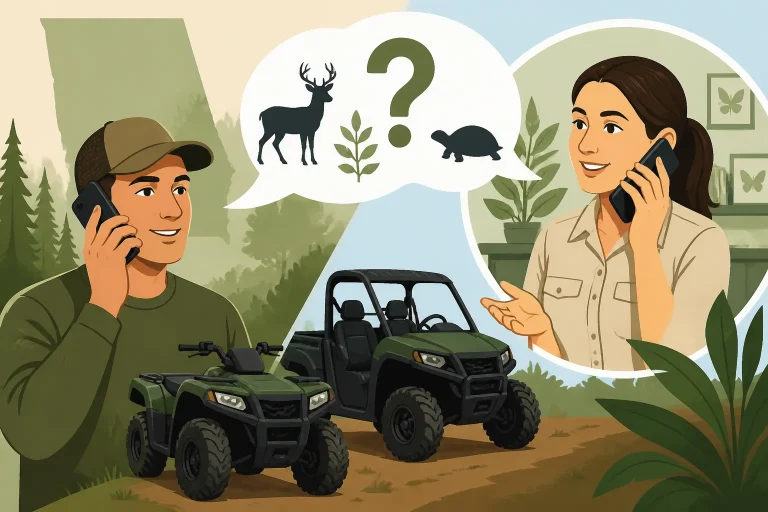
A short call or message to the campground can prevent a frustrating arrival. Ask about practical details rather than only asking, “What are quiet hours?” For example, find out whether late arrivals may park in a designated area, whether trailers can be left hitched overnight, and whether unloading is allowed after quiet hours begin. The answers may differ from one campground to another.
| Activity | Why it can disturb others | Considerate approach |
|---|---|---|
| Arriving late with a trailer | Doors, ramps, tie-downs, and engines create sharp noises | Confirm late-arrival instructions and prepare to unload earlier when possible |
| Starting an ATV or UTV | Engine noise carries through a campground at night | Do not start or move it during quiet hours unless staff direct you to |
| Running a generator | A steady sound can continue for hours near neighboring sites | Ask about generator rules and use a quieter power option when practical |
| Group conversation or music | Voices and speakers travel between campsites | Keep voices low and turn off outdoor music during quiet hours |
| Early departure | Idling, loading, and trailer connections can wake campers | Pack what you can the previous evening and leave with minimal noise |
| Dogs at camp | Barking can carry, especially when people or wildlife pass | Keep pets supervised and check the property’s pet rules |
If you expect to arrive late
Try to finish loading, fueling, and organizing gear before you reach the campground. That reduces the time spent opening storage boxes, searching for equipment, or moving items around after dark. If a late arrival is unavoidable, follow the campground’s instructions closely. Use the designated parking or check-in area if one is provided, and avoid driving around the property to look for your site unless that is part of the stated procedure.
If you cannot unload without making significant noise, contact staff before your trip and ask what they recommend. The considerate choice may be to leave the machines secured on the trailer until morning. Never leave equipment somewhere the campground has not authorized, and do not block a road, gate, or emergency access area.
Booking information matters here. Check the reservation process and any arrival instructions before you set out; Alabama Park Reservation Systems can help you understand why it is worth confirming the details instead of treating a booking confirmation as the full set of instructions.
If you plan an early start
An early ride can be the reason for camping, but it does not make a noisy departure harmless. Pack clothing, helmets, and smaller items the night before. Keep metal gear from clanking together, and avoid warming up an engine near tents or sleeping areas. If the park does not allow machine use before its operating hours, wait until the allowed time even if you are ready to ride.
For a group trip, set expectations in advance: where to meet, when to load, and how to leave without a round of loud conversations at each campsite. A clear plan is often more effective than trying to coordinate several vehicles in the dark. The planning advice in Alabama Group Ride Planning can help groups reduce confusion before the trip begins.
Keep Campsite Noise Under Control Without Sacrificing Safety
You do not need specialized equipment to be considerate. The most useful steps are usually simple: avoid unnecessary engine starts, keep music off, speak quietly, and put loose gear away before the campground gets quiet. A portable light can help with setup without turning on bright vehicle lights near other campsites, but follow any park rules on lighting and fire safety.
Generators deserve particular attention. A generator that seems quiet from inside your UTV may be intrusive at the next campsite. Check whether the property allows them, whether it restricts operating times, and whether it specifies where they can be used. If you need power overnight, ask whether the site has an approved hookup or whether the park recommends another option. Do not run a generator inside a tent, vehicle, or enclosed area. Exhaust can be dangerous, and quiet hours are not a reason to place equipment in an unsafe location.
Other practical ways to reduce noise include:
- Put away tools, ramps, and loose cargo before quiet hours begin.
- Close doors and storage compartments gently rather than letting them slam.
- Avoid testing speakers, horns, winches, or other equipment at the campsite at night.
- Keep conversations close to your own site instead of gathering between several occupied sites.
- Turn off music when you leave your campsite, even if you are only going a short distance.
- Ask children and guests to avoid running through occupied campsites.
- Keep a dog close and attended so it does not bark at people moving around at night.
Some sounds are part of camping: people walk to restrooms, a tent zipper may open, and a vehicle may need to move for a genuine safety reason. The goal is not to eliminate normal activity. It is to avoid preventable noise and respond sensibly if a neighbor or staff member raises a concern.
Personal sleep gear can help you rest when there is ordinary background noise, but it does not make it acceptable to create noise that violates park rules. If you prefer earplugs, pack ones that fit comfortably; Amazon and outdoor retailers carry different styles. Keep them where you can find them, and use them only when you can still respond to an alarm or a safety concern.
Avoid trying to make a machine quieter by removing or altering required equipment. Do not disable safety features or make changes that could create a hazard. If the campground or riding area has sound or equipment requirements, ask staff what applies to your machine before the trip.
Quiet camping also depends on choosing a suitable site. If you will be arriving late with a trailer, ask whether the park has a designated arrival or parking area. If you are traveling with a large group, request sites that make sense for your party rather than spreading people across a busy loop. Site availability and placement are not guaranteed, so describe your needs when booking and be prepared to follow the assignment the campground provides.
Handle Complaints and Check the Rules Before You Leave
If someone says your group is too loud, pause the activity and listen before arguing about whether it technically counts as a violation. Lower voices, turn off music, and shut down equipment if it is safe to do so. If you are unsure what the rule requires, ask campground staff. A calm question can clarify the policy; a confrontation in the middle of the night is likely to make the problem worse.
If staff contact you, follow their directions and ask for clarification if needed. Repeated noise or ignoring a staff request can put your camping privileges at risk. The campground may have its own process for complaints, warnings, or ending a stay, so do not assume that another park handled the same issue in the same way. Read the property’s cancellation and refund terms before booking; Alabama Park Refund Policies is useful background when a change of plans affects a reservation.
If you are the camper being disturbed, start with the least confrontational option. If it feels safe, politely ask the neighboring group to lower the noise. If the noise continues, contact staff using the campground’s stated process. Avoid entering another campsite, moving someone’s property, or escalating a dispute yourself.
Before departure, make one final check of the property’s rules. Policies can differ among parks and campgrounds, and details may change. Confirm:
- Quiet-hours start and end times.
- Whether generators are permitted and when they may run.
- When machines may be started, moved, or unloaded.
- Late check-in and early departure instructions.
- Campfire, music, pet, and visitor rules.
- Whom to contact after the office closes.
If you are staying on public land or using a separate riding area, check that location’s access rules too. A campground reservation does not establish that nearby roads or trails are open to ATVs and UTVs. For general riding manners that also help limit friction with other trail users, see Alabama Trail Etiquette Locals Expect. For campground-specific policies beyond noise, Alabama Private Park Camping Rules is a useful companion.
The most reliable approach is to confirm the rules, communicate them to everyone in your group, and plan the noisy parts of the trip for permitted hours. That leaves room for riding and camping without making nearby guests pay for your schedule.
Disclaimer
This article is for general informational purposes only and does not constitute professional advice. Laws, prices and regulations vary by location and change over time. Consult a qualified professional for guidance on your specific situation.