Alabama WMA Daily Permit Steps
A WMA daily permit can look like a simple pass, but getting one does not automatically make every road or trail open to your ATV or UTV. The permit process and riding rules can vary by wildlife management area, date, and activity. Use these steps to check what you need, obtain the right authorization, and avoid arriving with a permit that does not cover your ride.
What a WMA daily permit does and does not authorize
A wildlife management area, or WMA, is public land managed under rules that can differ from one area to another. A daily permit is an area-specific authorization for a particular visit or date when that WMA requires one. It is not a statewide riding permit, and it does not override a seasonal closure, a posted restriction, or a rule limiting machines to certain roads.
Before planning a ride, separate three questions:
- Do you need a license or other credential? A WMA license, hunting license, or other authorization may be required depending on your activity and circumstances. Riders should not assume that a permit for one purpose covers another.
- Is a daily permit required for this area and date? Permit requirements can vary by tract and may change with the season or management rules.
- Where may you ride? A permit does not necessarily allow off-road travel. You may be limited to roads or routes open to motorized use, and those routes may close temporarily.
The distinction matters because a person may be allowed onto a WMA for one activity but not have permission to ride a machine there. Likewise, having a daily permit does not necessarily mean that every open-looking road is an authorized ATV route. Review Which Permits to Carry on an Alabama WMA and Alabama WMA Rules Vary by Area before choosing a tract.
| Check | What to confirm | Why it matters |
|---|---|---|
| Area and tract | The exact WMA or tract you plan to visit | A permit or rule for one area may not apply elsewhere |
| Activity | Whether you are riding, hunting, or doing both | Requirements may depend on your purpose |
| Date | Whether access and motorized use are allowed that day | Seasonal rules, hunts, or closures can affect access |
| License or credential | Whether a WMA or hunting license is also required | A daily permit may not replace a separate license |
| Routes | Which roads or trails allow your machine | Permission to enter is not permission to ride anywhere |
| Check-in procedure | Whether you must check in or out | Some areas may require an additional step beyond getting a permit |
For an overview of the permit types and where to verify them, see How to Get an Alabama WMA Permit. If the trip involves hunting as well as riding, check the hunting requirements separately rather than treating the riding permit as a substitute.
Steps to get the right daily permit
The safest approach is to identify the exact area first, then follow the permit instructions for that area. Do not start by searching for a generic statewide ATV pass: the relevant process may depend on the tract and the activity.
1. Choose the specific WMA and tract
Write down the WMA’s name and, if it has more than one tract or access point, the tract you intend to use. A nearby entrance does not necessarily lead to the area you think it does. Maps and posted notices can help identify boundaries, but confirm that the map applies to the date and use you have in mind.
Use official area information to check whether motorized access is allowed. Pay attention to the distinction between a road that appears on a map and a road that is open to ATVs or UTVs. A road may be closed to public motorized travel, limited to particular users, or subject to seasonal restrictions. Alabama Area Biologists and Their Maps can help you find area-specific information and a useful contact when a map or notice is unclear.
2. Check the rules for your activity and date
Read the WMA’s current instructions for the day you plan to visit. Look for rules about riding, hunting seasons, vehicle access, open roads, and any temporary closures. If you will hunt during the trip, check both the WMA access rules and the hunting requirements.
Do not assume that a WMA’s general access information answers every question. A tract may have different restrictions during a hunt or other managed activity. A route that is open at one time may be closed at another, and an area may require riders to stay on designated roads. Alabama WMA Access During Deer Season offers a useful reminder to check seasonal access rather than relying on a previous visit.
3. Confirm whether a daily permit is required
Look for the permit instructions tied to the specific WMA, not just a general statement about WMA access. Confirm whether the daily permit is required for your activity, whether a separate license is needed, and whether the permit must be obtained before arrival.
If the instructions are not clear, contact the appropriate area office or biologist before traveling. Ask a direct question: “For this tract, on this date, do I need a daily permit to ride an ATV or UTV, and what other credentials or check-in steps apply?” Naming the tract, date, and activity makes it easier to get a useful answer.
4. Use the method specified for that area
Some permits may be handled electronically; other areas or circumstances may involve posted instructions or a paper process. Follow the method identified for the WMA. Do not assume every area uses the same app, kiosk, or permit form.
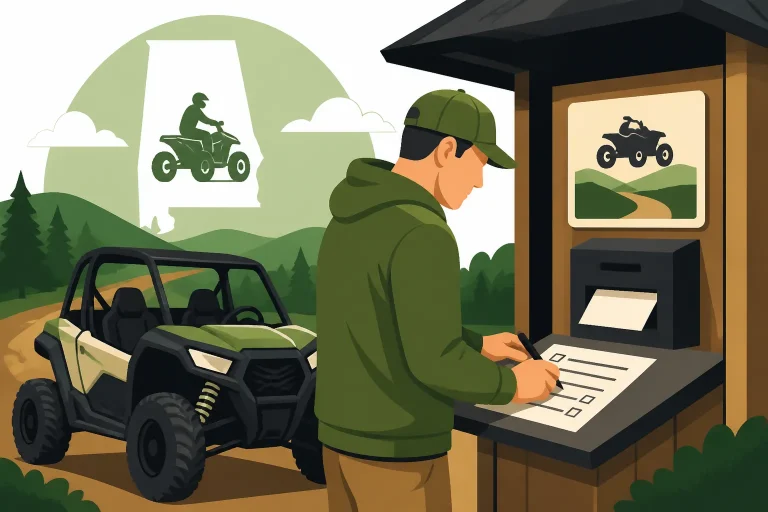
If the official instructions direct you to an electronic system, use the current official process and make sure you select the correct WMA, tract, date, and activity. Pulling a WMA Permit on Your Phone explains the practical points to check when using a phone-based process. If the area directs visitors to a paper permit station, follow the posted instructions there; Filling Out a Paper Permit at a Kiosk covers the details to watch for.
5. Complete every required field and review the result
Enter information accurately and check the permit before leaving the system or kiosk. Make sure the permit is for the right person, area, date, and activity. If the permit instructions specify a check-in or check-out step, complete that too. A permit with the wrong date or tract may not provide the authorization you intended.
Save or print the permit in the format the area accepts. If it is electronic, keep it accessible offline in case service is poor at the access point. A screenshot may help you retrieve the information, but use the official system’s instructions to determine what form of proof is accepted.
6. Carry the permit and any other required proof
Keep the permit available during the visit, along with any license or other documents the area requires. Make sure each person in your group understands which machine and route the permit covers. Do not rely on one rider’s permit to cover other members of the group unless the permit rules clearly say that it does.
If you are using a phone, keep it charged and protect access to the permit. Poor reception, a dead battery, or a screen that cannot be read can turn a straightforward check into a delay. Keep a record of the area’s instructions and any confirmation information in a way you can access without a signal.
Before you ride: verify the route, check-in, and group requirements
Getting the permit is only part of preparing for a WMA ride. Before unloading, compare your plan with the current map and posted notices. Check the entrance signs as well as the information you reviewed at home. Notices at the area may identify temporary restrictions or clarify access conditions.
Confirm the allowed roads and routes
Stay on roads or routes that are open to your machine and permitted for your activity. Do not treat a WMA boundary, service road, firebreak, or visible track as an invitation to ride. If an area map distinguishes between open and closed routes, follow that distinction. A GPS track from another rider is not a substitute for current official information.
The permit process and route rules answer different questions: the permit may authorize entry or access for a defined purpose, while the map and area rules identify where motorized travel is allowed. Review [Rules Printed on an Area Map] when route markings or notes are part of the instructions.
Follow check-in and check-out directions
Some areas may require visitors to record their use, check in, check out, or follow another area-specific procedure. If the instructions require it, complete the step even if you already obtained a daily permit. Do not assume that the permit itself automatically records your arrival or departure.
If there is a kiosk or sign-in location, read its instructions before riding away. If the instructions are electronic, complete the required action through the stated process. For more on this distinction, see Checking In and Out of a Tract.
Make sure the whole group is covered
Do not assume that one permit automatically covers every rider, passenger, or machine. Read the terms for the specific authorization and confirm who must obtain a permit or credential. Each rider should know the area boundaries, approved routes, and any conditions attached to the trip.
If your group includes hunters, passengers, or riders using more than one machine, clarify each person’s role and requirements before departure. A group plan should also identify what to do if someone gets separated or a machine cannot continue. The access rules still apply even when the group is traveling together.
Treat a closure or unclear sign as a reason to stop and check
If a road is gated, marked closed, or inconsistent with the map, do not ride around the barrier or assume it is an old notice. Look for updated information or contact the area office. Similarly, if the permit system is unavailable, do not assume that a prior permit, a screenshot from someone else, or a general WMA license is enough. Confirm an acceptable alternative before entering.
Common mistakes and a practical pre-ride checklist
Many problems come from treating a WMA permit as a blanket pass. These are the mistakes most worth avoiding:
- Choosing a permit before choosing the tract. Permit requirements may be area-specific, so identify the destination first.
- Confusing a daily permit with a license. One document may not replace another. Verify what applies to your activity.
- Assuming a hunting authorization covers riding. Hunting access and motorized access are separate questions.
- Relying on an old map or a previous visit. Routes, seasonal rules, and closures can change.
- Riding beyond the route shown as open. Access to the WMA does not mean unrestricted travel across it.
- Skipping a required check-in or check-out. Complete every procedure listed for the tract.
- Assuming a permit covers the entire group. Confirm who needs authorization and what machines or activities are covered.
- Arriving without a backup plan. A dead phone, poor signal, or closed access point may prevent you from completing the process.
Use this checklist before you leave:
- Identify the exact WMA and tract.
- Confirm that riding is allowed for your machine, activity, and planned date.
- Check whether a daily permit, license, or other credential is required.
- Obtain the permit using the method specified for that area.
- Review the permit for the correct date, tract, person, and activity.
- Save or print proof in an accepted format.
- Check whether check-in, check-out, or additional steps apply.
- Review the current map and stay on authorized routes.
- Read notices at the entrance before unloading or riding.
- Contact the area office if a rule, route, or permit instruction is unclear.
For a ride that crosses several areas or takes place during a busy hunting period, verify access for each tract rather than assuming one permit or map covers the whole trip. Alabama Public Land Rules Compared to Private can help explain why permission on private land does not answer the access question for a WMA. When in doubt, ask the area office or biologist before the trip; that is easier than trying to resolve a permit problem at the gate.
Disclaimer
This article is for general informational purposes only and does not constitute professional advice. Laws, prices and regulations vary by location and change over time. Consult a qualified professional for guidance on your specific situation.