Alabama Rules for Riding a County Road
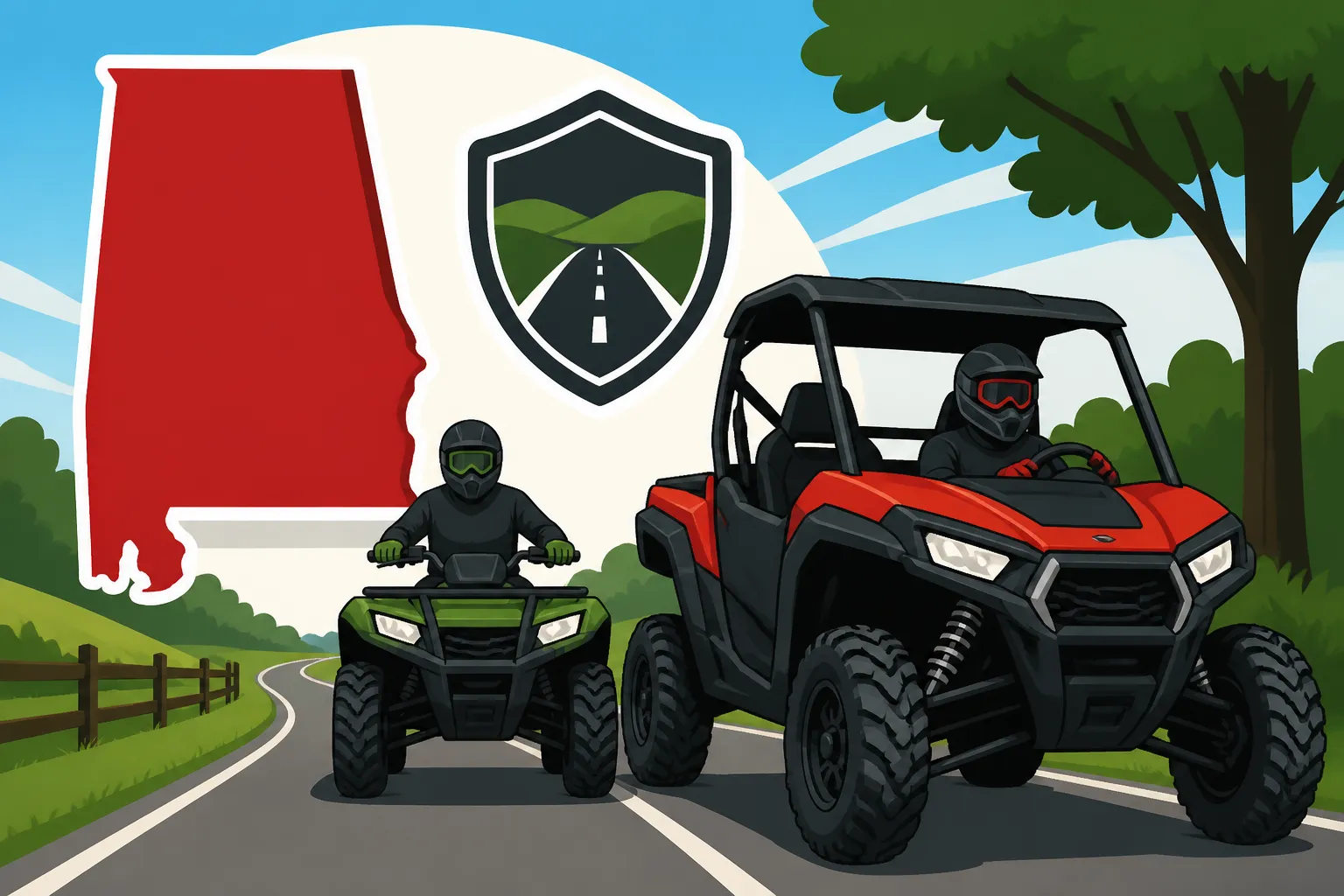
Oh, the age-old question that keeps so many of us off-road enthusiasts scratching our heads and sometimes, unfortunately, getting into a bit of trouble! There’s nothing quite like the dream of hopping on your quad or side-by-side right from your driveway and cruising down a quiet county road to get to your favorite hunting spot or simply explore. But the reality in Alabama can be a confusing maze of "can I or can't I?" This guide is here to untangle those rules for you, specifically focusing on what Alabama law actually says about riding your ATV or UTV on a county road, what the exceptions really mean, and how to stay on the right side of the law without losing your machine.
The Core Question: Can You Even Ride on an Alabama County Road?
Let's get straight to the heart of the matter because this is where a lot of folks get tripped up, often with good intentions. The short answer, which many people find frustrating, is generally "no." Alabama law, like many states, primarily designates ATVs and UTVs as off-road vehicles. This designation carries significant implications when it comes to public roads, including those quiet county roads we all wish we could freely use. It's not just about what feels safe; it's about specific legal definitions and federal standards that most off-road machines simply don't meet.
The Federal Standard Barrier
One of the biggest hurdles for anyone hoping to take their ATV or UTV on a public road in Alabama is something called the Federal Motor Vehicle Safety Standard (FMVSS). This isn't just some obscure rule; it's a comprehensive set of regulations that all vehicles must meet to be considered "street legal" and suitable for highway use. Think about cars, trucks, and even motorcycles – they're all designed and manufactured to comply with these standards, covering everything from headlights and turn signals to crashworthiness and emissions.
Your typical ATV or UTV, while rugged and incredibly capable off-road, is simply not built to these standards. They lack things like proper braking systems for paved roads, street-legal lighting configurations, specific tire ratings, and impact protection designed for collisions with other road vehicles. Because these machines don't meet FMVSS, they are legally considered non-highway vehicles. This fundamental difference is why [Alabama's Federal Standard Barrier to Road Use] is such a critical concept for off-road riders to understand. It's not a matter of simply adding a turn signal kit; it's about the entire design and certification of the vehicle.
The Definition of "Off-Road Vehicle"
To further solidify the "no road use" stance, Alabama law specifically defines what an all-terrain vehicle (ATV) and a recreational off-highway vehicle (ROV), often called a UTV or side-by-side, actually are. These definitions categorize them strictly for off-highway use. The statute outlines characteristics like having three or more wheels, being 60 inches or less in width (for ATVs), or up to 80 inches in width (for ROVs), and intended for off-road operation.
When a vehicle falls under these definitions, it's immediately put into the "off-road" bucket. This means that, by default, it's not considered suitable or legal for operation on public roads. This can be particularly confusing for UTV owners whose machines might look a lot like a small jeep or even a golf cart, which sometimes can be legally driven on certain roads under specific circumstances. But the legal definition makes a clear distinction: if it's an ATV or ROV as defined by Alabama law, its primary domain is off the pavement. For more details, you can check out [Alabama ATV & ROV Legal Definitions].
Alabama's General Prohibition
So, with the federal standard barrier and the state's legal definitions in mind, the general rule is clear: you cannot operate an ATV or UTV on a public road, street, or highway in Alabama. This includes county roads, paved or unpaved, unless a very specific and narrow exception applies. This often frustrates riders who see others seemingly flouting the rules or who live in rural areas where county roads feel more like dirt trails.
It's important to understand that this prohibition isn't just a suggestion; it carries legal weight. If you're pulled over while illegally riding your machine on a county road, you could face fines, penalties, and even have your machine impounded. It's a costly lesson many learn the hard way. The law is written to protect both the ATV/UTV rider, who is vulnerable to larger, faster road vehicles, and other motorists on the road.
Exceptions and Nuances: When an ATV Might Touch a County Road
While the general rule is a resounding "no," like many laws, there are specific, limited exceptions to consider. These aren't blanket permissions, and understanding their narrow scope is crucial. Don't mistake a limited exception for an open invitation to cruise down the road.
Crossing a Road
One of the most common and widely misunderstood exceptions relates to crossing a road. Yes, under certain conditions, you are legally permitted to cross a public road, including a county road, to get from one section of private property to another. However, this is a crossing, not a ride. This distinction is vital. You cannot travel down the road for any distance; you must cross it as directly and safely as possible.
Typically, this means you should come to a complete stop, look both ways, yield to any oncoming traffic, and proceed straight across the road to the opposite side. You're not allowed to drive along the shoulder, use the road as a shortcut, or drive to the store. This exception is designed for situations where a property owner's land is bisected by a public road, making it necessary to cross briefly to access another part of their property. Many riders assume "crossing" means they can ride a short distance down the road, but this is a dangerous misinterpretation. For further clarity, refer to [Alabama Rules for Crossing a Highway].
Farm, Timber, and Agricultural Use
Another significant exception pertains to bona fide agricultural operations. Alabama law often provides special considerations for vehicles and equipment used for legitimate farm, timber, or agricultural purposes. If your ATV or UTV is being used directly in the context of farming, timber harvesting, or other agricultural work, there may be provisions that allow for limited road use.
This isn't for pleasure riding or riding to your deer stand on a hunting lease. This exception applies when the machine is actively involved in the work of the farm – for example, moving between fields, checking livestock, or transporting small equipment on a property that borders a county road. Even then, the use is typically expected to be minimal, necessary for the operation, and often requires specific lighting or signage. It's about function, not recreation. If you’re riding a machine designated for farming, you might be interested in [Alabama Farm Use and Road Riding]. Just make sure your use genuinely qualifies!
Low-Speed Vehicles (LSVs) and Street-Legal Conversions
This is where a lot of confusion, and unfortunately, a lot of misleading marketing, comes into play. You might see "street legal kits" advertised by companies like SuperATV that include turn signals, horns, and mirrors. While these accessories are certainly necessary for a street-legal vehicle, simply adding them to an ATV or UTV does not magically make it street legal in Alabama or most other states.
The critical distinction here is between a modified off-road vehicle and a vehicle manufactured and certified as a Low-Speed Vehicle (LSV) from the factory. [Alabama Low-Speed Vehicle Rules] apply to vehicles that are specifically built to meet federal safety standards for LSVs. These are generally four-wheeled vehicles, often with a top speed between 20-25 mph, equipped with specific safety features, and typically registered differently than an ATV. They are designed from the ground up to be safe for low-speed public road use.
An ATV or UTV, even with all the bells and whistles added from an aftermarket kit, still fundamentally lacks the core design and safety certifications of an LSV or a full-sized automobile. This includes things like occupant protection, crash testing, and emission controls. While SuperATV and similar companies offer fantastic accessories to enhance safety and functionality off-road, their "street legal kits" usually add components that would be required for road use, but they don't change the underlying legal classification of your machine. The legal principle is that [Why a Street Legal Kit Will Not Make It Legal] is because the vehicle itself, as manufactured, does not meet the necessary federal safety standards. You can't just bolt on a few parts and bypass years of automotive engineering and federal regulation.
Local Ordinances and the "Wild Card" Factor
While state law sets the overarching framework, local jurisdictions sometimes have the authority to enact their own ordinances, which can add another layer of complexity to ATV and UTV use on county roads. This is often where rumors and local "everyone does it" attitudes get started, but relying on hearsay can lead to trouble.
City and County Authority
In some instances, cities and counties in Alabama can pass specific ordinances that permit or restrict the use of ATVs, UTVs, or golf carts on certain public roads within their jurisdiction. However, this power is not limitless, and any local ordinance must generally align with or be more restrictive than state law. It's rare for a county to widely open all its roads to ATVs and UTVs without significant caveats, primarily due to the state's existing prohibitions and the FMVSS barrier.
More commonly, if you see local allowances, they might apply to golf carts in certain small towns or to specific designated routes, often for very limited purposes. It's not a green light for your sport quad to hit the county pavement. The key takeaway is that such allowances are exceptions, not the rule, and they are typically very narrowly defined.
How to Check Local Ordinances
If you believe there might be a local ordinance in place that allows ATV or UTV use on county roads in a specific area, it's absolutely crucial to verify this information directly. Do not rely on what a friend of a friend said, or what you've seen others doing. The best way to check is to contact the county sheriff's office or the county commission's office directly. For city roads, you'd contact the city police department or city hall.
Ask specific questions: "Are ATVs or UTVs permitted on county roads within [specific county]?" "Are there any designated routes or special permits required?" Document who you spoke with, when, and what they told you. Many counties will simply reiterate the state law's general prohibition. You might also find some information by looking up [Alabama City Ordinance Lookups], but often these are more focused on golf carts or other specific low-speed vehicles. Without clear, official confirmation, assume the general state prohibition applies.
Consequences of Illegal Road Riding
Ignoring the law and riding your ATV or UTV on a county road when it's not permitted can lead to a host of unpleasant consequences. These aren't just minor inconveniences; they can hit your wallet hard and potentially put your machine at risk.
You could be issued a traffic citation, which comes with fines and court costs. These aren't just small fees; they can quickly add up. In some cases, especially if you're deemed to be operating the vehicle recklessly or are involved in an accident, your ATV or UTV could even be impounded. Getting an impounded machine back is a lengthy, expensive, and frustrating process involving impound fees, storage fees, and often proof of ownership and insurance. You certainly don't want to find yourself in a situation where you're asking about [Alabama Penalties for Illegal Road Riding] after the fact.
Beyond the legal ramifications, there's the very real danger. ATVs and UTVs are not designed for road conditions, and accidents involving them on paved surfaces can be severe. The risk to yourself, your passengers, and other motorists is simply too high to justify illegal road use.
| Scenario | Legal Status on Alabama County Roads | Why / Explanation |
|---|---|---|
| Standard ATV/UTV (Joyriding) | Generally Prohibited | Not FMVSS compliant, designed for off-road use only. |
| Crossing a Road (Directly) | Permitted (Limited) | To access adjacent private property, must be direct and safe. |
| Farm/Timber Use | Permitted (Limited) | For bona fide agricultural/timber operations, not recreation. |
| "Street Legal Kit" Conversion | Generally Prohibited | Aftermarket parts don't change core FMVSS non-compliance. |
| Factory-Built Low-Speed Vehicle | Permitted (Limited) | Must be manufactured as an LSV and meet specific criteria. |
| Local Ordinance Allows | Permitted (Locally) | Only if a specific county/city ordinance explicitly permits it; verify directly. |
Practical Considerations Beyond the Law
Even if there were a magical loophole that allowed ATVs and UTVs on every county road, there are still some very real, practical considerations that riders should think about before hitting the pavement. Safety, visibility, and insurance are paramount, regardless of what the law might permit.
Safety on Paved Surfaces
ATVs and UTVs are built for dirt, mud, rocks, and uneven terrain. Their suspension systems are often designed for absorbing bumps, and their tires typically have aggressive treads for traction in loose conditions. These characteristics, which are huge advantages off-road, become liabilities on paved county roads.
Off-road tires have less contact patch with pavement, reducing grip, especially when turning or braking hard. The aggressive tread can also make steering feel vague and unstable on asphalt or hard-packed gravel. The suspension, designed for impact absorption, can lead to excessive body roll in corners, increasing the risk of a rollover, especially in a side-by-side. Paved roads also mean higher speeds and interaction with full-size vehicles, a scenario these machines are not built to handle. A small ditch or unseen pothole at speed can send an off-road machine into a dangerous skid or rollover situation much more easily than a car.
Visibility and Lighting
Roads, even quiet county roads, mean sharing space with cars and trucks. Visibility is critical, and many ATVs and UTVs, while they might have headlights and taillights, are simply not as visible as a car or truck, especially at dusk, dawn, or in inclement weather. Their smaller profile, lower height, and often less intense lighting make them harder for other drivers to spot.
If you were somehow legally able to ride on a county road, you'd need to ensure your machine is highly visible. This would mean bright headlights, taillights, turn signals, and potentially reflective tape or flags. Riding after dark without adequate, street-legal lighting is incredibly dangerous and almost certainly illegal. Consider the dust that often coats county roads in Alabama too; this can reduce visibility for everyone. Think about safety equipment like what SuperATV offers for lighting upgrades, but remember, these are for off-road enhancements unless your machine is a true LSV.
Insurance Implications
Finally, let's talk about insurance. Many ATV and UTV insurance policies are specifically written to cover off-road use. While some policies might offer limited coverage for road crossings or incidental road use, operating your machine illegally on a public road could very well void your coverage in the event of an accident.
Imagine getting into an accident on a county road while riding illegally. Your insurance company might deny your claim, leaving you personally responsible for damages, medical bills, and potentially legal fees. This could be financially devastating. If you're serious about exploring any potential legal road use (such as with a legitimate LSV or a farm-use exception), you absolutely must confirm with your insurance provider that you have adequate coverage for that specific type of use. Don't just assume your standard off-road policy will cover you. It's always best to ask your provider, " [Does Alabama Require Insurance on an ATV?] " and what exactly your policy covers.
Ultimately, while the idea of cruising down an Alabama county road on your ATV or UTV is appealing, the legal and safety realities are quite clear. For the vast majority of riders and machines, these roads are off-limits. Understanding the rules and respecting them will help keep you safe, keep your machine out of impound, and keep your wallet happy.
Disclaimer
This article is for general informational purposes only and does not constitute professional advice. Laws, prices and regulations vary by location and change over time. Consult a qualified professional for guidance on your specific situation.