Alabama Rules for Riding a Dirt Road
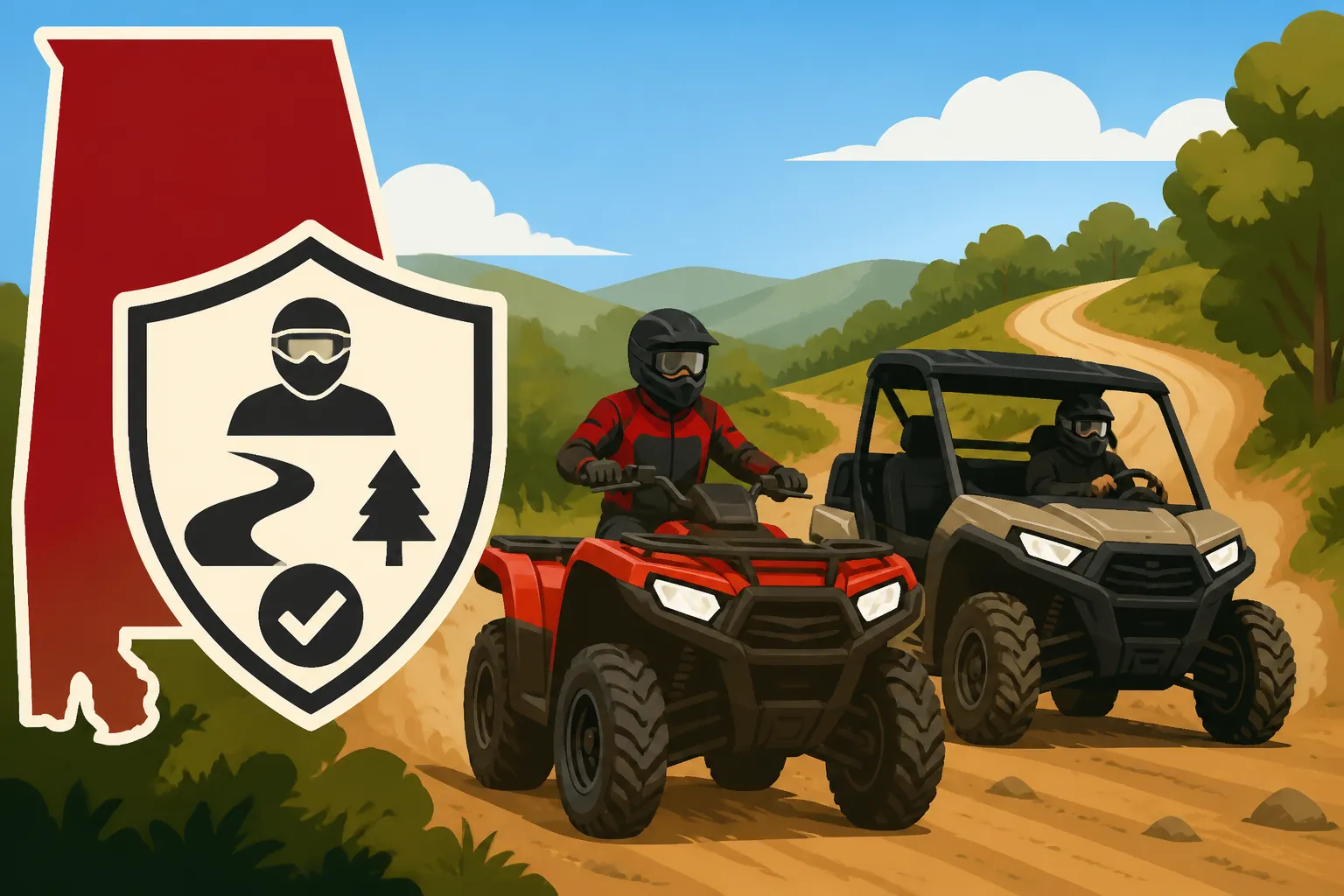
Oh, the allure of a winding dirt road in Alabama! It's a classic image, isn't it? The dust kicking up behind your ATV or side-by-side, the smell of pine, the freedom of the open country. But that idyllic scene often crashes head-first into a wall of confusion when you start wondering, "Can I actually ride my quad on this dirt road, or am I asking for a ticket?" It's a common frustration, because what seems like common sense in rural areas often bumps up against state statutes and local ordinances. This guide aims to unravel the tangled mess of Alabama's rules regarding ATV and UTV use on dirt roads, giving you a clearer picture of when and where you can enjoy that ride without the worry of breaking the law.
The Tricky Legal Landscape of Alabama Dirt Roads for ATVs and UTVs
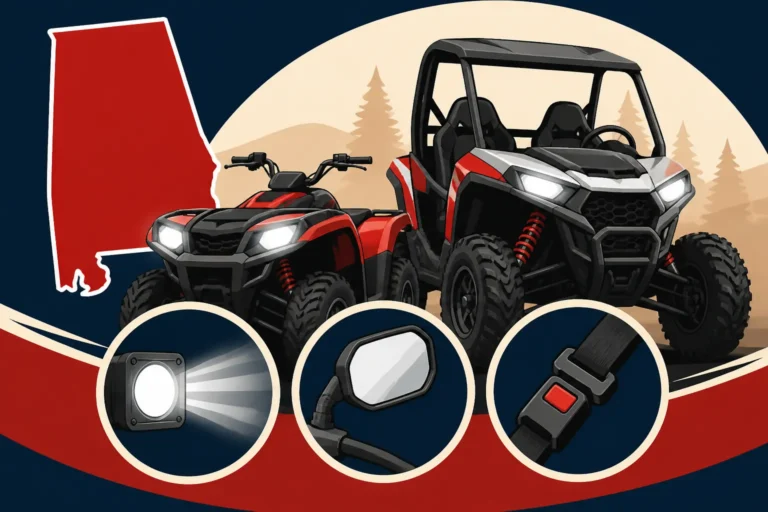
Let's cut to the chase: in Alabama, the general rule is that ATVs and UTVs are not designed or legally permitted for use on public roads, and this often includes dirt roads. This can be a tough pill to swallow, especially when you live out in the country and those dirt roads feel like an extension of your property. The state's laws typically define these machines as off-highway vehicles (OHVs) meant for off-road recreational riding, farm work, or specific industrial uses, not for general transportation on the public road system. The primary reason for this restriction often boils down to safety and vehicle standards. Most ATVs and UTVs simply don't meet the stringent Federal Motor Vehicle Safety Standards (FMVSS) required for on-road vehicles, lacking things like proper turn signals, headlights, tail lights, and other safety equipment that cars and trucks are legally mandated to have. You can delve deeper into what the state considers these machines by checking out [Alabama's ATV and ROV Legal Definitions].
Understanding the "Public Road" Definition
The biggest hurdle for riders wanting to use dirt roads is the definition of a "public road." In Alabama, if a road is maintained by the state, county, or a municipality and is open for public vehicular travel, it's generally considered a public road. This means it's subject to the same traffic laws as a paved highway, even if it's just two ruts through the woods. Many assume that because a road isn't paved, it's somehow "less" of a public road, but that's a dangerous assumption to make. The law doesn't make a distinction between a gravel road, a graded dirt road, or a paved interstate when it comes to the fundamental prohibition of unregistered, non-street-legal vehicles. This can lead to serious fines and even machine impoundment if you're caught.
Think about it this way: your neighbor's gravel driveway is private, but the county-maintained gravel road leading to it is public. It doesn't matter if it sees five cars a day or five hundred; if the government maintains it for public travel, it's generally off-limits for your quad or side-by-side. This is often the core frustration for rural residents who just want to get from one part of their property to another, or to a friend's house just down the dirt lane. The line between private and public land use can feel blurred, but the law tries to keep it quite distinct.
Why Standard ATVs Don't Qualify for Road Use
The inherent design of most ATVs and UTVs also plays a major role in their exclusion from public roads. They are built for agility, power, and navigating uneven terrain, not for the demands of highway speeds or mingling with cars and trucks. Their tires, suspension, and overall chassis are optimized for off-road conditions. For instance, the knobby tires excellent for mud and rocks wear quickly and provide poor traction on hard surfaces, especially in wet conditions. Furthermore, they often lack crucial safety features like seatbelts, airbags, and reinforced roll cages that are standard on street-legal vehicles. Trying to modify a standard ATV to meet these standards is usually far more complex and costly than it's worth, and in most cases, it simply won't be recognized as street-legal by the state. You can read more about why this conversion is generally not feasible in [Why Your Policy Should Name the Serial Number] (while the title is about serial numbers, the content explains street legal limitations).
Some states have specific "low-speed vehicle" classifications, but these typically apply to vehicles purpose-built for those standards, not converted ATVs. Even a brand like SuperATV, known for a vast array of aftermarket parts and accessories that enhance off-road performance, does not offer solutions that will magically make a standard ATV or UTV compliant with Alabama's road laws for general public use. Their focus is on making your machine more capable and durable for the terrain it's designed for.
Specific Scenarios and Exceptions for Dirt Road Riding
While the general rule is restrictive, Alabama does recognize a few specific exceptions where an ATV or UTV might legally operate on a dirt road. These aren't blanket permissions, though, and they come with their own set of conditions and limitations. Understanding these nuances is key to staying within the law.
Farm Use Exemption
One of the most frequently cited exceptions is for bona fide agricultural purposes. If your ATV or UTV is being used exclusively for farming, ranching, or timber operations, it might be allowed to cross or travel short distances on a public dirt road. However, "farm use" isn't a free pass to joyride. This exception is usually granted for activities directly related to agricultural production, such as moving equipment between fields, checking livestock, or transporting supplies on a farm that happens to be bisected by a dirt road. It's not for running to the store, taking a leisurely ride, or commuting to work, even if you live on a farm. You can learn more about this specific exemption in [Alabama Farm Use and Road Riding].
To qualify, your machine must typically be engaged in actual farm work. If a deputy stops you, they'll be looking to see if your activity aligns with agricultural needs. For instance, hauling a trailer full of hay bales, carrying tools for fence repair, or checking on cattle pastures would likely fall under this umbrella. Simply riding down a dirt road from your farmhouse to the mailbox with no clear farm-related purpose might not. Documentation proving your farm operation could also be beneficial, though not always required on the spot.
Crossing a Road
Another critical, but often misunderstood, exception involves crossing a public road. Alabama law generally allows an ATV or UTV to cross a public road, including a dirt road, provided certain conditions are met. This is not permission to travel down the road for any distance, but strictly to go from one side to the other. The crossing must be made at an angle of approximately 90 degrees to the road, with the operator yielding to all oncoming traffic, and the shortest, most direct route possible. It's intended to allow access between private properties or sections of a property that are separated by a road.
For example, if your deer camp is on one side of a county dirt road and your hunting land is on the other, you can usually cross that road. However, you cannot ride two miles down the road to get to a different section of your property. Common sense and extreme caution are paramount when performing a road crossing. Visibility is key, especially on dusty dirt roads where oncoming vehicles might be hard to see. Always assume other drivers don't see you. For more detailed information, check out [Crossing a Road on an ATV in Alabama].
Local Ordinances and Designated Areas
While state law sets the general framework, individual counties and municipalities in Alabama have the authority to enact their own ordinances regarding OHV use within their specific jurisdictions. This means that a dirt road that might be prohibited in one county could, theoretically, have specific allowances in another, or even within a particular city's limits, usually with strict conditions. These local rules often require a permit, specific safety equipment, or restrict hours of operation.
It's absolutely crucial to check with the local sheriff's department or county commissioner's office for the specific area you plan to ride. Never assume that because one rural area allows it, another will. For example, some small towns might have specific ordinances for golf carts or certain low-speed vehicles, but these rarely extend to standard ATVs or UTVs for general road use. Ignorance of a local ordinance is not a defense, and a ticket issued under a local rule is just as real as one issued under state law. Finding this information can sometimes be a challenge, requiring phone calls or visits to local government offices, but it's an essential step if you want to ride legally. You can explore this further in [Alabama Local Ordinances on ATV Riding].
| Scenario | General Legality on Public Dirt Roads | Key Considerations |
|---|---|---|
| General Recreational Riding | PROHIBITED | Most common cause of citations; not street legal. |
| Farm/Timber Use | PERMITTED (Limited) | Must be directly related to agricultural/timber operations; not for casual use. |
| Crossing a Road | PERMITTED (Strict Conditions) | Must be 90-degree angle, shortest route, yield to all traffic. |
| Designated OHV Trails | PERMITTED (Specific Areas Only) | Allowed only on trails within parks/private lands; not the public road to get there. |
| Private Roads | PERMITTED (With Permission) | If it's truly private and you have landowner consent. |
| Local Ordinance Allowance | PERMITTED (Rare, Strict) | Requires specific local law/permit; verify directly with local authorities. |
Practical Tips for Navigating Alabama's Dirt Road Rules
Given the complexities, how can you responsibly enjoy your ATV or UTV without running afoul of the law? It comes down to due diligence, respect for the rules, and a heavy dose of common sense. The goal is to maximize your enjoyment while minimizing risk and legal headaches.
How to Confirm Legality in Your Area
Before you even think about putting tires on a public dirt road, make that phone call. Seriously, pick up the phone and dial your local sheriff's department or county commission office. These are the folks who know the specific nuances of local enforcement and any unique ordinances that might apply. Be precise in your questions: "Can I ride my UTV on County Road X for farming purposes?" or "Are ATVs permitted on any public dirt roads within the city limits of Y?" Don't rely on hearsay or what a friend's cousin said. Laws can change, and interpretations can vary, so getting it from the source is always the best approach.
Additionally, always remember that local deputies are often the first line of enforcement. A quick chat with an officer can clarify any immediate concerns and build a good relationship within your community. They often appreciate riders who are trying to be responsible and understand the law. This proactive approach can save you a lot of trouble down the line.
Safety and Responsibility on Any Road Surface
Even if you find a legal reason or place to ride on a dirt road, safety should always be your number one priority. Dirt roads present their own unique hazards: dust can severely reduce visibility for you and other drivers, loose gravel can cause skids, and potholes can appear out of nowhere. Always ride defensively, wear appropriate safety gear (including a helmet, even if not legally mandated for your specific scenario on private land, it's just smart!), and make sure your machine is in top mechanical condition.
Consider investing in quality lighting for your machine, especially if you anticipate riding near dusk or dawn for farm work or [Alabama Rules for Riding After Dark]. Enhancements from companies like SuperATV can provide robust light bars and accessory lighting that improve your visibility and make your machine safer to operate, even if they don't make it street legal. When riding on any road shared with other vehicles, assume you are invisible and ride accordingly. Slow down, stay to the far right, and be prepared to stop or pull over if a car approaches. Remember, vehicles on public roads have the right-of-way.
Penalties for Illegal Road Use
It's not just a slap on the wrist. Getting caught riding an ATV or UTV illegally on an Alabama dirt road can lead to significant penalties. These can range from hefty fines, court costs, and potentially points on your driver's license, to the impoundment of your machine. In some cases, repeated offenses could lead to more severe consequences. The cost of retrieving an impounded vehicle, including towing and storage fees, can quickly exceed the initial fine, turning a fun ride into a very expensive mistake.
Beyond the legal penalties, there's the very real risk of an accident. If you're involved in a collision with another vehicle while operating illegally on a public road, your insurance policy might not cover damages, leaving you personally liable for extensive costs, injuries, and property damage. It's a risk that far outweighs the convenience of taking a shortcut on a public dirt road. For more information on the consequences, see [Alabama Penalties for Illegal Road Riding]. Always err on the side of caution and prioritize legality and safety.
Disclaimer
This article is for general informational purposes only and does not constitute professional advice. Laws, prices and regulations vary by location and change over time. Consult a qualified professional for guidance on your specific situation.