Alabama’s Motorcycle Helmet Statute
Riding an ATV or UTV in Alabama brings a special kind of freedom, whether you're working the land, hitting the trails, or just enjoying some good old country recreation. But when it comes to safety gear, especially helmets, there's a lot of head-scratching. Many folks assume that because Alabama has a motorcycle helmet law, it automatically applies to every two- or four-wheeled off-road machine out there. This guide is here to clear up that common confusion and explain exactly what Alabama's motorcycle helmet statute means for you and your off-road vehicle.
Understanding Alabama's Core Helmet Law
When we talk about helmets in Alabama, the first thing many people think of is the state's motorcycle helmet statute. This law has been around for a long time, and for very good reasons, primarily focusing on the safety of riders on public roads. However, the exact wording and intent of this statute are crucial to understanding its reach – or lack thereof – when it comes to ATVs and UTVs. It’s easy to jump to conclusions, but let’s break down what the law actually says.
The Motorcycle Helmet Statute in Detail
Alabama's law on helmets is quite specific. It generally mandates that "Any person operating or riding on a motorcycle on the public roads or highways of this state shall wear a protective helmet." The key phrases here are "motorcycle" and "public roads or highways." This statute was put in place to protect riders on paved roads, where speeds are higher, and the risk of severe head injury in a crash is significantly increased. Think about the conditions a motorcyclist faces: other vehicles, traffic laws, varying road surfaces, and the sheer momentum of travel at highway speeds. The law is a direct response to those specific dangers. It's a clear directive, not a blanket statement for every recreational vehicle.
The legislation usually details specifications for these helmets, often referring to standards set by the Department of Transportation (DOT). This ensures that the helmets worn offer a minimum level of protection designed for the types of impacts common in motorcycle accidents. So, it's not just any helmet; it's a protective helmet meeting certain criteria. This meticulous detail shows the targeted nature of the law, aiming to mitigate serious injuries for a specific class of vehicle and riding environment.
Who the Statute Explicitly Covers
As the statute clearly states, its primary focus is on individuals "operating or riding on a motorcycle." This includes both the operator and any passengers. The intent is unambiguous: if you're on a motorcycle and you're on a public road or highway, a helmet is legally required. This isn't up for debate for motorcyclists. What often causes confusion is the intuitive leap many people make, assuming that if it has an engine and wheels, it must be covered.
However, the law doesn't extend this mandate to all other types of powered vehicles. It doesn't mention bicycles, scooters, or, crucially for our discussion, ATVs and UTVs. The legal definitions of these vehicles are distinct in Alabama law, which we’ll dive into more shortly. The absence of ATVs and UTVs from this statute is not an oversight; it's a reflection of how these different vehicle types are classified and regulated within the state's legal framework. This distinction is paramount, and it’s why understanding [Alabama's ATV and ROV Legal Definitions] is so important. When the law defines a "motorcycle," it's typically referring to a vehicle designed for on-road use, with specific characteristics that separate it from an off-road machine.
Penalties for Non-Compliance on a Motorcycle
For those who are covered by the motorcycle helmet law—that is, motorcyclists and their passengers on public roads—the penalties for non-compliance are real and can be significant. If you're pulled over without a helmet, you're likely looking at a traffic citation, which carries a fine. Beyond the immediate financial hit, there might be court costs, and the violation could potentially impact your driving record or insurance rates.
The seriousness of these penalties underscores the state's commitment to rider safety for motorcycles. The law isn't just a suggestion; it's a firm requirement designed to save lives and prevent devastating injuries. While this section might seem tangential to ATVs, it's important context. It highlights that if the state wanted to mandate helmets for ATVs and UTVs on public roads, it would likely do so with similar clarity and enforcement mechanisms. The fact that it doesn't is a strong indicator that the motorcycle statute does not implicitly apply to off-road vehicles. Understanding the direct consequences for motorcyclists helps illustrate the legal gap for ATV and UTV riders.
Why ATVs and UTVs Are Different Under Alabama Law
One of the biggest sources of confusion for off-road enthusiasts in Alabama is mistaking an ATV or UTV for something like a motorcycle or even a car in the eyes of the law. While they all have engines and wheels, the legal definitions and intended uses are drastically different. This fundamental distinction is key to understanding why the motorcycle helmet statute, for example, doesn't automatically apply to your quad or side-by-side. It’s not about dodging safety; it’s about respecting how the state classifies these machines.
Alabama's Legal Definitions for OHVs
In Alabama, All-Terrain Vehicles (ATVs) and Recreational Off-Highway Vehicles (ROVs, which is often how UTVs are legally defined) have their own distinct definitions. The law typically defines an ATV as a motorized, off-highway vehicle designed to travel on four low-pressure tires, having a seat designed to be straddled by the operator, and handlebars for steering control. An ROV or UTV, on the other hand, is generally characterized by side-by-side seating, a steering wheel, and foot pedals, and is often designed for multiple passengers or hauling. These definitions explicitly mark them as "off-highway" vehicles.
This distinction is not just semantic; it has profound implications for how these machines are regulated. They are not classified as motor vehicles in the same way cars, trucks, or motorcycles are for general highway use. This is why you won't find them covered under many of the same statutes that apply to on-road vehicles. The very nature of their design and purpose – for traversing varied terrain off the beaten path – sets them apart. Because they are fundamentally defined as off-highway, many of the rules built around "public roads or highways" simply don't fit, which is crucial for answering the question, [Does the Motorcycle Helmet Law Cover an ATV?].
The "Non-Highway" Vehicle Designation
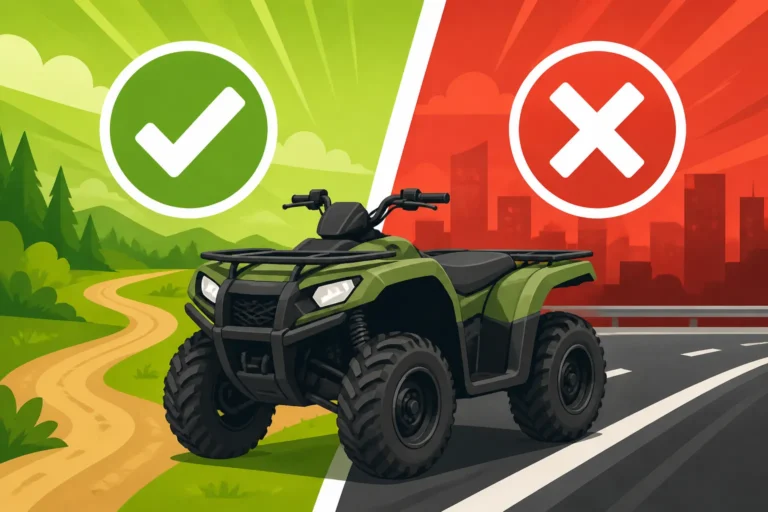
The term "non-highway vehicle" is probably the most critical piece of this puzzle. When Alabama law designates ATVs and UTVs as non-highway vehicles, it means they are, by their very nature and design, not intended for street legal operation. This distinction is paramount. It's why you can't simply put a license plate on your quad and drive it down Highway 31. The design specifications – such as tire type, lighting, mirrors, and safety features – are all geared towards off-road environments, not the demands of public roads.
This non-highway status directly impacts the applicability of street-focused laws. A helmet law designed for motorcycles operating on public roads won't automatically transfer to a vehicle legally defined as not for public roads. It's a bit like asking if a boat needs a rearview mirror to operate on a lake; the rules are different because the operating environment and vehicle type are fundamentally dissimilar. The entire regulatory framework for ATVs and UTVs in Alabama centers around their use off the highway, which often means different safety considerations and, consequently, different legal requirements regarding gear. This is also why [Are ATVs Street Legal in Alabama?] is such a complex question for many riders.
Federal Standard Barrier to Road Use and Helmet Laws
Beyond state definitions, there's a significant federal hurdle that prevents most ATVs and UTVs from being considered street legal, and this indirectly affects helmet mandates. Most standard ATVs and UTVs do not meet the Federal Motor Vehicle Safety Standards (FMVSS) required for on-road vehicles. These standards cover everything from braking systems and lighting to crashworthiness and emissions. Because typical off-road machines are not manufactured to these federal standards, they cannot be legally registered for street use in most places, including Alabama.
This "federal standard barrier" means that if an ATV or UTV were to operate on a public road in Alabama (which is generally illegal except in very specific, limited circumstances), it would be doing so as a non-compliant vehicle. The helmet laws are implicitly tied to compliant, on-road vehicles. Since ATVs and UTVs don't fit that mold, the helmet statute crafted for federally compliant motorcycles simply doesn't apply to them by extension. If a machine did meet specific low-speed vehicle (LSV) requirements, then a different set of rules might come into play, but that's a rare exception for purpose-built machines, not your typical sport quad or utility side-by-side.
When a Helmet Might Be Required for an ATV/UTV Rider
So, Alabama state law might not mandate a helmet for your ATV or UTV on private land, but that doesn't mean you're always in the clear. There are several situations where wearing a helmet isn't just a good idea, it's a firm requirement. It’s crucial to understand these nuances, because thinking "the state doesn't require it" can lead to a rude awakening if you're not paying attention to other rules.
Private Park Rules and Waivers
This is perhaps the most common scenario where helmets become mandatory for ATV and UTV riders in Alabama. Most reputable private off-road parks, like Stony Lonesome OHV Park or Minooka Park, have their own strict safety rules, and a helmet is almost always at the top of the list. When you enter one of these parks, you'll typically sign a waiver that outlines their rules, and by signing it, you agree to abide by them. Failing to wear a helmet where required by park rules can lead to you being ejected from the park, or worse, refusal of entry altogether.
These parks implement helmet rules for several very practical reasons: they have a duty of care to their visitors, they want to minimize serious injuries on their property, and they are often trying to manage their own liability. They know the risks inherent in off-road riding – rollovers, impacts with trees, unexpected terrain changes – and they understand that a helmet is your first line of defense against severe head trauma. So, before you even load up your machine, check the specific rules of any park you plan to visit. Many parks go further, specifying the type of helmet, often requiring DOT-approved motocross-style helmets for off-road conditions. For more on this, check out [Alabama Private Park Helmet Rules].
Local Ordinances and Designated Areas
While state law might be clear on the lack of a helmet mandate for off-road vehicles, local jurisdictions sometimes have their own ordinances. This is less common for helmets specifically, but it's not entirely unheard of. Some cities or counties might have local rules governing ATV/UTV use within their boundaries, especially in designated riding areas they manage, or if they permit limited road crossings. It’s always possible that a very specific local ordinance could require helmets in certain public-use areas managed by a county or city.
For example, a small town might decide to allow golf carts on certain streets and, in doing so, could add a helmet requirement for youth riders or all operators, even if the state doesn't. This is why it's always wise to research the local laws if you plan to ride anywhere other than your own private property, especially if it's within city limits or a specific county-managed park. Calling the local sheriff's department or city hall before your trip can save you a lot of grief. [When an Alabama City Writes Its Own ATV Rule] details how these local regulations can vary widely, making it essential to do your homework. These local rules are distinct from the overarching state statute, and they are important to remember.
Age Restrictions and Manufacturer Recommendations
Even if you're riding on private property where no park rules or local ordinances apply, there are still strong recommendations and de facto requirements based on age and manufacturer guidelines. Most ATV and UTV manufacturers, including prominent ones, vehemently recommend that all riders, and especially youth riders, wear an approved helmet. They understand the risks involved and design their products with the expectation that riders will use appropriate safety gear.
For [Alabama Rules for Young Riders], this is particularly critical. Youth ATVs and UTVs often come with explicit warnings and guidelines about helmet use. Parents should absolutely enforce helmet use for their children, not just for legal protection, but for the child's own safety and well-being. A child's head is particularly vulnerable, and a helmet can literally be a life-saver in an unexpected tip-over or collision. Ignoring these recommendations, while not necessarily illegal on private land, is a gamble no responsible adult should take. The manufacturers’ guidance often extends to other gear too, like eye protection, sturdy boots, and gloves, forming a comprehensive safety approach.
Practical Considerations for Helmet Use (Even if Not Required)
Alright, so we've established that Alabama's motorcycle helmet statute doesn't directly apply to your ATV or UTV for most situations. Great! Does that mean you should just toss caution to the wind and leave the helmet in the garage? Absolutely not. While the law might give you a pass, common sense and a strong focus on personal safety should always guide your choices when riding an off-road machine. Trust me, the trail doesn't care about legal technicalities when you hit a hidden root or take a tumble.
The Safety Imperative: Why Wear One Anyway?
Let's be blunt: a helmet is the single most important piece of safety gear you can wear when riding an ATV or UTV. The forces involved in an off-road crash, whether it's a rollover, an impact with a tree, or being thrown from the machine, can be immense. Head injuries are among the most debilitating and life-threatening consequences of such incidents. Even at relatively low speeds, a simple tip-over can result in your head striking the ground or a hard object. Without a helmet, the outcome can be catastrophic, leading to concussions, skull fractures, or worse.
Think about it this way: your brain is incredibly fragile, and a helmet is designed specifically to absorb and dissipate impact energy, protecting that vital organ. It’s an investment in your future, in your ability to keep riding, and in your overall quality of life. The slight inconvenience of wearing one pales in comparison to the potential, life-altering consequences of a serious head injury. This isn't just about legality; it's about making smart choices for yourself and your loved ones. As an off-road enthusiast, choosing to protect yourself is just part of the game. For more thoughts on this, consider [Choosing a Helmet When Alabama Does Not Require One].
Choosing the Right Helmet for Off-Road Riding
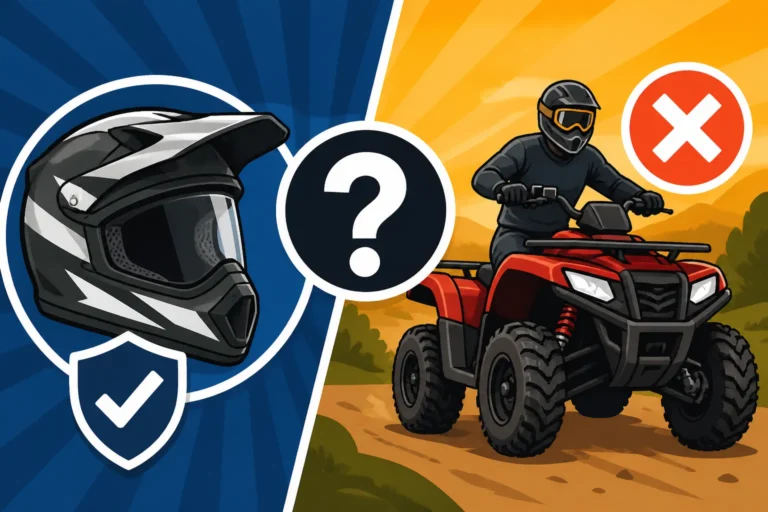
If you've decided (wisely!) that wearing a helmet is a no-brainer, the next step is choosing the right one. An off-road helmet isn't just a fancy accessory; it's specifically designed for the unique demands of trail riding. Unlike street helmets, off-road helmets typically feature a prominent visor to shield your eyes from sun and roost (dirt kicked up by other riders), and an extended chin bar to provide greater protection for your face and jaw in dusty, dirty environments. They also tend to have more ventilation to keep you cool during strenuous rides.
Look for a helmet that is DOT-approved, which means it meets certain safety standards. Beyond DOT, you might see ratings like Snell or ECE, which are even more stringent and offer higher levels of protection. Fit is paramount: a helmet should be snug but not uncomfortably tight, and it should not move around on your head. Always try helmets on before buying, and ensure it covers your forehead and temples adequately. Brands like SuperATV might not make helmets themselves, but they certainly promote safe riding and offer accessories that complement responsible use of their parts, emphasizing the importance of proper gear when tackling tough terrain.
Eye Protection and Other Essential Gear
While the helmet protects your head, don't forget your eyes! Riding without proper eye protection is an open invitation for dust, dirt, branches, insects, or even small rocks to cause serious injury. Goggles are indispensable for off-road riding. Look for goggles with good ventilation to prevent fogging, and make sure they fit comfortably with your chosen helmet. Different lens tints can enhance visibility in varying light conditions, from clear for night riding to tinted for bright, sunny days. This is especially true when riding on [Eye Protection Worth Wearing on Red Clay] in Alabama.
Beyond helmets and goggles, consider other vital gear:
- Gloves: Protect your hands from blisters, abrasions, and impacts.
- Long-sleeved shirt/jersey and long pants: Guard against scrapes, cuts, and sun exposure.
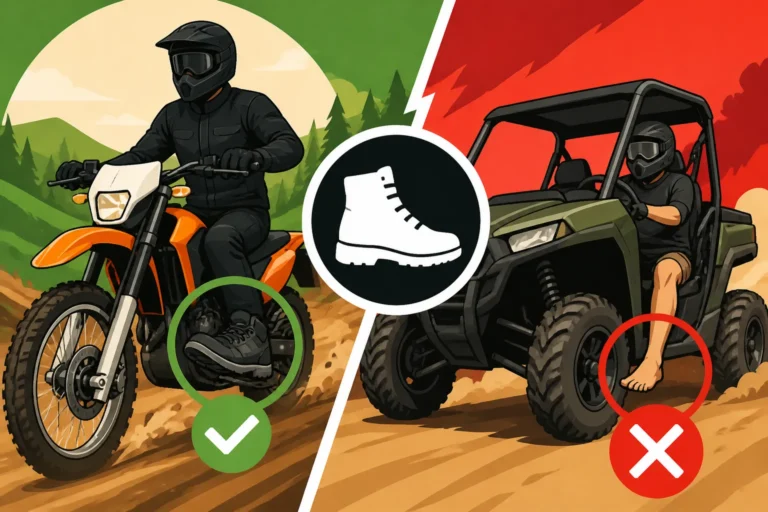
- Over-the-ankle boots: Provide crucial support and protection for your feet and ankles.
- Chest protector/body armor: Especially for aggressive riders, this can shield your torso from impacts.
Wearing this full complement of gear isn't about looking the part; it's about being prepared for the unpredictable nature of off-road riding. Each piece serves a specific purpose in minimizing injury and maximizing your enjoyment on the trails.
Addressing Common Misconceptions and Scenarios
The world of ATV and UTV regulations is ripe with misunderstandings, especially when it comes to safety gear. Riders often hear bits and pieces of information, leading to confusion about specific situations. Let's tackle some of the most frequent questions and scenarios that pop up, separating myth from reality when it comes to helmets in Alabama.
Does an Enclosed Cab Get You Out of a Helmet?
This is a really common question, especially for UTV owners with full cabs or even just a roof and windshield. The thinking goes: "If I'm in an enclosed space, I'm protected, so I don't need a helmet, right?" Unfortunately, that's a dangerous assumption to make. For the vast majority of ATVs and UTVs, even those with full cabs, the answer is a resounding no, an enclosed cab does not automatically exempt you from the need for a helmet for safety reasons. In fact, [Does an Enclosed Cab Get You Out of a Helmet?] is a critical topic that warrants careful consideration.
Here’s why: a UTV cab, even a factory-installed one, is generally not designed to offer the same level of crash protection as a car. In a rollover, even with a roll cage, your head can still strike the cage, interior components, or even the ground if the machine flips completely. Helmets are designed to absorb and distribute impact forces, greatly reducing the risk of severe head injury in such an event. Also, many cabs offer limited protection from projectiles like rocks, branches, or other debris that could enter the cab and strike your head. While an enclosed cab might offer some weather protection and a sense of security, it doesn't replace the direct, impact-absorbing protection of a properly fitted helmet. Some off-road parks might even require helmets for UTVs with cabs.
Riding on Private Land vs. Public Areas
This distinction is perhaps the most significant in terms of legal helmet requirements in Alabama. Generally speaking, Alabama's state laws, including its helmet mandates, primarily apply to public roads and regulated public lands.
- Private Land: If you own the land, or have explicit permission from the landowner to ride on private property, you are typically not subject to state-level helmet laws for ATVs and UTVs. This means that, legally, the choice to wear a helmet is yours (or the landowner's, if they impose rules). However, as discussed, ignoring the safety imperative is never a good idea. [Alabama Private Use on Your Own Property] clearly defines this freedom.
- Public Areas: This is where it gets a bit more complex.
- Public Roads/Highways: As we've covered, ATVs and UTVs are generally not permitted on public roads in Alabama. If you were illegally riding on a public road, the motorcycle helmet statute still wouldn't technically apply to your ATV, but you'd be cited for much more serious offenses.
- Designated Public Riding Areas (e.g., OHV Parks, WMAs): These areas often have their own specific rules that can include helmet requirements. For example, a state-run OHV park might mandate helmets for all riders. Similarly, Wildlife Management Areas (WMAs) might have specific rules for machines operating within their boundaries, though a universal helmet mandate for ATVs/UTVs is less common than in private parks. Always check the specific rules of [Alabama Public Use Designated Areas] before you ride. The point is, even if the state's general helmet law doesn't apply, specific public land managers can (and often do) impose their own safety rules.
Helmet Rules for Passengers on a Quad or Side-by-Side
Passengers add another layer of consideration to the helmet discussion.
- Quads (ATVs): Most ATVs are designed for a single rider. Carrying a passenger on a single-seat ATV is inherently risky and often against manufacturer recommendations. If you do carry a passenger (which is generally discouraged), both the operator and passenger would ideally wear helmets for safety. In a crash, a passenger is just as vulnerable, if not more so, than the operator. [Alabama Rules for Passengers on a Quad] often echo manufacturer warnings against carrying more than the machine is designed for.
- Side-by-Sides (UTVs): UTVs are designed for multiple passengers, with seating typically side-by-side. While Alabama state law doesn't specifically mandate helmets for UTV passengers on private land, many private parks and safety-conscious operators will require or strongly recommend helmets for all occupants. Remember, a UTV can still roll over, hit objects, or suffer an impact. All occupants face similar head injury risks in an accident. The cab provides some structure, but not impact absorption for the head. Especially for younger passengers, a helmet is non-negotiable for their safety.
| Scenario | Legal Helmet Requirement (Alabama State Law for ATVs/UTVs) | Typical Safety Recommendation |
|---|---|---|
| Private Property | No (unless landowner specifies) | Always wear a helmet. Crucial for protection against impacts, rollovers, and unforeseen hazards. |
| Private OHV Parks | No (state law); YES (by park rules and waiver) | Always wear a DOT-approved off-road helmet. Parks often require specific types of helmets (e.g., motocross style). |
| Public Roads/Highways | No (motorcycle law doesn't apply to ATVs); BUT ATVs are generally illegal on public roads, leading to other citations. | Irrelevant, as ATVs/UTVs shouldn't be on public roads. If an exception exists (rare, specific local ordinance), helmet use would be a wise safety precaution even if not explicitly mandated by the exception. |
| Designated Public Riding Areas (e.g., WMAs) | No (state law), but check specific WMA rules; potentially YES if a specific local/federal rule applies. | Always wear a helmet. Rules can vary, so check with the managing authority (e.g., Alabama Department of Conservation and Natural Resources). |
| Youth Riders (anywhere) | No (state law for ATVs/UTVs); YES by virtually all manufacturer recommendations and private park rules. | Absolutely wear a helmet. A child's developing brain is extremely vulnerable. |
| Passengers (UTV) | No (state law for ATVs/UTVs) | Always wear a helmet. Passengers face similar risks in rollovers or impacts. |
What to Do If You're Unsure
Navigating the rules for ATVs and UTVs in Alabama can feel like trying to find your way through a winding trail after dark. Even with all the information, specific situations can leave you scratching your head. When in doubt, it’s always better to err on the side of caution and actively seek clarification. Guessing can lead to tickets, accidents, or worse.
Calling an Alabama Sheriff Before You Ride
This is hands down one of the best pieces of advice anyone can give you. If you're planning to ride your ATV or UTV in an area where you're not absolutely sure about the rules—especially concerning public access, road crossings, or specific safety gear requirements—pick up the phone and call the local sheriff's office for that county. They are the primary enforcers of local and state laws. A quick, friendly call can save you a lot of headache, potential fines, and even vehicle impoundment.
Be specific about your planned location and the type of riding you intend to do. For instance, you might ask, "I'm planning to ride my side-by-side on county dirt roads near [Specific Town/Address] for farm access. Are there any local ordinances I should be aware of, especially regarding helmets?" A deputy or clerk can usually provide accurate information or direct you to the correct resource. Always remember that enforcement can sometimes vary, but getting information directly from the source is your best bet for peace of mind and compliance.
Checking Park and WMA Rules
As we've discussed, private OHV parks and Wildlife Management Areas (WMAs) often have their own specific rules that go above and beyond state law. These rules are usually in place for safety, conservation, and liability reasons. Before you hitch up the trailer and head out, make it a habit to check the official website or call the office of the park or WMA you intend to visit.
Look specifically for sections on vehicle requirements, safety gear (helmets, eye protection, boots), age restrictions, and any unique operating rules. For example, [Alabama WMA Riding Rules] might restrict machine access during certain hunting seasons, or require specific permits. Some private parks might have different helmet rules for ATV riders versus UTV riders, or even vary based on age. If their website seems outdated or unclear, a phone call is essential. Don't rely on old forum posts or hearsay; get the current rules directly from the source to avoid disappointment at the gate.
Always Prioritize Safety
Ultimately, regardless of what the law mandates or doesn't mandate, the overarching principle for any off-road enthusiast should be safety. Laws are minimum standards, but responsible riding means going beyond the bare minimum to protect yourself and others. If there's any doubt about whether a helmet is legally required, choose to wear one. If a certain piece of gear could prevent an injury, invest in it.
Think about the long-term consequences of an injury versus the minor inconvenience of wearing gear. A serious head injury can impact your life, your family, and your livelihood in profound ways. Investing in quality safety gear and always prioritizing safe riding practices is the best way to ensure you can continue to enjoy the thrilling world of Alabama ATV and UTV adventures for years to come. Ride smart, ride safe, and always be prepared for the unexpected.
Disclaimer
This article is for general informational purposes only and does not constitute professional advice. Laws, prices and regulations vary by location and change over time. Consult a qualified professional for guidance on your specific situation.