What Alabama’s Off-Road Vehicle Statute Covers
When you own an ATV or UTV in Alabama, it’s easy to feel like you’re navigating a dense forest without a map, especially when it comes to understanding the state's off-road vehicle (ORV) statutes. Many riders just want to know where they can legally ride and what paperwork they need, but the rules can seem vague and contradictory. This comprehensive guide aims to shine a bright light on Alabama’s off-road vehicle statute, breaking down the definitions, registration types, titling requirements, road use limitations, and safety regulations so you can ride with confidence and stay on the right side of the law.
Unpacking Alabama's Core Definitions: What Exactly is an Off-Road Vehicle Here?
Before you even think about hitting the trails or heading out to the back forty, it’s absolutely essential to understand how Alabama defines an Off-Road Vehicle (ORV). This isn't just about technicalities; it dictates whether your machine needs registration, if it can ever be titled, and what rules apply to its operation. Many folks incorrectly assume "ATV" covers everything, but the statute is much more specific, creating distinct categories that impact you directly as an owner. Missing these distinctions can lead to frustration or even legal trouble down the road.
Pinpointing the ATV: Quads, Three-Wheelers, and Weight Limits
The statute starts by clearly laying out what constitutes an All-Terrain Vehicle, or ATV. When Alabama lawmakers drafted this, they had specific types of machines in mind, primarily the traditional "quad" or four-wheeled ATV that many of us grew up riding. But it also includes those classic three-wheelers, though you don't see as many of those around these days. The key here isn't just the number of wheels, but also the design intended for off-road use, the specific handlebars for steering, and crucially, the weight.
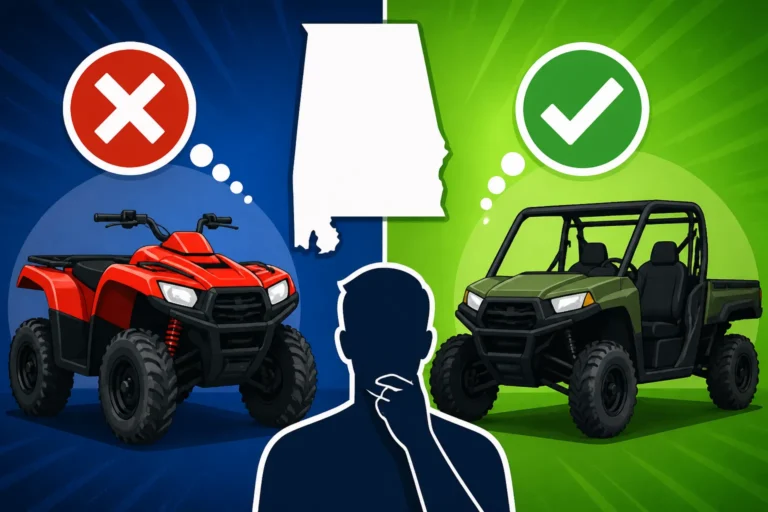
Alabama defines an ATV as any motorized off-highway vehicle that is 60 inches or less in width, has a dry weight of 1,500 pounds or less, travels on three or more non-highway tires, and is designed for use by a single operator with no passengers. This specific language means if your machine has a steering wheel instead of handlebars, or if it's wider than 60 inches, it's likely not an ATV under this definition, and different rules will apply. Imagine you've just bought a sleek new sport quad; it almost certainly falls into this category, requiring you to adhere to the ATV-specific rules for registration and use. [Alabama ATV and ROV Legal Definitions] delves deeper into these nuances.
The ROV Definition: Side-by-Sides and Weight/Width Specifics
The term "ROV," or Recreational Off-Highway Vehicle, is where many side-by-sides, also known as UTVs, come into play. These machines have become incredibly popular, offering seating for multiple passengers, storage, and often more robust capabilities than a traditional ATV. The statute recognizes this difference and creates a distinct category for them, but not without some complexities that can confuse even seasoned riders. The legal definition for an ROV is a bit broader than an ATV, accommodating the larger footprint and passenger capacity.
An ROV is defined as a motorized off-highway vehicle with a width of 80 inches or less, a dry weight of 3,500 pounds or less, traveling on four or more non-highway tires, and designed to be operated by a steering wheel for non-highway use. You'll notice the crucial differences: steering wheel instead of handlebars, capacity for multiple passengers, and significantly higher width and weight limits. However, there can be some conflicting figures, especially when looking at older or less common statutes. For instance, sometimes you'll see a 1,500-pound figure mentioned, which typically applies to ATVs, but for ROVs, the 3,500-pound dry weight is the primary distinguishing factor. [Alabama's Conflicting ROV Weight Figures] can help clarify some of these historical discrepancies. If you're driving a four-seater side-by-side to your deer stand, it's almost certainly an ROV, and you’ll need to understand the regulations specific to that classification.
Machines That Don't Fit: Golf Carts, Farm Equipment, and More
Perhaps one of the biggest sources of confusion for off-road enthusiasts in Alabama is what isn't considered an ATV or ROV under the main off-road vehicle statute. Many people assume if it goes off-road, it's covered, but that's not always the case. The statute explicitly carves out several exceptions, and understanding these can save you a lot of headaches, especially if you're trying to figure out if you need to register or title a particular machine.
For example, golf carts are a common point of misunderstanding. While they might look like a smaller, slower side-by-side, Alabama's ORV statute specifically excludes them. This means golf carts have their own set of rules, often governed more by local ordinances than by the state's ORV laws. So, if you're trying to register your golf cart, you won't find its requirements within the ATV/ROV framework. Similarly, machines used exclusively for agricultural purposes, such as tractors, certain utility vehicles, or other farm implements, are often exempt from many of the ORV statute's provisions. [Alabama Excludes Golf Carts From the Chapter] and [Alabama Excludes Farm Equipment] provide more context on these important distinctions. The intent of the statute is truly focused on recreational and personal utility off-road vehicles, not every machine that might roll through a field.
The Two Paths of Registration: Public Versus Private Use
Once you’ve nailed down whether your machine is an ATV, an ROV, or something else entirely, the next big hurdle for Alabama owners is figuring out registration. Unlike many other states that have mandatory registration across the board, Alabama offers a voluntary registration system, but it's split into two distinct tiers: "Public Use" and "Private Use." This duality can be a real head-scratcher for new owners, or even those who’ve owned machines for years, wondering which path is right for them and what the actual benefits are. Choosing the wrong one, or not understanding its limitations, can quickly turn a fun day into a frustrating one.
Choosing Public Use: When and Where It's Required
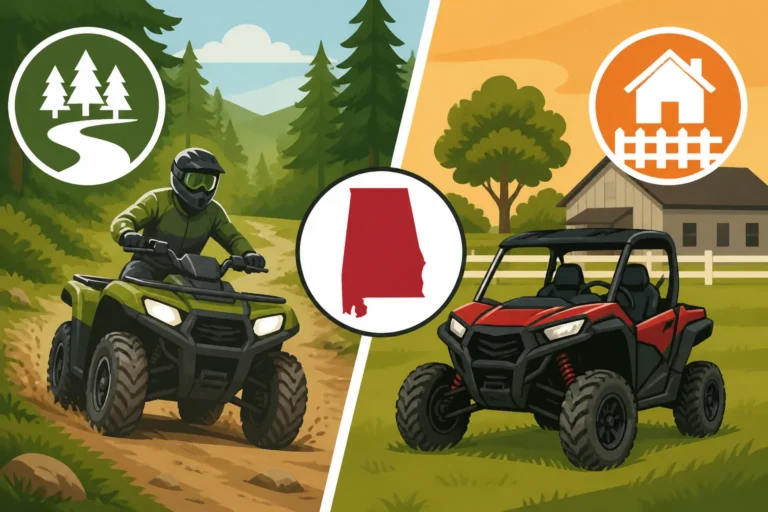
If your vision of off-road adventure involves exploring designated trails in state parks, national forests (where permitted), or commercially operated OHV parks, then the "Public Use" registration tier is likely what you'll need. This tier is designed for machines that will be operated on public lands or trails that are specifically designated for off-road vehicle use. It's not a license to ride anywhere; rather, it's proof that your machine is recognized by the state for operation in these controlled environments. Many public riding areas or private parks require this registration as a condition of entry.
The Public Use registration carries a slightly higher fee than the private option, reflecting the expanded access it grants. When you register for public use, you'll receive a decal that must be displayed on your machine, signaling to park rangers and authorities that you've met this requirement. This registration is valid for three years, which is a nice perk, saving you the hassle of annual renewals. [Alabama Public Use ATV Registration Explained] details the process and what it truly unlocks. It's your ticket to some of Alabama's fantastic riding opportunities, like those at Stony Lonesome OHV Park or Minooka Park.
The Simplicity of Private Use: For Your Land, Your Way
For many Alabama residents, their ATV or ROV is primarily a tool or a toy used exclusively on their own private property, or perhaps on leased hunting land with explicit permission. If this sounds like you, then the "Private Use" registration tier might be all you need – or perhaps even more than you need, as it is still voluntary. This option is geared towards owners who have no intention of riding on public trails or designated OHV parks. It's often chosen for utility purposes around the farm, riding through a deer camp, or just for casual enjoyment in your own backyard.
The Private Use registration is less expensive and comes with fewer implicit permissions for public land access. While it still provides an official record of your machine with the state, it doesn't automatically grant you the right to ride in public OHV areas. Think of it as a bare-bones option that fulfills a basic desire for official recognition without the additional cost associated with broader riding privileges. It's also valid for three years, just like the public use option. [Alabama Private Use ATV Registration Explained] offers a full breakdown of this tier and its advantages for the landowner or private leaseholder. Many find this sufficient, especially if their machine rarely leaves their property lines.
Navigating the Switch: Changing Your Registration Tier
Life happens, and sometimes your riding habits or needs change. Maybe you initially registered your utility side-by-side for private use because you only used it on your timberland, but now you've discovered a fantastic public OHV park you want to explore. Or perhaps you bought a used quad with a public use registration but only plan to ride it on your family farm. The good news is that Alabama allows you to switch between the Public Use and Private Use registration tiers. It's not a permanent, set-in-stone decision, though there are administrative steps involved.
If you need to upgrade from Private to Public Use, you'll generally need to pay the difference in fees and follow the appropriate application process through the Alabama Law Enforcement Agency (ALEA). This ensures your machine is properly recognized for public access. Conversely, if you want to downgrade from Public to Private Use, you can simply choose the private option at renewal time. However, it's worth noting that refunds for partially used registration periods or changes in tier might not always be straightforward. You'll need to contact ALEA directly or check their guidelines to understand the exact procedures and any associated costs for modifying your existing registration. This flexibility is a huge benefit, as it means your registration can evolve with your needs without forcing you to start from scratch.
Here's a quick comparison of the two tiers:
| Feature | Public Use Registration | Private Use Registration |
|---|---|---|
| Intended Use | Designated public OHV trails/parks | Private property, leased land |
| Cost | Higher | Lower |
| Decal Issued? | Yes | Yes |
| Validity Period | Three years | Three years |
| Required for Public Trails? | Generally, yes | Generally, no |
| Proof of Ownership | Yes, required for application | Yes, required for application |
Alabama's New Titling Law: What You Need to Know Starting 2026
For years, one of the biggest challenges for ATV and ROV owners in Alabama was the complete lack of a state titling system. This meant that while you might register your machine, there was no official document from the state proving ownership, much like a car title. This led to all sorts of issues with financing, theft recovery, and selling machines. Thankfully, Alabama recognized this gap, and a new titling law is set to go into effect, bringing much-needed clarity and security to off-road vehicle ownership. However, it's not a blanket change, and there are specific conditions for which machines will be titled.
Which Machines Need a Title: The Model Year 2026 Rule
The most crucial detail about Alabama's new titling law is its effective date and the model years it applies to. Get this wrong, and you might unnecessarily stress about titling a machine that doesn't need one, or overlook a requirement for a newer purchase. Starting January 1, 2026, all new ATVs and ROVs with a model year of 2026 or newer will be subject to state titling requirements. This means that if you buy a brand-new 2026 model year side-by-side from a dealer, it will come with a title, just like a car.
This new system is being handled through the Alabama Vehicle Information Network (ALVIN), which is the same system used for motor vehicle titles. This integration aims to streamline the process and make it more consistent. When you purchase one of these newer machines, the dealer will typically handle the initial title application for you, submitting the necessary paperwork and fees to the county probate office or other designated agent. This makes proving legal ownership significantly more robust and should bring a lot more peace of mind to new owners. [Alabama ATV Titling Starts With Model Year 2026] details the specifics of this upcoming change.
Why Older Machines Are Exempt From Titling
Here's where many existing ATV and ROV owners breathe a sigh of relief, or perhaps a sigh of confusion, depending on their machine's age. The new titling law is not retroactive. This means that if your ATV or ROV has a model year prior to 2026, it will generally not be eligible for a state title. For instance, if you own a reliable 2020 quad or a sturdy 2018 side-by-side, Alabama will not issue you a title for it. This decision was made to avoid the immense logistical challenge of trying to title hundreds of thousands of older machines, many of which may have changed hands multiple times without formal documentation.
While this exemption simplifies things for long-time owners, it doesn't mean older machines are off the hook entirely for proof of ownership. It simply means the state won't be issuing a title. You'll still need to maintain good records, such as a bill of sale, to prove you lawfully own the machine. For many, this has been the status quo for years. Understanding [Why Older Alabama ATVs Cannot Be Titled] is key to managing your expectations and paperwork for these machines.
Proving Ownership for Those Without a Title
So, if your machine is a 2025 model year or older, and therefore won't get a state-issued title, how do you prove you own it? This has been a critical question for Alabama riders for a long time, and even with the new titling law, it remains highly relevant for the vast majority of machines currently in circulation. Without a title, a strong paper trail becomes absolutely paramount for establishing ownership, especially in cases of sale, theft, or even just for insurance purposes.
The primary document you'll rely on is a comprehensive bill of sale. This isn't just a scribble on a napkin; it needs to be detailed. A robust bill of sale should include the full names and addresses of both the buyer and seller, the purchase price, the date of sale, and, critically, the machine's Vehicle Identification Number (VIN) or serial number. If you're buying from a private seller, you can find forms online (LawDepot, for example, offers customizable bill of sale templates that can be adapted for ATVs and ROVs) to ensure all necessary information is captured. This document is your proof that the machine legally transferred to you. Beyond that, keep any original purchase receipts, past registration documents, and even photographs of the machine with its serial number clearly visible. These pieces of evidence collectively form your "proof of ownership" for an untitled machine. [Proving You Own an Untitled Machine] offers practical steps to secure your ownership record.
The Reality of Road Use: Where Can You Actually Ride?
This is perhaps the single most frustrating and confusing aspect of off-road vehicle ownership in Alabama: road use. Every rider dreams of connecting trails, running to the gas station, or simply cruising down a quiet county road. However, Alabama’s statutes are very clear, and often, the reality falls far short of the dream. Many riders, both local and visiting, find themselves in hot water because they operate under assumptions rather than specific legal understanding. It's crucial to grasp these limitations to avoid citations, fines, or even more serious legal repercussions.
The Blanket Ban: Why ATVs Aren't Street Legal in Alabama
Let's cut right to the chase: in Alabama, standard ATVs and ROVs are not street legal on public roads, streets, or highways. This isn't some obscure local ordinance; it's enshrined in state law. The reason boils down to federal motor vehicle safety standards (FMVSS). To be considered "street legal" and receive a license plate for public road use, a vehicle must meet stringent federal safety requirements, including things like specific lighting, mirrors, braking systems, and crashworthiness. Standard ATVs and ROVs, as manufactured for off-road use, simply do not meet these standards.
They lack the necessary equipment for safe operation in traffic, such as turn signals, brake lights that meet highway brightness standards, and often even basic rearview mirrors. They also don't have the crash protection designed for highway speeds. Because of this fundamental incompatibility with federal standards, you cannot register a standard ATV or ROV with the Department of Revenue for a license plate in Alabama, nor can you legally operate it on public roadways. This is a hard truth that often disappoints new owners. [Are ATVs Street Legal in Alabama?] provides a deeper dive into the federal regulations that dictate this prohibition.
Exceptions and Crossings: Farm Use and Designated Areas
While the blanket ban on road use can be disheartening, there are a few very specific and limited exceptions outlined in the statute that allow for some interaction with public roads. It's vital to understand these exceptions precisely, as deviating from them even slightly can lead to trouble. The most common exception applies to machines used for agricultural purposes. If your ATV or ROV is genuinely being used as farm equipment, you may be permitted to operate it on a public road for short distances to cross or access farmland, particularly between fields or to move from a barn to a pasture.
Another exception applies to crossing a paved road. In many areas, if you are actively riding on an unpaved road or trail and a paved road intersects your path, you may be permitted to cross the paved road directly, provided it is done safely and at an angle that minimizes the time spent on the pavement. This is for quick transit, not for riding down the road. Additionally, some specific county roads, typically unpaved dirt roads, might have local ordinances that allow limited ATV/ROV use, but these are rare and highly localized. You absolutely must verify with local authorities (county sheriff or city police) before assuming any road is open. [Alabama Rules for Riding a County Road] details these nuanced situations. Always remember that even with an exception, safe operation and yielding to other traffic are paramount.
Consequences: Penalties for Illegal Road Riding and Trespass
Ignoring the rules regarding road use and trespassing can lead to serious consequences that far outweigh the brief thrill of an illegal ride. Penalties for operating an ATV or ROV unlawfully on public roads in Alabama can range from significant fines to having your machine impounded. Law enforcement takes these violations seriously, particularly due to safety concerns and potential damage to public infrastructure. You could be ticketed for multiple offenses, including operating an unregistered vehicle (if not registered even for off-road use), reckless driving, or violating local ordinances.
Beyond public roads, trespassing on private property is another major concern. Many enthusiastic riders mistakenly believe that if land isn't explicitly fenced or posted, it's fair game. This is a dangerous assumption. Riding on private land without the express permission of the landowner is illegal and can lead to civil penalties (like being sued for damages) or even criminal charges. Landowners in Alabama have various ways to designate their property as private, including purple paint on trees or fences, which acts as a clear "no trespassing" sign. Always obtain written permission before riding on any private land that isn't your own. Ignorance of the law is not an excuse, and a fun afternoon can quickly turn into a costly legal nightmare. Ensuring you have proper documentation, perhaps even a written permission slip from LawDepot, can protect you from disputes.
Safety, Age, and Equipment: Key Statutory Considerations
Beyond the legal definitions, registration, and road use rules, Alabama's off-road vehicle statute also touches on important aspects of rider safety, age restrictions, and required equipment. These provisions are in place to minimize accidents and ensure a safer riding environment for everyone. While some of these might seem like common sense, knowing the specifics can help you prepare properly and avoid unintentional violations. These aren't just suggestions; they are part of the legal framework governing ATV and ROV operation in the state.
Rider Safety: Helmets, Eye Protection, and Passengers
When it comes to personal safety equipment, the law can sometimes feel a bit like a patchwork quilt in Alabama. For ATVs and ROVs, unlike motorcycles, there isn't a universal, explicit state mandate requiring helmets for all riders in all situations. This can lead to confusion, as many assume the strict motorcycle helmet law applies across the board. However, it's critical to note that [Alabama's Motorcycle Helmet Statute] does not automatically extend to ATV and ROV operators, particularly on private land.
Despite the lack of a universal mandate, many public OHV parks and riding areas do enforce their own strict helmet rules, often requiring DOT-approved helmets for all operators and passengers. It is always, always, always recommended to wear a helmet, regardless of whether the law or park rule demands it. Helmets, along with eye protection (goggles or a face shield), can be the difference between a minor bump and a life-altering injury. Furthermore, the statute generally specifies that ATVs are designed for a single operator. Carrying passengers on a single-seat ATV is highly dangerous and often prohibited by park rules, if not explicitly by state statute. ROVs, designed with multiple seats, are different, but only carry the number of passengers they were designed for, and ensure everyone is properly restrained. Safety should always be your top priority, even when the state law is silent.
Age Matters: Rules for Young Riders and Supervision
Introducing kids to the joy of off-road riding is a fantastic experience, but it comes with significant responsibilities, and Alabama's statute addresses these. The law typically sets age recommendations or requirements for operating ATVs and ROVs, recognizing that young riders may lack the judgment, strength, or experience to safely control these powerful machines. While there isn't a state-mandated safety course requirement for all riders, common guidelines suggest that children under 16 should be supervised by an adult.
More importantly, machines should always be matched to the rider's age and ability. Youth models exist for a reason, specifically designed with lower power, lighter weight, and smaller controls. It’s generally recommended that children under the age of 16 operate an ATV or ROV that is appropriate for their age, weight, and height, and never operate an adult-sized machine. Many private parks will have their own specific age minimums and supervision requirements, often requiring a parent or guardian to sign waivers and be present. Ignoring these guidelines for young riders not only puts them at extreme risk but can also lead to legal liability for the supervising adult in case of an accident. Always prioritize safety over "just letting them try."
Essential Equipment: Spark Arrestors and Noise Rules
When you're out enjoying Alabama's beautiful trails, it's not just about what you wear, but also what your machine is equipped with. The statute includes provisions for certain essential equipment, primarily focusing on environmental protection and community peace. A critical piece of equipment often required, especially on public lands (like national forests, where permitted), is a spark arrestor. This device, usually integrated into your machine's muffler system, is designed to prevent hot carbon particles from escaping the exhaust and potentially starting wildfires. Given Alabama's dry periods and forested areas, a spark arrestor is a non-negotiable item for responsible riding, even if you are just heading to the hunting camp. Many off-road vehicles come with them installed from the factory, but it's always good to check and ensure it's in good working order.
Noise levels are another area that the statute, or certainly local ordinances and park rules, address. While there isn't a universal decibel limit explicitly stated in the state's ORV statute for all areas, excessive noise can be a nuisance and lead to complaints, especially near residential areas or sensitive wildlife zones. Many organized riding parks or designated public areas will have their own sound limits, often requiring machines to meet certain decibel standards. Operating a machine with a modified or aftermarket exhaust that significantly amplifies noise can attract unwanted attention from law enforcement or park officials and may result in penalties or being asked to leave a riding area. Being a good neighbor and responsible rider means ensuring your machine meets reasonable noise expectations and is equipped with a functional spark arrestor.
Disclaimer
This article is for general informational purposes only and does not constitute professional advice. Laws, prices and regulations vary by location and change over time. Consult a qualified professional for guidance on your specific situation.