Why the Model Year Decides If You Title It
Navigating the ins and outs of ATV and UTV ownership in Alabama can feel like trying to find your way through a winding trail with no map, especially with new laws coming into play. One of the biggest points of confusion for many riders and prospective buyers revolves around titling – specifically, how the model year of your machine dramatically changes whether or not you'll need one. This guide is here to untangle that knot, helping you understand exactly what the model year means for your off-road vehicle's official paperwork in the Yellowhammer State.
The New Law and the "Magic" Date of Model Year 2026
Alabama is making a significant shift in how it handles off-road vehicles (ORVs), moving towards a titling system that will eventually cover all machines. However, this isn't a blanket change applied overnight to every quad or side-by-side already out there tearing up trails or working on farms. The core of the new law hinges entirely on one crucial factor: the machine's model year. Ignoring this detail can lead to a lot of frustration, unnecessary paperwork, or even problems down the road if you’re looking to buy or sell.
It's completely normal to feel a bit overwhelmed by new regulations, especially when they introduce concepts that weren't there before. Many states have had titling for ORVs for years, but for us here in Alabama, it's a new frontier. The state understands that there's a massive existing population of machines, and trying to retroactively title every single one would be a logistical nightmare. That's why the model year serves as the clear dividing line, providing a practical way to implement the law without penalizing owners of older machines.
When Titling Becomes Mandatory
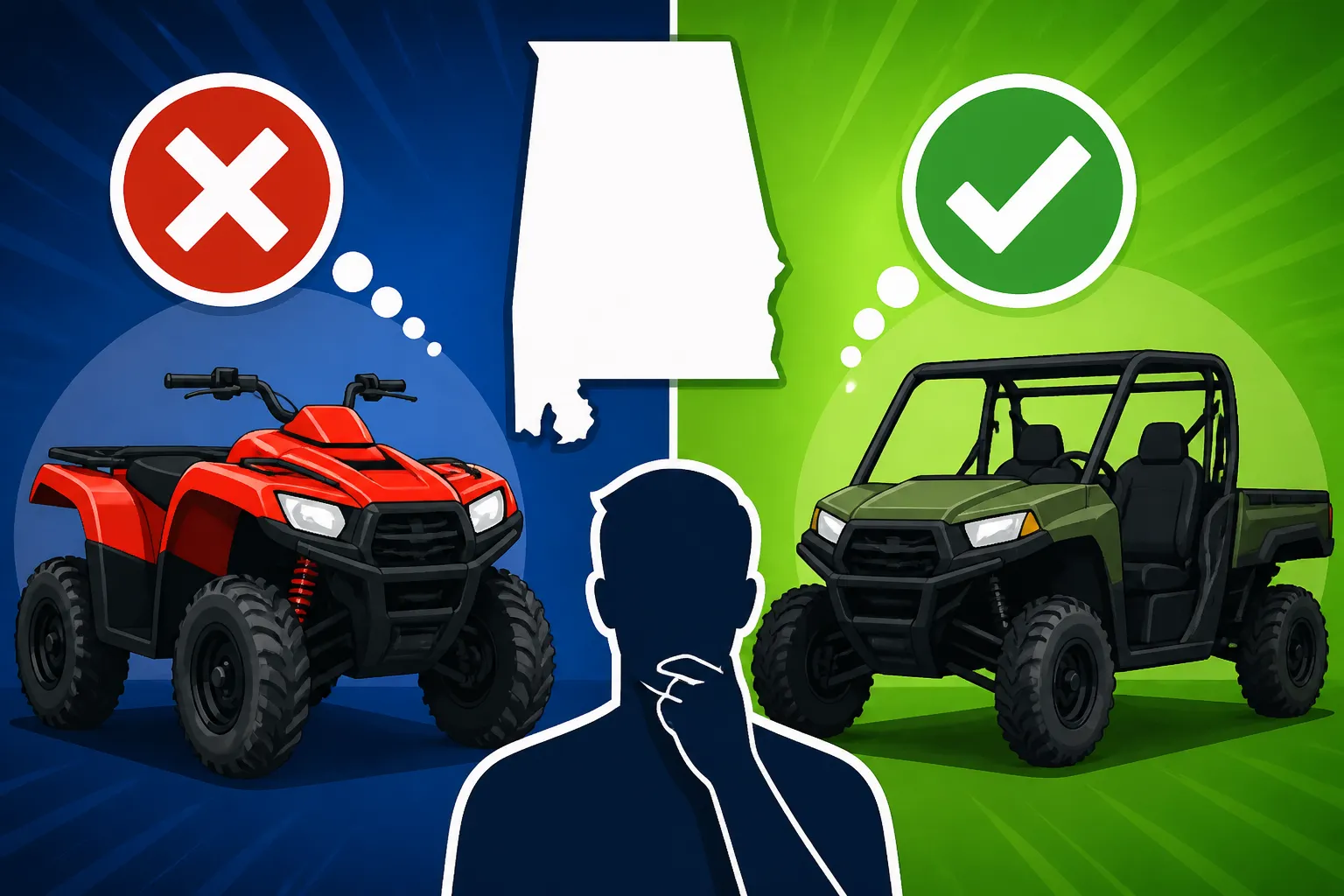
The most critical date to remember is tied directly to the model year of your ATV or UTV. [Alabama ATV Titling Starts With Model Year 2026]. If your machine is a model year 2026 or newer, it will require a certificate of title in Alabama. This applies to brand-new machines rolling off the dealership floor starting in 2026, and any subsequent model years. Think of it like buying a new car; from the moment you take possession, that vehicle needs a title.
This means that if you're eyeing a shiny new 2026 Polaris RZR, a 2027 Honda Rancher, or any other ORV released with those model years or later, the process will include applying for a title. This is a big change for buyers and sellers of newer machines, as it introduces a new layer of official documentation that simply didn't exist for ATVs and UTVs in Alabama before. It's designed to create a clear chain of ownership, similar to what we've always had for cars and trucks, making transactions more secure and helping track machines.
For dealers, this means integrating title applications into their sales process, much like they do for other vehicles. For private sellers, it means ensuring they have a clear title to transfer when selling a newer machine. It’s a necessary step to bring more accountability and proper ownership records to the ORV market in our state, addressing concerns about theft and providing a clearer path for financing.
Why Older Machines Are Exempt
Now, for those of us who already own an ATV or UTV, or are looking at buying a used one, there's a huge sigh of relief to be had: if your machine is a model year 2025 or older, it is generally exempt from the new titling requirements. This is often referred to as a "grandfather clause" and it's a practical recognition of the existing market and ownership structures that were in place before the law changed. You won't be required to go out and get a title for that trusty old quad you've had for years, or for a vintage side-by-side you just picked up. [Why Older Alabama ATVs Cannot Be Titled].
This exemption is a significant point, as it differentiates Alabama's approach from states that might require retroactive titling for all ORVs, regardless of age. It means that the vast majority of machines currently in circulation in Alabama will continue to operate without a state-issued title. For current owners, this means no new title paperwork to worry about. For those looking to buy older, used machines, it means the traditional methods of proving ownership, like a detailed bill of sale, will remain paramount.
While you might not need a title for your older machine, it doesn't mean you're off the hook for all paperwork. You'll still want robust proof of ownership, such as a well-documented bill of sale, especially if you plan to ever sell it or need to prove it's yours in case of theft. We'll delve more into that important aspect later, but for now, the key takeaway is: older machines get a pass on the new titling mandate. [Why Pre-2026 Owners Do Nothing].
Understanding "Model Year" for Titling Purposes
The term "model year" might seem straightforward, but it's important to understand how it's actually determined for your machine, especially when a legal cutoff is involved. It's not always the calendar year you bought it, and sometimes, manufacturers release next year's models quite early in the preceding year. This distinction becomes critical when you're trying to figure out if your machine falls into the titling category or the exemption category.
Getting this right from the start can save you a lot of hassle. Imagine purchasing a machine in late 2025, thinking you're getting a "2025 model" and thus won't need a title, only to discover it's officially designated as a 2026 model year machine. That would certainly throw a wrench in your plans and require an immediate title application. It's all about checking the official documentation and the vehicle itself.
How Manufacturers Determine Model Year
When we talk about "model year," we're referring to the designation given by the manufacturer, not necessarily the calendar year in which the vehicle was produced or sold. For example, a manufacturer might start producing and selling "2026 model year" ATVs in the summer or fall of 2025. This is a common practice across the automotive industry, and ORVs are no different. The model year is typically encoded within the Vehicle Identification Number (VIN) of your machine.
To find your machine's model year, the most reliable method is to locate the VIN, which is usually stamped on the frame in a visible spot. The VIN is a 17-character alphanumeric code, and specific characters within it indicate manufacturing details, including the model year. Usually, the 10th character of the VIN represents the model year. There are many online VIN decoders that can help you translate this information if you're unsure, or you can check your machine's original paperwork, such as the Manufacturer's Statement of Origin (MSO) or owner's manual.
It's a good habit to always verify the model year directly from the VIN, especially when buying or selling, to avoid any misunderstandings. Don't just rely on what a seller tells you or what might be listed on a generic bill of sale, which could be inaccurate. Taking the extra minute to double-check this crucial detail can prevent headaches later on when it comes to compliance with Alabama's titling requirements.
The Ten-Year Exemption Window (Post-2026)
The model year 2026 cutoff isn't the only model year-based exemption. Alabama's titling law also includes a provision for future exemptions based on age. Once the titling requirement kicks in for model year 2026 and newer machines, there will be a rolling ten-year exemption window. This means that after a machine is ten model years old, it will become exempt from requiring a title. [How a Ten-Year Window Exempts Older Machines].
Let's break this down with an example: A brand-new 2026 model year ATV, purchased and titled in Alabama, will require a title for its first ten years of existence. However, once it reaches the "2036 model year" (meaning it's 10 calendar years past its model year designation), it will no longer require a title. This doesn't mean its existing title becomes invalid, but rather that subsequent transfers or sales of that machine would not mandate a new title to be issued.
This future exemption is designed to reduce the administrative burden of tracking very old machines that may have lost their original titles or been through many private sales without formal record updates. It acknowledges the natural depreciation and changing value of off-road vehicles over time. So, while you might title a new 2026 machine, you can anticipate that someday, far in the future, it too will eventually age out of the mandatory titling requirement.
What This Means for Buying and Selling ATVs/UTVs in Alabama
The introduction of model year-based titling in Alabama significantly impacts the buying and selling process for off-road vehicles. Whether you're a seasoned rider looking to upgrade or a newcomer hoping to get your first quad, understanding these changes is crucial to a smooth, legal transaction. Gone are the days when a simple handshake and a basic bill of sale were sufficient for every machine.
This bifurcation of titling requirements means you really need to do your homework before committing to a purchase or listing your machine for sale. Misunderstanding the model year implications could leave a buyer without proper proof of ownership, or a seller struggling to complete a transaction. It's all about due diligence and knowing which set of rules applies to the specific machine in question.
Purchasing a Model Year 2026 or Newer Machine
If you're in the market for a new (or relatively new, post-2026) ATV or UTV in Alabama, you absolutely must ensure that a title is part of the transaction. For a new machine purchased from a dealership, they will handle the initial title application process for you. This is standard operating procedure, and they'll likely submit all the necessary paperwork, including your [Alabama Title Applications From January 2026], to the appropriate county probate office. You'll typically pay the title fees as part of your overall purchase price.
When buying a model year 2026 or newer machine from a private seller, the process becomes very similar to buying a used car. The seller should possess a valid Alabama certificate of title for the ORV, and this title must be properly signed over to you, the new owner. You'll then take that signed-over title to your county probate office to apply for a new title in your name. If a private seller claims to have a 2026 or newer machine but doesn't have a title, that should raise a major red flag. It could indicate a stolen machine or an incomplete previous sale. Always be wary and insist on proper title transfer for these newer model years.
Having a title for a newer machine provides significant protection. It's definitive proof of ownership, which is invaluable for insurance purposes, proving the machine isn't stolen, and making future sales much simpler. It also ensures that any liens (if you financed the purchase) are properly recorded, protecting both you and the lender.
Dealing with Pre-2026 Machines and Proof of Ownership
For ATVs and UTVs with a model year of 2025 or older, the titling rules simply don't apply. You will not be able to get a state-issued title for these machines, nor will you be required to. However, this doesn't mean you can skip out on proof of ownership. A strong, detailed bill of sale remains the absolute gold standard for pre-2026 machines. This document serves as your official record that you legally purchased the machine from the previous owner. [Alabama Bill of Sale Requirements].
A good bill of sale should include specific details: the full names and addresses of both the buyer and seller, the date of sale, the purchase price, and critically, the complete Vehicle Identification Number (VIN) of the ATV or UTV. It’s also wise to include a statement that the machine is sold "as-is" and any known defects disclosed by the seller. Websites like LawDepot offer templates for comprehensive bills of sale that can be customized for your specific transaction, ensuring all necessary legal details are covered. This can give both buyer and seller peace of mind, especially when no state-issued title exists.
In scenarios where original ownership documents might be lost or never existed (such as a gifted machine or one purchased years ago at a farm auction), proving ownership can be trickier. Beyond a bill of sale, other forms of proof might include old registration documents (if it was ever voluntarily registered), insurance policies listing the VIN, or even sworn affidavits. [Proving You Own an Untitled Machine] is a process that requires diligence, but a robust bill of sale is always the easiest starting point. Without a title, this paperwork becomes your sole legal proof.
The Registration System Versus the Titling System
It's easy to confuse titling with registration, but in Alabama, these are two distinct processes handled by different agencies, serving different purposes. Understanding this separation is key to avoiding further confusion, especially since one might be required while the other is not, depending on your machine's model year and how you plan to use it. They are related but separate facets of ORV ownership.
Many people assume if they register a machine, it's also titled, or vice versa. This simply isn't the case in Alabama, particularly with the new titling law. Registration focuses on permission to operate and identifying a machine for certain uses, while titling is purely about establishing and tracking legal ownership. Both have their place and benefits for ORV owners.
Alabama's Two-Agency Approach
In Alabama, the responsibility for off-road vehicle documentation is split between two different state entities. The Alabama Law Enforcement Agency (ALEA) is in charge of ORV registration. When you register your ATV or UTV, you're interacting with ALEA, either directly or through their designated agents. This is the agency that issues your registration decal and a certificate of registration, indicating that your machine is recognized by the state for operation.
On the other hand, the new titling system for model year 2026 and newer machines falls under the purview of your county probate court (or similar designated county office). Just like car titles, ORV titles will be applied for and processed at the county level. This means you'll be dealing with different offices and different sets of paperwork depending on whether you're registering your machine or applying for a title. [Alabama Splits Titling and Registration Between Agencies]. This dual-agency approach can sometimes add a layer of complexity, but it ensures specialized attention to each function – ownership records versus operational permits.
This separation means you could potentially have a brand-new 2026 machine that is both titled (by the county) and registered (by ALEA) if you choose to ride it on public lands. Conversely, you could have a pre-2026 machine that is only registered (by ALEA) because it doesn't qualify for a title.
Why Both Matter (But Differently)
A title is definitive proof of ownership. It legally establishes who owns the machine, making it invaluable for buying, selling, insuring, and especially for recovery if your ATV or UTV is stolen. With the title, there's a clear, official record of the machine's legal owner, which provides a layer of security and certainty for all parties involved in a transaction. For model year 2026 and newer machines, this legal ownership document will be mandatory. [Theft Recovery Without a Title].
Registration, however, is primarily about tracking machines for operational purposes, often tied to where and how you plan to ride. Alabama offers both a "Public Use" and "Private Use" registration option, handled by ALEA. While registration for private use is voluntary, registration for public use is mandatory if you intend to operate your ORV on designated public lands or trails in Alabama. This registration provides your machine with an official decal, making it easily identifiable to law enforcement and land managers. [Alabama Public Use ATV Registration Explained].
Even if your pre-2026 machine doesn't require a title, choosing to register it (especially for public use) can be highly beneficial. It shows that you're a responsible owner and helps fund the maintenance of our amazing riding areas. A registered machine is easier to track if it's lost or stolen, and it ensures you're legally compliant when enjoying Alabama's beautiful outdoor trails. [What Registering Gets You Before Riding Public Land]. It's a way to contribute to and gain access to the broader riding community, even without a title.
Practical Steps for Owners Based on Model Year
Understanding why the model year matters is the first step; the next is knowing what to do about it. Your actions will differ significantly depending on whether your machine falls into the pre-2026 category or the 2026-and-newer category. Taking the correct steps from the beginning will save you headaches and ensure you're compliant with Alabama's new regulations.
It's all about being proactive and informed. Don't wait until you're trying to sell your machine or facing a situation where proof of ownership is critical. Get your paperwork in order now, based on your machine's model year.
For Owners of Model Year 2026 and Newer Machines
If you are the proud owner (or soon-to-be owner) of an ATV or UTV with a model year of 2026 or later, you absolutely need to secure a certificate of title.
The process for [How to Title an ATV in Alabama] typically starts when you purchase the machine. If you buy from a dealership, they will usually handle the initial paperwork. This includes submitting your application, any required fees, and proof of sale (like the Manufacturer's Statement of Origin or a bill of sale) to the county probate office. You’ll be responsible for signing the necessary forms and ensuring all your information is correct.
For private purchases of titled, newer machines, the seller will sign over their existing title to you. You'll then take this signed title, along with a bill of sale, to your county probate office. There, you'll apply for a new title in your name, paying the required fees. It's crucial that the VIN on the title matches the machine exactly and that all signatures are properly executed. A mistake here can delay the titling process. Expect to receive your new title in the mail after it has been processed, which can take several weeks.
Beyond titling, you'll also need to consider registration. Even if your 2026+ machine has a title, you'll still need to register it with ALEA if you plan to ride on public lands or trails. This involves a separate application and fee, resulting in a registration decal and certificate. Remember, title is ownership, registration is permission to operate.
For Owners of Pre-Model Year 2026 Machines
If your ATV or UTV is a model year 2025 or older, you do not need to worry about obtaining a title in Alabama. The new law simply doesn't apply to your machine. [Why Pre-2026 Owners Do Nothing] regarding titling. This means you can continue to enjoy your off-road adventures without the added step of a state-issued ownership certificate.
However, this doesn't mean you should neglect official documentation. For these untitled machines, maintaining robust proof of ownership is paramount. A comprehensive [Alabama Bill of Sale Requirements] is your best friend. This document should detail the VIN, buyer and seller information, date of sale, and purchase price. If you purchased your machine years ago and don't have a bill of sale, consider creating an affidavit of ownership or gathering any available supporting documents like old insurance cards, registration certificates, or maintenance records that list the VIN. Platforms like LawDepot can help you generate legal documents like a bill of sale, ensuring it's robust and legally sound.
Even without a title, you still have the option to register your pre-2026 machine with ALEA. While voluntary for private use, it's mandatory if you plan to ride on any designated public lands or trails in Alabama. This [Alabama Public Use ATV Registration Explained] helps identify your machine and contributes to the system that maintains our riding areas. So, while titling is off the table, registration is still a valuable and often necessary step for responsible riding.
Here's a quick comparison of the two systems:
| Feature | Titling (Model Year 2026+) | Registration (All Model Years) |
|---|---|---|
| Purpose | Proof of Legal Ownership | Permission to Operate (on public lands) |
| Governing Agency | County Probate Office | Alabama Law Enforcement Agency (ALEA) |
| Mandatory For | All model year 2026 & newer ATVs/UTVs | All ATVs/UTVs used on designated public land |
| Voluntary For | Not voluntary; required if 2026+ | Private use machines not on public land |
| Main Document | Certificate of Title | Certificate of Registration & Decal |
| Key Benefit | Clear ownership chain, theft recovery, financing | Legal public land access, identification |
| What It Replaces | Old "no title" status | Nothing; works alongside proof of ownership |
| Impact on Selling | Title must be transferred | Registration can be transferred or allowed to lapse |
Addressing Common Concerns and Future Implications
Alabama's new titling law, while designed to bring clarity and security to ORV ownership, naturally raises questions and concerns among owners. It's a significant change for a state that previously had no titling requirement for these vehicles, and any new system takes time for everyone to fully understand and adapt to. Let's tackle some of these common concerns head-on.
It's important to remember that laws evolve, and what might seem complex today will become standard practice over time. The goal is to create a more secure and organized environment for ORV owners, reducing issues like theft and making transactions more transparent.
What If My Machine's Model Year Is Unclear?
One of the most immediate concerns for many owners might be: "How do I even know what model year my machine is, especially if I bought it used and don't have all the original paperwork?" This is a valid question, as the entire titling requirement hinges on this single piece of information. The best and most reliable way to determine your machine's model year is by checking its Vehicle Identification Number (VIN).
The VIN is usually stamped directly onto the frame of the ATV or UTV, often on a sturdy part like the front frame rail, under the seat, or near the footpegs. Once you locate the 17-character VIN, you can use an online VIN decoder to decipher its meaning. The 10th character of the VIN typically indicates the model year. If you're still uncertain after checking the VIN, your next best bet is to contact a dealership for your machine's brand, provide them with the VIN, and they should be able to tell you the exact model year. As a last resort, contacting the manufacturer directly with your VIN can also provide the official model year designation.
It’s always a good idea to record your VIN in a safe place, like a personal logbook or a digital document. Take a photo of it. This information is invaluable for insurance, police reports if stolen, and confirming your machine’s model year for titling or registration purposes.
The Future of Off-Road Vehicle Ownership Records in Alabama
The implementation of titling for model year 2026 and newer ATVs and UTVs marks a significant step towards bringing Alabama's off-road vehicle ownership records more in line with those of many other states across the country. Historically, the lack of a statewide titling system for ORVs meant that proving ownership could sometimes be challenging, leading to difficulties in resolving disputes, recovering stolen machines, or securing financing.
Over time, this new system will build a more robust database of ORV ownership. For machines that are titled, it will greatly simplify transfers of ownership, provide clearer documentation for lenders (making financing easier for newer machines), and enhance law enforcement's ability to track and recover stolen vehicles. [Theft Recovery Without a Title] will become more streamlined and effective. For older machines that remain untitled, the emphasis on a detailed bill of sale as primary proof of ownership will only grow, underscoring the importance of good record-keeping for all ORV owners.
While there might be an initial learning curve and some adjustments for owners and dealers alike, the long-term benefits of a comprehensive titling system for newer machines are clear. It promises a more secure, transparent, and manageable environment for enjoying our ATVs and UTVs across Alabama's diverse landscapes.
Disclaimer
This article is for general informational purposes only and does not constitute professional advice. Laws, prices and regulations vary by location and change over time. Consult a qualified professional for guidance on your specific situation.