How a Ten-Year Window Exempts Older Machines
Navigating the ins and outs of off-road vehicle laws can feel like slogging through deep mud, especially when new regulations come into play. Many folks in Alabama who have owned their ATVs and side-by-sides for years suddenly find themselves wondering if their trusty machines will need a shiny new title come 2026, or if they'll be stuck in bureaucratic limbo. This guide is here to untangle the confusion surrounding Alabama's new titling law, specifically focusing on the ten-year window that exempts many older machines from mandatory title requirements, helping you understand exactly where your off-road vehicle stands.
Understanding Alabama's New Titling Law for Off-Road Vehicles
Alabama's approach to titling off-road vehicles like ATVs and UTVs is undergoing a significant change, and it's completely understandable why so many owners are scratching their heads. For years, these machines were largely unregistered and untitled, existing in a kind of gray area when it came to official state records. The new law aims to bring more clarity and a system of official ownership, but it doesn't apply equally to every machine out there. It’s a classic case of new rules meeting old habits, and it creates a specific carve-out for machines that have been part of our outdoor lives for a while.
The January 2026 Starting Line
The most critical date to keep in mind is January 1, 2026. This isn't just an arbitrary day; it marks the official kickoff for mandatory titling of certain off-road vehicles in Alabama. From this point forward, if you buy a brand-new ATV or UTV, or even a newer used one that falls within the specified window, you'll be engaging with the new titling system. This means that dealers will have new paperwork to handle, and private sellers will need to understand how the new title flows from one owner to the next.
For many, this feels like a big shift, and it can be. Imagine purchasing a shiny new side-by-side right after the new year in 2026. Suddenly, instead of just a bill of sale, you'll also be walking away with, or at least beginning the process for, an official state-issued title. This title will serve as definitive proof of ownership, much like a car title, offering a level of security and traceability that simply didn't exist before. It's a move toward formalizing ownership, and while it might seem like extra hassle initially, it ultimately aims to protect buyers and sellers alike. [Alabama ATV Titling Starts With Model Year 2026] goes into more detail about this crucial date.
What "Model Year" Means for Titling
Here's where a lot of the confusion can creep in: the law specifically references "model year," not the year you bought the machine. Manufacturers designate a model year for their vehicles, often releasing next year's models in the late summer or fall of the current year. So, you might buy a "2026 model" ATV in late 2025. This distinction is absolutely crucial because the ten-year exemption is tied directly to this model year, not when the machine first rolled off the dealership lot or into your garage.
Understanding your machine's model year is paramount for determining its titling status. It's usually found on the VIN (Vehicle Identification Number) plate or sticker, typically located on the frame. If you're unsure, digging out your original purchase paperwork or even contacting the manufacturer with your VIN can often clarify things. A "2015 model" ATV, regardless of whether you bought it new in 2014 or used in 2020, will always be a 2015 model. This consistent reference point is how the state determines eligibility for titling, cutting through any ambiguity about when the machine changed hands over its lifespan. [Why the Model Year Decides If You Title It] explores this concept further.
The Core of the Exemption: Ten Model Years and Counting
This is the part that will bring a sigh of relief to many long-time off-road enthusiasts in Alabama. The new titling law is not retroactive in a way that would require every single ATV or UTV ever sold in the state to suddenly have a title. Instead, there's a practical, common-sense exemption built right into the statute. This "ten-year window" is designed to exclude older machines from the mandatory titling requirement, acknowledging the difficulties and administrative burden that would come with trying to title vehicles that have been in circulation for a decade or more, often changing hands multiple times without formal state records.
How the Ten-Year Window Works
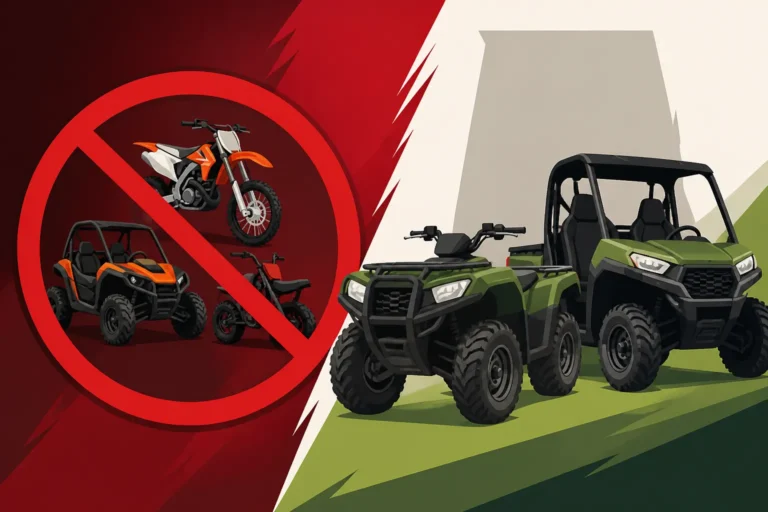
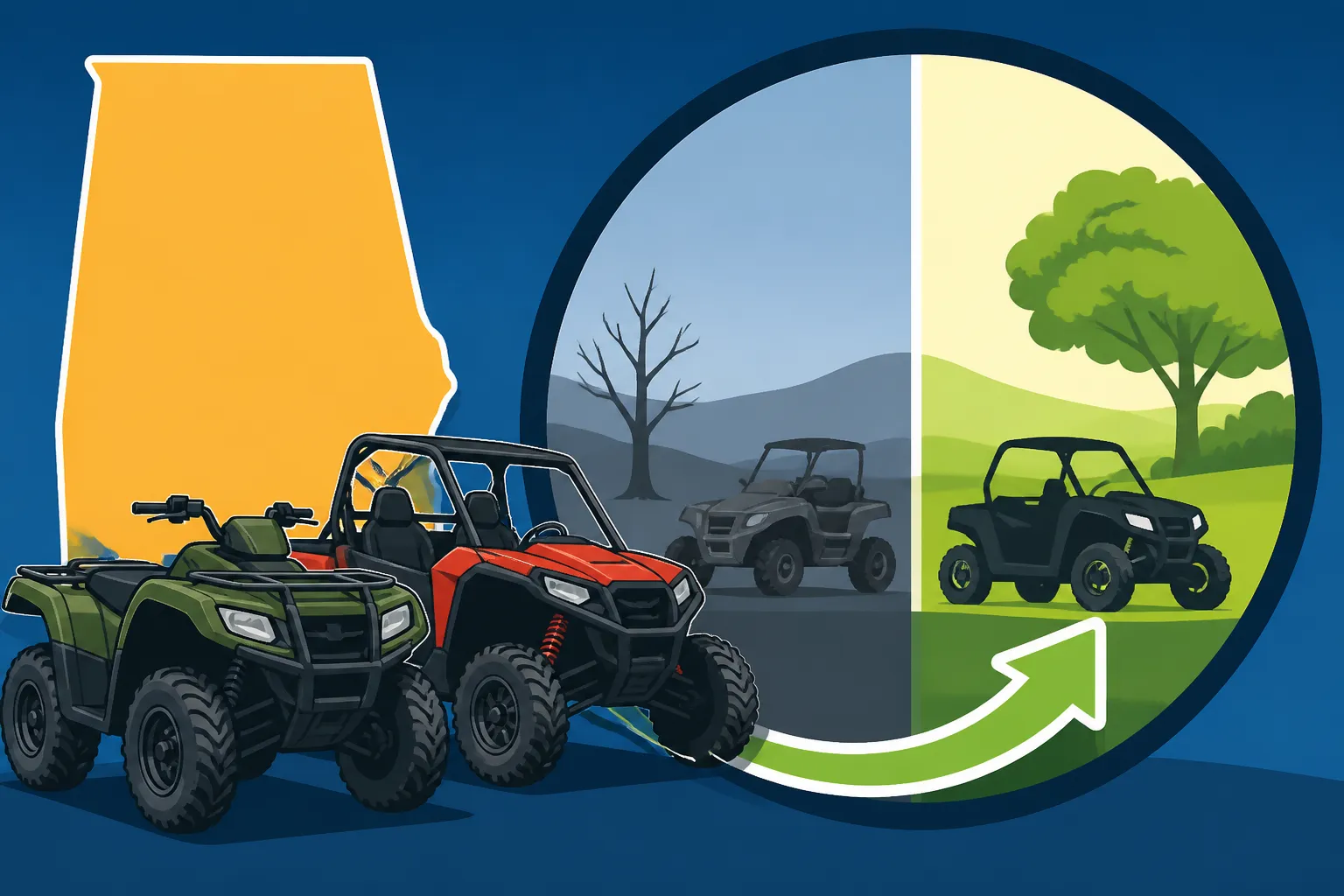
The exemption is quite straightforward: off-road vehicles that are older than ten model years are exempt from the mandatory titling requirement. Let's break that down with an example. When the law goes into effect in January 2026, it will apply to all 2026 model year machines and newer. Therefore, any machine with a model year of 2015 or older would generally fall outside the scope of mandatory titling in 2026. This is a rolling window, meaning that as each year passes, the cut-off model year for titling will also advance.
So, in 2027, 2016 model year machines and older would be exempt. In 2028, 2017 model year machines and older would be exempt, and so on. This isn't a one-time exemption for machines currently older than ten years; it's a dynamic rule that continues to apply as machines age. This means that your 2018 model side-by-side, which might require a title if sold in Alabama in 2026, could become exempt from titling if you were to sell it in, say, 2029 (depending on the exact calculation for that year). It's a pragmatic approach to avoid forcing owners to chase down records for machines that predated any such formal system.
Why Alabama Excludes Older Machines from Mandatory Titling
The state isn't just being nice by exempting older machines; there are very real, practical reasons behind this decision. Think about the countless ATVs and UTVs bought decades ago, often through private sales, at farm auctions, or simply passed down through families. Many of these transactions didn't involve formal bills of sale, let alone any state registration or title. Trying to retroactively impose a titling requirement on these machines would be an administrative nightmare for the state and a massive headache for owners.
Moreover, the primary goal of the new titling law is to combat theft, establish clear ownership for new transactions, and provide a framework for financing. For machines that are already ten or more model years old, the challenges of establishing a clean chain of ownership are significant. Original sales records might be lost, companies might have gone out of business, and the sheer volume of informal transactions would overwhelm any system attempting to create titles from scratch. By setting this ten-year window, Alabama acknowledges these realities and focuses its titling efforts on newer machines where the trail of ownership is much clearer and the need for theft deterrence is arguably more pressing. [Why Pre-2026 Owners Do Nothing] delves deeper into the rationale.
Implications for Owners of Pre-2026 Machines
If you're an Alabama resident and your beloved off-road machine rolled off the assembly line well before the 2026 model year, you're likely feeling a mix of relief and perhaps a lingering question mark. The good news is that the new titling law offers a clear path for you, but it’s vital to understand what that path entails and, more importantly, what it doesn’t. The state isn't suddenly going to demand titles for every single quad and side-by-side currently out there.
What Pre-2026 Owners Do (or Don't Do)
For many current owners, especially those with machines that are already ten or more model years old by January 1, 2026, the answer is refreshingly simple: you don't need to do anything regarding titling. If your machine is a 2015 model year or older, for example, the mandatory titling requirement that begins in 2026 simply won't apply to it. You won't be required to apply for a new title, nor will you face penalties for not having one. This effectively means that your status quo regarding state-issued ownership documents remains unchanged.
This exemption is a huge relief for people who have owned their machines for decades and might not even have perfect records going back that far. You can continue to enjoy your ATV or UTV without the stress of navigating a new bureaucratic process for an old machine. The focus of the new law is forward-looking, aiming to capture new transactions and newer machines into the titling system, rather than attempting a massive, retroactive overhaul. However, this doesn't negate the importance of having personal proof of ownership, such as a sturdy bill of sale, which we'll discuss further. For more on how to establish ownership without a title, see [Proving You Own an Untitled Machine].
Voluntary Registration vs. Mandatory Titling
It's critical not to confuse the new mandatory titling requirements with Alabama's existing voluntary registration program. Even if your machine is exempt from titling due to its age, you still have the option to voluntarily register it with the Alabama Law Enforcement Agency (ALEA). This voluntary registration is entirely separate from the title, and it's primarily for those who wish to ride on designated public lands or simply want an official record for their machine. The voluntary registration gets you a decal and an official record in the ALEA system, but it's not a title.
Many riders choose to pursue voluntary registration for a few key reasons: it helps with theft recovery, provides a recognized proof of ownership that isn't a title, and most importantly, it's often a requirement for riding on public lands and at sanctioned OHV parks. So, even if your 2010 model ATV doesn't need a title, you might still want to get that voluntary registration decal if you plan on hitting up places like Stony Lonesome OHV Park. It's about choosing the right tool for your specific needs, distinguishing between a legal requirement and a beneficial option. Find out more about this process in [Alabama's Voluntary ATV Registration Through ALEA].
The Nuances of the Exemption and Your Paperwork
While the ten-year exemption from titling offers a clear path for many older machines, it's not a license to disregard all paperwork. Being "exempt from titling" is not the same as being "without proof of ownership." In Alabama, even if your machine doesn't require a state-issued title, you still need to be able to demonstrate that you are the rightful owner, especially if you ever plan to sell it, insure it, or recover it if stolen. This is where understanding the power of a well-crafted bill of sale becomes paramount.
Understanding "Exempt" from Titling vs. "No Paperwork"
The biggest mistake an owner of an exempt machine can make is thinking that "no title required" means "no paperwork needed." This is simply not true. While the state won't issue a title for your older ATV or UTV, you absolutely still need proof that you legitimately own it. This proof usually comes in the form of a detailed bill of sale, an invoice from a previous purchase, or even a notarized affidavit if the machine was inherited or received as a gift without prior documentation. Without any form of ownership record, you could face significant challenges.
Imagine trying to sell an ATV that’s a 2012 model year without any documentation. A savvy buyer will be wary, and rightly so. How do they know it’s not stolen? How can they be sure they’re buying it from the actual owner? Similarly, if your machine is ever stolen and recovered, proving it's yours without any paperwork can be an uphill battle, even with a clear serial number. This is why a document like a bill of sale, even for an exempt machine, remains a critical piece of your ownership puzzle. Resources like LawDepot can provide excellent templates for creating a comprehensive bill of sale, ensuring all necessary details are included.
Selling or Buying an Exempt Older Machine
When it comes to transactions involving off-road vehicles that are exempt from titling, the bill of sale becomes the single most important document. If you're selling an older machine, you'll need to provide the buyer with a complete and accurate bill of sale, including your information, the buyer's information, a detailed description of the ATV or UTV (make, model, year, and crucially, the full serial number), the purchase price, and the date of sale. Both parties should sign it, and it's often a good idea to have it notarized for an extra layer of legal validity.
If you're buying an older, exempt machine, insist on a thorough bill of sale from the seller. Don't accept a crumpled note on a napkin. A legitimate seller will understand this need for proper documentation. Before finalizing the purchase, always verify the serial number on the bill of sale matches the physical serial number on the machine itself. This is your primary defense against buying a stolen vehicle. Websites like LawDepot offer customizable bill of sale forms that can be a lifesaver for private party transactions, ensuring you don't miss any critical information. [Alabama Bill of Sale Requirements] provides a comprehensive list of what to include.
When the Exemption Doesn't Apply (Even for Older Machines)
While the ten-year rule is broad, there are some nuanced situations where an older machine might still have title implications, especially if it's coming from outside Alabama. For instance, if you purchase a 2015 model year ATV in 2026 from a state that does title off-road vehicles, and that machine comes with a valid out-of-state title, Alabama's new law might require you to apply for an Alabama title for it, even though its model year would otherwise exempt it. The logic here is that if a clear, official chain of title already exists, the state will typically recognize and continue that chain within its own system.
This isn't about circumventing the exemption, but rather about integrating machines with existing official documentation into Alabama's framework. The state isn't going to de-title a machine that already has a valid title from another jurisdiction. Therefore, if you're bringing an older machine into Alabama from out of state, always inquire about its titling status in its previous home state. If it had a title there, be prepared to navigate the process of transferring that title to Alabama, regardless of its model year. [Alabama Title for a Machine Bought Out of State] offers guidance on this specific scenario.
Protecting Your Investment: Beyond the Title
Even without a mandatory state title for older machines, ensuring your investment is protected goes beyond mere compliance. It's about establishing clear ownership, safeguarding against unforeseen events, and having peace of mind. For many long-time off-road enthusiasts, their ATV or UTV isn't just a vehicle; it's a tool for work, a source of recreation, and often, a cherished possession with sentimental value. Understanding how to protect this asset, even when it's exempt from formal titling, is essential.
The Role of a Bill of Sale for Exempt Machines
We've touched on this before, but it bears repeating with emphasis: for off-road vehicles exempt from Alabama's new titling law, the bill of sale is your golden ticket for proof of ownership. It's not merely a receipt; it's a legal document that establishes the transfer of ownership from one party to another. A strong bill of sale should include:
- Seller Information: Full legal name, address, and contact details.
- Buyer Information: Full legal name, address, and contact details.
- Vehicle Description: Make, model, year, color, and most importantly, the full and accurate VIN/serial number.
- Purchase Price: The agreed-upon selling price.
- Date of Sale: When the transaction officially took place.
- Signatures: Both seller and buyer should sign, and it's highly recommended to have it notarized.
Having a robust bill of sale protects both parties. For the seller, it proves they no longer own the machine. For the buyer, it’s the primary legal document confirming their ownership. Without it, you could face immense difficulty registering the machine voluntarily, getting insurance, or proving ownership in a dispute. Websites like LawDepot specialize in providing legal documents, including comprehensive bill of sale templates that can be customized to ensure all relevant details for an off-road vehicle are included. This can save you a lot of headache down the road. [Proving Ownership of a Quad Bought at a Farm Sale] highlights scenarios where this document is critical.
Insurance Considerations for Untitled Machines
A common concern for owners of older, untitled ATVs and UTVs is how the lack of a title impacts insurance. The good news is that most insurance companies primarily rely on the vehicle's serial number (VIN) and a valid bill of sale to issue a policy, not necessarily a state-issued title. For them, the bill of sale serves as sufficient proof that you have an insurable interest in the machine. They want to know you own it and can verify its identity.
It's highly advisable to insure your ATV or UTV, even if it's exempt from titling. Accidents happen, theft is a risk, and liability coverage is crucial if someone is injured while riding your machine. When seeking insurance, be prepared to provide your bill of sale and the machine's full serial number. Many policies will cover physical damage, theft, and liability. Don't let the absence of a title deter you from protecting your investment with proper insurance coverage; it's a crucial layer of financial protection. [Insuring a Machine With No Title] details what you need to know.
Titling & Registration Overview for Alabama Off-Road Vehicles
To help clarify the distinctions and requirements, here's a comparative overview of titling and registration in Alabama for off-road vehicles, considering the new laws coming into effect.
| Feature | Machines Model Year 2026 & Newer (Mandatory Titling) | Machines Model Year 2015 & Older (Exempt from Mandatory Titling) |
|---|---|---|
| Titling Requirement | Mandatory. Required for new purchases and transfers of these model years starting Jan 2026. | Exempt. Not required to obtain a state title for these model years. |
| Issuing Agency | County Probate Office/License Commissioner (for titles) | Not applicable for titling exemption. |
| Primary Proof of Ownership | Official State Title | Strong Bill of Sale (or other historical purchase documents) |
| Voluntary Registration | Optional. Can still register with ALEA for public use decal. | Optional. Can register with ALEA for public use decal (highly recommended for public land use). |
| Registration Issuing Agency | Alabama Law Enforcement Agency (ALEA) | Alabama Law Enforcement Agency (ALEA) |
| Purpose of Title | Legal proof of ownership, theft deterrence, lien recording, formal transfer of ownership. | Not applicable, as no title is issued. |
| Purpose of Registration | Permission to ride on designated public lands, official record, theft recovery aid. | Permission to ride on designated public lands, official record, theft recovery aid. |
| Transfer of Ownership | Title transfer required, in addition to bill of sale. | Bill of Sale is the primary document for transfer. |
| Insurance Impact | Generally requires VIN/serial and ownership proof (title/bill of sale). | Generally requires VIN/serial and ownership proof (bill of sale); title not mandatory for policy. |
| Cost | Titling fees apply (county & state portions) | No titling fees. Voluntary registration fees apply if chosen. |
Understanding Alabama’s ten-year window exemption for off-road vehicle titling is a huge relief for many long-time owners. It means that while new regulations are coming for newer machines, your older ATV or UTV likely won't require a state-issued title. However, this exemption doesn't negate the need for strong personal proof of ownership, primarily through a detailed bill of sale, and it doesn't preclude the benefits of voluntary registration for public land use. By staying informed and keeping your paperwork in order, you can continue to enjoy the trails and fields of Alabama without unnecessary stress.
Disclaimer
This article is for general informational purposes only and does not constitute professional advice. Laws, prices and regulations vary by location and change over time. Consult a qualified professional for guidance on your specific situation.