Alabama Duplicate and Transfer at $5
Losing important paperwork or needing to transfer ownership of your beloved ATV or UTV can feel like navigating a maze blindfolded, especially when you're just trying to enjoy the trails or get work done. Nobody wants to deal with a mountain of forms or unexpected fees. This guide is here to untangle the specifics of duplicate and transfer fees for your off-road machine in Alabama, focusing on that crucial $5 charge and what it means for you.
Understanding the $5 Duplicate and Transfer Fee
That seemingly small $5 fee for a duplicate or transfer of your ATV or UTV registration in Alabama might seem straightforward, but it's essential to understand exactly what it covers and why it's structured the way it is. It's not just an arbitrary number; it's a specific charge for specific administrative actions related to your off-road vehicle's registration. When you're dealing with official paperwork, every detail matters, and knowing the purpose of each fee helps you avoid any surprises down the line.
What the $5 Fee Applies To
First off, let's clarify what this $5 fee actually applies to. In Alabama, this amount is charged for two distinct services related to your off-road vehicle (ORV) registration: obtaining a duplicate registration certificate and transferring an existing registration to a new owner. This fee is levied by the Alabama Law Enforcement Agency (ALEA), which is responsible for the state's voluntary ATV registration program. So, whether you've lost your original registration card and need a fresh copy, or you've just sold your side-by-side and need to officially transfer its registration to the buyer, you'll encounter this $5 charge. It's a nominal administrative fee designed to cover the basic costs of processing and issuing these specific documents.
It’s easy to confuse this with other fees you might encounter, but remember, this $5 is specifically tied to the registration document itself, not the machine's initial registration cost, its titling (which is a separate process for newer machines), or any county-level processing fees you might incur elsewhere. This fee keeps things affordable when life happens, like a misplaced document or a change of ownership.
Why These Fees Are So Low
You might wonder why these fees are set at such a low amount. Compared to the costs associated with motor vehicle titles or even initial ATV registration, $5 feels almost too good to be true. The primary reason is that Alabama's ATV and UTV registration program through ALEA has historically been voluntary. The state has aimed to keep the barriers to participation low, encouraging owners to register their machines without imposing burdensome costs for routine administrative tasks. The idea is to make it easy for owners to comply with basic record-keeping, ensuring that information on registered machines is as current and accurate as possible.
This low fee also reflects the nature of the registration itself. Unlike a vehicle title, which serves as definitive proof of ownership and is tied to a more complex legal framework, the ALEA registration is more of an operational permit and an ownership record for certain purposes. The minimal fee helps maintain accessibility, especially for those who use their machines primarily for private recreational purposes or as part of a small farming operation. It's a deliberate choice by the state to facilitate record updates rather than to generate significant revenue from these particular transactions.
How This Fee Differs from Other Charges
It's crucial to distinguish the $5 duplicate and transfer fee from other costs you might encounter as an ATV or UTV owner in Alabama. For instance, the initial registration fee through ALEA, while also relatively low, is a separate charge that covers the three-year registration period itself. There’s also the [Alabama's $2.50 Issuance Fee] that applies to the initial registration, which covers the cost of physically printing and mailing your decal and registration card. These are distinct from the $5 fee we're discussing here.
Furthermore, with the advent of Alabama's new titling law starting with model year 2026 machines, you'll encounter entirely different fee structures for titles. [Alabama ATV Titling Starts With Model Year 2026] will bring new costs associated with applying for, transferring, or duplicating titles, which are distinct from the registration process entirely. The $5 duplicate and transfer fee applies only to the ALEA registration documents, which remain an important part of owning an off-road machine in Alabama, especially for older models or those used on public lands. Understanding this distinction prevents confusion and ensures you budget correctly for each necessary piece of paperwork.
Getting a Duplicate Registration in Alabama
Misplacing important documents is a common headache, and your ATV or UTV registration is no exception. Whether it flew out of your pocket on a bumpy trail ride, got water damaged during a creek crossing, or simply vanished into the abyss of your filing cabinet, needing a duplicate is a real possibility. Thankfully, Alabama has a straightforward process for replacing your registration card and decal, costing you that modest $5 fee. It’s a good idea to always keep your registration information current and accessible, especially if you plan on riding on public lands where proof of registration might be required.
When You Might Need a Duplicate
There are several scenarios where you'll find yourself needing a duplicate registration for your off-road vehicle. The most obvious is if your original registration card or decal has been lost or stolen. Imagine showing up to [Stony Lonesome OHV Park in Alabama] ready for a weekend of riding, only to realize your registration decal is peeling off or your card is nowhere to be found. That’s a situation where a duplicate is essential. Another common reason is damage: perhaps your registration card went through the wash in your riding pants, or the decal on your fender faded beyond recognition under the harsh Alabama sun.
Even if you still have your original documents, you might need a duplicate if your address has changed and you want an updated card reflecting your current residence. While Alabama may not always require a new card for an address change, having the most accurate information on your official documents is always a good practice. In essence, any time your original registration is no longer legible, present, or accurate, applying for a duplicate is the way to go to maintain proper records for your machine. This ensures you're always ready to show proof of registration if an authority asks, preventing potential hassles.
The Application Process for a Duplicate
Applying for a duplicate registration is typically a simple process handled through ALEA. You'll generally need to complete a specific form provided by ALEA for duplicate registrations. This form will ask for details about your machine, such as the VIN or serial number, the type of machine (ATV or UTV), and your personal information as the registered owner. It’s vital to fill out this form accurately and completely, as any errors could delay the process. Make sure you have your machine's serial number handy, as this is the primary identifier for your registration record.
Once the form is completed, you'll submit it along with the $5 duplicate fee. While some transactions can be handled online or by mail, for specific services like duplicates, you may need to check with ALEA or your local county office for the preferred submission method. Often, you can mail the application and fee directly to the ALEA address provided on the form. It's always a good idea to keep a copy of your submitted application for your records until your new duplicate arrives. Remember that patience is key here; processing times can vary, so don't wait until the last minute if you know you'll need it for an upcoming trip.
Receiving Your New Registration Document
After your application for a duplicate registration has been processed and the $5 fee cleared, ALEA will mail your new registration card and decal to the address on file. The new decal should be affixed to your machine in a visible location, typically on the rear fender, as specified by ALEA guidelines. The registration card, like your original, should be kept in a safe, accessible place, preferably with you when you're riding, especially if you're on public lands or participating in organized events.
It's a good practice to verify all the information on your new duplicate document as soon as it arrives. Double-check your name, address, and the machine's details to ensure everything is correct. If you find any discrepancies, contact ALEA immediately to get them rectified. While the [Alabama Duplicate Registration Cost] is minimal, the peace of mind knowing you have valid, up-to-date documentation for your ATV or UTV is invaluable. Remember that these registrations run for [Three Years Instead of One], so once you have your duplicate, you're usually set for a while, unless you sell the machine or need another update.
Transferring an ATV/UTV Registration in Alabama
Buying or selling an ATV or UTV in Alabama involves more than just handing over keys and cash. When an off-road machine has an active ALEA registration, that registration needs to be officially transferred to the new owner. This process ensures that the state's records accurately reflect who is responsible for the machine, which is especially important for situations like accident reporting or if the machine is ever recovered after theft. The good news is that Alabama makes this part relatively inexpensive with that $5 transfer fee, but getting the paperwork right is crucial.
Scenarios Requiring a Transfer
A registration transfer is necessary any time an off-road vehicle with an active ALEA registration changes ownership. The most common scenario is a private sale. When you sell your used quad to a neighbor, friend, or someone you met online, the registration needs to move from your name to theirs. This isn't just a formality; it releases you from any potential liability associated with the machine after the sale, and it ensures the new owner has proper documentation for riding on public lands.
Another scenario is if you've gifted an ATV or UTV to a family member or friend. Even though no money changed hands, the ownership has still shifted, and the registration needs to follow suit. Similarly, if an ATV or UTV is inherited, the beneficiary will need to transfer the registration into their name. In all these cases, the goal is the same: to update ALEA's records to accurately reflect the current owner of the registered machine. This process is distinct from any future titling requirements for newer machines, which will have their own transfer procedures.
Documentation for a Successful Transfer
To successfully transfer an ATV or UTV registration in Alabama, specific documentation is required, primarily a clear chain of ownership and proof of the transfer itself. The most critical document is typically a properly executed bill of sale. This bill of sale should clearly identify the machine by its make, model, year, and crucially, its Vehicle Identification Number (VIN) or serial number. It also needs to include the names, addresses, and signatures of both the buyer and the seller. A well-drafted bill of sale, perhaps using a template from a service like LawDepot, can make this process much smoother, ensuring all necessary fields are covered.
In addition to the bill of sale, the original registration certificate should be endorsed by the seller, often on the back, indicating the transfer of ownership. If the original certificate is lost, the seller might need to apply for a duplicate first, or the buyer might need to initiate a new registration with proof of purchase. The new owner will then typically fill out a new application for registration, indicating it's a transfer and providing the bill of sale as proof of ownership. Make sure all parties sign where necessary, and that the serial number on the bill of sale matches the machine and any previous registration documents.
The Role of the Buyer and Seller
Both the buyer and the seller have distinct responsibilities in the registration transfer process. For the seller, the main duty is to provide the buyer with a signed bill of sale and, if possible, the original, properly endorsed registration certificate. It’s also wise for the seller to keep a copy of the bill of sale for their records, as this serves as proof that they are no longer the owner. This is an important step in protecting yourself from any incidents involving the machine after it leaves your possession.
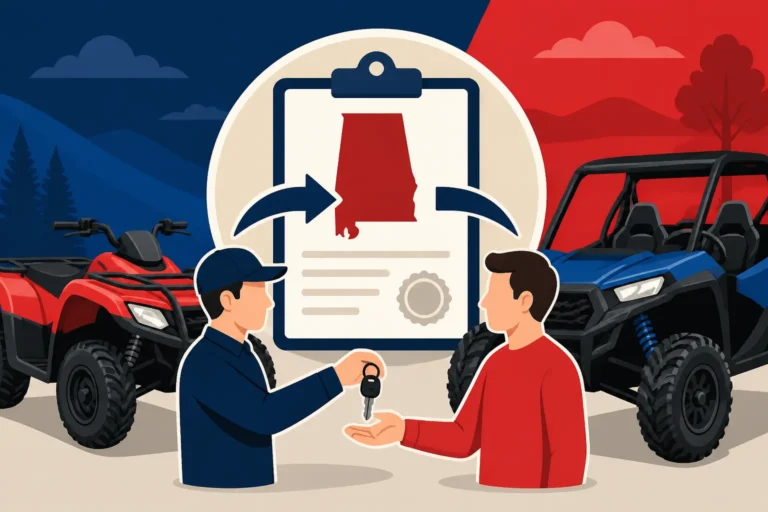
The buyer, on the other hand, is responsible for initiating the transfer of registration into their name. They will need to complete the necessary application, provide the bill of sale, and pay the $5 transfer fee. The buyer should submit these documents to ALEA, either by mail or through an authorized agent, depending on current procedures. It's in the buyer's best interest to complete this transfer promptly to ensure they have legal documentation of ownership and the right to use the machine in accordance with Alabama's off-road vehicle laws. Using a reliable resource for drafting agreements, like a bill of sale from LawDepot, can ensure both parties are protected and the transfer is legally sound. [Alabama Registration Transfer After a Sale] is a key step that should never be overlooked.
Important Considerations for Registration Paperwork
Navigating the world of ATV and UTV registration in Alabama goes beyond just paying fees; it involves understanding the nuances of ownership, ensuring accuracy, and knowing how to handle less-than-perfect situations. While the $5 duplicate and transfer fees are straightforward, the circumstances surrounding why you need them can sometimes be complex. Getting your paperwork in order correctly from the start can save you a lot of headaches down the line, whether you're planning a sale, trying to prove ownership, or simply aiming to avoid issues with authorities.
Verifying Ownership Without a Title
For many older ATVs and UTVs in Alabama—specifically those with a model year prior to 2026—there is no official state title. This can create a unique challenge when it comes to verifying ownership, especially during a private sale or if you've inherited a machine. In these cases, the ALEA registration becomes an even more critical piece of documentation. While not a title, it serves as an official record of who registered the machine, providing strong presumptive evidence of ownership.
If you're buying an older machine, always insist on a bill of sale, even if the machine isn't titled. A detailed bill of sale, showing the seller's name, your name, the date, price, and most importantly, the machine's full serial number, is paramount. This document, combined with a current or transferable ALEA registration, is often the best proof you’ll have. If the seller has lost the original registration, they should get a duplicate before the sale, or be prepared for the buyer to register it with only the bill of sale. For specific guidance, services like LawDepot can offer templates for a solid [Alabama Bill of Sale Requirements] that can help prove ownership of an untitled machine. [Proving You Own an Untitled Machine] often relies heavily on these supporting documents.
Ensuring All Information is Correct
Accuracy is paramount on all registration documents. Even a small typo on a name, address, or serial number can cause significant delays or issues down the road. When applying for a duplicate or transferring a registration, double-check every piece of information you provide against your machine's actual VIN or serial number and your official identification. One common mistake is transposing numbers or letters in the VIN, which can make your registration invalid or link it to the wrong machine.
After you receive your new or transferred registration card and decal, immediately inspect them for any errors. If you spot a mistake, contact ALEA promptly to get it corrected. It’s far easier to fix an error when it’s fresh than to try to explain a discrepancy to a deputy out on the trails. Keeping accurate records not only protects you but also helps maintain the integrity of the state's off-road vehicle database. The $5 fee covers the administrative cost, but your careful review ensures the information being processed is correct.
Dealing with Missing or Incomplete Records
What if you've acquired an ATV or UTV and the previous owner has absolutely no paperwork—no bill of sale, and certainly no registration card? This situation, while challenging, is not insurmountable. Your first step should be to locate the machine's serial number, usually stamped on the frame. This number is vital for establishing its identity. You can then contact ALEA with the serial number to see if the machine has ever been registered in Alabama and, if so, under whose name. This can sometimes help you trace ownership.
If no records are found and you have no bill of sale, you might need to consider creating a detailed affidavit of ownership, outlining how and when you acquired the machine. While this isn't a direct substitute for a bill of sale or previous registration, it can sometimes serve as supporting documentation when applying for a new registration in your name. In rare cases, if the machine has a murky history, you might need to seek legal counsel to explore options for establishing clear ownership. Always remember that for [Alabama Registration Without a Bill of Sale], you'll need substantial proof of purchase or acquisition to satisfy ALEA's requirements, and checking for a stolen machine is always a crucial first step.
Titling vs. Registration: Why the Distinction Matters
For years, owning an ATV or UTV in Alabama primarily involved voluntary registration through ALEA, or sometimes no state-level paperwork at all. This has changed with the introduction of a new titling law, making the distinction between a "title" and a "registration" more critical than ever. While this article focuses on the $5 duplicate and transfer fees for registration, it's impossible to discuss current ATV/UTV paperwork without touching on titling, especially as it impacts future transactions and understanding which machines are affected.
The New Titling Law's Impact on Registration
Alabama's new titling law, which began with model year 2026 machines, introduces a mandatory title requirement for many new ATVs and UTVs. This is a significant shift. Before, an ALEA registration was essentially the closest thing many owners had to an official state record of ownership. Now, for eligible machines, the title will be the definitive proof of legal ownership, much like a car title. This doesn't mean the ALEA registration is going away; instead, it means there are now two distinct systems at play for different machines.
For a brand-new 2026 or newer ATV, you'll go through the titling process, likely handled through your county Probate Judge or License Commissioner’s office. This will involve different forms and fees than the ALEA registration. However, even with a title, you might still opt for an ALEA registration if you plan to ride on public lands that require it. The title proves ownership; the registration, for public use, is more like an operational permit. This parallel system means owners need to understand which rules apply to their specific machine, ensuring they have both ownership proof and operational legality. [Alabama Splits Titling and Registration Between Agencies] now, making it a dual system.
Machines That Cannot Be Titled
It's vital to remember that not all ATVs and UTVs in Alabama will be titled. The new law specifically applies to machines with a model year of 2026 or newer. This means that if you own an ATV or UTV with a model year 2025 or older, it cannot be titled in Alabama. This is a huge point of confusion for many owners. For these older machines, the ALEA registration system remains the primary method for maintaining an official state record, and thus, the $5 duplicate and transfer fees for registration will continue to be highly relevant for their owners. [Why Older Alabama ATVs Cannot Be Titled] is a common question, and it boils down to the specific cutoff in the new law.
So, if you’re selling a 2020 quad or buying a 2015 side-by-side, your focus for state-level paperwork will remain on the ALEA registration process, including using the $5 transfer fee when ownership changes. The bill of sale will continue to be the primary document proving ownership for these untitlable machines. Understanding this distinction is crucial so you don't waste time trying to title a machine that isn't eligible, or conversely, neglect to get a title for a newer machine that requires one. [Why Pre-2026 Owners Do Nothing] regarding titling, but still need to be aware of registration.
Future Changes to Keep in Mind
While the current titling law provides a clear line at model year 2026, laws can evolve. It's always a good idea for ATV and UTV owners in Alabama to stay informed about potential legislative changes that could affect registration, titling, or fees. The state's approach to off-road vehicles is becoming more formalized, and further adjustments to regulations are always a possibility. Keeping an eye on announcements from ALEA and the county Probate or License Commissioner’s offices will help you stay ahead of any new requirements.
For now, the distinction is clear: newer machines will be titled, and a duplicate or transfer of that title will have its own fees. Older machines will continue to rely on the ALEA registration, with its associated $5 duplicate and transfer fees. Having clear, up-to-date registration records, whether for a duplicate or a transfer, contributes to responsible off-road vehicle ownership. Always review official state resources or consult with your local county office or ALEA directly if you have specific questions about your machine's paperwork.
| Service | Fee | Description | Applies To | Agency |
|---|---|---|---|---|
| Duplicate Registration Certificate | $5.00 | Replacing a lost, stolen, or damaged ATV/UTV registration card and decal. | All ATVs/UTVs that have an active, voluntary ALEA registration. | Alabama Law Enforcement Agency (ALEA) |
| Transfer Registration | $5.00 | Transferring an existing ATV/UTV registration from one owner to another after a sale or change of ownership. | All ATVs/UTVs that have an active, voluntary ALEA registration and are changing ownership. | Alabama Law Enforcement Agency (ALEA) |
| Initial Registration Issuance Fee | $2.50 | Administrative fee for processing and issuing the original three-year registration. | All initial voluntary ALEA ATV/UTV registrations. | Alabama Law Enforcement Agency (ALEA) |
| Initial Registration Cost | (Varies) | The base fee for the three-year voluntary ATV/UTV registration itself. | All initial voluntary ALEA ATV/UTV registrations. | Alabama Law Enforcement Agency (ALEA) |
| Title Application Fee | (Varies) | Fee for applying for a mandatory Certificate of Title. | ATVs/UTVs with a model year 2026 or newer. | County Probate Judge or License Commissioner's Office (ALVIN system) |
| Title Transfer Fee | (Varies) | Fee for transferring a Certificate of Title from one owner to another. | ATVs/UTVs with a model year 2026 or newer that are changing ownership. | County Probate Judge or License Commissioner's Office (ALVIN system) |
Disclaimer
This article is for general informational purposes only and does not constitute professional advice. Laws, prices and regulations vary by location and change over time. Consult a qualified professional for guidance on your specific situation.