Why Your Registration Paperwork Goes to Montgomery
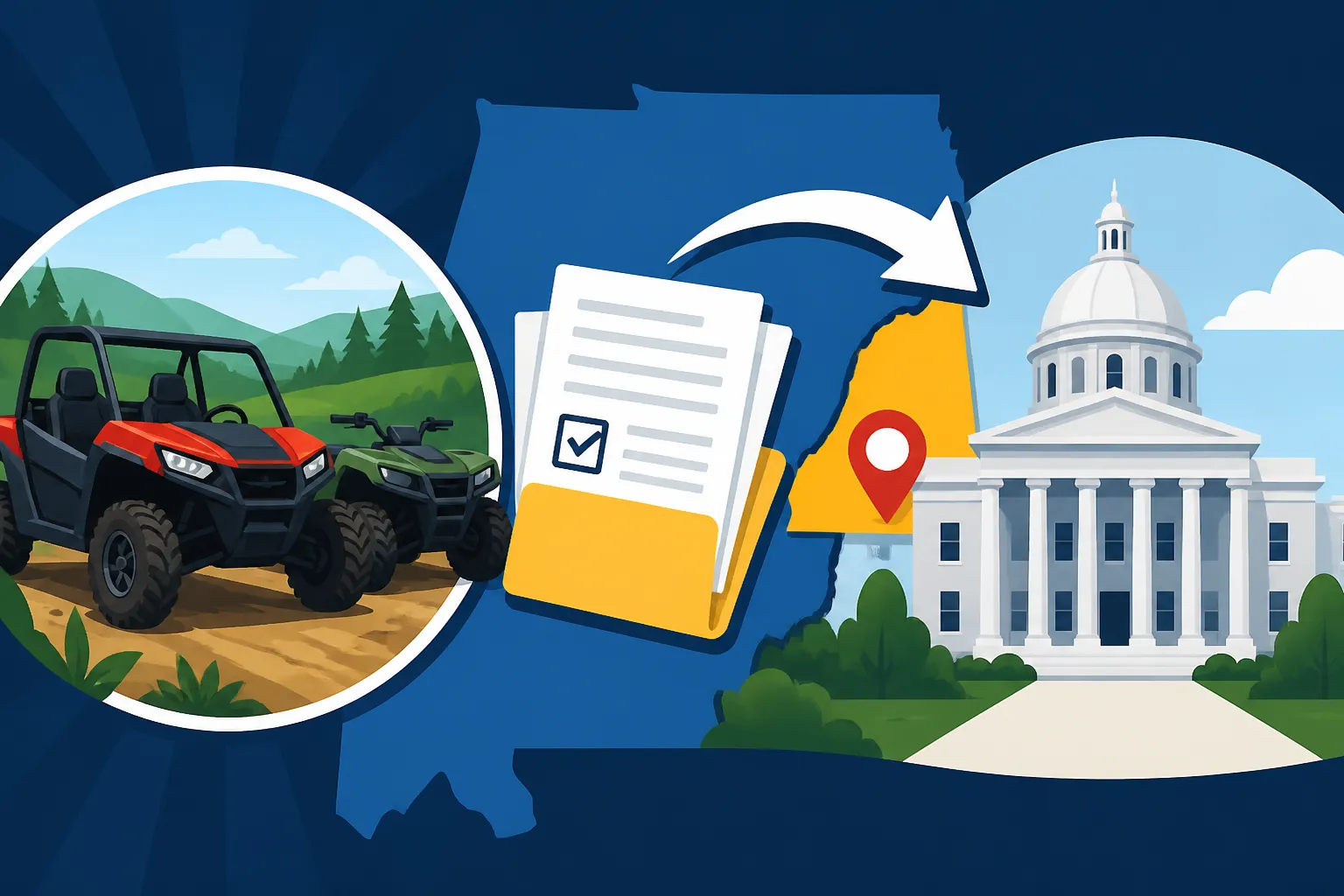
It's incredibly frustrating, isn't it? You go through all the trouble of filling out your ATV or UTV registration paperwork at your local county office, hand over your hard-earned money, and then you're told it all gets sent off to "Montgomery." This guide is here to shed some light on why your Alabama off-road vehicle registration application makes that journey, what happens when it gets there, and why this centralized system is actually in place.
The Centralized System Behind Alabama ATV Registration
When you register your ATV or UTV in Alabama, you're not just filling out a local form; you're participating in a statewide system designed for consistency and proper record-keeping. The journey your paperwork takes to Montgomery is a deliberate part of this structure. It might feel like an extra step, but there's a method to the madness, ensuring that every off-road vehicle registered in Alabama is handled uniformly.
The Alabama Law Enforcement Agency (ALEA)'s Role
The primary reason your registration paperwork heads to Montgomery is that the Alabama Law Enforcement Agency, or ALEA, is the state-designated authority for off-road vehicle registration. Think of ALEA as the central hub for all things related to keeping track of who owns what in the off-road world across the state. They're the ones responsible for issuing those official registration decals and certificates you eventually receive.
Your local county probate office or license commissioner's office acts as an initial point of contact, a convenient place for you to submit your application and payment without having to drive across the state yourself. But once collected, that information isn't processed and finalized right there on the spot. Instead, it's gathered and sent to ALEA's central office to be entered into their official statewide database. This centralization helps ensure that all off-road vehicle records are managed under one roof, preventing potential inconsistencies that could arise if each of Alabama's 67 counties handled the final processing independently. It’s [Alabama's Voluntary ATV Registration Through ALEA] that sets up this system, and it applies whether you're choosing the [Alabama Public Use ATV Registration Explained] or the [Alabama Private Use ATV Registration Explained] tier.
Montgomery as the Hub for Off-Road Vehicle Records
Montgomery isn't just the state capital; it's the administrative heart of Alabama, and that includes where many state agencies maintain their vital records. For off-road vehicle registrations, it serves as the physical location where all those applications from every corner of the state converge. This isn't unique to ATVs and UTVs; many state-level record-keeping functions, from driver's licenses to vehicle titles (for on-road vehicles), follow a similar centralized model.
Imagine the sheer volume of paperwork involved in registering thousands upon thousands of off-road machines each year. Having a single, dedicated location staffed by ALEA employees who specialize in processing these registrations allows for greater efficiency and expertise. It ensures that the process, from data entry to verification and decal issuance, adheres to state guidelines without local variations. While it might seem like a long trip for a piece of paper, it's about consolidating resources and expertise to manage a critical statewide database.
What Happens When Your Paperwork Reaches Montgomery
So, your carefully filled-out application and payment have left your county office and are now making their way to Montgomery. What exactly happens behind the scenes once it arrives at ALEA? It's more than just shuffling papers; it's a multi-step process designed to accurately record your ownership and issue your registration.
Data Entry and Verification Process
Once your [Alabama Registration Paperwork Explained] arrives at ALEA in Montgomery, it enters a structured workflow. The first major step is data entry. All the information you provided – your name, address, machine's make, model, year, and crucially, its Vehicle Identification Number (VIN) or serial number – is meticulously input into the state's official database. This database is the backbone of Alabama's off-road vehicle record-keeping.
After data entry, a verification process kicks in. This is where ALEA staff check for completeness and accuracy. Did you provide all the required information? Does the serial number match existing records, or is it a new entry? Are there any discrepancies between the information on your application and, say, the bill of sale you submitted? Common errors, like a transposed number in the VIN, an incomplete address, or missing signatures, can flag an application for further review and potentially cause delays. Sometimes, they might even need to reach out to you or your county office for clarification, slowing down the entire process. This thoroughness is critical to maintaining accurate records and preventing fraud down the line. If you bought your machine from a dealer, rest assured that [Alabama Dealer Paperwork at Delivery] usually means the application is filled out correctly, minimizing these issues.
Issuance of Registration Decals and Certificates
Once your application has been successfully entered and verified, ALEA proceeds to the final step: issuing your official registration materials. This includes a registration certificate, which is a paper document serving as proof of your registration, and the all-important decal. The decal is what you'll affix to your ATV or UTV, visible proof that your machine is legally registered in Alabama for its intended use (public or private).
These decals are unique, often containing an expiration date and linking directly back to your machine's serial number in the ALEA database. They're not generic stickers; they're specific to your registration. The mailing of these documents typically happens in batches. After processing, your certificate and decal are packaged and sent back to you via mail, completing the cycle that started at your local county office. Remember, these registrations are valid for [Alabama Registrations Run Three Years], so you won't be repeating this process annually.
Why a Centralized Approach Benefits the State (and You)
While it might feel like your paperwork is taking a scenic tour, there are legitimate and significant benefits to Alabama's centralized ATV and UTV registration system. These advantages extend beyond just administrative convenience for the state, offering protections and consistency for off-road enthusiasts like you.
Uniformity and Consistency in Record Keeping
One of the most compelling reasons for a centralized system is to ensure absolute uniformity and consistency across the entire state. Imagine if each of Alabama's 67 counties had its own unique way of registering off-road vehicles. The rules might vary slightly, the forms could be different, and the data collected might not be standardized. This patchwork approach would create confusion for riders, make it difficult for law enforcement, and complicate statewide data analysis.
By centralizing the process at ALEA in Montgomery, every single off-road vehicle registration in Alabama adheres to the exact same set of rules and procedures. This means that whether you register your quad in Mobile, Huntsville, or tiny Hayneville, the fundamental requirements are identical, and the resulting registration is recognized and valid statewide. This consistency is a huge benefit for you as a rider, guaranteeing that your registration is always legitimate wherever you travel within Alabama, and it provides a clear framework for agencies like law enforcement to understand and enforce off-road vehicle laws. It’s part of how [Alabama Splits Titling and Registration Between Agencies], ensuring each system serves its purpose efficiently.
Combating Theft and Ensuring Proper Ownership
A centralized database is an incredibly powerful tool in the fight against ATV and UTV theft, and it plays a crucial role in verifying legitimate ownership. When every registered off-road vehicle's serial number is recorded in one place, it creates a comprehensive registry that law enforcement can quickly access. If your machine is stolen, having its serial number immediately available in a statewide database makes it much easier for officers to identify it if it's recovered, even if it's found hundreds of miles away in a different county. This is particularly relevant when you consider [Alabama Theft and Repossession Motives].
Furthermore, this central record helps prevent fraud during sales. When you buy a used ATV or UTV, especially in a private sale, you want to be sure the person selling it actually owns it and that it hasn't been reported stolen. A centralized registration record provides an official means to verify ownership. While Alabama is just beginning its titling process for newer machines, the existing registration database has long offered a layer of ownership verification, providing peace of mind to both buyers and sellers. Having a proper [Alabama Bill of Sale Requirements] also significantly aids in this process, helping ALEA cross-reference information.
The Difference Between County and State Responsibilities
It’s easy to get confused about who does what when you're trying to register an off-road vehicle. You visit your local county office, but the state agency in Montgomery handles the final steps. Understanding this division of labor clarifies why your paperwork travels and who to contact for different kinds of questions.
County Offices as the Initial Point of Contact
Your local county probate office or license commissioner's office serves as the convenient, first point of contact for off-road vehicle registration. These offices are designed to be accessible to residents, handling a wide array of local and state-related transactions. For ATV and UTV registrations, their role is primarily to:
- Accept Applications: They provide the necessary forms and collect your completed application.
- Collect Fees: They collect the registration fee and any local issuance charges.
- Initial Review: Clerks might do a quick visual check to ensure the application is mostly complete before sending it on.
- Transmit Paperwork: Crucially, they act as the conduit, packaging and forwarding all collected applications and payments to ALEA in Montgomery for official processing.
What a county clerk generally cannot do is immediately issue you a registration decal or certificate. They don't have direct access to the statewide database for real-time processing and issuance. Their job is to facilitate the start of the process, acting as a local agent for the state. If you have questions about which forms to use or how much the initial payment will be, your county office is the perfect place to start. However, if you're wondering about the status of your mailed decal, that falls under ALEA's purview.
The Future of Titling and How It Differs
It's important to differentiate registration from titling, especially with new laws coming into effect. Starting with model year 2026 machines, Alabama is implementing a new titling requirement for ATVs and UTVs. While registration is about recording your machine for use on designated trails and private property, a title is a definitive legal document proving ownership. You can learn more about this significant change in [Alabama ATV Titling Starts With Model Year 2026].
The titling process, handled by a separate agency (the Alabama Department of Revenue via the ALVIN system), will also involve county offices as agents. However, just like with registration, the county's role will be to collect applications and forward them for central processing and issuance. The key takeaway is that even with the advent of titling, the concept of a central state agency being the ultimate authority for official records will persist. Your paperwork will still make its journey to a state-level hub, whether for registration with ALEA or for titling with the Department of Revenue, ensuring consistency and official record-keeping.
What You Can Do to Ensure a Smooth Process
Navigating government paperwork can feel like a maze, but there are definitely steps you can take to make the ATV and UTV registration process as smooth as possible. A little bit of preparation and attention to detail can save you a lot of headache and waiting time.
Double-Checking Your Application Before Submission
The single most impactful thing you can do to speed up your registration is to submit a perfect application. Before you even think about leaving your house, meticulously review every single field on the form.
Here’s a checklist to consider:
- Completeness: Did you fill out every required field? Don't leave anything blank that asks for information.
- Accuracy: Is your name spelled correctly? Is your address current and complete? Is the machine's make, model, and year correct?
- Serial Number: This is absolutely critical. The VIN or serial number must be entered precisely as it appears on your machine. A single transposed digit can cause significant delays or even rejection. Ensure it matches your [Alabama Bill of Sale Requirements] or other proof of ownership. For more details, check out [Alabama Serial Numbers on the Application].
- Signatures: Have you signed where required? If there are multiple owners, have all owners signed?
- Supporting Documents: Did you include all necessary supporting documents, such as a bill of sale, and are they clear and legible?
Think of it this way: every time ALEA has to contact you because something is missing or incorrect, it adds days, if not weeks, to your processing time. A common mistake is using an outdated form; always ensure you have the most current application from ALEA's website or your county office. If you're using a template for a bill of sale or other documentation for a private sale, resources like LawDepot can help ensure you have legally sound documents that meet Alabama's requirements, further streamlining your submission.
Tracking Your Application and Contacting ALEA
Once your paperwork is submitted, a bit of patience is definitely in order. However, if an unreasonable amount of time has passed, or you have a specific question about your application, you'll need to know how to follow up. Your local county office likely won't have real-time tracking information once they've forwarded your documents to Montgomery.
The best course of action for tracking your application status is to contact ALEA directly. Be prepared to provide them with:
- Your Full Name: The name under which the application was submitted.
- Your Address: The mailing address provided on the application.
- Date of Submission: When you submitted the paperwork at your county office.
- Your Machine's Serial Number: This is often the quickest way for them to look up your record.
While contacting ALEA, remember to be polite and patient. They handle a high volume of inquiries, and having all your information ready will help them assist you more efficiently. They will be able to tell you if your application has been received, if it's currently being processed, or if there were any issues that caused a delay.
Understanding Processing Times and Expectations
One of the biggest frustrations for riders is the waiting game. How long does it actually take for your paperwork to travel to Montgomery, be processed, and for your decals to be mailed back? Unfortunately, there's no single, fixed answer, but you can set some realistic expectations.
Generally, you should anticipate a processing time of several weeks. This can fluctuate based on:
- Time of Year: Peak seasons, such as spring when many riders are preparing for the warmer months, can lead to longer processing times due to a higher volume of applications.
- Completeness of Application: As mentioned, an incomplete or incorrect application will significantly delay the process.
- State Holidays and Staffing: These factors can also play a role in how quickly applications are handled.
It's always a good idea to submit your registration well in advance of when you plan to use your machine on public lands. If you're nearing the end of your [Alabama Registration Processing Time] and haven't received anything, that's when it's appropriate to reach out to ALEA. Don't expect instant turnaround; patience is truly a virtue when dealing with state-level administrative processes.
| Feature | Local County Office | Alabama Law Enforcement Agency (ALEA) – Montgomery |
|---|---|---|
| Primary Role | Initial point of contact, application collection | Final processing, record-keeping, decal issuance |
| What They Do | Provide forms, collect applications & fees | Data entry, verification, database management |
| Issuance of Decals? | No, they forward paperwork | Yes, they mail decals and certificates |
| Tracking Capability | Limited once forwarded | Full tracking within their system |
| Physical Location | Your local probate/license commissioner's office | Central state offices in Montgomery |
| Who to Contact for Status | For initial questions about forms/fees | For application status after submission |
Disclaimer
This article is for general informational purposes only and does not constitute professional advice. Laws, prices and regulations vary by location and change over time. Consult a qualified professional for guidance on your specific situation.