Choosing the Cheaper Tier
It can be incredibly confusing and sometimes downright frustrating to figure out what kind of registration your ATV or UTV truly needs here in Alabama, especially when you're just trying to save a few bucks. Many folks just want to ride their machine on their own land, or maybe a friend's property, and they balk at paying for a full-blown "public use" registration that feels overkill. This guide is here to walk you through the distinct registration tiers available in Alabama, highlighting the "cheaper tier" that might be perfect for your needs, so you can avoid unnecessary costs and understand exactly what your registration covers.
Understanding Alabama's Two Registration Tiers: Public Use vs. Private Use
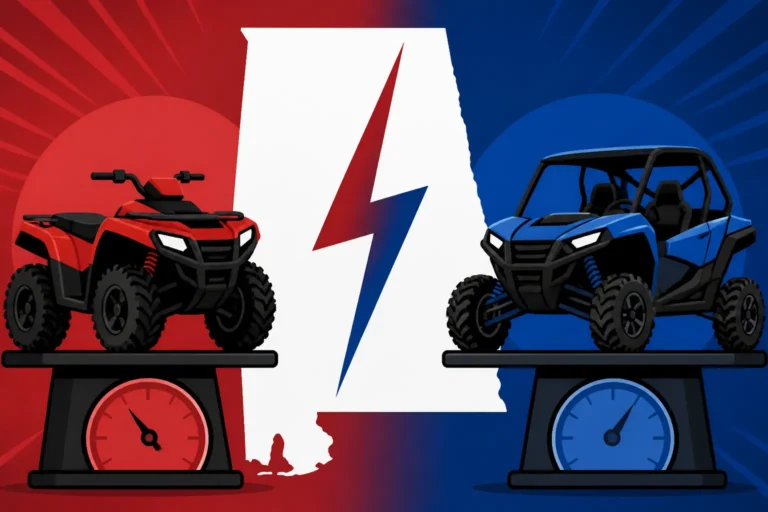
Alabama understands that not every ATV or UTV owner plans on tearing up public trails every weekend. Many of us use our machines for very specific, localized purposes, often on private property. That's why the state has thoughtfully created two distinct registration tiers: "Public Use" and "Private Use." The difference isn't just a matter of semantics; it dictates where you can legally ride your machine and, crucially for many, how much you'll pay at the time of registration. It's a system designed to balance the need for legitimate identification and funding for trail maintenance with the reality of diverse off-road vehicle ownership.
The Core Distinction: Where You Ride
At its heart, the choice between these two tiers boils down to one primary factor: where you intend to operate your ATV or UTV. The "Public Use" tier is designed for those who plan to ride on state-designated trails, in parks open to off-road vehicles, or within Wildlife Management Areas (WMAs) where ATVs are permitted. This registration tier includes a higher fee because it contributes to the upkeep and management of these public riding resources. Think of it as your entry ticket to Alabama's vast network of public riding opportunities.
On the flip side, the "Private Use" tier is specifically for machines that will only be operated on private property. This could be your own sprawling acreage, a hunting club lease, or a friend's farm with their explicit permission. The fee for this tier is significantly lower because your riding activities aren't directly utilizing the state's public trail infrastructure. It's the state's acknowledgment that many off-road vehicles serve more utilitarian roles or are simply for recreational enjoyment within private boundaries. It's important to be honest with yourself about your riding intentions, as choosing the wrong tier could lead to headaches down the road. You can learn more about the specifics of each in [Alabama Public Use Versus Private Use].
Cost Differences and Why They Matter
Let's get down to brass tacks: the cost. The "Private Use" registration is indeed the "cheaper tier." While I can't give you exact figures, you'll find that the fee for private use is notably less than the public use option. This cost difference isn't just a minor fluctuation; it's a deliberate pricing structure. The extra funds collected from the "Public Use" registrations often go directly into programs that manage and maintain public ATV trails, ensuring they remain safe and enjoyable for everyone. This includes things like signage, trail clearing, erosion control, and sometimes even law enforcement presence on these public lands.
For someone who truly never plans to ride anywhere but their own property, paying the higher "Public Use" fee feels like throwing money away. Why should you contribute to trail maintenance on land you'll never touch? This is exactly the frustration the "Private Use" tier aims to alleviate. It provides a legal, albeit limited, form of state registration at a reduced rate, acknowledging the machine's existence for ownership records without burdening private riders with public access costs. Remember, both tiers provide you with an official record of ownership and a decal, but the price reflects the scope of permissible use. For a breakdown of the expenses, check out [Alabama Registration Cost].
What Qualifies as "Private Use" for the Cheaper Tier?
Choosing the cheaper "Private Use" registration tier is an attractive option for many Alabama off-road vehicle owners, but it comes with specific boundaries. It's not a free pass to ride anywhere you please for less money. Understanding what truly qualifies as "private use" is crucial to avoid running into legal trouble or finding yourself in a bind if your riding habits ever change. This tier is truly designed for machines that operate within a defined, non-public context.
Riding Exclusively on Private Property
The most straightforward scenario for utilizing the "Private Use" tier is when your ATV or UTV is ridden exclusively on your own private property. This means land that you personally own, have deeded access to, or that belongs to a family member who has given you express permission. Think of your backyard, your farm fields, your hunting camp acreage, or even a large rural lot where you keep your machine. The key here is exclusive operation on land that is clearly not accessible to the general public for recreational riding. This tier is perfect for farmers moving feed, hunters getting to a stand on their own land, or families enjoying leisurely rides within their property lines.
It's also important to note that "private property" extends to land where you have a formal, documented right to ride. This could include a long-term lease, such as for a hunting club, or a specific written agreement with a landowner. For instance, if you're part of a hunting club that leases hundreds of acres from a timber company, and your riding is confined to that leased land, the "Private Use" tier would likely apply. Having documentation, like a lease agreement or a written [Landowner Permission Letters] from LawDepot, can be incredibly helpful if you ever need to prove your right to ride on that property. This kind of documentation supports your claim that you are indeed using the machine for private purposes on private land.
Common Activities That Fit the Private Use Tier
Many activities fall perfectly within the "Private Use" classification, making the cheaper tier a sensible choice. Farming operations are a prime example. If you use your ATV to check fences, move irrigation lines, transport tools, or herd livestock across your fields, you're squarely in the private use category. The same goes for land management tasks like spraying weeds, hauling small loads of timber, or accessing remote parts of your property for maintenance. For more on this, look into [Alabama Registration for a Farm Machine].
Recreational riding can also fall under private use, as long as it stays on private land. Families enjoying trails cut through their woods, kids learning to ride in a pasture, or simply joyriding around your own property are all valid private uses. Hunting is another major one; many hunters use ATVs to access deer stands, retrieve game, or transport supplies within their own leased or owned hunting land. The critical takeaway is that your machine's tires should never touch public roads, public trails, or state-owned recreation areas if you're relying solely on the "Private Use" registration. If you're unsure about whether your specific activity fits, always err on the side of caution or consult with the local authorities or ALEA for clarification.
When the "Public Use" Tier Becomes Necessary
While the "Private Use" tier is undoubtedly appealing for its lower cost, there are many situations where the "Public Use" registration becomes not just beneficial, but absolutely essential. If your riding habits extend beyond the boundaries of private land, ignoring the "Public Use" requirement can lead to fines, legal issues, and the unwelcome experience of having your ride cut short by a park ranger or deputy. This tier is your gateway to a vast network of legal riding areas across Alabama.
Accessing Public Lands and Designated Trails
The most obvious reason to opt for the "Public Use" tier is if you plan to ride on any state-managed land or designated public trails. This includes popular destinations like Stony Lonesome OHV Park, Minooka Park, or any other county or state park that permits off-road vehicles. It also extends to riding within certain Wildlife Management Areas (WMAs) and designated roads or trails within Alabama's national forests, where ATVs are explicitly allowed. These areas are funded and maintained, in part, by the fees collected from "Public Use" registrations. Without this registration, you simply don't have the legal right to operate your machine in these places.
Imagine you've loaded up your side-by-side, driven an hour or two to a fantastic OHV park, only to be turned away at the gate because your machine only has a "Private Use" decal. It's a real bummer, and a scenario that's easily avoidable by getting the correct registration from the start. These public areas often have specific rules, and proper registration is always at the top of the list. Don't risk the disappointment and wasted travel time. If you dream of exploring [Alabama ATV Trails: Where to Ride] or plan to spend a weekend camping and riding at [Stony Lonesome OHV Park in Alabama], the "Public Use" registration is non-negotiable.
Riding on Public Roads (Where Permitted) or Crossing Highways
While ATVs and UTVs are generally not street legal in Alabama, there are very specific and limited circumstances where they might be allowed on certain public roads or for crossing highways. These exceptions are typically granted by local ordinances (e.g., in small towns for golf carts or utility vehicles meeting certain criteria) or for agricultural purposes. Even in these rare instances, a "Public Use" registration often underpins the legality of such operation, because you are, by definition, interacting with public infrastructure. If you're wondering about this, check out [Are ATVs Street Legal in Alabama?] for more context.
Attempting to cross a road or ride on a shoulder with a "Private Use" registered machine, even briefly, can expose you to legal penalties. The "Private Use" designation clearly restricts your vehicle to private property, meaning any interaction with a public roadway, no matter how short, can be deemed illegal. If your activities, even farm-related ones, require you to move your machine along or across public roads, you should seriously consider the "Public Use" tier, or at least investigate the specific local laws and exceptions carefully. It’s always better to be overly cautious than to face a citation or even worse, an accident on a public thoroughfare without proper authorization.
The Problem with "Riding Public Land on a Private Tier"
It's a common misconception, and a risky one, to believe you can sneak onto public trails or property with a "Private Use" registration and simply claim ignorance if caught. This is simply not how the system works. [Riding Public Land on a Private Tier] is expressly prohibited and will lead to consequences. Rangers and law enforcement officers who patrol these areas are well-versed in the distinction between the two decals. They know what each registration allows, and they are there to enforce the rules for everyone's safety and to protect the resources.
If you are found riding a "Private Use" registered machine on public land, you could face fines, be required to leave the area, or even have your machine impounded. These penalties are often far more expensive than the difference in cost between the two registration tiers. Beyond the financial implications, there's the inconvenience and the potential damage to your reputation as a responsible rider. It's a classic case of trying to save a little money upfront only to pay a lot more in the long run. The state issues different decals for a reason, and pretending one is the other won't fly.
Making the Switch Between Tiers (and If It's Worth It)
Life happens, and sometimes your riding needs change. You might start with a "Private Use" registration because you only planned to ride on your farm, but then your buddies invite you to an epic weekend at an OHV park. Or perhaps you bought a new property with direct access to public trails, and suddenly the public use option makes sense. The good news is that Alabama does allow you to switch your registration tier. However, it's important to understand the process, potential costs, and whether it's truly the most economical choice.
How to Upgrade from Private to Public Use
If you find yourself needing to upgrade from the "Private Use" tier to the "Public Use" tier, the process generally involves contacting the Alabama Law Enforcement Agency (ALEA), which handles off-road vehicle registrations. You'll likely need to fill out new paperwork, pay the difference in registration fees, and possibly a small processing fee. Since [Alabama Registrations Run Three Years], you're effectively modifying an existing multi-year registration. It's not usually as simple as just paying the difference in annual fees for the remaining term; you're likely paying the full upgrade amount to convert the existing registration to public use.
You'll probably receive a new decal to replace your old "Private Use" one, signifying your new public access privileges. It's crucial to ensure you've completed all the necessary steps and received official confirmation before heading out to those public trails. Just because you've sent in a check doesn't mean your machine is instantly cleared for public use. Always wait for the official updated registration and decal. You can find more specific details about this process in [Switching From the Private Tier to Public Use].
Downgrading and Why It's Rarely Practical
While theoretically possible, downgrading from a "Public Use" registration to a "Private Use" one is rarely practical or cost-effective. Given that the "Public Use" tier costs more, a downgrade would essentially mean that you've overpaid for your registration from the start. The state is unlikely to issue a partial refund for the difference in fees, especially since the registration usually covers a three-year period. You've essentially paid for a privilege you're no longer using, and the state's administrative process isn't set up for prorated refunds in such scenarios.
Therefore, if you anticipate your riding needs might change, it's generally recommended to register for the "Public Use" tier upfront if there's even a slight chance you'll use public lands. The initial cost difference, while present, is often less painful than the hassle and unrecoverable expense of changing tiers mid-stream. Think of it as insurance: paying a little more now to ensure you have maximum flexibility without future penalties or administrative headaches.
When to Stick with the Cheaper Tier
Despite the flexibility, there are still many instances where the "Private Use" tier is absolutely the correct and most economical choice. If your ATV or UTV is genuinely and exclusively used on your own property, a leased hunting tract, or strictly for [Alabama Registration for a Farm Machine], then the cheaper tier makes perfect sense. There's no need to pay for public access you'll never use.
Consider if you have another machine, perhaps a dirt bike or a different ATV, that you do use on public trails. In that case, you could register your trail machine for "Public Use" and keep your farm quad on the "Private Use" tier, optimizing costs for each vehicle's specific purpose. It's about being realistic about your actual usage. If you're someone who really just needs a machine for hauling deer feed across your land or checking irrigation pipes, and you have no intention of visiting Minooka Park or Stony Lonesome, then stick with the private use registration and save that money for fuel or accessories.
| Registration Tier | Typical Cost | Where You Can Ride | Common Use Cases | Decal Appearance |
|---|---|---|---|---|
| Private Use | Cheaper | Exclusively private property (owned, leased, or permitted land) | Farm work, hunting on private land, backyard riding | Specific private |
| Public Use | Higher | Public OHV parks, designated state/county trails, WMAs, public roads (where allowed) | Recreational trail riding, OHV park visits | Specific public |
Disclaimer
This article is for general informational purposes only and does not constitute professional advice. Laws, prices and regulations vary by location and change over time. Consult a qualified professional for guidance on your specific situation.