Ten Model Years and Counting
It can be incredibly confusing trying to wrap your head around Alabama's new titling laws for ATVs and UTVs, especially when you've owned your machine for years without any such requirement. Many folks are wondering if their trusty old quad, which has been a workhorse on the farm or a weekend warrior for ages, suddenly needs a title. This guide is here to clear up that specific headache, diving deep into the "ten model years and counting" rule, explaining exactly which machines will and won't be subject to Alabama's upcoming titling mandate, and what that means for you.
Understanding Alabama's New Titling Law for Off-Road Vehicles
Let's start by acknowledging that change can be tough, and navigating new regulations for something you've always done a certain way is a prime example. For years, ATVs and UTVs in Alabama didn't require a title – you owned it, you registered it (if you wanted to ride on certain public lands), and that was that. But the landscape is shifting, and it's essential to understand the basics of this new system.
Alabama passed a law that changes how we handle ownership records for off-road vehicles. This isn't just a small tweak; it's a significant shift designed to bring our state in line with many others and help combat things like theft. The most crucial detail to grasp upfront is that this new titling requirement doesn't kick in for all machines, nor does it apply retroactively to every ATV or UTV currently out there. It's specifically targeted at newer models, starting with a particular model year. This distinction is where the "ten model years" rule really comes into play, creating a cutoff point that's caused quite a bit of chatter among riders and landowners alike. You can learn more about the specifics of [Alabama's 2024 Titling Law] and how it's designed to roll out over the coming years.
When Titling Becomes a Requirement
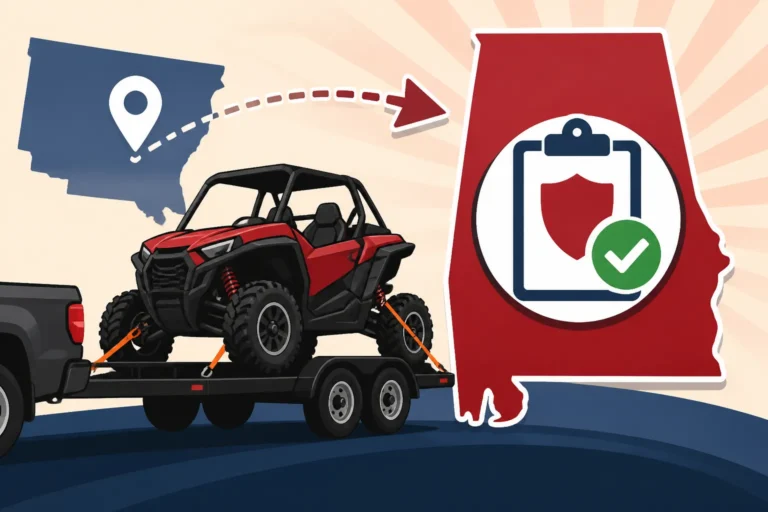
The big date to remember is January 1, 2026. From this point forward, if you buy a brand-new ATV or UTV that is a Model Year 2026 or newer, it will require an Alabama title. This applies whether you're purchasing it from a dealership or from a private seller. If you're buying a [A Model Year 2026 Machine], the titling process will be initiated at the point of sale or shortly thereafter. The intent behind this is to create a clear chain of ownership for these machines from their initial sale, which helps law enforcement track stolen vehicles and provides clearer proof of ownership for buyers and sellers. It's a system many states have for cars and trucks, now extending to our off-road machines.
This means that if you're looking at a shiny new side-by-side or a powerful quad, you'll be entering a world where proving who truly owns it, via a state-issued document, becomes standard practice. It might feel like another layer of bureaucracy, but it's ultimately designed to protect your investment and make transactions more secure. The specific requirements for these new machines are detailed further in [Alabama ATV Titling Starts With Model Year 2026], which outlines the paperwork and steps involved.
How the Model Year Decides Everything
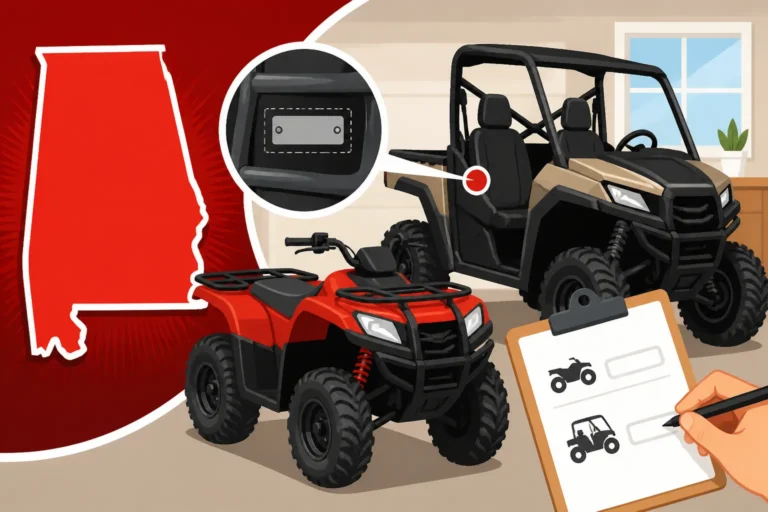
So, why the focus on "model year"? It's the simplest way for the state to draw a clear line in the sand without creating a system that demands every single off-road vehicle ever sold in Alabama suddenly acquire a title. Model year is an unambiguous identifier, usually found right on the machine's VIN plate. It's not about when you bought it, but what model year the manufacturer designated it as.
This means a machine built in late 2025 could still be a 2026 model year, and thus require a title. Conversely, a machine bought new in early 2026 but manufactured as a 2025 model year would not require a title under the new law. The law's framers recognized the complexities of creating a title system from scratch for a vehicle category that has traditionally been untitled. By tying it to the model year, they've established a forward-looking system that avoids the monumental task of retroactively titling countless older machines, many of which have changed hands multiple times with only a handshake or a simple bill of sale as proof.
The "Ten Model Years" Exemption in Detail
This is where many of us breathe a sigh of relief. While the new titling law is coming, it includes a very significant exemption for older machines. Understanding this exemption is key to knowing whether your current ATV or UTV will ever need a title in Alabama. It's about drawing a practical line in the sand, recognizing that the older a machine is, the harder it often becomes to track its full ownership history through official channels.
The exemption specifies that machines that are ten model years old or older are exempt from the new titling requirement. This isn't a temporary waiver; it's a permanent exclusion from the titling mandate. The intent here is to prevent the immense logistical challenge and potential headache of trying to title machines for which original purchase documents might be long lost, or which have been passed down through families, or sold multiple times via private transactions with minimal formal paperwork.
What "Ten Model Years" Truly Means in Practice
Let's break down this "ten model years" concept with some practical examples, because it can sound a bit abstract. Imagine the year is 2026, when the titling law takes effect. A machine that is a Model Year 2016 would be considered ten model years old (2026 minus 2016 equals 10). Therefore, a 2016 model year ATV or UTV would not require a title in Alabama, even if it's changing hands in 2026 or later.
Fast forward to 2027: in that year, a Model Year 2017 machine would then be considered ten model years old (2027 minus 2017 equals 10) and would likewise be exempt from titling. This means the exemption is a rolling one, always looking at the current calendar year minus ten. So, if you own a [A Model Year 2015 Machine], it will never require a title under this new law, regardless of when you sell it or if you pass it on. This rolling exemption is crucial for understanding [How a Ten-Year Window Exempts Older Machines] from the burden of new title applications.
Why Older Machines Are Exempt
The decision to exempt machines older than ten model years wasn't arbitrary. It stems from a realistic understanding of how these vehicles have been bought, sold, and used over the decades. Unlike cars, where titles have been standard for a very long time, ATVs and UTVs have largely operated in a less regulated space regarding official proof of ownership. Trying to mandate titles for every machine dating back twenty or thirty years would create a bureaucratic nightmare.
Think about it: many older quads might have been bought with cash at a farm sale, passed down from a grandfather, or acquired through a trade with a neighbor. The original bill of sale, if one even existed, is likely long gone. Establishing a clear chain of ownership for these machines to create a new title would be nearly impossible in many cases. The law specifically addresses this challenge by exempting these older vehicles, focusing instead on establishing a clear title system for newly manufactured machines moving forward. This is precisely [Why Older Alabama ATVs Cannot Be Titled] and why the state chose this pragmatic approach.
What This Means for Owners of Older Machines
If you're like many Alabama residents, you likely own an ATV or UTV that falls squarely into this "older than ten model years" category, or perhaps it's a pre-2026 model year machine. The good news is that the new titling law doesn't create an immediate, mandatory task for you to complete. You won't have to scramble to get a title for your long-owned machine.
For machines that are Model Year 2025 or older, they will not be required to get an Alabama title, regardless of their age. This means your current quad, bought new in 2023, will never need a title under this law. Similarly, if your machine is a Model Year 2015, or even a 2005, it will remain untitled as far as the state is concerned. This provides clarity and avoids forcing owners to navigate a complex, often impossible, process of trying to prove a historical chain of ownership for a title that simply wasn't required before. In essence, for a vast number of existing ATV and UTV owners, the direct impact of the new titling law on their current machines is minimal, if not nonexistent. You can essentially refer to this as [Why Pre-2026 Owners Do Nothing] in terms of securing a new title.
Proving Ownership Without a Title
Just because your older machine doesn't get a state-issued title doesn't mean you have no way to prove ownership. It simply means you rely on other common forms of documentation, much like we did for all ATVs and UTVs prior to this new law. The most critical document remains a bill of sale. This should clearly identify the machine (make, model, year, VIN/serial number), the buyer, the seller, the date of sale, and the price. A well-drafted bill of sale is your primary proof of ownership for an untitled machine. You can find customizable templates for documents like a bill of sale or even an affidavit of ownership through resources like LawDepot, which can be particularly helpful for private sales or for formalizing ownership if a machine has been passed down without formal paperwork.
Other forms of proof can include previous registration documents from the Alabama Law Enforcement Agency (ALEA), insurance policies naming you as the owner, or even photographs of you with the machine over time. For peace of mind, always keep these documents in a safe place, both physically and perhaps digitally. When buying an older, untitled machine, insist on a comprehensive bill of sale, and ensure it lists the machine's VIN or serial number accurately. This helps in [Proving You Own an Untitled Machine] and can save a lot of grief later on.
Buying and Selling Older, Untitled Machines
The process for buying or selling an older ATV or UTV (Model Year 2025 or older, or anything that falls into the "ten model years or older" exemption) will largely remain the same as it has been. The cornerstone of the transaction will still be the bill of sale. When you're the buyer, make sure the seller provides a clear, signed bill of sale that includes all the pertinent information for the machine and both parties. It should also state that the machine is free of liens or encumbrances. Utilizing a template from a service like LawDepot for your bill of sale can add a layer of professionalism and ensure all necessary details are included. Remember, a thorough [Alabama Bill of Sale Requirements] document will protect both the buyer and the seller in these transactions.
Conversely, if you're selling an older machine, be prepared to provide a detailed bill of sale to the new owner. While the state won't issue a title, this document is vital for the new owner to prove their ownership for registration purposes or in case of theft. It's a common practice to have both parties sign two copies of the bill of sale, with each retaining one for their records. Without a title, this document essentially is your proof of ownership, and its importance for these older machines cannot be overstated.
The Impact on Registration vs. Titling
It's absolutely crucial to understand that Alabama's new titling law and the "ten model years" exemption apply only to titling, which is about establishing a legal record of ownership. This new law does not change the existing requirements or processes for registration with the Alabama Law Enforcement Agency (ALEA). These are two separate functions handled by different state entities.
Think of it this way: a title is like a deed to your house – it proves you own it. Registration is like getting your car's license plate – it permits you to operate it legally on public roads or in designated areas. For ATVs and UTVs in Alabama, registration has always been about gaining permission to ride on public lands or participate in certain organized events, not about proving ownership for every single machine. This distinction is important because many owners, especially those of older machines, might confuse the two. The details of how these responsibilities are divided are explained in [Alabama Splits Titling and Registration Between Agencies].
Titling and Registration Are Separate Processes
As mentioned, the titling process, particularly for Model Year 2026 and newer machines, will largely be handled through county offices working with the state's ALVIN system. This system is designed to create a secure, centralized record of ownership. Registration, on the other hand, remains with ALEA. You apply to ALEA for a registration decal, which permits your machine to be ridden on public property designated for OHV use, or you can choose a private use registration if you primarily ride on your own land.
The critical takeaway here is that even if your machine is "ten model years and counting" old and won't get a title, it can absolutely still be registered with ALEA. Registration is voluntary for private property use but mandatory if you intend to ride on public lands that permit off-road vehicles. This means that an older quad from 2008, which will never see an Alabama title, can still be fully and legally registered for [Alabama Public Use ATV Registration Explained] or [Alabama Private Use ATV Registration Explained] if you plan to hit the trails at a state park or designated public riding area.
Registering Your Older, Untitled Machine
If you own an older ATV or UTV that falls under the "ten model years or older" exemption, you can absolutely still register it with ALEA. The process for registration doesn't require a title for machines that aren't subject to the titling law. You'll typically need to provide proof of ownership (like a bill of sale), the machine's VIN or serial number, your personal identification, and the appropriate registration fee.
The beauty of this system is that it acknowledges the reality of existing ownership without creating undue burden. So, whether you have a classic three-wheeler from the 80s or a side-by-side from 2018, you can still obtain the necessary registration if you plan to take it beyond your private property. This ensures that all riders, regardless of their machine's age or titling status, can legally access designated public riding areas in Alabama, provided they meet the registration requirements. If you're wondering [Do You Need to Register an ATV in Alabama?], the answer still depends on where and how you plan to ride, not solely on whether your machine has a title. You'll also want to familiarize yourself with [Alabama Registration Paperwork Explained] to make sure you have everything in order.
Disclaimer
This article is for general informational purposes only and does not constitute professional advice. Laws, prices and regulations vary by location and change over time. Consult a qualified professional for guidance on your specific situation.