Alabama Public Use Versus Private Use
Trying to navigate Alabama's ATV and UTV registration requirements can feel like attempting a blind climb up a steep, muddy hill. Many riders get tangled up in the terminology, especially when it comes to understanding the difference between "public use" and "private use" registrations. It's a critical distinction that can impact where you can legally ride and what paperwork you need. This guide is here to help you cut through the confusion, clearly defining each tier and helping you decide which one best suits your off-road adventures.
Understanding the Alabama Off-Road Vehicle Statute
Before we dive into the specific registration tiers, it's really helpful to grasp what Alabama considers an off-road vehicle (ORV) in the first place. The state has specific definitions that dictate whether your machine even falls under these registration rules. Getting this foundational understanding right can save you a lot of headaches down the line.
What is an Off-Road Vehicle in Alabama?
When Alabama talks about an "off-road vehicle," they're generally referring to all-terrain vehicles (ATVs) and recreational off-highway vehicles (ROVs), which you might know as side-by-sides or UTVs. The legal definitions typically specify things like width, weight, and the type of tires. For instance, an ATV is often defined as a motorized, off-highway vehicle designed to travel on four or more low-pressure tires, having a seat designed to be straddled by the operator, and handlebars for steering. A side-by-side, or ROV, is often defined as having a non-straddle seat and a steering wheel, designed for travel on unpaved surfaces.
These definitions are crucial because they determine if your machine is even subject to the ORV registration laws. Things like golf carts and most farm equipment, despite being used off-road, are typically excluded from these definitions and, therefore, from this specific registration chapter. You might find it interesting to read about [Alabama's ATV and ROV Legal Definitions] to get the full picture straight from the source. The nuances of these definitions are why a local county probate office or ALEA (Alabama Law Enforcement Agency) can give you the most accurate interpretation for your specific machine.
Why the Distinction Matters
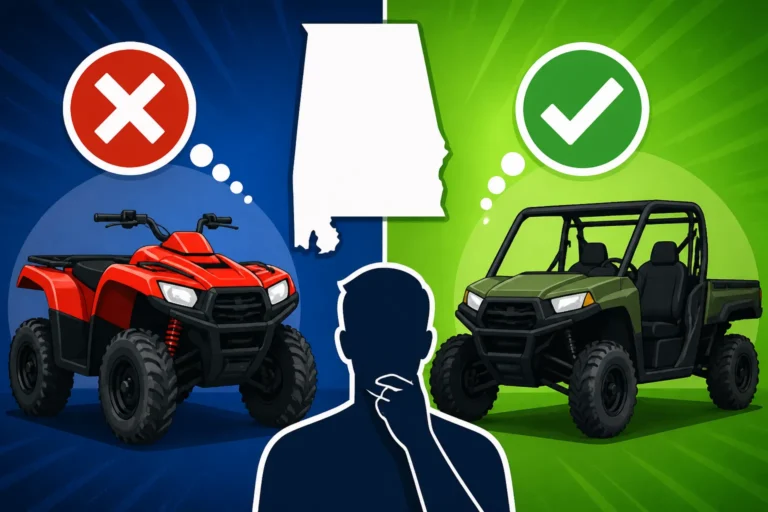
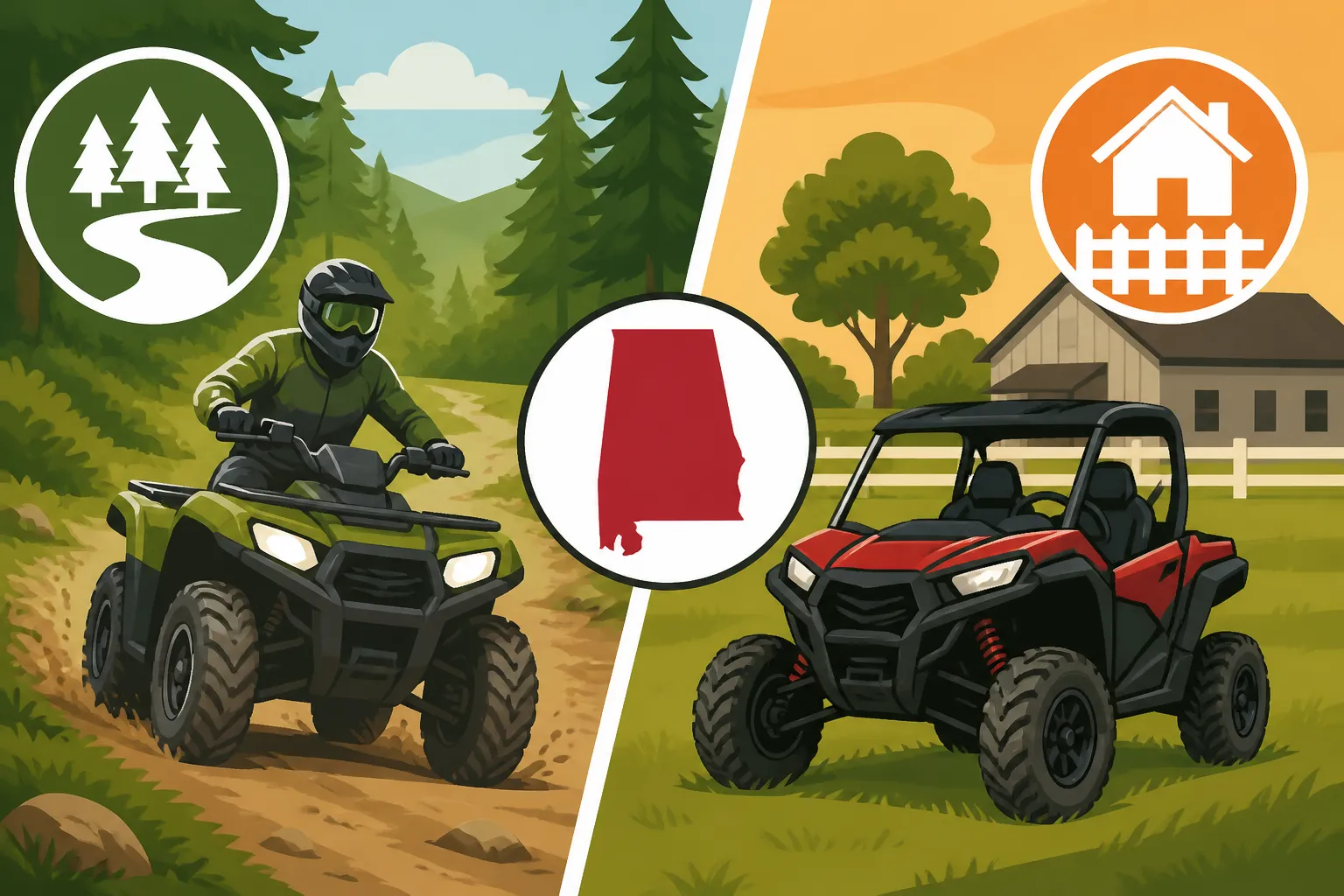
The reason Alabama bothered to create two separate registration tiers – public use and private use – boils down to where you intend to operate your machine. The state isn't trying to make things overly complicated; they're trying to differentiate between someone who primarily uses their quad on their own property versus someone who wants to explore designated public trails or, critically, cross public roads. Your registration choice signals your intended usage, and it carries different legal implications, costs, and riding privileges.
If you mistakenly choose the wrong tier, you could find yourself riding illegally, facing fines, or even having your machine impounded. It's not just a matter of paying a little more or less for a sticker; it's about adhering to the spirit of the law and ensuring you're legally permitted to be where you're riding. This distinction is at the heart of [Do You Need to Register an ATV in Alabama?] and understanding it fully is your first step to legal and worry-free riding.
The "Private Use" Registration Tier
For many Alabama ATV and UTV owners, the thought of registering their machine for "private use" seems like the logical choice. It implies that you're just using it on your own land, far from public scrutiny. While this tier offers some advantages, it's vital to truly understand its limitations to avoid accidentally breaking the rules.
Who Qualifies for Private Use?
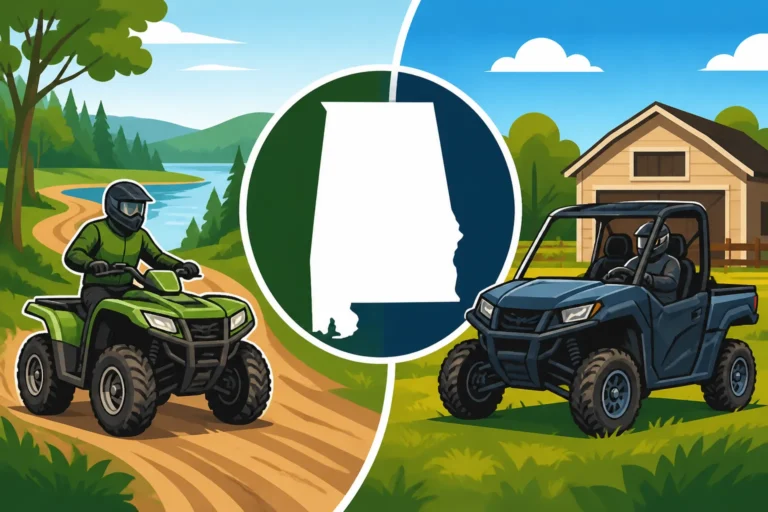
The "private use" registration tier is specifically designed for owners who will exclusively operate their off-road vehicle on private property. This means your own land, or land for which you have explicit permission from the landowner. Think of it this way: if your machine never touches a public road, a public trail, or any land managed by the state or federal government, then private use registration is likely appropriate. This covers a wide range of common uses, from tending to crops on your farm to cruising around your hunting club's leased acreage, or simply having fun in your own backyard woods.
It's tempting to think that "private use" means you don't really need to worry about registration at all. However, even if you are only using your machine on private property, the state still offers and encourages this registration. It serves as a clear record of your machine with the state, which can be invaluable in cases of theft or for proving ownership.
Benefits and Limitations
The most significant benefit of the private use registration is its cost. It is generally the less expensive option compared to public use registration. This financial incentive makes it attractive for those who genuinely stick to their own property. It also provides a state-issued decal and record, affirming your machine's place in the official system, even if it's primarily a personal asset. You can check [Alabama Private Use ATV Registration Explained] for a deeper dive into the specifics of this tier.
However, the limitations are equally important. With a private use registration, you are legally restricted from operating your ATV or UTV on any public land, which includes state parks, federal forests, designated OHV trails, and most importantly, public roads. Even crossing a public road to get from one private parcel to another can put you in violation if you only have a private use sticker. This is a common pitfall that many riders overlook, leading to unexpected encounters with law enforcement. The private use sticker essentially says, "This machine is recognized by the state, but only for private property use."
Common Scenarios for Private Use
Let's look at some common situations where private use registration is a perfect fit. If you own a large property in places like Cullman County and primarily use your side-by-side to check fences, haul feed, or move equipment around your own fields, then private use is ideal. Similarly, if your primary riding takes place exclusively within your hunting camp in the Black Warrior National Forest region, but on private leased land, this tier works well.
Another scenario is if you're a weekend warrior who enjoys tearing up trails on family property near Talladega, and you always load your quad onto a trailer to get it there, never even crossing the street with it. In these cases, the cheaper private use registration is perfectly sufficient and keeps you compliant. Many people use services like LawDepot to generate a solid bill of sale when acquiring a used machine, which is excellent for proving ownership regardless of the registration tier you choose. A clear paper trail is always your friend.
The "Public Use" Registration Tier
For the adventurous Alabama rider who dreams of exploring vast trails or needs to operate their machine beyond the boundaries of strictly private land, the "public use" registration tier is absolutely essential. While it comes with a slightly higher cost, it unlocks a world of legal riding opportunities across the state.
Who Needs Public Use Registration?
Simply put, if you plan to ride your ATV or UTV on any land that isn't exclusively private property, you need public use registration. This includes riding in designated public OHV parks like Stony Lonesome OHV Park, accessing trails in Wildlife Management Areas (WMAs), or participating in organized group rides that traverse public easements or private lands with shared access. Crucially, it also applies if you ever need to legally cross a public road, even if it's just for a few feet to access another parcel of private land.
The definition of "public land" can sometimes be broader than people assume. It's not just state parks; it can include certain utility rights-of-way, timber company roads that are open to public access, and even some unimproved county dirt roads. If there's any ambiguity, or if your riding involves sharing space with the general public, the public use registration is your safest bet. Understanding [What Registering Gets You Before Riding Public Land] will further clarify the advantages.
What "Public Use" Actually Means
"Public use" registration signifies to the state that your off-road vehicle is equipped and permitted for operation in areas accessible to the general public. It's not a license to drive on highways, but it is the prerequisite for using your machine on legally designated public OHV trails and, under specific circumstances and local ordinances, crossing public roads. This registration helps fund the management and maintenance of these public riding areas, ensuring they remain accessible for future generations of riders.
It's a common misconception that "public use" implies full road legality. This is emphatically not the case in Alabama for most ATVs and UTVs. Public use registration is distinct from vehicle titling and plating for highway use, which requires machines to meet stringent federal motor vehicle safety standards (FMVSS). Your public use sticker simply grants you the right to operate on off-road public lands where ATVs are permitted, and to make those limited road crossings.
Scenarios Where Public Use Is Essential
Let's imagine you're planning a trip to Stony Lonesome OHV Park in Bremen. To legally ride those 150 miles of trails, your machine must have a public use registration decal. The same applies if you intend to go hunting on an Alabama WMA and want to use your UTV to retrieve game on designated WMA roads; you'll need that public use sticker in addition to your [Alabama WMA Permits for Riders].
Another frequent scenario involves landowners whose property is split by a county road. Even if you own land on both sides, to legally ride your quad across that public roadway, you need the public use registration. Ignoring this small detail can lead to fines and citations for illegal road riding. When dealing with private land access, having a clear [Alabama Landowner Permission Forms] generated through a service like LawDepot, combined with your public use registration, ensures you’re covered from all angles.
Comparing Public and Private Use Registrations
When you're faced with two options, a direct comparison is often the clearest way to make an informed decision. Alabama's public and private use registrations have distinct differences in cost, privileges, and the paperwork process, making it important to weigh them against your actual riding habits.
Cost Differences
The most immediate difference many riders notice is the price. The "private use" registration tier carries a lower fee than the "public use" tier. This is a deliberate choice by the state, acknowledging that machines used exclusively on private property contribute less to the wear and tear on public lands and require less state oversight for public safety. Both registrations typically run for three years before renewal, which is a great aspect of Alabama's system; you don't have to worry about renewing every single year. You can get more details on [Alabama Registration Costs Over Three Years].
While the dollar difference between the two tiers might not seem astronomical over a three-year period, it's still a factor, especially if you own multiple machines. Always check the current fees with the ALEA or your local probate office, as these can be subject to change.
Riding Privileges
This is where the rubber meets the road, quite literally. A private use registration restricts you to private property where you have permission. This means no designated public OHV trails, no state-managed forest roads, and absolutely no riding on or crossing public roads. It's a clear boundary designed to keep private recreational activities distinct from publicly managed ones.
The public use registration, however, opens up those doors. With it, you gain the privilege to ride on state and federal lands where off-road vehicles are permitted, such as certain parts of the Talladega National Forest or within specific county OHV parks. Crucially, it also enables you to perform legal road crossings where local ordinances allow, which is a game-changer for many who have property on both sides of a county road or need to briefly use a road to connect trails. You can dive deeper into this at Alabama Public Use Versus Private Use.
Here's a quick comparison table:
| Feature | Private Use Registration | Public Use Registration |
|---|---|---|
| Intended Use | Exclusively on private property | On private property AND designated public lands/trails |
| Cost (Relative) | Lower | Higher |
| Public Road Crossing | Not permitted | Permitted under specific local ordinances and conditions |
| Public Trail Access | No | Yes (on designated OHV trails) |
| WMA Access | No (unless strictly within private lease/ownership) | Yes (on designated WMA roads/trails, with WMA permits) |
| State Record | Yes, machine is recorded with the state | Yes, machine is recorded with the state |
| Typical Term | Three years | Three years |
| Decal Issued | Yes | Yes |
Paperwork and Process
The actual process for applying for both types of registration is quite similar. You'll generally go through ALEA, often via your local probate office. You'll need to provide proof of ownership, such as a bill of sale or manufacturer's statement of origin (MSO), and details about your machine, including its vehicle identification number (VIN) or serial number. [Alabama Registration Paperwork Explained] goes into detail on what you'll need to bring.
The main difference in the paperwork is simply selecting the correct tier on the application form and paying the corresponding fee. Ensure your bill of sale, especially if it's a private sale, is complete and accurate. You might consider using a template from a reputable source like LawDepot to ensure all necessary information, such as the seller's details and the machine's VIN, is included. This robust documentation simplifies the registration process for either tier.
Common Misconceptions and Pitfalls
Even with the best intentions, it's easy to fall into common traps when distinguishing between public and private use. Alabama's off-road laws, like many state statutes, have nuances that can catch an unsuspecting rider off guard. Let's clear up some of the most frequent misunderstandings.
"Just Crossing the Road" Isn't Private Use
This is perhaps the most widespread misconception. Many riders with private use machines believe that if they just quickly cross a paved county road to get from one section of their property to another, it's a minor infraction, or even permissible. Unfortunately, this is incorrect. Any operation of an off-road vehicle on a public road, even for a few yards, generally requires public use registration. If local ordinances permit it, and it's done safely and directly, the public use sticker makes this legal. Without it, you are in violation.
Imagine you're at your deer camp in Lowndes County. Your main hunting grounds are on one side of a gravel county road, and your food plots are on the other. Even though it's "your land," that road in between is public property. Using your privately registered ATV to cross it, even for a second, means you're operating it on public thoroughfare without the proper designation. This is a common way riders can run afoul of the law, and something discussed in [Crossing a Road on an ATV in Alabama].
"My Farm Is Private" But I Haul Grain on County Roads
Another area of confusion revolves around farm use. While Alabama does have exemptions for farm equipment, and a separate, lower sales tax rate for farm machines, this doesn't automatically mean your farm-use ATV or UTV can be ridden on public roads with a private use registration. If you're using your UTV to haul equipment or materials down a county road between fields, even for agricultural purposes, you are still operating on a public right-of-way.
For these specific farm-related road uses, the machine might need to meet certain equipment requirements (lights, slow-moving vehicle signs) and typically falls under regulations distinct from general ATV registration. It's a complex area, and it's best to consult with your local sheriff's office or ALEA for precise guidance on [Alabama Farm Use and Road Riding] if your farm operations involve public road travel with an ORV. Simply having a private use sticker won't cover these situations.
Riding on Utility Easements or Timber Company Land
Many rural properties in Alabama have utility easements running through them, or border large tracts of timber company land. While these might feel "private" due to their secluded nature, they often have public access rights, either implied or explicit. Utility easements, for example, grant access to utility companies and often remain public property. Timber companies sometimes lease land for hunting or recreation, but their main roads can be considered public access, even if not fully paved county roads.
If you ride on these types of lands with only a private use registration, you could inadvertently be riding on public access land. Always clarify the ownership and access rules for any non-private land you intend to ride on. If there's any public access, a public use registration is necessary. If the land is truly private but you're not the owner, ensure you have explicit, written permission. Services like LawDepot can help you draft a clear permission agreement if needed, protecting both you and the landowner. Otherwise, you risk violating [Alabama Trespass Law for Riders].
Making the Right Choice for Your Riding Style
Deciding between public and private use registration isn't just about the cost; it's about honestly assessing your current and future riding habits. Making the right choice ensures you stay compliant, avoid penalties, and can fully enjoy all the riding Alabama has to offer.
Assessing Your Riding Habits
Take a moment to truly think about how and where you use your ATV or UTV. Do you only ride it on your personal land or a clearly delineated private lease, never venturing onto public roads or designated trails? If so, private use registration might be perfectly adequate. This is common for those who primarily use their machine for chores, hunting within their own property, or recreational riding solely within their fenced acreage.
However, if there's even a small chance you'll visit an OHV park, ride on WMA lands, or need to cross a public road to connect pieces of property, then public use is the safer and smarter choice. It's always better to be over-prepared than under-prepared when it comes to legal compliance. Think about potential future uses too – a friend might invite you to a public trail system, or you might acquire new land that requires road crossings.
When to Upgrade from Private to Public
Life changes, and so do riding plans. If you initially chose private use registration but your intentions evolve, you can usually upgrade. For instance, if you decide to start exploring new trails at a public park, or if you purchase a new property that requires you to traverse a county road, you'll need to switch your registration.
The process of [Switching From the Private Tier to Public Use] is generally straightforward. You'll likely need to go back to your local probate office or contact ALEA, fill out an updated application, and pay the difference in the registration fee. It's a small price to pay for the peace of mind and expanded riding opportunities. Don't wait until you're pulled over to make the switch!
Where to Get More Information
Still feeling a bit unsure? That's totally normal. State laws can be intricate, and local interpretations can vary slightly. The best course of action is always to consult the official sources.
Your local County Probate Office is an excellent resource. They handle many of these registrations daily and can provide specific guidance based on your county's practices. Additionally, the Alabama Law Enforcement Agency (ALEA), which oversees the state's ORV registration program, has resources and personnel who can answer your questions. Don't hesitate to call or visit their offices. It's much better to get clarity beforehand than to face a citation or fine later. Understanding [Alabama Registration Questions Owners Ask] can prepare you for what to ask.
Disclaimer
This article is for general informational purposes only and does not constitute professional advice. Laws, prices and regulations vary by location and change over time. Consult a qualified professional for guidance on your specific situation.