Registering a Side-by-Side in Alabama
Getting a new side-by-side, or UTV as many of us call them, is an exciting time! Whether you're planning on hitting the trails, working on the farm, or just cruising around your property, figuring out the specific rules and requirements for registration in Alabama can feel like trying to navigate a mud pit blindfolded. This guide is here to help you cut through the confusion and understand exactly what's needed to register your side-by-side in Alabama, ensuring you're good to go without any unexpected bumps in the road.
Understanding Alabama's Definition of a Side-by-Side (ROV)
Before we even dive into the paperwork, it’s crucial to understand how Alabama actually sees your side-by-side. The state law lumps these machines under the umbrella of "Off-Road Vehicles" (ROVs), but they have distinct characteristics that differentiate them from their smaller, single-rider ATV cousins, and even from other vehicles you might use off-road. Getting this distinction right from the start can save you a lot of headaches down the line when it comes to registration and potential titling.
The Crucial Distinctions: ATV vs. ROV
It's easy to use "ATV" and "side-by-side" interchangeably in casual conversation, but Alabama law is far more particular, and these differences directly impact how you register your machine. An All-Terrain Vehicle (ATV) is generally defined as a motorized, off-highway vehicle designed to travel on four low-pressure tires, with a seat designed to be straddled by the operator, and handlebars for steering. Think of your traditional four-wheeler.
Now, an Off-Road Vehicle (ROV), which is where your side-by-side fits in, is a whole different beast. The key characteristics of an ROV typically include a side-by-side seating arrangement, a steering wheel (not handlebars), and foot pedals for acceleration and braking, much like a car. They often have roll-over protection structures (ROPS) and seatbelts, enhancing their utility and safety for multiple passengers or heavier loads. This distinction is vital because while both are off-road machines, the state's statutes apply slightly different rules to each. Owners often get frustrated trying to decipher the nuances, especially when one chapter refers to ATVs and another to ROVs, or even when both are mentioned in the same breath. It's a common point of confusion, and frankly, it's easy to see why. For a deeper dive into these definitions, you might find [Alabama's ATV and ROV Legal Definitions] particularly helpful.
Width and Weight Limits for Side-by-Sides
Beyond the steering wheel and seating, Alabama law also applies specific physical dimensions to define what qualifies as an ROV. Generally, side-by-sides are subject to width and weight limits. While these figures can sometimes be a moving target depending on the exact wording in different sections of the law, a common understanding is that ROVs can be up to 80 inches wide and have a dry weight limit of up to 3,500 pounds. These aren't just arbitrary numbers; they're designed to categorize machines for various purposes, including registration and what public lands they might be allowed on.
If your machine exceeds these width or weight limits, it might fall into a different classification altogether, or simply not be eligible for standard ROV registration. Imagine investing in a heavy-duty, super-wide utility UTV only to find out it's technically too large for certain state-regulated off-road categories. That's a real concern for many buyers, especially as manufacturers continue to produce increasingly larger and more capable machines. It's always a good idea to measure your specific side-by-side and check its dry weight against current state guidelines. You can get more details about these specific measurements in [Alabama ROV Width and Weight Limits]. These limits are paramount for compliance and avoiding any unforeseen issues down the trail.
What's Excluded from the ROV Definition
Just as important as knowing what is an ROV is understanding what isn't. Alabama law is pretty clear about certain exclusions that might otherwise seem like off-road vehicles but are treated differently. For example, golf carts, while often used off pavement, are typically excluded from the ROV definition under the specific chapter governing these vehicles. This means they have their own set of rules, or often, no state-level registration requirements at all.
Similarly, farm equipment is another significant exclusion. A utility side-by-side used exclusively for legitimate agricultural purposes on private land might fall under this exemption, freeing it from the standard ROV registration requirements. However, this isn't a blanket pass; using a "farm machine" for recreational rides on public land, even if it has a plow attachment, would likely void that exclusion. Other specialized vehicles like industrial utility vehicles or certain types of construction equipment also generally fall outside the ROV chapter. These distinctions are not just bureaucratic nitpicking; they're vital for determining if and how your machine needs to be registered. Many owners, especially those in rural areas, grapple with whether their multi-purpose machine truly qualifies as "farm equipment." For more on this, check out [Alabama Excludes Golf Carts From the Chapter] and [Alabama Excludes Farm Equipment]. Understanding these exclusions ensures you're applying the correct set of rules to your vehicle.
The Two Paths: Public Use vs. Private Use Registration
Alabama gives side-by-side owners a choice when it comes to registration, and this choice is perhaps the most critical decision you'll make. It boils down to where you plan to ride your machine. The state offers two distinct registration tiers: Public Use and Private Use. While both options get your side-by-side officially recognized, they come with different costs, different decals, and, most importantly, very different legal implications for where you can take your machine.
Why Alabama Offers Two Registration Tiers
The reason for these two separate tiers is pretty straightforward: the state wants to accommodate different types of riders and manage the use of its public lands effectively. Not every side-by-side owner plans to ride on state-designated trails or in Wildlife Management Areas (WMAs). Many owners simply use their machines on their own large properties, at private hunting clubs, or for farm work. For these individuals, requiring the same level of registration and fees as someone who regularly accesses public trails didn't make much sense.
So, Alabama created a system that allows owners to choose the tier that best fits their intended use, theoretically simplifying things and keeping costs down for those with more limited needs. However, in practice, this can sometimes lead to confusion. What if you primarily ride on private land but occasionally want to visit a public OHV park? This is a common dilemma, and one that requires careful consideration. The goal is to avoid unintentionally breaking the rules because you chose the wrong registration type. It's a system designed for flexibility, but it demands that owners truly understand their riding habits. You can delve into the specifics of this choice with [Alabama Public Use Versus Private Use].
Public Use Registration: When and Why You Need It
If your adventures typically involve state parks, designated public OHV trails, or even traversing approved routes within Wildlife Management Areas, then public use registration is your non-negotiable ticket. This tier is designed for machines that will legally operate on public lands and facilities where off-road vehicles are permitted. Opting for public use signals to the state that you intend to use shared resources, and the associated fees contribute to the maintenance and management of those trails and areas.
The benefits of a public use registration are clear: legal access to a wider range of riding opportunities. Without it, you could face fines, trespassing charges, or have your machine impounded if caught riding on public land with only a private use decal, or worse, no registration at all. The cost for public use registration is higher than private use, reflecting the broader access it provides. This fee structure is designed to offset the operational costs of maintaining public lands suitable for side-by-sides. If you envision exploring Alabama's beautiful, rugged landscapes beyond your fence line, this is absolutely the way to go. Getting your side-by-side properly registered for public use is key to enjoying those expansive trails without worrying about legal repercussions. For more comprehensive details on this, refer to [Alabama Public Use ATV Registration Explained].
Private Use Registration: Limited Access, Lower Cost
For side-by-side owners whose machines will primarily stay on private property—think your expansive backyard, a large family farm, or a leased hunting club where you have explicit permission to ride—the private use registration tier offers a more economical option. This registration confirms your ownership and provides a decal, but it strictly limits where you can legally operate the machine. It's a perfect fit for folks who primarily use their side-by-side for work, property maintenance, or recreational riding exclusively within private boundaries.
The main draw of private use registration is its lower cost, making it an attractive choice for those who don't need or want access to public trails. However, it's crucial to understand the limitations. This decal does not grant you permission to ride on public roads, even temporarily (unless specifically allowed by local ordinance for crossing, which is rare for ROVs), nor does it allow you access to state OHV parks or WMAs. Trying to ride public land with only a private use registration could lead to penalties, including fines and the potential impoundment of your machine. It’s a classic case of knowing your boundaries. While the cost saving is appealing, ensure your actual riding habits align with this tier to avoid any legal entanglements. Learn more about this specific tier in [Alabama Private Use ATV Registration Explained].
The Registration Process: Steps and Paperwork
Now that you understand which type of registration your side-by-side needs, it's time to gather your documents and tackle the actual process. Registering an ROV in Alabama involves a specific set of steps and required paperwork, and knowing these details upfront can make the experience much smoother. While the overall process is managed by the Alabama Law Enforcement Agency (ALEA), your local county probate office or license commissioner's office is typically where you'll go to get things done.
Where to Go and What to Bring
The first practical step is knowing exactly where to submit your application. For most residents, this will be your local county probate office or the office of the license commissioner. These are the same offices where you might register your car or boat, so they are generally well-versed in vehicle paperwork. Before you head out, gather all the necessary documents to avoid multiple trips. You'll definitely need a valid photo ID, such as your driver's license, to prove your identity. Proof of residency is also typically required, which can often be satisfied by your driver's license if it shows your current Alabama address.
The most critical piece of paperwork for your side-by-side itself will be the Bill of Sale. This document proves you legally purchased the machine and should include the seller's information, buyer's information, the date of sale, the purchase price, and most importantly, the vehicle identification number (VIN) or serial number of the side-by-side. If you bought it new from a dealer, you'll also likely have a Manufacturer's Statement of Origin (MSO) or Manufacturer's Certificate of Origin (MCO), which is crucial for establishing the first legal ownership. For machines where a title isn't yet issued (more on that later), this proof of ownership is paramount. Double-check all spellings and numbers before you leave your house! Many owners find that utilizing a service like LawDepot for creating a standardized Bill of Sale template can provide a clear and legally sound record of their purchase. More details on the required documents can be found in [Alabama Registration Paperwork Explained] and [Alabama Bill of Sale Requirements].
Filling Out the Application and Fees
Once you're at the county office with your documents in hand, you'll be asked to complete a registration application form. This form will request basic information about you (name, address, contact details) and detailed information about your side-by-side. You'll need to accurately record the VIN/serial number, make, model, year, and clearly indicate whether you're applying for public use or private use registration. Make sure you select the correct option, as switching later can be an additional hassle.
At this point, you'll also pay the applicable fees. These typically include the registration fee itself, which varies depending on whether you choose public or private use, and an additional issuance fee. This issuance fee is a small charge, often around $2.50, that covers the administrative costs of processing your registration and printing your documents and decal. What's often overlooked by new owners is that [Alabama Registrations Run Three Years] rather than the typical annual registration for cars. This means you pay for three years upfront, which can be a bigger lump sum than expected but saves you the hassle of annual renewals. Knowing this helps you budget accordingly for your initial registration. You can learn more about the issuance charge in [Alabama's $2.50 Issuance Fee]. If you're considering mailing in your application, make sure to read [Alabama Registration Applications by Mail] for specific instructions.
Receiving Your Decal and Proof of Registration
After successfully submitting your application and paying the fees, you'll receive a couple of important items: your official registration certificate and the physical decal for your side-by-side. The registration certificate is a paper document that serves as your legal proof that the machine is registered in Alabama. It's wise to keep this document in a safe place, ideally with your vehicle's other important papers, and carry a copy or a clear photo of it when you ride.
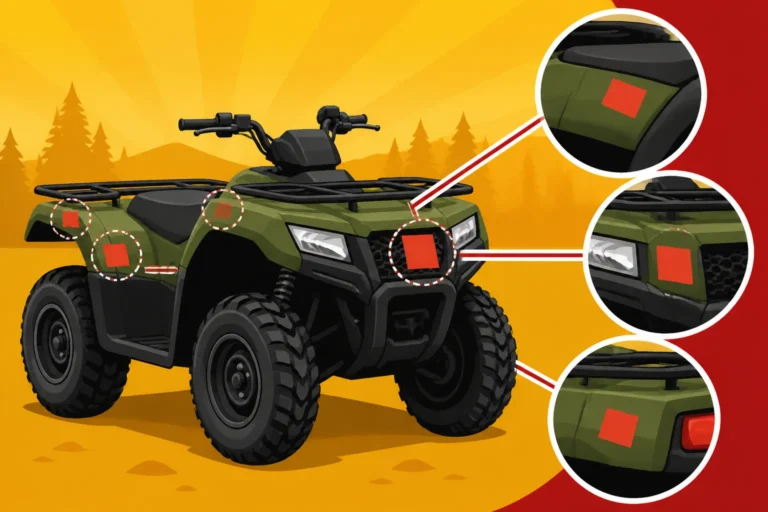
The decal is a sticker that must be prominently displayed on your side-by-side. The specific placement is usually on the front fender or another clearly visible location, so enforcement officers can easily confirm your registration status without having to stop you. The decal will indicate whether your machine is registered for public or private use, typically through a color code or specific wording. This visual cue is important for quick identification, especially on public trails or in WMAs. Make sure to affix it cleanly and securely where it won't be easily damaged or fall off. This decal is your visible proof that you've done your due diligence and can legally operate your side-by-side according to your chosen registration tier. For guidance on where to place this sticker, check out [Where the Registration Decal Sticks on Your Quad].
Titling Side-by-Sides: The New 2026 Law
Here's where things get really interesting, and for many Alabama side-by-side owners, a bit confusing. For a long time, off-road vehicles in Alabama did not require a title, much like a boat or a small utility trailer. However, that's changing drastically. Alabama has enacted a new law that introduces mandatory titling for certain off-road machines, including side-by-sides, starting in 2026. This is a monumental shift that will impact how you buy, sell, and even prove ownership of your machine in the future.
The Big Change: Mandatory Titling from 2026
Historically, Alabama has been one of the states that did not require titles for off-road vehicles. This meant that proving ownership often relied solely on a bill of sale and registration paperwork. While this seemed simpler on the surface, it created headaches for law enforcement in tracking stolen machines and for consumers when establishing clear chains of ownership, especially in private sales. Enter the new legislation: starting with machines designated as Model Year 2026, side-by-sides and other off-road vehicles will require an official title. This brings Alabama in line with many other states that already title these types of vehicles.
This change is a big deal and represents a significant update to how off-road machines are legally tracked in the state. It's intended to provide a more robust system for proving ownership, combating theft, and facilitating secure transactions. However, for current owners and those looking to buy in the next few years, it introduces a whole new layer of understanding. It's easy to feel overwhelmed by such a substantial change, wondering how it applies to your machine. For the full legal breakdown, see [Alabama ATV Titling Starts With Model Year 2026] and [Alabama Title Applications From January 2026].
Which Side-by-Sides Need a Title and Which Don't
The key to understanding the new titling law is the "Model Year 2026" cutoff. If your side-by-side is a Model Year 2026 or newer, it will require an Alabama title. This applies whether you buy it new from a dealership or if you purchase a used 2026+ model from a private seller down the road. The title will serve as the definitive legal document of ownership, much like a car title.
What about older machines? This is where the law provides some relief and avoids a massive retroactive titling effort. If your side-by-side is a Model Year 2025 or older, it generally will not be required to have an Alabama title. These machines will continue to be governed by the previous rules, relying on a bill of sale and registration for proof of ownership. There's also an exemption for machines over ten model years old, which, combined with the 2026 cutoff, means a vast number of existing machines will remain untitled. This staggered approach is designed to ease the transition, but it also creates a dual system for a period, where some machines have titles and others don't. This can be particularly confusing in the resale market. For current owners of older machines, [Why Pre-2026 Owners Do Nothing] should offer some peace of mind. You can also explore [Alabama Machines Over Ten Model Years Exempt] for further clarification on the exceptions.
The Titling Process for New Machines (Post-2026)
For those purchasing a Model Year 2026 or newer side-by-side, the titling process will largely mirror what you might experience when buying a new car. If you buy from a dealership, they will typically handle the initial title application paperwork for you as part of the purchase process. You'll sign the necessary forms, and the dealer will submit them to the appropriate state agency, likely through Alabama's ALVIN system. This system is designed to streamline the titling and registration of vehicles.
If you purchase a 2026 or newer machine from a private seller, you will be responsible for applying for the title yourself. This will involve taking the previous owner's properly assigned title, a bill of sale, and your identification to a county probate office or license commissioner's office. You'll fill out a title application form and pay the associated title fees. A critical document for any new machine is the Manufacturer's Statement of Origin (MSO) or Manufacturer's Certificate of Origin (MCO), which establishes the first legal owner. This document is essential for the initial title application. Dealers are generally adept at handling this, but if you're buying privately, ensure you receive this document if it's the first sale of a 2026+ model. Understanding this process beforehand can prevent delays in getting your new machine officially recognized. You can get more information on where to file your applications at [Alabama Title Applications at a County Office] and how the system works in [Alabama's ALVIN System and Off-Road Titles].
Special Scenarios and Common Questions
The world of side-by-side registration isn't always a straight line. There are plenty of unique situations that can throw a wrench into the standard process, from buying or selling a machine to moving into Alabama from another state, or even using your UTV for farm work. These scenarios often lead to specific questions and require a slightly different approach to ensure you remain compliant with Alabama law.
Buying and Selling a Side-by-Side
Whether you're the buyer or the seller, navigating the transfer of ownership for a side-by-side requires careful attention to detail. If you're selling a machine that is already registered, you'll need to provide the buyer with a clear bill of sale and potentially your current registration certificate. While the registration itself isn't directly "transferred" to the new owner in the same way a title might be endorsed, the buyer will use your bill of sale to apply for their own new registration. For older, untitled machines, the bill of sale is the primary proof of ownership, so it must be meticulously completed, including the VIN/serial number, seller's and buyer's full names and addresses, and the sale price and date.
When you're the buyer, always insist on a well-documented bill of sale, even for a machine that doesn't require a title. This protects you legally and provides the necessary paperwork for your own registration application. If the machine is Model Year 2026 or newer, ensure you receive the properly assigned title from the seller. If you're a seller looking for a robust way to document the transaction, especially for older machines, a standardized bill of sale template from a service like LawDepot can be incredibly helpful. This ensures all the necessary legal information is captured correctly, offering peace of mind to both parties. For additional information on this process, see [Alabama Bill of Sale Requirements] and [Selling a Registered Machine in Alabama].
Side-by-Sides Bought Out-of-State
Moving to Alabama with your side-by-side, or purchasing one from a dealer or private seller in another state, brings its own set of considerations. If your machine was previously titled in another state, you'll generally bring that title with you to your county probate office in Alabama. They will use this out-of-state title as proof of ownership to issue you an Alabama title (if it's a 2026+ model) and allow you to apply for Alabama registration.
The process can get a bit trickier if you bought an older machine out-of-state that was not titled in its original state (because many states, like Alabama historically, didn't require it). In this scenario, you'll rely heavily on a comprehensive bill of sale, much like you would for an older machine purchased within Alabama. Ensure the bill of sale clearly identifies the machine, the previous owner, and the state it came from. The goal is to provide enough documentation to the Alabama authorities to prove legitimate ownership. You'll apply for registration in Alabama, and for Model Year 2026+ machines, you'll also apply for an Alabama title if it didn't come with one or needs to be converted. This is a common scenario that can be confusing, so being prepared with all available documentation is key. You can find more specific guidance in [Alabama Registration for a New Resident] and [Alabama Title for a Machine Bought Out of State].
Farm Use and Other Exclusions in Practice
We touched on farm equipment exclusions earlier, but let's dive into how this plays out in the real world. A side-by-side used exclusively for agricultural purposes, such as hauling feed, checking fences, or transporting tools around a working farm, may indeed be exempt from registration requirements under certain conditions. This is often an attractive option for farmers looking to reduce administrative burdens and costs.
However, the "farm use" exemption isn't a loophole for recreational riding. If your side-by-side is primarily used for leisure, trail riding, or even just driving around your farm property for fun, it's unlikely to qualify for the farm equipment exemption, even if you occasionally use it to carry a bag of fertilizer. The intent and primary use of the machine are what matters. If you plan to ride it off your private property, even to cross a road to another field, it's generally best to secure at least a private use registration to avoid any legal issues. Should an enforcement officer question the use of your "farm machine" on public access, you'd need to clearly demonstrate its primary agricultural function. It's always better to be clear about your machine's primary purpose and register accordingly than to risk a fine or other penalty. For more on this specific topic, refer to [Alabama Registration for a Farm Machine].
| Feature | Private Use Registration | Public Use Registration |
|---|---|---|
| Intended Use | Exclusively private land, hunting clubs, farms | Public lands, designated OHV trails, WMAs |
| Cost | Lower fees | Higher fees |
| Access | Limited to private property | Broad access to public OHV areas (where allowed) |
| Decal Type | Specific private use decal | Specific public use decal |
| Titling (2026+) | Still required for Model Year 2026+ machines | Still required for Model Year 2026+ machines |
| Required Paperwork | Bill of Sale, ID, Proof of Ownership | Bill of Sale, ID, Proof of Ownership |
| Duration | Three years | Three years |
| Purpose | Proof of ownership, limited access | Legal access to public riding, theft deterrence |
Why All This Paperwork Matters
It's easy to look at all the forms, fees, and rules and wonder if it's truly worth the effort. But when it comes to registering and titling your side-by-side in Alabama, every piece of paperwork serves a crucial purpose. From protecting your investment to ensuring legal access to your favorite riding spots, these processes are more than just bureaucratic hurdles—they are foundational to responsible off-road vehicle ownership.
Proving Ownership and Preventing Theft
Imagine the heartbreak of having your prized side-by-side stolen. Without proper documentation like a registration certificate and, in the future, a title, proving that the machine is legally yours becomes an incredibly difficult, if not impossible, task. The registration process records your ownership with the state, associating the machine's unique Vehicle Identification Number (VIN) or serial number with your name. This official record is invaluable for law enforcement in recovering stolen machines and for you in establishing your claim.
For older machines that won't require a title, a meticulously kept bill of sale, perhaps generated through a reliable platform like LawDepot, coupled with your registration, stands as your primary proof. Without this, if your machine is stolen and later recovered, you might struggle to get it back, even if it was clearly yours. This lack of clear ownership documentation is a major frustration for many, making it vital to safeguard what paperwork you do have. Investing a little time in proper registration is a powerful deterrent against theft and a critical tool for recovery. More on the motivation behind these laws can be found in [Alabama Theft and Repossession Motives], and if you're ever in a tough spot, [Proving You Own an Untitled Machine] has helpful insights.
Riding Legally on Public Lands
If your vision of side-by-side ownership includes exploring Alabama's vast network of public lands, designated OHV parks, or specific routes within Wildlife Management Areas (WMAs), then proper public use registration isn't just a suggestion—it's a legal requirement. These public areas are managed resources, and the state uses registration as a way to regulate access, fund maintenance, and ensure compliance with environmental and safety standards.
Riding your side-by-side on public land without the appropriate public use registration can lead to significant penalties. These can range from substantial fines to your machine being impounded, and potentially even charges of trespassing or illegal operation. It's simply not worth the risk. That brightly colored decal isn't just for show; it's your permit to legally enjoy those trails. Without it, you're not only breaking the law but also potentially jeopardizing the future access for all riders. Understanding [What Registering Gets You Before Riding Public Land] truly highlights the value of that sticker.
Insurance, Financing, and Resale Value
Proper registration and, especially with the upcoming titling law, a valid title significantly impact other crucial aspects of side-by-side ownership. Most insurance companies will require proof of ownership and registration to provide comprehensive coverage. While you can often get liability-only insurance for an untitled machine, obtaining full coverage (theft, collision, etc.) is far easier and more reliable when your ownership is clearly documented through official state channels. This also extends to financing; lenders are much more willing to offer loans for machines with clear titles, as the title acts as collateral. Trying to finance a significant purchase like a side-by-side without clear paperwork can be a real struggle. You can find more information on this specific challenge in [Financing an Untitled Machine] and [Insuring a Machine With No Title].
Finally, consider the resale value. A side-by-side with current registration and, if applicable, a clear title, will always command a higher price and be much easier to sell than a machine with questionable paperwork. Buyers are wary of machines without clear ownership records, as they can represent a huge risk. A complete and organized set of documents, including a well-drafted bill of sale (again, something a service like LawDepot can assist with), shows due diligence and provides confidence to a potential buyer. All this paperwork might seem tedious at first, but it protects your investment, expands your riding opportunities, and smooths out every aspect of owning your side-by-side.
Disclaimer
This article is for general informational purposes only and does not constitute professional advice. Laws, prices and regulations vary by location and change over time. Consult a qualified professional for guidance on your specific situation.