Primitive Sites and Hookup Sites
When you plan an Alabama ATV weekend, the campsite can make or break the trip. A primitive site may keep you close to the trails without utility hookups, while an RV site with water and power can make a long weekend feel much easier. This guide explains the trade-offs, what to check before booking, and how to match a campsite to your riding plans.
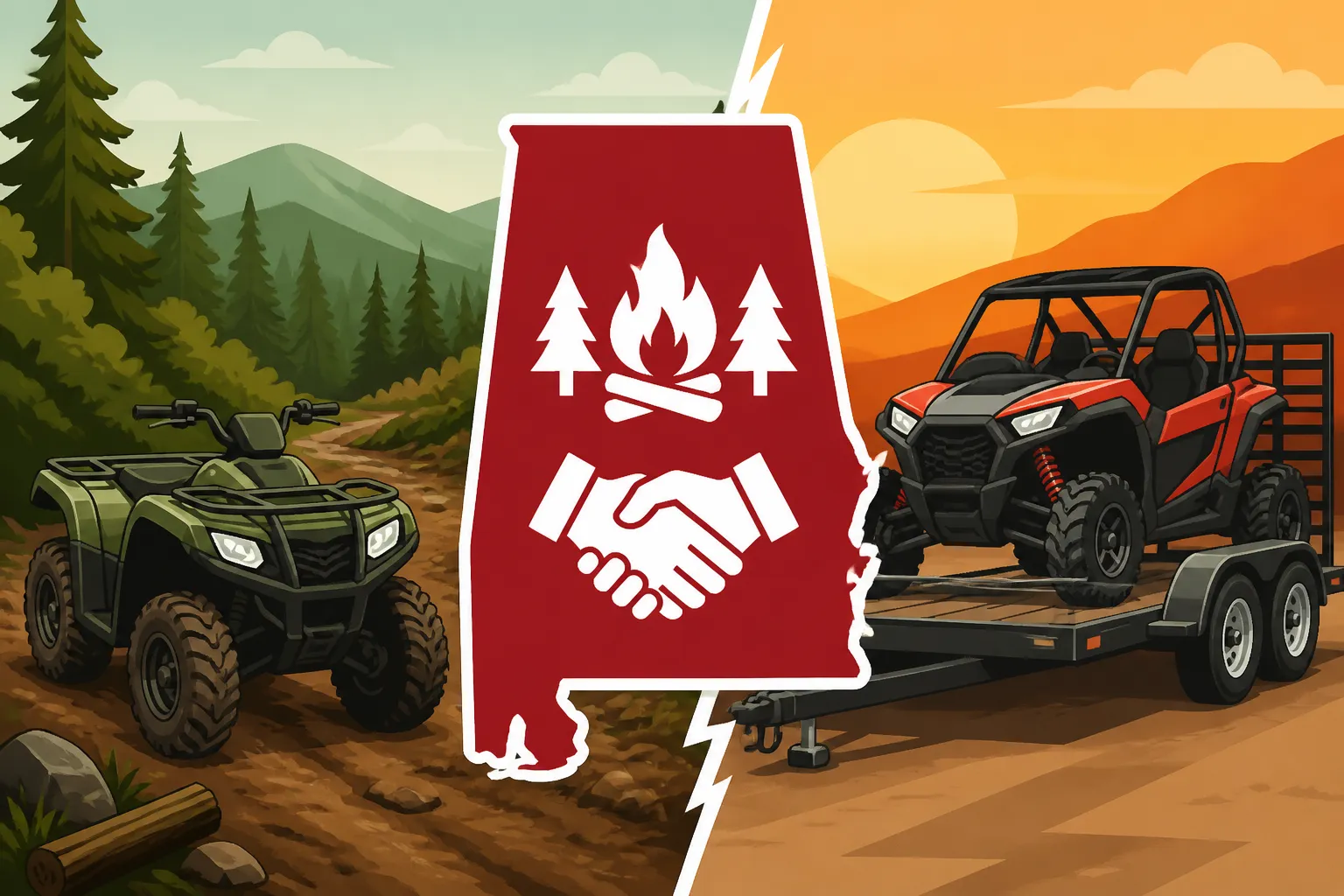
Primitive sites versus hookup sites
A campsite label can sound straightforward, but “primitive” and “hookup” do not always mean the same thing at every riding area. One park’s primitive site might be a basic place to pitch a tent, while another may offer shared facilities nearby. Likewise, a hookup site may have some connections but not every service your RV needs.
Before you reserve, look beyond the label. Check the park’s site description, map, and current rules, then contact the office if anything important is unclear. Confirming details beforehand is much easier than discovering after a long tow that your site is too small, lacks the connection you expected, or sits farther from the riding area than you planned.
What primitive camping usually means
Primitive camping generally means you should expect to be self-sufficient at your site. You might pitch a tent, sleep in a vehicle, or bring a camper without relying on utility connections. The exact setup varies, so don’t assume that “primitive” automatically means secluded, unserviced in every way, or far from restrooms.
For a riding weekend, primitive camping can be a good fit when your group travels light. Imagine two riders arriving with a tent, a cooler, and a small trailer. They may be happy with a basic site because most of the day is spent on the trails and they only need a comfortable place to sleep and organize gear. A larger group with kids, a full-size RV, and several days’ worth of supplies may have different needs.
Ask whether the site has a defined parking area, how close it is to the trail access, and whether there are shared restrooms or water points nearby. Find out whether campfires are allowed and whether the park has rules about generators, quiet hours, pets, or unloading machines. Those details can matter more than the word “primitive” itself.
If you are comparing parks, Alabama OHV Camping With Trail Access can help you think about how camping and riding fit together. It is also worth browsing Alabama Parks With Cabins if your group wants more shelter but does not need to bring an RV.
What hookups can and cannot provide
A hookup site may offer water, electricity, or other services, but you should confirm exactly what is included. “Full hookup” and “water and power” are not interchangeable descriptions. Check the park’s site information for the specific connections, the location of the connections, and any equipment you need to bring.
Hookups can make a longer stay more comfortable. A family using an RV may appreciate being able to manage lights, refrigeration, and routine cleanup without depending entirely on batteries or a generator. Someone traveling with a small camper may value a nearby water connection, especially when the group plans to ride for several days and wants to avoid carrying every supply from home.
There are trade-offs. Sites with utilities may be more limited, may need to be reserved earlier, or may be arranged in a more developed camping area. A convenient site can also mean more neighbors and less privacy than you would get at a tucked-away primitive spot. If quiet mornings and space between camps matter to you, ask about the site layout rather than assuming that hookups mean a particular style of campground.
| Camping option | Often suits | Questions to ask before booking |
|---|---|---|
| Primitive site | Tent campers, light packers, short stays, or riders who want a simple base | Are there restrooms or water nearby? Is parking included? How far is the site from trail access? |
| Water and power site | RV or camper users who want basic utility connections | Which connections are available? What equipment or adapters should you bring? |
| Full hookup site | Campers who want several utility services at the site | Which services are included, and are connection locations compatible with your rig? |
| Cabin or other shelter | Groups that want more protection from weather without setting up a tent | What bedding, cooking equipment, and supplies must you bring? |
Use the table as a starting point, not a guarantee. Site names and amenities can differ from one park to another, so verify the details with the specific campground before you commit.
How to choose a campsite for an Alabama riding trip
Your ideal campsite depends on more than the rig you bring. Think about how long you plan to stay, how many people are coming, whether you want to cook at camp, and how much time you want to spend moving gear between the site and the trailhead. A simple overnight visit and a multi-day group trip can call for very different setups.
Start with your equipment and group
List the equipment that has to fit at camp: the tow vehicle, trailer, ATV or UTV, RV or tent, and any extra gear. A site that fits your RV may not leave enough room to park a trailer or unload a machine safely. If your group is bringing several vehicles, ask whether the reservation includes space for them or whether parking is handled separately.
Think about who is coming, too. A couple who can pack light may be comfortable with a primitive site. A family with young children might prefer a nearby restroom, a sheltered place to prepare food, and a reliable way to charge essential devices. A group that plans to arrive at different times should check how late arrivals are handled and where everyone can meet without blocking access roads.
Make a simple list of non-negotiables before looking at sites:
- The campsite can fit your RV, tent, or other shelter.
- There is a practical place to park and unload your machine.
- The available utilities match your equipment.
- The site is close enough to the trail access for your group.
- The park’s rules work for your group, including rules about pets, minors, campfires, and generators.
If even one item is uncertain, ask the campground rather than guessing. A photo of your RV or a description of your trailer and machine can help staff answer a site-fit question more clearly.
Match the campsite to the riding area
A campground close to a trail entrance can reduce daily shuttling, but proximity is only one part of the decision. Consider whether the park allows your particular machine, whether trails suit your group’s experience, and whether the terrain is likely to be comfortable for your vehicle and tires. Check the campground and riding-area rules separately; a campsite reservation does not automatically explain every trail rule.
For example, riders looking at Stony Lonesome OHV Park near Bremen or Minooka Park near Jemison should verify the current camping options, trail access, and site arrangements directly with the park. Those details can affect whether a primitive site or a utility site is the better choice. The broader guide to Alabama ATV Trails: Where to Ride can help you compare riding destinations, while Alabama Trail Conditions Before You Tow is a useful reminder to check conditions before hauling a machine and camper across the state.
Navigation deserves a little planning as well. You can use a paper map, the park’s posted trail information, or a mapping app such as onX Offroad to help orient yourself. Before leaving home, confirm that the trails you intend to ride are open to your machine and that you understand the area’s boundaries. Download or save useful information in advance if you expect to have unreliable cell service. onX Offroad can be one way to keep track of route information, but it should not replace park signs, official maps, or instructions from staff.
Plan for comfort, weather, and trail-day logistics
Camping beside an OHV area has its own rhythm. You may be starting early, returning muddy, and sharing space with other groups unloading machines. A little planning can keep routine chores from eating into your ride time.
Pack for the campsite you actually reserved
For a primitive site, plan as if you will need to bring the basics yourself. Depending on the site and park rules, that may mean drinking water, a way to prepare meals, lighting, a first-aid kit, and a plan for keeping food secure. Don’t assume a nearby water source is safe to drink or that a restroom is within a short walk.
For a hookup site, bring the equipment that matches the connections listed by the park. Check your camper’s requirements and ask whether you need specific cords, hoses, adapters, or other supplies. Even when utilities are available, it is sensible to have a backup plan for lighting, charging, and keeping food cold. Confirm how the site is arranged before you arrive, especially if your vehicle or trailer needs to approach from a particular direction.
Weather can change the practical difference between the two options. Heavy rain may make a tent setup uncomfortable, while hot weather can make shade and access to water feel especially important. Before you travel, check the forecast and the campground’s weather or closure information. For trail planning, Alabama Riding Season Considerations and Alabama Trail Closures After a Storm can help you think through how seasonal conditions may affect the trip.
Keep trail gear separate from camp supplies. Put helmets, gloves, tools, recovery gear, and riding clothes in a dedicated area so they are easy to find after unloading. If your machine is muddy when you return, have a plan for keeping wet gear away from sleeping bags, food, and the inside of your camper.
Make the reservation and arrival process easier
Before booking, confirm the basics in writing or save the park’s published site description. Check the reservation dates, the site type, the number of people and vehicles allowed, and any check-in instructions. If the booking system lets you select a specific site, read its notes carefully; a name or number alone may not tell you whether the location suits a large rig.
Ask how arrival works after the office closes, if that is relevant to your schedule. Find out where to check in, whether you need to complete a waiver, and whether the park expects campers to unload only in designated areas. If you are traveling with a group, agree on a meeting place before arriving. It is easier to coordinate at home than while several vehicles are waiting near a gate or campground entrance.
Keep a backup plan in mind if your first-choice site is unavailable or unsuitable. That could mean choosing another site type, staying at a nearby campground, or changing the length of the trip. Guides such as Alabama Riding Areas With RV Sites and Alabama Parks With Full Hookup Sites can help narrow the search, but contact the individual location for current availability and details.
For navigation and trip organization, onX Offroad may help you review the area before you leave. Save the park’s own directions and instructions as well, and don’t rely on a phone connection being available at the campsite or along the trails. If your group is using different navigation tools, agree on the official meeting point and the route back to camp before anyone rides out.
A practical way to decide between primitive and hookup camping
When you are torn between a basic site and a utility site, decide what will make the trip easier rather than choosing the option that sounds more comfortable in the abstract. A hookup is useful only if your equipment can use it and the added convenience matters to your group. A primitive site can be a great choice when you are prepared for its limits and want a simpler camp.
Use a quick decision checklist
Choose a primitive site if your group can comfortably bring what it needs, your stay is short, and you do not require utility connections. It may also suit riders who spend nearly all their waking hours on the trails and want a straightforward place to sleep. Before deciding, confirm parking, restroom access, water availability, and the distance to trail access.
A hookup site may make more sense if you are bringing an RV that depends on utility connections, staying for several nights, or traveling with people who need more predictable camp routines. Make sure the site offers the specific connections your rig requires. If your group includes several machines and vehicles, confirm that the site can handle the full setup without blocking neighboring campers or park roads.
When both options seem workable, compare the full experience: site size, location, privacy, arrival logistics, and your group’s comfort needs. It can be helpful to write down what you will actually use. If you would not use a particular utility or amenity, it may not be worth making that feature the deciding factor.
Confirm the details before you leave
A short call or message to the campground can clear up the questions that online listings often leave unanswered. Ask what “primitive” means at that park, which utilities are available at the site, and whether the listing includes space for your tow vehicle and trailer. Confirm whether trail access is direct or whether you need to drive to a separate staging area.
Also ask about rules that affect your setup: campfires, generators, pets, quiet hours, unloading machines, and any required waivers. Rules may differ between private riding parks, public areas, and campgrounds nearby. The guides to Alabama Private Off-Road Parks and Alabama Trail Etiquette Locals Expect can help you prepare for the broader expectations of a riding-area visit.
onX Offroad can help with route planning and orientation, but check the park’s own information for operating rules and access. Save key details before you travel, especially directions, reservation confirmations, and contact information. That way, if cell service fades during the drive, you still know where you are headed and what your site is supposed to include.
Disclaimer
This article is for general informational purposes only and does not constitute professional advice. Laws, prices and regulations vary by location and change over time. Consult a qualified professional for guidance on your specific situation.