Alabama Riding Near Mobile
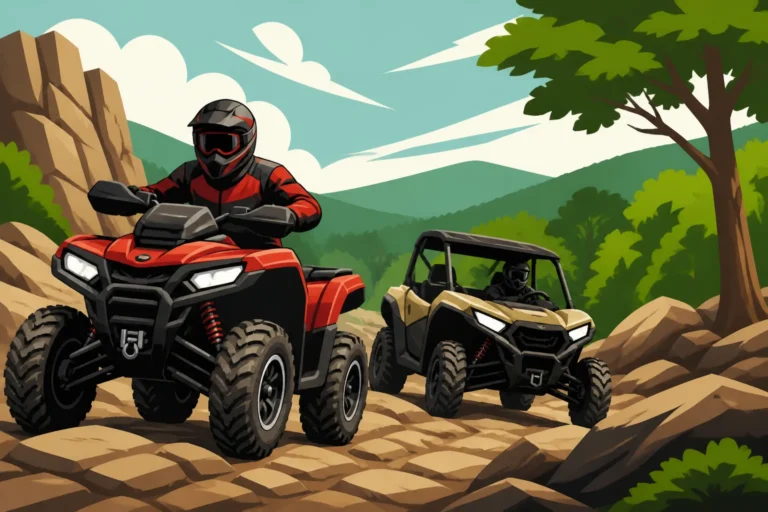
Mobile riders often discover that “nearby” does not necessarily mean a public trail is open to ATVs. The Gulf Coast has plenty of back roads and wooded land, but riding permission, vehicle rules, and park access vary sharply. This guide explains how to find legitimate places to ride near Mobile, compare nearby options, and plan a trip without arriving at a closed gate.
What to expect when riding near Mobile
Public riding options are not the same as nearby forest land
The Mobile area is surrounded by rural roads, timberland, and public lands, so it can look as if there should be endless places to unload a machine. The catch is that land being wooded, remote, or publicly owned does not automatically make it open to off-highway vehicles. A trail or road must be designated for the type of motorized use you plan to make, and access can depend on the land manager’s current rules.
Conecuh National Forest lies east and northeast of Mobile, but do not treat the forest as a general-purpose ATV riding area. Before loading up, check whether the specific route you intend to use is open to your machine. A road shown on a general map may be closed to motor vehicles, intended for other uses, or subject to seasonal restrictions. For background on the distinction, see [Can You Ride an ATV in Alabama's National Forests?] and [Which Forest Roads in Alabama Are Open to ATVs].
That uncertainty is frustrating, especially when a route looks promising online. Make your plan around a named, confirmed riding area rather than a vague patch of green on a map. The broader guide [Alabama ATV Trails: Where to Ride] can help you think through the difference between public routes, private parks, and land that requires permission.
“Near Mobile” can mean a day trip
Mobile’s immediate surroundings may not offer the same concentration of established OHV parks as other parts of Alabama. Depending on what is open and what kind of riding you want, a practical trip might involve driving inland or crossing into neighboring Mississippi. That can still be worthwhile, but it changes the day: you will want to confirm the gate schedule, admission process, vehicle rules, and whether the park has the terrain your group is looking for before setting out.
One Alabama option riders may consider is Boggs and Boulders near Andalusia. It is not right around the corner from Mobile, so think of it as a destination for a planned outing rather than a quick after-work ride. Check directly with the park before traveling for current access, operating details, permitted vehicles, and any requirements for riders or passengers.
On the Mississippi side, Red Creek Offroad near Perkinston is another name to investigate when comparing Gulf Coast-area riding choices. It is across the state line, and the same rule applies: confirm that it is operating and that its current rules fit your machine and group. For an overview of how Alabama riding areas compare across the state, see [Alabama North and South Riding Compared].
Comparing riding areas within reach of Mobile
Private OHV parks
For many visitors, a private park is the clearest place to start. A managed riding area can provide marked or established trails, defined entry procedures, and staff or posted rules. That is much easier to plan around than trying to work out whether an unfamiliar forest road or timber track is legally open.
Private parks are not interchangeable, though. One may be a better fit for a stock quad and a relaxed day, while another may focus on mud, steep climbs, or side-by-side riding. A route that looks manageable in a short video may feel very different after rain, when clay turns slick and ruts deepen. Ask about trail difficulty, machine restrictions, wet-weather closures, and whether a beginner has suitable routes. [Alabama Private Off-Road Parks] offers more context on what to expect from this type of riding area.
Before you go, read the park’s own rules rather than relying on an old social post or a friend’s recollection. Parks may set their own expectations for helmets, passengers, minors, sound, alcohol, pets, and waivers. The checklist in [Alabama Private Park Waivers and Rules] is useful when you are organizing a group or bringing children.
Public land and forest routes
Public land can be appealing because it feels quieter and less structured, but it often requires more preparation. You need to identify the managing agency, locate the route on an authoritative map, and confirm that ATV or UTV use is allowed there. A trailhead, gate, or old tire track does not prove that a route is open for riding.
In and around the Mobile region, avoid assuming that forest roads are OHV trails. A route may be open to highway vehicles but not to ATVs, or open only for a particular use or season. If you cannot confirm the route’s status, choose a verified private park instead of risking a trespass issue or a long tow for a ride you cannot legally take.
Maps are planning tools, not permission slips. Apps such as onX Offroad can help you review terrain and organize a route, but check access and closures with the responsible land manager before relying on a line on a screen. For more on permits and access conditions, see [Alabama Public Land Rules Compared to Private].
A quick comparison before you choose
| Riding option | Best suited to | What to confirm before leaving Mobile |
|---|---|---|
| Private OHV park in Alabama | Riders who want a managed venue and defined entry rules | Operating status, vehicle limits, waiver, riding rules, and weather closures |
| Private OHV park in Mississippi | Riders willing to cross the state line for another park option | Current admission process, applicable rules, open areas, and travel details |
| National forest or other public land | Riders who have identified a specific permitted route | Route designation, vehicle eligibility, permits, seasonal access, and closures |
| Private timber or hunting land | Riders with a direct invitation or written authorization | Landowner permission, boundaries, allowed routes, and any lease rules |
The table is a starting point, not a substitute for checking the particular property. The distinction between a park, public land, and privately owned ground matters because each comes with different access conditions. If you want to compare trail destinations more broadly, [Alabama County Parks Open to OHVs] may help you identify other options around the state.
Match the destination to your machine and group
Check vehicle size and trail difficulty
A trail can be open to off-highway vehicles without being suitable for every ATV or UTV. Width restrictions, turning space, steep or narrow sections, and trail conditions all affect whether a particular machine can travel comfortably. A wide side-by-side may have a different experience from a compact quad, especially on wooded trails or routes with tight turns.
Be honest about the machine’s capabilities and your group’s experience. If you are bringing a new rider, a young rider, or someone who has not ridden in a while, look for a park that can confirm easier routes are available. A beginner who gets funneled onto a difficult muddy loop can end up stressed and stuck, while a capable group may find that same terrain is exactly what they came for.
When speaking with a park, describe your machine rather than just saying “ATV.” Give the make and model if asked, mention whether it is a side-by-side, and ask about width or other restrictions. Also confirm whether passengers are allowed in your machine and whether the park has age or supervision rules. These details are easy to overlook when everyone is focused on the trail map.
Think about rain, red clay, and recovery
Weather can change the character of a ride quickly in southern Alabama and Mississippi. A trail that seems straightforward in dry conditions may become slick, deeply rutted, or difficult to climb after heavy rain. If the forecast is uncertain, ask the riding area whether trails remain open and whether any sections are closed or discouraged.
Do not assume that a winch, aggressive tires, or a snorkel makes every route a good idea. Recovery gear can help, but it does not remove the risks of a deep mud hole, hidden stump, or soft shoulder. For a family outing or first visit, choose a location with options to shorten the ride or turn back rather than committing to a challenging loop early in the day.
An offline map is useful when cell service is patchy, but download or prepare it before leaving town. onX Offroad may help you keep track of planned routes and nearby terrain; still, use the park’s own directions and posted signs as your authority on where you may ride. You can also review [Alabama Trail Conditions Before You Tow] and [Alabama Trail Closures After Rain] when planning around wet weather.
Plan the trip before you hook up the trailer
Confirm access directly with the riding area
A park’s name in a search result or on an old map does not guarantee that it is open on the day you want to go. Operating schedules, reservations, trail access, and entry procedures can change. Check the park’s own communication channels or contact the office before loading your machines, particularly if you are traveling from Mobile and have a long drive ahead.
Ask focused questions: Is the park open on the date you plan to visit? Are all the trails open, or are some closed? Are there vehicle-size limits? Does the group need to complete a waiver in advance? Are helmets required by the park? Is there fuel, camping, or a wash area on site? These questions are more useful than asking only whether “ATVs are allowed,” because the answer may depend on machine type, trail, or conditions.
If you are considering a public route, contact the relevant land office or agency and ask about the exact road or trail, not just the general area. Write down the route name and any access instructions. A clear answer about one route is much more useful than a broad statement that riding is allowed somewhere in the forest.
Prepare for the drive and the day on the trail
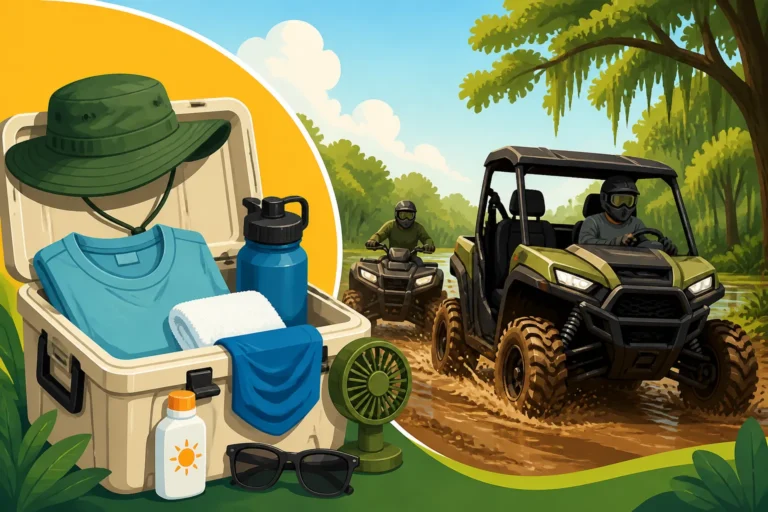
A Mobile-area ride can involve a significant tow, so treat the trip as more than a quick local errand. Check trailer tires, lights, hitch connections, tie-downs, and the machine’s fuel and fluids before departure. Pack water, basic tools, a first-aid kit, weather-appropriate clothing, and a way to contact your group if riders become separated.
Plan fuel stops and breaks around the route rather than assuming there will be a convenient station beside the park entrance. If you are riding with several vehicles, agree on a meeting point and a plan for anyone who needs to leave early. Keep the park’s address and phone details accessible even if you have a navigation app open; rural service can be inconsistent.
Use a mapping app such as onX Offroad as one part of your preparation, especially for reviewing the area and keeping a record of your plan. Do not use an app to override a gate, posted sign, or landowner instruction. Take a paper map or save key details offline when possible, and let someone outside the riding group know where you are going and when you expect to return.
Ride responsibly and avoid access problems
Stay on authorized routes and respect boundaries
Riding on private land without permission can create serious problems, even when the property appears unused. Timberland, hunting leases, and farm roads may have owners or managers who restrict access, and a track visible from a public road is not an invitation to ride it. Get clear permission before unloading, and ask which routes are allowed and whether permission applies to everyone in your group.
On public land, follow the designated route rather than cutting around a barrier or taking a side trail that is not marked for motorized use. Closures may protect sensitive ground, support maintenance, or address safety concerns. If a route is blocked, turn around and use the alternative that the land manager or park has identified.
Ride at a pace that gives you time to react, especially around blind corners, mixed-use areas, and muddy sections where sightlines are poor. Keep space between machines and stop somewhere safe if the group becomes separated. The practical advice in [Alabama Trail Etiquette Locals Expect] can help make a shared trail more pleasant for other riders and nearby land users.
Keep your documents and group expectations in order
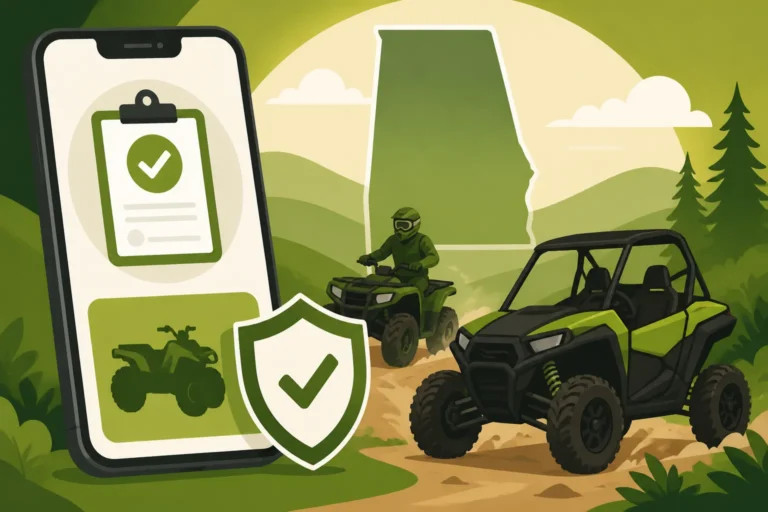
Before the trip, agree on what the park requires for identification, ownership information, permits, or waivers. Requirements differ by location, so do not assume that a registration document or permit from one riding area will satisfy another. Confirm details with the park or public-land manager, and keep relevant paperwork available rather than buried under gear in the truck.
If you are riding with children, set expectations before the engines start. Confirm which routes are appropriate, establish a meeting point, and make sure each rider knows to stop if they lose sight of the group. For mixed-age groups, plan around the least experienced rider rather than letting the fastest rider determine the pace.
Finally, leave enough time to load safely and clean the machines before heading home. Mud and debris can hide damage, and a rushed departure is when tie-downs or trailer checks get skipped. If conditions changed during the ride, make a note of what you learned for the next trip. That small habit can save a lot of frustration the next time you plan an outing from Mobile.
Disclaimer
This article is for general informational purposes only and does not constitute professional advice. Laws, prices and regulations vary by location and change over time. Consult a qualified professional for guidance on your specific situation.