Alabama Riding in Spring
Spring riding in Alabama can mean beautiful green trails one weekend and slick red clay, flooded crossings, or a closed route the next. This guide helps you plan an ATV or UTV trip around changing weather, trail access, and seasonal conditions, so you can choose a suitable riding area, prepare your machine, and avoid turning a fun day into a long recovery.
Plan around spring weather and trail conditions
Check the ground, not just the forecast
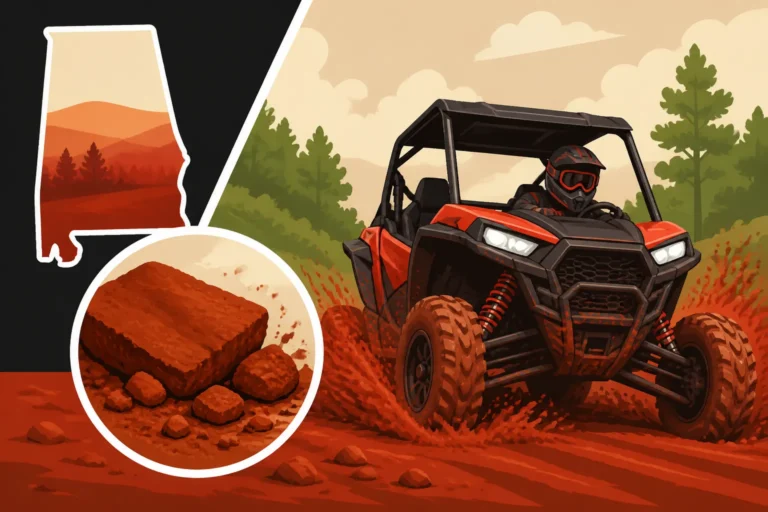
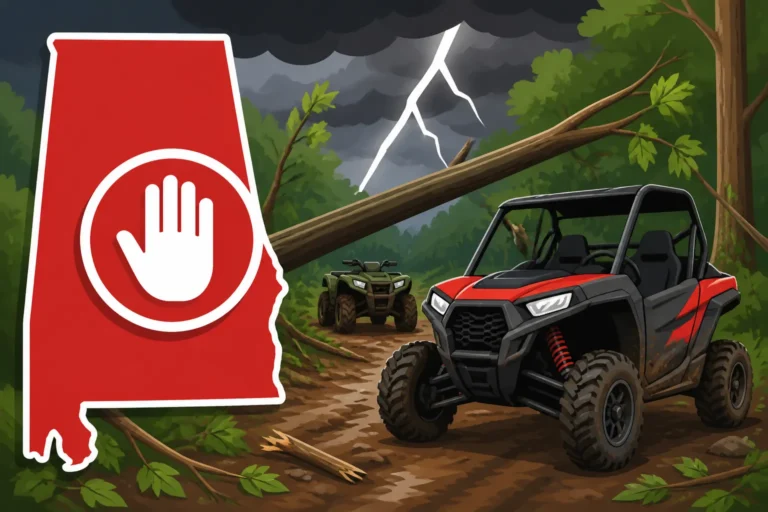
A sunny forecast does not necessarily mean a trail is ready for riding. In Alabama, rain can leave clay slick long after showers stop, while shaded hollows and low spots may stay muddy or waterlogged. A route that felt easy during a dry fall outing can behave very differently after a wet spring week.
Before towing out, look beyond the general weather forecast. Check for recent rainfall near your destination, ask the park or land manager about current conditions, and confirm whether the specific routes you want to ride are open. Conditions can vary across a single riding area: a ridge may be firm while a creek bottom remains soft. If the route includes steep slopes, narrow trails, or water crossings, recent rain matters even more.
It helps to plan a backup. If the trails are too wet for responsible riding, consider changing the destination, choosing a route with firmer ground, or postponing the trip. That can feel frustrating when the trailer is already loaded, but spinning tires through soft clay can deepen ruts, damage the trail, and make the rest of your ride less enjoyable. For a practical pre-trip checklist, see [Alabama Trail Conditions Before You Tow] and [Alabama Trail Closures After Rain].
Know when to turn around
Mud is part of the appeal for some riders, but there is a difference between a rideable muddy section and ground that is being damaged by traffic. If your tires are digging trenches, the machine is sliding unpredictably, or water is running across the trail, stop and reassess. A winch can help recover a stuck UTV, but it cannot make a fragile or closed route appropriate to ride.
Be especially cautious on steep clay climbs. A machine that loses traction partway up can slide sideways, while repeated attempts may cut deeper grooves into the slope. In wet conditions, choose a route that matches your experience and your machine’s tires, ground clearance, and recovery equipment. If you are unsure whether the trail is passable, ask the riding area before committing.
Ride in a way that leaves the route usable for the next visitor. Avoid creating new bypasses around puddles or blocked sections; those detours can widen the trail and disturb surrounding ground. [Alabama Trail Riding After Heavy Rain] and [Treading Lightly on Erodible Alabama Clay] offer more detail on adjusting your plans and riding responsibly when the ground is vulnerable.
Choose a legal, open place to ride
Confirm access before you load the trailer
Alabama has several kinds of riding areas, and their access rules are not interchangeable. A private off-road park, a county-managed property, a Wildlife Management Area, and a national forest may each have different routes, permits, vehicle restrictions, hours, or seasonal closures. Do not assume that a road or track visible on a map is open to ATVs or UTVs.
For a private park, check its operating schedule and current notices before you leave. Parks may close certain days, limit access after storms, or temporarily restrict particular trails. If you are considering [Stony Lonesome OHV Park in Alabama] or [Minooka Park Riding in Alabama], confirm details directly with the park before making the drive. A map app can help you understand the general area, but the park’s own instructions should guide access and rules.
Public land requires extra care. Some routes may be designated for particular vehicle types, and seasonal wildlife or land-management rules can affect where and when you may ride. Before visiting a Wildlife Management Area, read [Alabama WMA Riding Rules] and check the rules for the specific area. For national forest riding, contact the appropriate district office and review its route information; [Calling the National Forest District Office Before You Ride] explains why a quick check can prevent a wasted trip.
Use maps as planning tools, not permission
A digital map can make it easier to plan a route, see nearby roads, and keep your group oriented. Riders may use tools such as onX Offroad to study a general area and prepare a route in advance. Treat any map as a planning aid, not proof that a trail is open, legal for your machine, or passable after rain.
Before the ride, compare your planned route with current information from the park or land manager. Save the relevant map for offline use if you expect weak cell service, and make sure everyone in the group knows the route and meeting point. In Alabama’s wooded riding areas, cell coverage can be unreliable, so do not rely on a live connection to find your way back.
When the map and posted signs disagree, stop and follow the posted restriction while you seek clarification. Do not ride through a gate, around a closure sign, or onto a track simply because an app shows a line there. Keeping a paper map or a saved offline map as a backup can be useful, but the responsibility to verify access remains with the rider. For a broader starting point, [Alabama ATV Trails: Where to Ride] can help you compare the types of riding areas available.
| Spring planning question | What to check | Why it matters |
|---|---|---|
| Has the area had recent rain? | Local forecast, recent rainfall, and park updates | Clay and low ground may remain slick or saturated |
| Is the route open to my machine? | Posted rules and land-manager information | Routes can have vehicle or seasonal restrictions |
| Will my group have reliable service? | Coverage expectations and offline maps | You may need navigation or a meeting plan without a signal |
| Is there a safe backup plan? | Alternate route, second destination, or rescheduling option | Conditions can change between planning and arrival |
Prepare your ATV or UTV for a spring ride
Inspect the machine before the drive
A spring trip can expose small maintenance problems quickly. Mud hides leaks, wet trails can strain brakes, and a long tow can make a minor trailer issue inconvenient. Before leaving home, inspect tires for damage and suitable pressure, check fluid levels, test the brakes and lights, and confirm that the battery is secure. On a UTV, check the belt area and make sure the seat belts work properly.
Bring basic recovery equipment that matches the machine and the terrain. Depending on your setup and experience, that may include a winch, rated recovery points, a tow strap, a shovel, and gloves. Learn how to use the equipment before you are stuck on a slope or in a muddy rut. Keep people clear of a tensioned line, and never attach recovery gear to an unsuitable component.
Mud and water can also make a machine harder to clean and inspect afterward. Before riding, check that vulnerable components are protected appropriately for your machine and intended route. Do not treat accessories as permission to attempt deep water crossings; water depth, current, submerged hazards, and machine limits can make a crossing dangerous even when it looks manageable from the bank.
Pack for changing conditions and a slower day
Spring temperatures can shift during a ride, especially when the group is moving between open ground and shaded forest. Pack water, food, a basic first-aid kit, and clothing that can handle damp or cool conditions. A rain layer and a dry change of clothes can make the drive home much more comfortable if the ride turns muddy.
Set a realistic pace. Wet surfaces can increase stopping distance and reduce steering control, and a group often moves only as quickly as its least experienced rider. Agree on a lead rider, a sweep rider, and a clear way to stop the group before entering a difficult section. If someone gets separated, a prearranged meeting point is safer than having everyone search different trails.
Tell someone who is not riding where you are going and when you expect to check in. This matters particularly when the route has limited cell service. For more ideas about supplies and comfort, see [Packing for a Humid Day Out]. If you are using onX Offroad to plan, make sure the route information is available offline before you lose service, and share the intended route with your group before leaving the trailhead.
Ride with care around people, wildlife, and changing terrain
Adjust your riding style for spring surfaces
Alabama spring trails can shift from firm to slick within a short distance. Ease off the throttle before turns, leave more room between machines, and avoid abrupt steering or braking on wet clay. On a side-by-side, passengers should keep their seat belts fastened and follow the driver’s instructions. On a quad, stay within the machine’s intended passenger capacity and avoid carrying a passenger if the vehicle is designed for one rider.
Treat creek crossings as a decision point, not a challenge to conquer. Water can conceal a soft bottom, a drop-off, or debris, and recent rain can change both depth and flow. If you cannot confidently assess the crossing, do not enter it. Turn back, find a designated alternative, or ask the land manager about a safer route.
Spring vegetation can narrow sight lines and conceal branches, washouts, or trail edges. Slow down where visibility is limited, especially on blind corners and shared routes. Give other trail users room, make your presence known without startling them, and follow posted speed and direction rules. [Alabama Trail Etiquette Locals Expect] covers the habits that help keep shared riding areas pleasant and safe.
Respect seasonal access and local rules
Spring also overlaps with wildlife activity and changing land-use schedules. On public lands, access may depend on area-specific rules, open seasons, permits, or designated routes. A hunting license or a general idea of how the property is used does not automatically grant permission to ride every road or trail. Check the rules for the exact tract and the exact activity.
On private land, get permission from the landowner or lease manager before riding. Permission to hunt, camp, or retrieve game should not be treated as blanket permission to bring an ATV or UTV onto the property. Gates, posted notices, and written access conditions matter. If a route crosses timber company land or a hunting lease, ask what is allowed and whether the permission applies to your whole group.
Above all, leave the trail as you found it. Do not cut around muddy sections, cross closed areas, or leave trash behind. If weather has made the route unsafe or damaging, choosing not to ride is part of responsible spring planning. With a verified destination, a flexible route, a prepared machine, and a willingness to turn around, you can enjoy Alabama’s green season without putting yourself, other riders, or the trails at unnecessary risk.
Disclaimer
This article is for general informational purposes only and does not constitute professional advice. Laws, prices and regulations vary by location and change over time. Consult a qualified professional for guidance on your specific situation.