Alabama Riding in Summer Heat
Alabama summer riding can turn an enjoyable trail day into a draining one fast: high humidity, hot equipment, dusty routes and limited shade all add up. This guide explains how to plan an ATV or UTV ride for the heat, recognize when someone needs a break, and adjust your route when conditions become uncomfortable.
Plan an Alabama ride around the heat
Choose a route that leaves room to turn back
A summer ride is not the day to treat a mileage goal as a promise. Heat, humidity, slow technical sections and unexpected stops can make a familiar route feel much longer. Pick a loop that lets your group shorten the day, return to the staging area or reach a known stopping point without having to push through one more difficult stretch.
Think about the terrain as well as the distance. A shaded wooded trail may feel different from an exposed ridge, open field or wide gravel road, but shade does not remove the effects of humidity. If your route crosses exposed areas, plan breaks before you reach them rather than waiting until everyone feels worn down. Check the trail’s difficulty and expected conditions in advance; [Alabama Trail Difficulty Ratings] can help you think through whether a route fits your group and its machines.
Check access and conditions before loading up
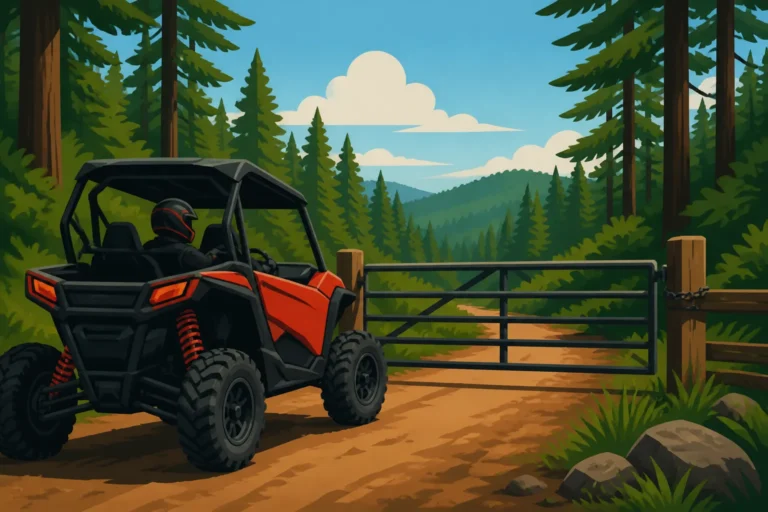
Trail access and riding conditions can change. Before leaving home, check the riding area’s own notices, rules and operating information. A route that was open on a previous visit may have a closure, a changed access arrangement or a condition that makes it a poor choice for the day. This is especially worth doing after storms, when water, fallen limbs or damaged trail surfaces may affect travel. For more on that planning step, see [Alabama Trail Conditions Before You Tow] and [Alabama Trail Closures After a Storm].
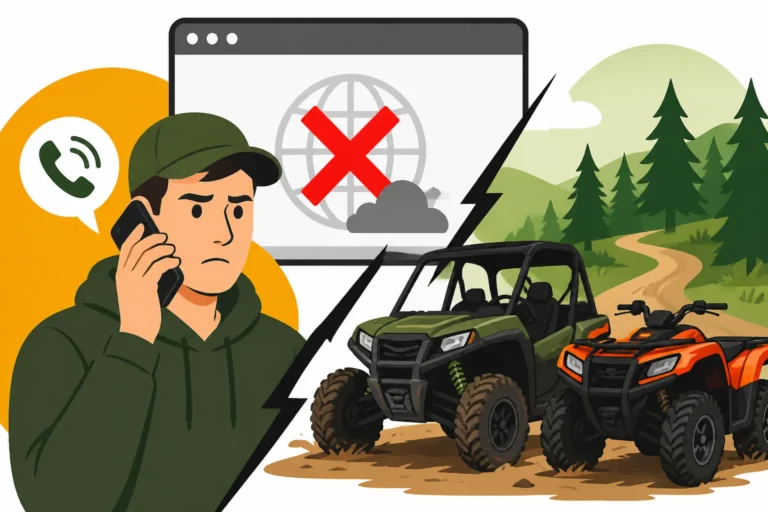
A mapping app can help you keep track of your route, but it should not replace information from the land manager or park. For instance, onX Offroad can be useful for reviewing a route and keeping a map available when cell service is weak. Download or save what you need before you lose signal, and confirm that the route you plan to follow is actually open to your vehicle. An app map is a navigation aid, not permission to ride.
Set a flexible start and finish plan
Starting earlier can help you avoid the hottest part of the day, but the exact timing depends on the park’s schedule, your drive and the group. Build in time for unloading, safety checks and a gradual start rather than rushing straight from the trailer onto a demanding trail. Decide in advance what will make you shorten or end the ride, such as a rider feeling unwell, a machine running unusually hot or the group getting behind schedule.
Agree on a simple check-in routine, especially if riders may spread out. Choose clear places where the group can regroup and make sure everyone knows who to contact if plans change. If you are riding somewhere with limited reception, tell someone at home where you are going and when you expect to be back. For a broader look at seasonal choices, [Alabama Riding Season Considerations] offers another useful planning reference.
Prepare people and machines for hot weather
Hydrate before you feel thirsty
It is easy to underestimate fluid loss while riding. Protective clothing, engine heat, physical effort and humid air can all make a rider feel hotter than expected. Encourage the group to drink regularly throughout the day, rather than waiting until someone is parched. Bring more water than you expect to need, and keep it somewhere riders can reach without unpacking the entire trailer.
For a longer outing, think about food and electrolyte drinks as part of the plan, while following product directions and individual medical advice. Riders who take medication or have a health condition that affects heat tolerance should discuss precautions with a healthcare professional before riding. Don’t assume that a shaded break means everyone has recovered; check how each person feels and be ready to call the ride early.
Dress for heat without giving up protection
Lightweight, breathable riding layers can help manage sweat, but protection still matters. Wear the helmet and protective gear required by the riding area, and avoid treating hot weather as a reason to ride in clothing that leaves skin exposed to branches, debris, sun or a fall. A ventilated helmet, moisture-managing base layers and gloves that remain comfortable when damp may make a long day easier.
Pack sun protection that suits the way you ride, including sunscreen and sunglasses or suitable eye protection. Reapply sunscreen according to its directions, particularly after sweating heavily. A spare shirt, dry gloves and a towel can also help after a sweaty ride. For a more complete checklist, [Packing for a Humid Day Out] is a useful companion to this heat-focused planning.
Do a heat-aware machine check
Before riding, look over the machine as you normally would, paying attention to cooling airflow, fluids, tires and any warning indicators. Clear away debris that could block airflow around cooling components, following the owner’s manual for the machine. Carry the basic tools and supplies your group may need, but do not attempt a roadside repair that feels unsafe or unfamiliar just to stay on schedule.
Keep an eye out for signs that the machine is not behaving normally, such as a temperature warning, an unusual smell, loss of power or a change in engine performance. Stop in a safe place and consult the owner’s manual rather than continuing to test it under load. On a UTV, passengers can also add heat inside the cab; use the machine’s ventilation as intended, and take a proper break if occupants are becoming uncomfortable.
| Before the ride | What to check | Why it helps |
|---|---|---|
| Route | Distance, difficulty, shade and turn-back options | Gives the group choices if heat or fatigue builds |
| Access | Park or land-manager notices and route rules | Helps avoid closed or unsuitable trails |
| People | Water, food, protective clothing and health considerations | Reduces the chance of overlooking basic needs |
| Machine | Cooling airflow, fluids, tires and warning indicators | Helps catch problems before they worsen |
| Navigation | Saved map, planned regroup points and emergency contact | Supports safer decisions where reception is limited |
Make smart decisions while you are on the trail
Take breaks before the group is struggling
A useful break happens before riders are exhausted. Stop in a safe place with room for machines, away from other trail users and out of the path of traffic. Give people time to drink, cool down and check in with one another. If shade is available, use it, but keep clear of hot exhaust and other machine parts. Don’t park in tall dry grass or another spot where a hot component could create a fire risk.
Make breaks part of the route rather than an emergency response. For example, a group riding near Bankhead or Talladega can agree to regroup at a known junction or staging point, then decide whether everyone is comfortable continuing. In a group, the strongest rider’s pace should not set the standard for everyone else. A child, a new rider or someone in heavier gear may need more frequent stops.
Watch for heat illness and respond early
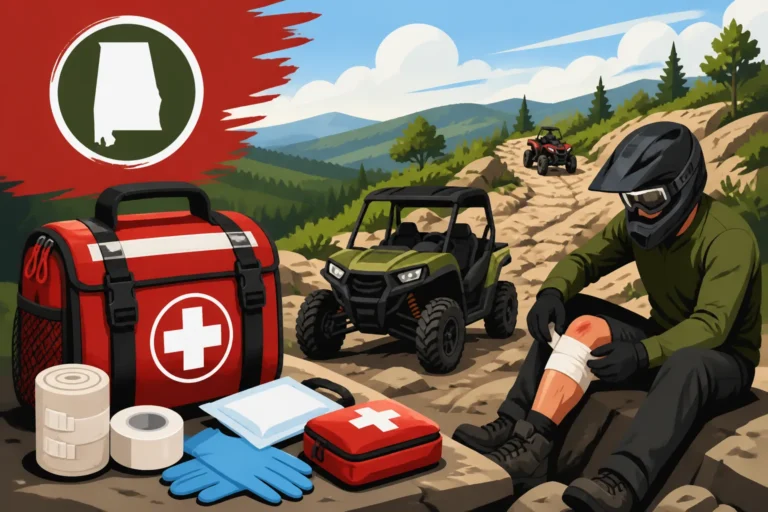
Heat-related illness can become serious. Warning signs may include headache, nausea, dizziness, weakness, unusual fatigue, heavy sweating or confusion. If someone seems unwell, stop riding, move them to a cooler place, loosen unnecessary layers and offer water if they are alert and able to drink. Do not leave the person alone while the group carries on.
Confusion, fainting, seizure, loss of consciousness or other severe symptoms require urgent emergency help. Call emergency services and follow the dispatcher’s instructions. If you are unsure how serious the symptoms are, err on the side of getting medical help. A person who feels briefly better after a stop may still need to end the ride; returning to the trail too soon can make the problem worse.
Adjust for dust, storms and changing trail surfaces
Summer weather can shift quickly. A dry route may become dusty, while a sudden storm can bring slick clay, standing water, poor visibility or fallen branches. Slow down when visibility drops, increase the space between machines and avoid following so closely that another rider’s dust obscures your view. If conditions make it hard to see or control the machine, stop somewhere safe and reassess instead of pressing on.
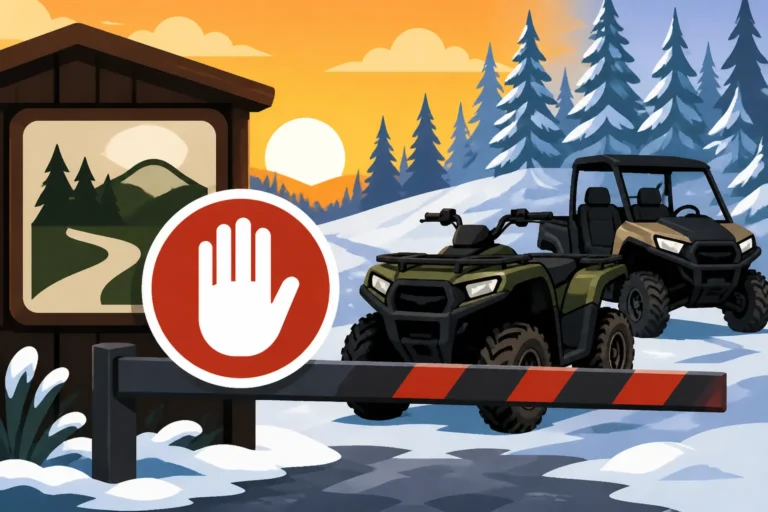
After rain, don’t assume a trail is ready just because the sky has cleared. Wet Alabama clay can be slippery and vulnerable to rutting, and a familiar climb may be more difficult than it looked on a dry day. Respect barriers and closures, and avoid creating new bypasses around muddy sections. [Alabama Trail Closures After Rain] and [Alabama Trail Etiquette Locals Expect] cover related decisions that help protect both riders and trails.
End the ride safely and learn from the day
Know when to shorten the route
Turning back is a sound riding decision, not a failed outing. Shorten the ride if someone is struggling with heat, the machine shows a warning, the group has used more water than expected or the weather is changing. Make that call while everyone can still travel comfortably, rather than waiting until the group is depleted or a minor problem has become harder to manage.
If you are riding at a destination such as [Stony Lonesome OHV Park in Alabama], check the facility’s current rules and notices before the trip, then use the park’s posted information while there. Different areas can have different operating details, trail layouts and procedures. Keep your group together when leaving the trail, and do not split up without agreeing on a route and a clear regroup point.
Cool down and inspect equipment after riding
Once you are back at the staging area, give everyone time to cool down before loading. Drink, change out of sweaty layers if you can, and check whether any rider still feels dizzy, nauseated or unusually weak. If symptoms persist or worsen, seek medical care rather than assuming rest alone will fix the problem.
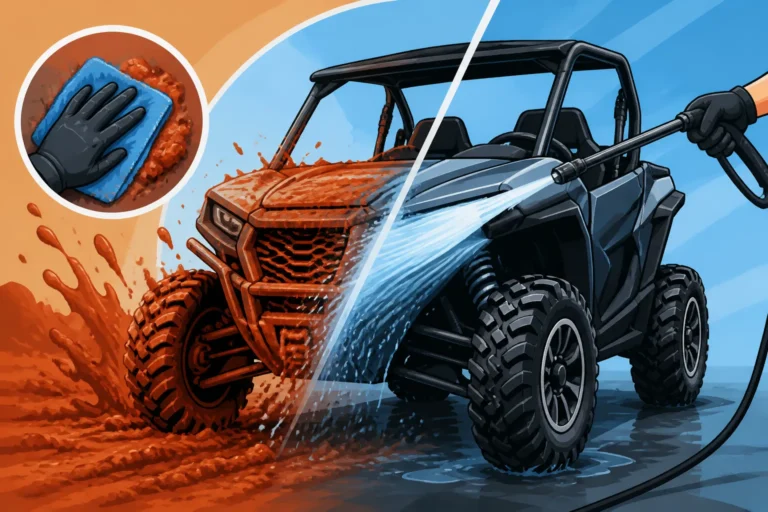
After the machine has cooled enough to handle safely, check for packed debris, mud buildup, leaks or damage. Clean the machine in a way that follows the owner’s manual and the riding area’s rules. Rinse red clay before it hardens, but avoid directing high-pressure water into electrical connections, bearings or other sensitive areas. Make a note of anything that needs attention before the next ride.
Review the plan before the next hot-weather trip
A quick post-ride conversation can improve the next outing. Which section felt most exposed? Did the group need more water, an earlier start or a shorter loop? Was a machine uncomfortable for passengers, or did dust make spacing difficult? These practical observations are more useful than simply deciding that the day was “too hot.”
Update your saved route or notes while details are fresh. With onX Offroad, you can use your planned map as a reference, but keep confirming route access with the riding area before each visit. Save the locations of useful regroup points and note where the group had to slow down or turn back. That preparation makes the next Alabama summer ride easier to adapt to real conditions.
Disclaimer
This article is for general informational purposes only and does not constitute professional advice. Laws, prices and regulations vary by location and change over time. Consult a qualified professional for guidance on your specific situation.