Packing for a Humid Day Out
An Alabama ride can feel manageable at the trailhead and punishing an hour later, when humidity, red clay, and low-speed climbs have soaked your clothes and drained your energy. Packing for a humid day out means more than tossing water in a cooler: this guide helps you plan hydration, clothing, recovery breaks, navigation, and emergency supplies for a safer, more comfortable ride.
Plan for Alabama’s heat and trail conditions
Check the forecast and the route before loading up
Heat and humidity affect the whole day, not just how comfortable you feel while riding. A shaded trail can still be demanding when you’re working through mud or climbing slowly, and a sunny stretch can feel much hotter than the temperature suggests. Before you leave, check the forecast for the riding area itself, not only the nearest city. Conditions near Bankhead, Talladega, Cullman, and central Alabama can vary, and scattered showers may change a trail from dusty to slick.
Also check that the park or riding area is open and that your intended route suits your group and machine. A loop that looks short on a map may take much longer when the ground is wet, traffic is heavy, or riders need frequent breaks. Review Alabama Trail Conditions Before You Tow and Alabama Trail Closures After Rain before you commit to a destination. If rain is expected, ask whether particular routes or sections are closed rather than assuming that every trail remains usable.
Navigation is part of heat planning. Getting turned around can turn a comfortable outing into a long, tiring one, especially if your group has to backtrack in the sun. Save or download the map information you’ll need before heading into an area with weak cell service. onX Offroad can be one way to review routes and keep useful map information handy, but don’t make a phone app your only navigation plan. Bring a charged phone, a portable battery, and a paper map or another backup when appropriate. Alabama ATV Trail Map Downloads can help you plan what to carry.
Choose a ride length your group can manage
A successful hot-weather outing is not the one that squeezes in the most miles. It’s the one where everyone has enough energy to ride safely and get back without rushing. If you’re taking children, new riders, or someone who isn’t used to Alabama summer conditions, build in short loops and easy ways to return to the staging area. A group that includes experienced riders may still need to set the pace for its least experienced member.
Plan breaks into the route before anyone feels overheated. Waiting until someone is exhausted or unusually quiet is a poor way to decide it’s time to stop. Choose rest points with shade when possible, and agree on a simple signal for asking the group to pull over. For more seasonal planning, see Alabama Riding in Summer Heat. If you’re new to a particular park, ask staff about trail difficulty, shaded areas, wash stations, and the best route for a shorter ride.
Pack water, food, and a way to recover
Carry more than one easy-to-reach drink
Bring enough drinking water for the people riding, with some extra set aside for delays. How much a person needs depends on the individual, the length and intensity of the ride, and the weather, so avoid treating a single amount as a guarantee. If someone has a health condition or takes medication that affects heat tolerance or fluid needs, plan with their clinician’s guidance.
Make water easy to reach during breaks. A bottle buried beneath tools in a cargo box is less useful than one stored securely where a rider can access it without unloading half the machine. Some riders use a hydration pack; others prefer bottles secured in a UTV or carried in a pack. Whichever approach you choose, make sure it stays attached through bumps and is not positioned where it interferes with riding.
A sports drink or electrolyte product may be useful for some riders during a long, sweaty day, but it is not a substitute for water, shade, or rest. Don’t rely on energy drinks or large amounts of caffeine to push through fatigue. Pack drinks that your group will actually use, and keep them out of direct sun when practical. A cooler can help at the staging area, but it should not be your only source of fluids once you leave camp or the parking area.
Bring snacks that hold up in heat
A humid ride can make food unappealing, and snacks left in a hot machine may melt, spoil, or become difficult to eat. Choose simple, sturdy options that travel well, such as crackers, granola bars, nuts, or other familiar foods that fit your group’s dietary needs. Pack food in sealed containers so red clay, dust, and mud don’t end up in the same bag as lunch.
Eat before you feel depleted. If your ride runs across a meal period, plan a proper break rather than expecting everyone to power through on a few bites. For children, include familiar snacks and an extra option in case heat makes their first choice less appealing. Keep any perishable food cool, and don’t leave it sitting in a hot vehicle for hours.
A small cleanup kit makes snack breaks more pleasant. Include hand wipes or sanitizer, tissues, and a bag for wrappers. Carry out everything you bring in, including food scraps and drink containers. Following Alabama Trail Etiquette Locals Expect is part of being a considerate guest at a park or shared riding area.
Make the staging area part of the plan
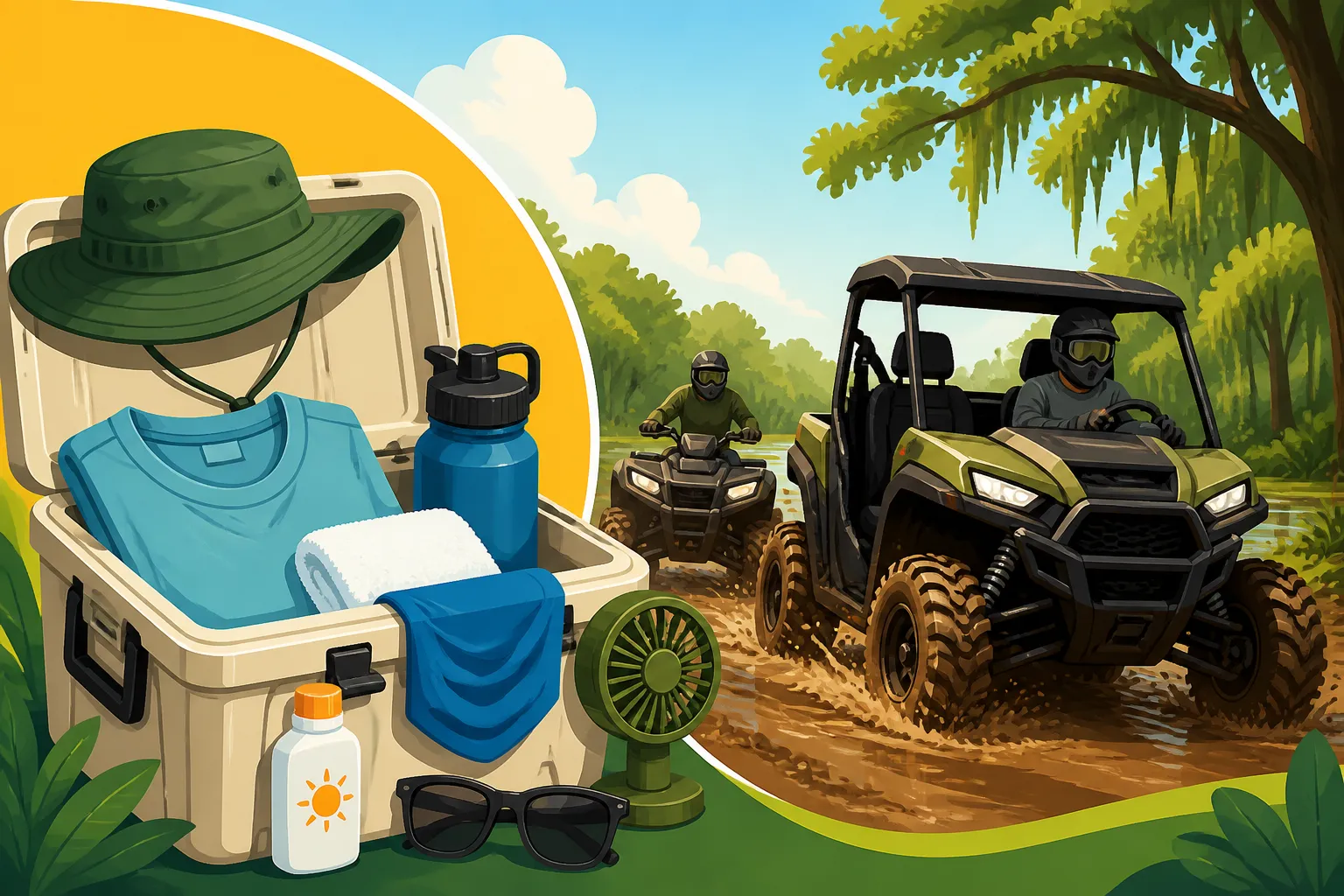
Think about what you’ll need both on the trail and when you get back. A clean shirt, towel, water, and a place to sit can make the return to the truck much more comfortable. If the park has a wash station, plan to use it without counting on it for basic personal needs; amenities, hours, and availability differ from place to place. Alabama Riding Areas With Wash Stations can help you consider that detail when choosing where to ride.
Keep a separate recovery bag at the vehicle with more water, dry clothes, simple food, and basic cleanup supplies. That way, a wet, muddy rider doesn’t have to dig through riding gear to find a towel or clean shirt. If you’re camping, add a change of clothes and a dry layer for the evening, when a sweaty shirt can become uncomfortable after the ride ends.
| Pack for | Useful items | Why it matters |
|---|---|---|
| Hydration | Water bottles or a secured hydration pack, plus extra water at the vehicle | Makes drinking accessible during breaks and helps cover delays |
| Food | Heat-tolerant snacks, a meal if needed, sealed storage | Helps riders avoid running out of energy and keeps food clean |
| Sun and rain | Sunscreen, sunglasses, a brimmed hat for breaks, light rain layer | Provides protection during exposed sections and changing weather |
| Navigation | Charged phone, offline map access, portable battery, backup map | Reduces the chance of getting lost when cell service is unreliable |
| First aid | Basic first-aid kit, personal medication, emergency contact details | Helps the group respond to minor injuries and prepare for more serious problems |
| Recovery | Clean clothes, towel, wipes, extra water, trash bag | Makes the post-ride trip home more comfortable |
Dress for sweat, sun, mud, and sudden showers
Wear breathable layers that still protect you
Lightweight, quick-drying clothing is usually more comfortable than heavy cotton once it becomes soaked with sweat. Wear long sleeves and long pants where appropriate for your riding activity and the park’s rules. They can help reduce sun exposure and protect skin from brush, insects, and flying grit. Choose gear that fits well enough to move freely without loose fabric catching on the machine.
Riding protection still matters in hot weather. A helmet, eye protection, gloves, and suitable footwear protect against hazards that don’t disappear because it’s warm. A helmet can feel stifling in humidity, but riding without required or sensible protection is not a good way to cool off. Take breaks in a safe spot, loosen or remove gear only when you’re stopped and away from moving machines, and follow the park’s posted equipment requirements.
Bring a spare shirt and socks in a sealed bag. Even if the ride is not especially long, sweat, creek crossings, mud, and rain can leave you uncomfortable. A dry layer in the truck is especially welcome after a wet ride in the Bankhead hills or a muddy day around Cullman. If you use a backpack, choose one that sits securely and doesn’t interfere with the helmet, your posture, or the machine.
Protect yourself from sun and insects
Apply sunscreen before you gear up, paying attention to exposed areas such as your face, neck, ears, and hands. Reapply according to the product directions, especially after sweating heavily or wiping your face. Sunglasses or suitable riding goggles help keep glare, dust, and debris out of your eyes. Bring a hat for breaks, but don’t wear anything that interferes with a properly fitted helmet while riding.
Insect protection may be useful, particularly around wooded routes, tall grass, and damp areas. Choose a repellent that suits your needs and follow its label directions. At the end of the day, check for ticks and brush debris from clothing before heading home. If you’re riding with children, make the check part of the normal post-ride routine rather than waiting until someone notices an itch.
Weather can shift quickly. A compact rain layer can be more useful than a bulky coat, but avoid wearing loose material that could snag or flap while riding. If a thunderstorm develops, don’t treat a rain jacket as protection from lightning. Stop in an appropriate safe location and follow the park’s directions. For a broader look at equipment and trail preparation, Alabama Riding Season Considerations is a useful companion read.
Prepare for discomfort, delays, and emergencies
Carry a first-aid kit and personal essentials
Your first-aid kit should match the group and the length of the outing. A basic kit may include adhesive bandages, gauze, antiseptic wipes, medical tape, gloves, and any personal medication someone may need. Keep medication in its original packaging when possible, and make sure the person who needs it can reach it. Don’t store critical medication in a place that becomes dangerously hot.
Tell someone who is not riding where you’re going and when you expect to return. Share the name of the park or riding area, your planned route, and who is in the group. Agree on what to do if a machine breaks down or riders become separated. If a person is seriously ill or injured, contact emergency services and follow instructions from trained responders rather than trying to manage a serious situation with a small trail kit.
Heat-related illness can become urgent. Watch for unusual weakness, dizziness, headache, nausea, confusion, or behavior that seems out of character. Stop riding, move the person to a cooler place, and seek urgent help if symptoms are serious, worsening, or include confusion or collapse. Don’t leave an affected rider alone or ask them to ride back to the truck. First Aid on a Long Stony Lonesome Loop offers more context for preparing to respond away from the trailhead.
Keep tools and recovery gear accessible
A humid-day pack should include a few practical items for common delays: a tire repair option suited to your machine, basic tools, a flashlight, a portable battery, and a way to contact help. Choose equipment you know how to use. A tool kit can be impressive and still be useless if nobody in the group knows where it is or how it works.
Secure every item before riding. Loose tools, bottles, and bags can shift over rough ground, distract the driver, or become a hazard. Divide supplies among machines so one breakdown doesn’t leave the entire group without water or first aid. Keep essential items—phone, medication, water, and emergency contacts—accessible rather than buried beneath recovery gear.
A paper map or a second navigation method is particularly helpful when a phone battery is low or service drops out. onX Offroad may help with route planning, but download the information you need before you reach the trail and carry a backup that doesn’t depend on a signal. Check your phone battery before departure, and use a portable charger during a break if needed.
Do a final check before leaving the trailhead
Before setting off, make sure every rider knows the planned route, the meeting point, and the pace for the day. Confirm that water, snacks, medication, and first-aid supplies are actually on the machines—not still on the kitchen counter or tucked in the truck. Check that cargo is secure and that each rider has suitable protective gear.
A quick check-in during the ride can catch problems early. Ask whether everyone has had water, whether anyone feels unusually tired, and whether the group still wants to continue. If conditions become hotter, wetter, or more difficult than expected, shorten the route. Turning back is not a failed ride; it’s often the decision that keeps a good day from becoming a miserable one.
When you return, account for everyone before loading up. Refill water, clean up your staging area, and give riders time to cool down before the drive home. A little preparation—especially around water, route planning, sun protection, and backup supplies—makes an Alabama ride far more comfortable when the humidity is high.
Disclaimer
This article is for general informational purposes only and does not constitute professional advice. Laws, prices and regulations vary by location and change over time. Consult a qualified professional for guidance on your specific situation.