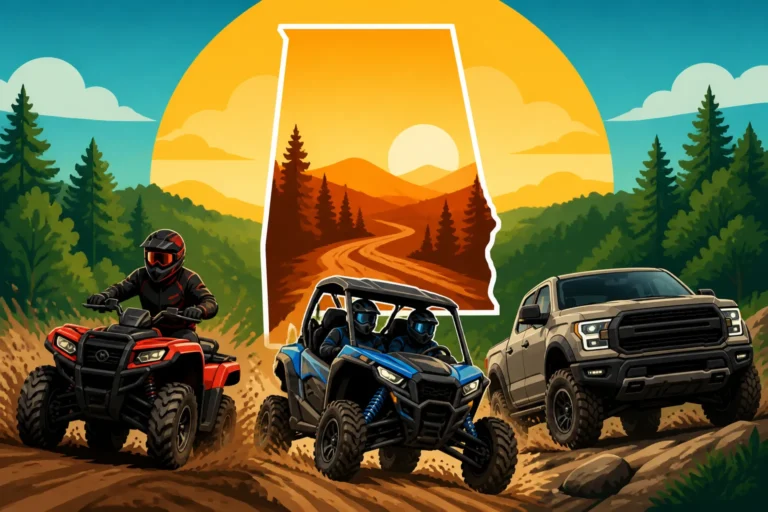
Alabama Riding Areas With Wash Stations
A muddy Alabama ride can leave red clay packed around the tires, underbody, and fenders just as you’re ready to load up and head home. The hard part is finding a riding area where you can clean your machine without guessing about facilities or park rules. This guide explains which Alabama parks to check first and what to ask before you tow.
How to find an Alabama riding area with a wash station
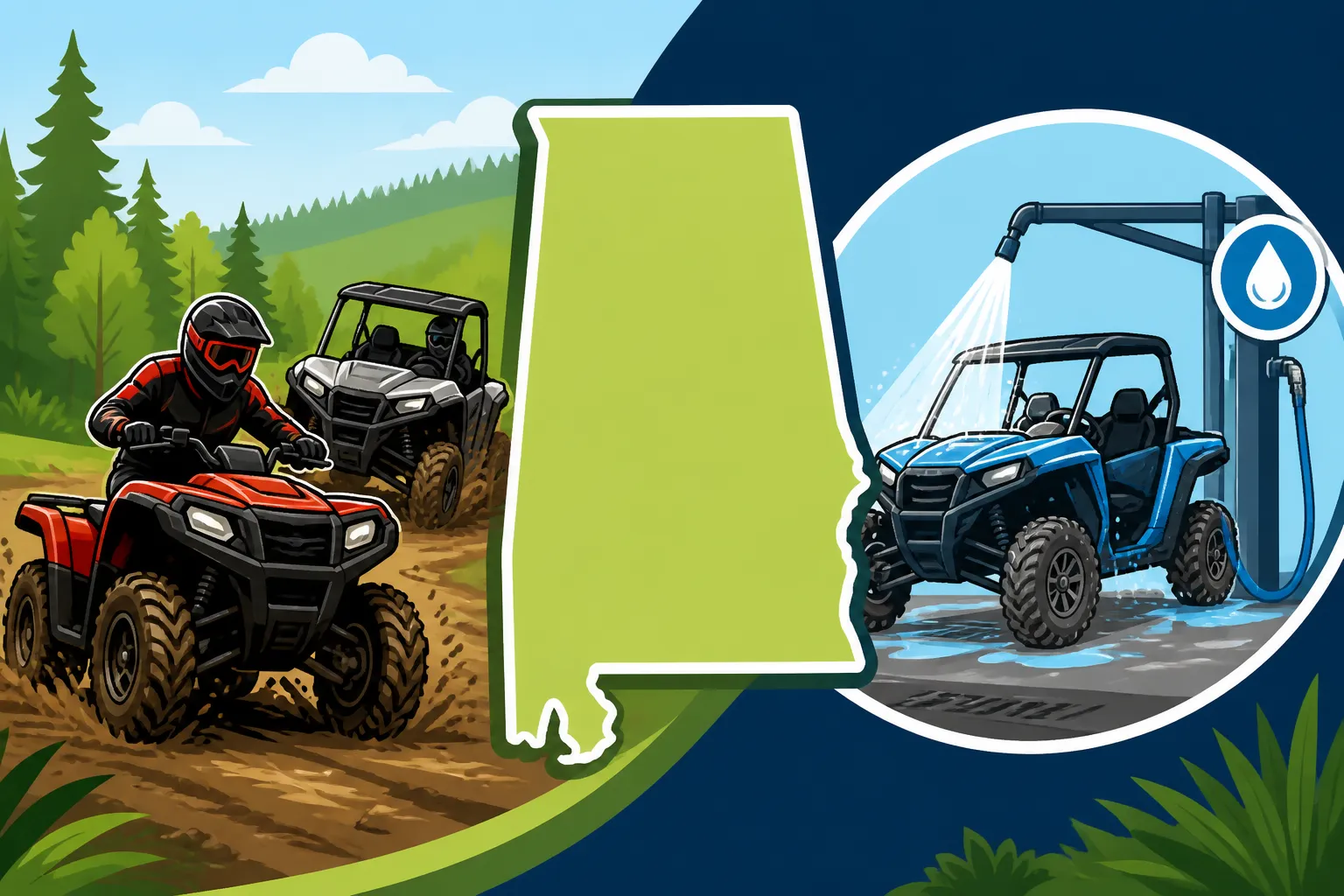
A wash station can mean different things from one park to another. It might be a designated wash bay, a hose connection, or simply an area where riders are allowed to rinse machines. Those differences matter: a facility may be available only to registered riders, may have limited operating hours, or may not be suitable for washing clay from a machine’s underside.
Before you choose a destination, confirm the facility directly with the park. Ask whether it is open on your riding day, whether it works for both ATVs and side-by-sides, and whether you need to bring your own hose or supplies. If you’re planning to ride after heavy rain, check trail conditions as well. A wash station is useful, but it doesn’t mean the trails will be open or safe.
Parks to check first
Stony Lonesome OHV Park near Bremen and Minooka Park in Jemison are two Alabama riding destinations worth checking when you’re looking for a place to ride and clean up afterward. Contact the park before loading your machine, and ask specifically about a wash station rather than assuming that general park amenities include one. Facility details and access rules can change.
When you call, ask whether the wash area is available to day riders as well as campers, whether it has water hookups, and whether there are limits on washing muddy machines. It’s also worth asking where the wash area is located. If it is far from the riding area or the exit, that can affect your plans—especially when you’re hauling several machines or riding with children.
For more options, start with [Alabama Private Off-Road Parks] and [Alabama Parks With Wash Stations]. A park directory or an online map can help you build a shortlist, but a listing alone doesn’t confirm that the wash facility is operating or available to every visitor.
What to confirm before you tow
A quick phone call can prevent a frustrating end to the day. Try asking: “Do you have a wash station open to riders today?” Then clarify whether it can handle a UTV, whether water is available, and whether the park has rules about washing heavy mud from machines. If the person answering isn’t sure, ask whether there is a posted policy or a park office that can confirm.
Also check what the park expects riders to do with muddy water and debris. Some facilities may direct riders to a specific area, while others may ask visitors to avoid washing machines in parking or camping areas. Don’t assume that a nearby spigot is a wash station or that you can wash wherever you find a hose.
| What to ask | Why it matters |
|---|---|
| Is the wash station open on my riding day? | Facilities may have separate hours or be temporarily unavailable. |
| Can I use it as a day rider? | Access may differ for day visitors and overnight guests. |
| Does it fit my ATV or side-by-side? | A small wash area may not comfortably accommodate a wider machine. |
| Is water or a hose provided? | You may need to bring supplies or plan another cleanup option. |
| Are there rules about mud or washing location? | The park may require you to use a designated area. |
| Are trails open after recent rain? | A wash station doesn’t mean wet trails are open or rideable. |
It can help to use onX Offroad or another mapping tool to plan the drive, find the park entrance, and keep track of your route. Still, treat a map as a planning aid—not confirmation that a wash station is open or that a particular road or trail is available. For muddy-weather planning, see [Alabama Trail Conditions Before You Tow] and [Alabama Trail Closures After Rain].
Plan for Alabama mud before the ride
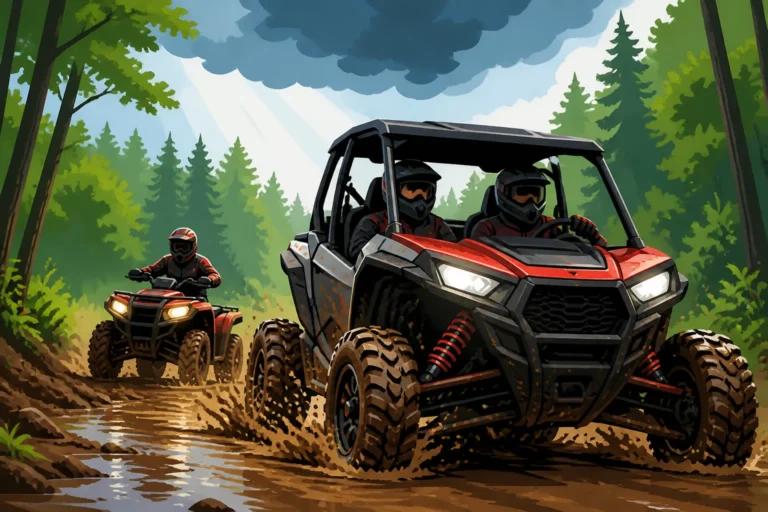
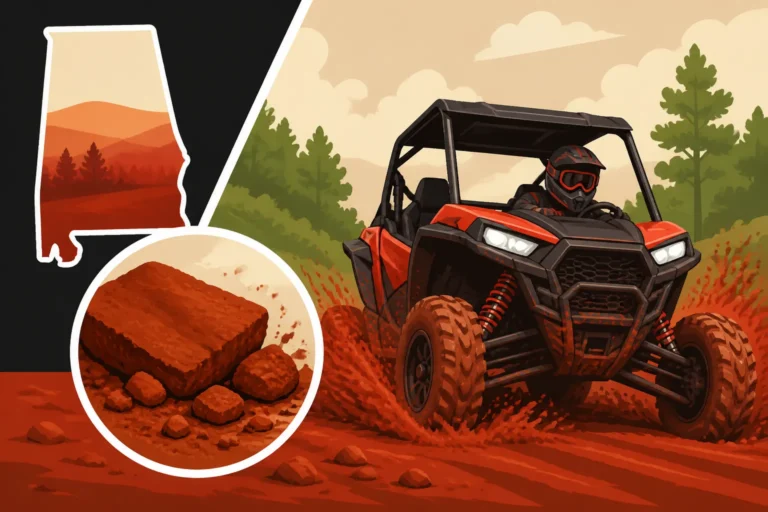
Alabama red clay is more than a cosmetic nuisance. When it’s wet, it can cling to tires, wheel wells, skid plates, and suspension components. Once it dries, the packed mud can be harder to remove, and a quick rinse may not reach every spot. If you’re riding somewhere with a wash station, think about cleanup before you leave home: bring clothes you don’t mind getting dirty, secure loose gear, and leave room in your trailer plan for a muddy machine.
Red clay and wet trail conditions
A trail that looks manageable at the start of the day can become slick after rain. Clay can build up in tread and underbody areas, changing how a machine handles and making it harder to load safely. Before heading out, check the park’s trail status and ask whether recent weather has affected access. The overview in [Alabama Red Clay and What It Does] can help you think through the conditions you may encounter.
If the park says trails are wet or temporarily closed, respect that guidance. Riding soft ground can deepen ruts, damage trails, and create recovery problems for you or other riders. A wash station should be part of your trip plan—not a reason to ride in conditions the park has closed. You can also check [Alabama Trail Riding After Heavy Rain] for more on how rain can change a riding day.
Pack a small cleanup kit even if the park confirms it has a wash area. A brush, gloves, a towel, and a plastic tub or bag for muddy gear can make the trip home more comfortable. These items won’t replace a proper wash, but they can keep loose clay and wet clothing from spreading through your truck or trailer.
Timing the wash and protecting your machine
If you can, rinse the machine soon after the ride rather than letting thick mud dry in place. Start with the areas where mud can accumulate: tires, fenders, wheel wells, footwells, and accessible parts of the underbody. Be careful around electrical connections, air intakes, seals, and other components that the manufacturer says should not be hit with high-pressure water.
A wash station may have rules about how long riders can use it or how much mud they can rinse off. Be considerate of the next person waiting, and remove large clumps of mud before they clog drains or spread across a shared area. If the park’s instructions are unclear, ask staff rather than improvising with a hose in a parking lot.
The detailed guidance in [Washing Red Clay Off Before It Sets] can help you prepare a sensible post-ride routine. For seasonal planning, [Alabama Riding in Spring] and [Alabama Riding in Summer Heat] cover conditions that can shape how muddy, dusty, or tiring a ride may be.
Make wash access part of your trip plan
A wash station is just one detail in a successful riding trip. You’ll also want to know when the park opens, what the trail rules are, whether overnight camping is available, and what facilities your group will need. If you’re traveling from outside the area, confirm the address and entrance directions before you leave; a navigation app may route you to a nearby road that isn’t the park’s public entrance.
Match the facility to your group
The right park depends on your machine, experience, and travel plans. A solo rider on a quad may have different needs from a family bringing two side-by-sides, camping gear, and a trailer. Ask whether the wash area has room to maneuver, whether the route to it is accessible with a trailer, and whether the park offers other amenities your group needs. For overnight stays, see [Alabama Parks With RV Sites] and [Alabama Parks With Bathhouses].
If you’re bringing new riders, agree on a simple cleanup and loading routine before the group arrives at the wash area. One person can manage the machine while another keeps muddy gear and loose items organized. That small bit of planning can prevent a tired end-of-day scramble, especially when everyone is eager to get home.
Use onX Offroad or a similar map to review your route and identify useful landmarks on the way to the park. Save the park’s contact information separately so you can call if your arrival is delayed or you need to confirm a facility detail. Mapping tools help with navigation, but the park remains the best place to verify its own rules and amenities.
Keep the wash area usable for everyone
Follow posted directions, use only the designated wash area, and avoid leaving mud, trash, or equipment where other riders need to move. If the facility is busy, take turns and keep your cleanup focused. A wash station is a shared convenience, and considerate use helps keep it available for the next group.
Park etiquette matters beyond cleanup, too. Stay on marked routes, give other riders room, and follow staff instructions about trail access and closures. [Alabama Trail Etiquette Locals Expect] is a useful companion if you’re visiting an unfamiliar riding area. If you’re still comparing destinations, [Alabama ATV Trails: Where to Ride] can help you think more broadly about where to ride before you make the drive.
Before you leave, check that mud hasn’t covered lights, the license plate or registration decal, or trailer connections. Secure muddy equipment, and don’t assume that a quick rinse has removed every clump from the underbody. If a park’s wash station is closed or unavailable, use a cleanup option you already know is permitted rather than washing on an unapproved part of the property.
Questions to ask before choosing a park
A little confirmation makes it easier to choose a riding area that fits your trip. When comparing parks, focus on the actual wash setup, the rules for your machine, and whether the trails are likely to suit your group. A park may be a great destination even without a wash station, but it’s better to know that before you arrive with a trailer full of muddy machines.
Use this checklist when you call:
- Is the wash station available on the day I plan to ride?
- Can day-use visitors use it, or is it limited to overnight guests?
- Can it accommodate my ATV or UTV?
- Is water provided, and do I need to bring a hose or other supplies?
- Are there limits on washing very muddy machines?
- Are trails open, and have recent conditions changed access?
- Where is the wash area in relation to the riding area, exit, and parking?
- Are there other park rules or amenities I should know about?
Once you have those answers, compare the park’s location and riding options with your group’s needs. Save the park’s contact details, plan your route, and bring a basic cleanup kit even if the wash station is confirmed. That way, a muddy ride ends with a clear plan instead of a last-minute search for somewhere to rinse off.
Disclaimer
This article is for general informational purposes only and does not constitute professional advice. Laws, prices and regulations vary by location and change over time. Consult a qualified professional for guidance on your specific situation.