Alabama Trail Riding After Heavy Rain
Heavy rain can turn an Alabama trail from firm red clay into slick ruts, hidden washouts, and muddy water crossings in a few hours. The hard part is knowing whether a route is merely messy or genuinely unsafe—and whether the riding area is even open. This guide explains how to assess conditions, make a safer ride plan, and decide when it’s better to wait.
How Heavy Rain Changes Alabama Trails
Red clay, ruts, and slick slopes
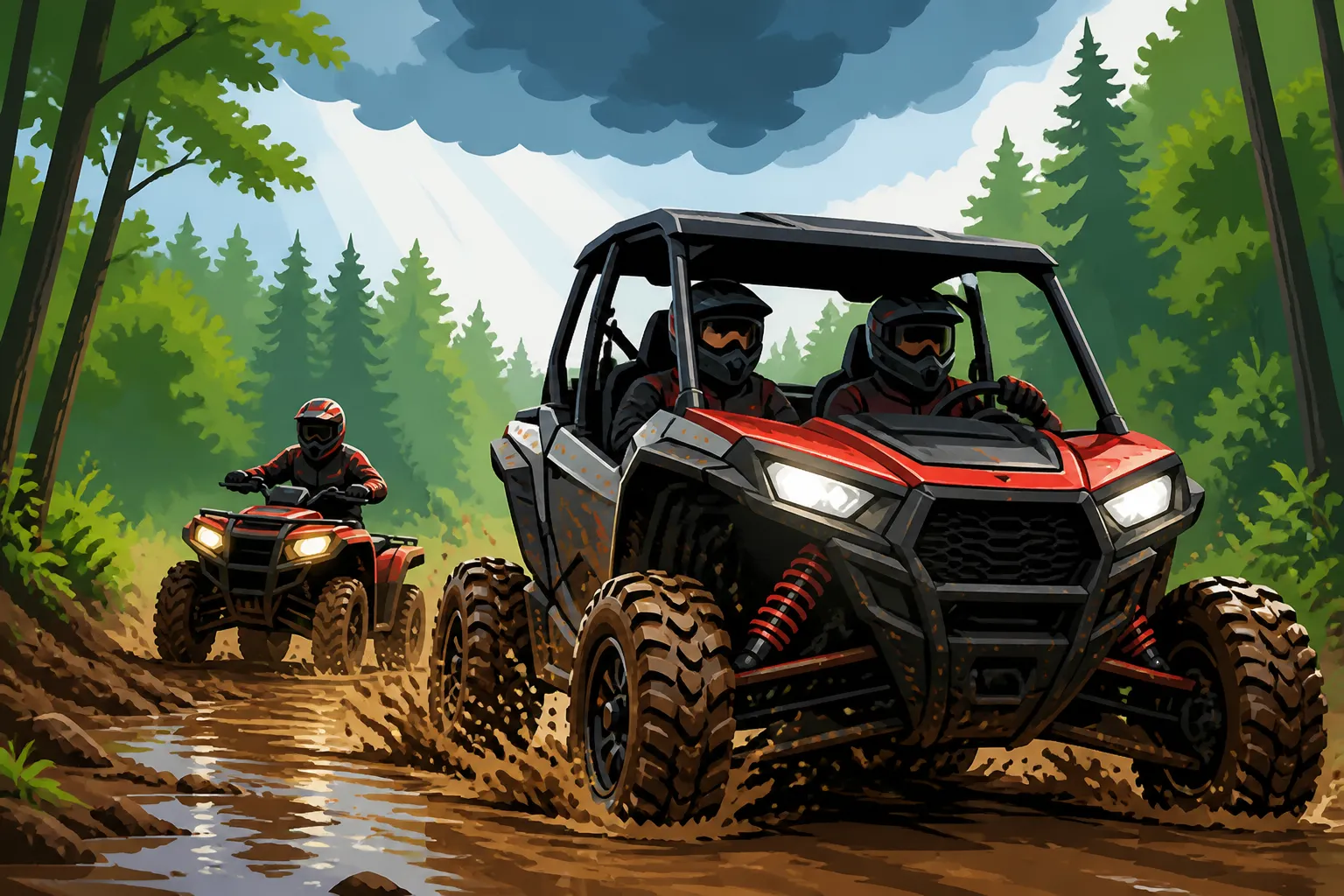
Alabama red clay can become extremely slick when wet. A trail that felt manageable on a dry day may offer little traction after a storm, especially on hills, turns, and approaches to creek crossings. Tires can spin without moving the machine forward, and a small rut can deepen quickly when riders keep trying to climb through it.
The risk isn’t limited to steep or technical trails. A gentle downhill can be difficult to control if the surface is slick, while a muddy turn can send a quad or UTV sliding toward a ditch, tree, or trail edge. On a side-by-side, extra weight can make recovery harder if the tires sink or the machine settles into a rut. Mud tires may help in some conditions, but they don’t make every slope or crossing safe.
Wet ground is also easier to damage. Spinning tires can cut deep grooves into a trail, push mud into drainage areas, and widen a route as riders try to find firmer ground. That’s one reason some riding areas restrict access or close trails after storms. Check [Alabama Trail Closures After Rain] before planning a trip, and respect a closure even if a route looks passable from the entrance.
Water can hide a problem
A puddle or shallow-looking crossing can conceal a soft bottom, a hole, a displaced rock, or a washed-out section. Rain can also increase water depth or current in a short time. If you can’t see the bottom or identify a safe route across, don’t assume the crossing is harmless because another machine went through earlier.
Water can be especially deceptive where a trail drops into a creek or follows a low area. The banks may be soft, and the exit on the other side may be steeper or more slippery than it appears. A machine that enters safely may still struggle to climb out. Avoid riding into moving or rising water, and never rely on another rider’s tire tracks as proof that a crossing is safe.
Check Conditions Before You Tow
Confirm the riding area is open
A trail system may have different conditions on different sections. One loop could drain quickly while another stays saturated, and a park may close only certain trails—or suspend riding altogether—to prevent damage or reduce risk. Check the riding area’s official notices before you leave, and call if the status is unclear. A parking area being open does not necessarily mean every route is open.
Conditions can change between the time you check and the time you arrive. If rain is still falling, additional storms are expected, or the access road is flooding, reconsider the trip. For public land, confirm that the specific roads or routes you plan to use are authorized for your machine. A map showing a road or trail does not by itself confirm that it is open to off-highway vehicles. [Alabama Trail Conditions Before You Tow] offers a useful checklist for making those checks before loading up.
Use maps as planning tools, not proof of access
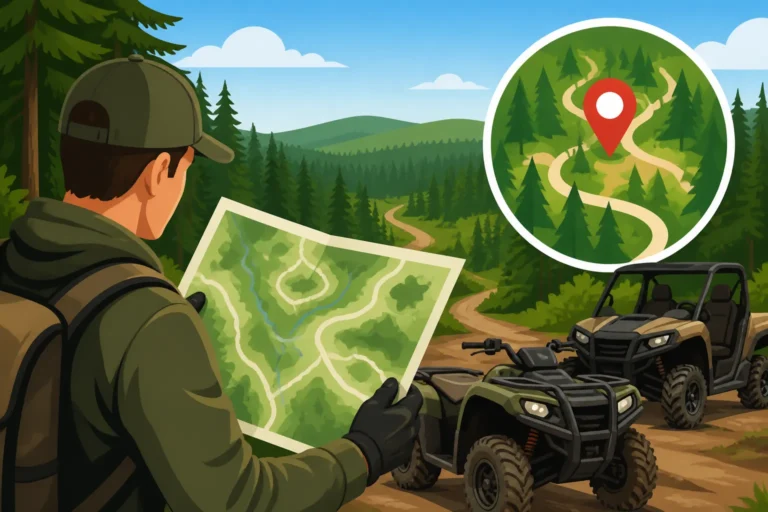
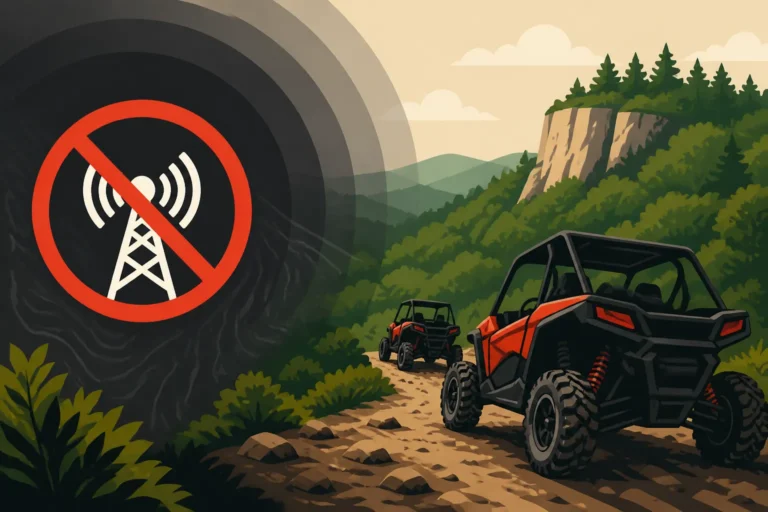
A navigation app such as onX Offroad can help you review a route, understand where trails connect, and keep track of your position when you’re riding. Download or prepare the information you need before leaving an area with reliable cell service. In the Bankhead Hills and other remote areas, your phone may not have a dependable signal.
Treat app information as one planning tool, not a guarantee that a trail is currently open, passable, or legal to ride. A route line cannot show every fresh washout, deep rut, fallen tree, or temporary closure. Compare your planned route with official land-manager or park information, and follow posted signs at the trailhead. onX Offroad can help you stay oriented, but it cannot replace a current trail-status check or an on-the-ground decision to turn back.
| What you notice | Why it matters | Safer response |
|---|---|---|
| Standing water hides the trail surface | The water may conceal holes, soft ground, or debris | Stop and assess from firm ground; turn back if you cannot judge the route |
| Tires spin in a shallow rut | Repeated attempts can deepen the rut and bog the machine | Stop before the rut worsens; avoid aggressive throttle |
| A creek is higher or faster than expected | Water depth and current can make a crossing hazardous | Do not enter; choose another route or end the ride |
| Fresh mud covers a steep descent | Traction and braking may be unpredictable | Avoid the slope and find a safer route |
| A gate or sign indicates a closure | The route may be unsafe or closed to protect the land | Do not bypass the barrier |
| The trail edge is crumbling | Saturated ground may not support the machine’s weight | Keep away from the edge and turn around if needed |
Decide Whether to Ride, Reroute, or Turn Back
Make a cautious first inspection
At the trailhead, look for recent closure notices, standing water, blocked access, and visible damage. If the first section is already deeply rutted or the ground gives way underfoot, that’s a warning about what may be farther in. Don’t let the effort of towing there—or the anticipation of a full day of riding—push you into a route that doesn’t feel safe.
Once on the trail, approach unfamiliar mud and water slowly enough to inspect them without committing the whole machine. Look for a firm place to stop, check the route from a safe position, and avoid walking into fast or deep water. If the trail disappears under water or the bank looks unstable, turn around. A turnaround point is a sensible part of the ride plan, not a failure.
For a group, agree ahead of time that any rider can call for a stop or retreat. A confident rider may be willing to attempt a slick hill, but the rest of the group shouldn’t feel pressured to follow. Keep enough space between machines to avoid a collision if one slides or stops suddenly. [Alabama Group Ride Planning] can help with organizing a trip so the group knows how to communicate and what to do if conditions change.
Know when a trail is too wet
There is no single rainfall amount that tells you every Alabama trail is safe or unsafe. Soil, slope, drainage, shade, and maintenance all affect how quickly a route dries. A sunny afternoon may improve a well-drained section, while shaded clay or a low-lying route can remain saturated. Recent rain is a reason to inspect conditions carefully—not a reliable way to predict them from a distance.
Consider postponing if the area is officially closed, water is moving across the route, deep ruts are forming, or you would need repeated attempts to get through an obstacle. Turning around is also the sensible choice when the group lacks recovery equipment or experience for the conditions ahead. If you’re unsure whether the trails will be open, call the park or land manager rather than making the drive based on assumptions. [Alabama Trail Closures After a Storm] provides more detail on how closures can affect a riding plan.
Protect Your Machine, the Trail, and the Group
Avoid unnecessary trail damage
Spinning the tires can turn a small muddy patch into a trench. If a machine loses traction, stop before repeated throttle attempts dig deeper. Don’t widen the trail by driving around a muddy spot into vegetation, across a ditch, or onto an unmarked route. Those detours can damage land and create new hazards for other riders.
Stay on routes that are open and designated for your machine. This matters on public land as well as at private parks, where posted access rules may vary by route or condition. If a trail is closed, muddy, or visibly damaged, choose an approved alternative only if the riding area confirms it is open. [Alabama Public Land Rules Compared to Private] explains why access rules can differ depending on who manages the ground.
Prepare for cleanup and recovery
Wet rides bring home mud in places that are easy to miss: under fenders, around suspension parts, and near radiators and cooling openings. Once you’re back, rinse mud off before it hardens, and check the machine for packed debris or damage. After a difficult ride, inspect the tires, brakes, steering, and undercarriage before heading home. If you crossed water, follow the manufacturer’s guidance for checking the machine and servicing it as needed.
Bring basic recovery and safety supplies suited to your machine and the route, and make sure everyone knows where they are. A winch or tow strap is only useful if the group knows how to use it safely and has a suitable anchor point. Keep phones protected from water, but don’t count on cellular coverage to get help. A paper map or an offline map saved in onX Offroad can help you understand your location, but tell someone outside the group where you’re riding and when you expect to return. [Packing for a Humid Day Out] can help you think through comfort and safety supplies for Alabama conditions.
Most importantly, don’t mistake a powerful machine or a confident group for a reason to push through. Heavy rain can change the trail beneath you, and a route that was familiar last weekend may be very different today. Check access, ride within the group’s abilities, and turn around when the surface or water makes the next section uncertain.
Disclaimer
This article is for general informational purposes only and does not constitute professional advice. Laws, prices and regulations vary by location and change over time. Consult a qualified professional for guidance on your specific situation.