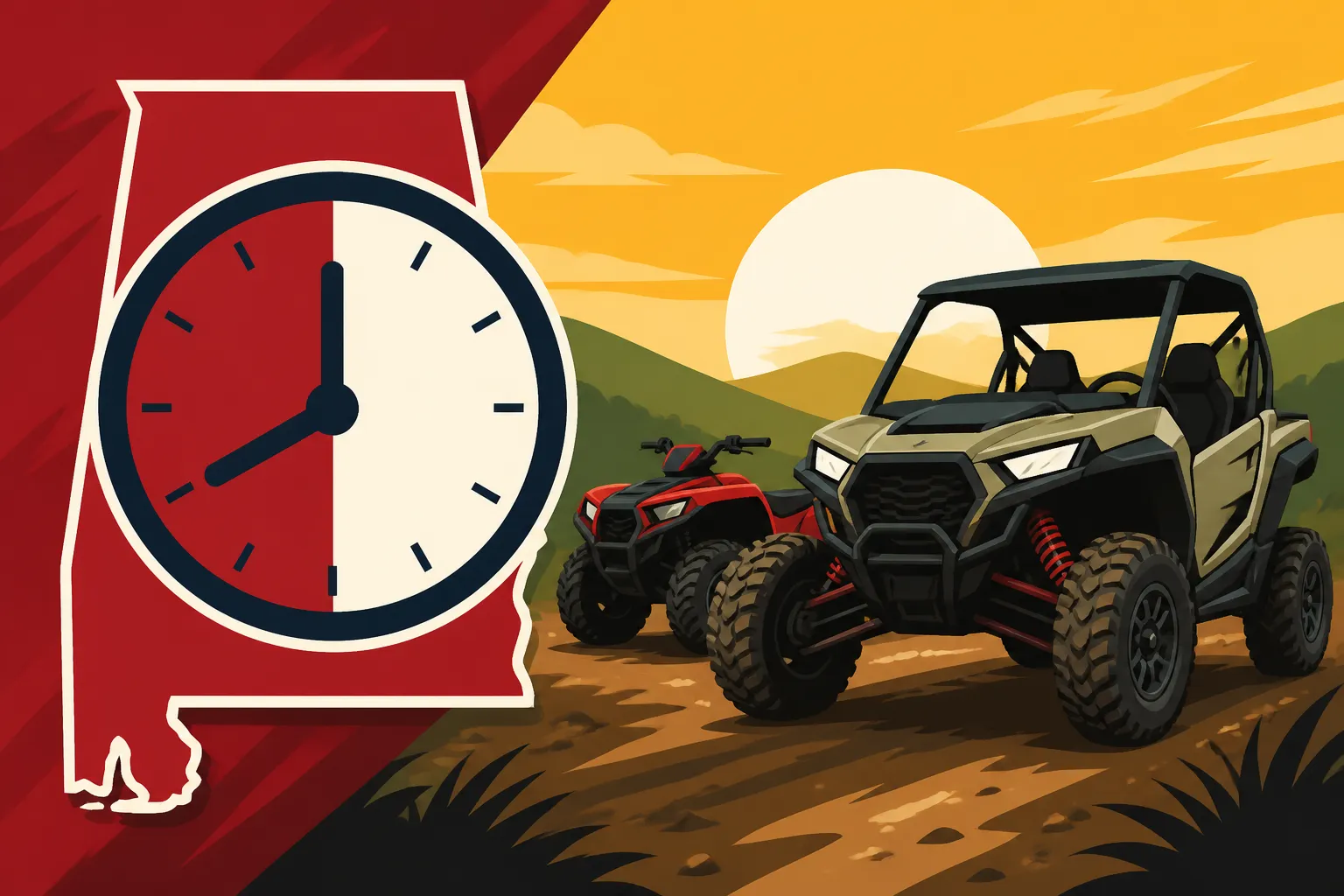
Open at Half Past Eight
A riding park that opens at 8:30 can shape your whole Alabama ATV or UTV day: arrive too early and you may be waiting at a locked gate, but arrive late and you can lose cool morning riding time. This guide helps you plan around opening hours, choose a suitable riding area, prepare your route, and avoid preventable delays.
Plan Your Ride Around the Gate Opening
Treat the posted opening time as a starting point
An opening time is not always the moment you can unload and ride. Some parks need staff to open the entrance, check riders in, collect waivers, or direct trailers to parking. If a listing says 8:30, arriving well before then may simply mean waiting in your truck or finding out that the entrance road is not meant for early arrivals.
Before leaving, check the riding area’s own information for that day’s hours, admission process, and any reservation requirements. Hours can change with the season, special events, maintenance, or weather. A quick call is especially useful if you are towing a long trailer, bringing a group, or driving a significant distance. The practical details in Calling Ahead for a Reservation can help you know what to ask before setting out.
Build a little flexibility into your arrival plan. If you are coming from Birmingham toward Cullman County, for example, traffic, fuel stops, and the final approach to a riding area can all affect when you reach the gate. Arriving close to opening may work for a simple day trip, but a first visit often goes more smoothly if you allow time to read signs, complete check-in, and unload without rushing.
Make check-in part of your arrival routine
Before the trip, gather the things you may be asked to provide: identification, payment, any required permits, and information for everyone riding with you. If minors are coming along, check whether a parent or guardian must sign their waiver. Park rules differ, so do not assume that the same process applies at Stony Lonesome OHV Park, Minooka Park, or another Alabama riding area.
Keep paperwork and essentials together rather than scattered between the glove box, phone, and trailer. A small folder or pouch can hold confirmation details, emergency contacts, and any permits you need. If cell service is unreliable at your destination, save important information offline or print it. That way, a weak signal at the entrance does not turn check-in into a frustrating search through emails.
Use the time before opening to prepare, not to ride somewhere you are not allowed to be. Stay clear of gates, staff access points, and posted private roads. If the park has a designated staging area, wait there and follow instructions. Being ready to check in promptly helps you make use of the morning without putting staff, other visitors, or your group under pressure.
Choose an Alabama Riding Area That Fits Your Day
Compare the ride, not just the opening time
Opening hours are only one part of choosing a destination. Think about how long you want to ride, what kind of terrain your group enjoys, whether the park allows your machine, and what facilities matter to you. A family looking for a manageable first outing may want a different experience from an experienced group seeking challenging climbs or technical ground.
Alabama has a range of riding options, from private off-road parks to other areas where access depends on local rules and conditions. Start with Alabama ATV Trails: Where to Ride to get a broader sense of the choices, then check each destination’s own rules before you tow. A place that appears suitable on a map may have restrictions on machine type, trail access, or operating days.
| Planning question | Why it matters | What to check before leaving |
|---|---|---|
| What time does the gate open? | Determines arrival and unloading plans | Official hours for the specific day |
| Is my machine allowed? | Width, type, or other rules may limit access | Park rules for ATVs, UTVs, and other vehicles |
| Is check-in required? | Waivers, payment, and permits can take time | Admission process and group requirements |
| What is the trail difficulty? | Helps match terrain to rider experience | Trail descriptions and current conditions |
| Is the route open after rain? | Wet ground can affect safety and trail access | Closure notices or a call to the park |
| Can I park my trailer there? | Affects whether the trip is practical | Trailer parking details and access directions |
For first-time visitors, look for clear trail descriptions and ask whether beginner-friendly routes are available. Best Alabama ATV Trails for Beginners can help you think through what makes a ride more approachable. Even when your group includes experienced riders, agree on a route that everyone can manage and decide in advance how you will handle different comfort levels.
Match the destination to the people and machines
A group with a two-seat quad, a youth machine, and a full-size side-by-side needs more than a general “ATVs welcome” answer. Ask specifically whether each vehicle is permitted and whether passengers are allowed on the machine they will use. Also check any age, helmet, and supervision rules. Park policies may be more specific than what riders expect from general state rules.
Terrain matters just as much. Red clay can become slick after rain, while rocky or steep sections may challenge riders who are new to off-road terrain. If your group has mixed experience, choose a route with options to turn back or take an easier line. Discuss a simple regrouping plan before riding so nobody feels pressured to follow a route that is beyond their ability.
For maps, combine the park’s own information with a reliable navigation plan. onX Offroad can be useful for reviewing routes and keeping track of your position, but do not treat an app map as proof that a road or trail is open to riders. Access rules, temporary closures, and private boundaries still matter. Use posted signs and park staff directions as your guide when they differ from what appears on a screen.
Prepare for Trail Conditions and Navigation
Check conditions before towing
A trail that was open on your last visit may not be suitable after a storm. Rain can create deep ruts, muddy climbs, standing water, and slippery clay. Some parks close trails or limit access to protect the ground and reduce damage. Checking Alabama Trail Closures After Rain and the destination’s current notices can save you from towing for hours only to find that the riding you planned is unavailable.
Ask about conditions in concrete terms. Instead of only asking, “Is it muddy?” find out whether the park is open, whether particular trails are closed, and whether the conditions are suitable for your machine and experience level. A UTV with appropriate tires may handle ground differently from a smaller quad, but neither should be pushed into a route that staff have closed or that the rider cannot safely manage.
Consider what rain means for your return trip, too. A muddy day can leave a machine, tie-downs, and trailer covered in clay. Bring what you need to secure the vehicle safely, protect items in the truck, and clean up where permitted. If you are staying overnight, check whether the campground or nearby lodging has rules or facilities relevant to muddy equipment rather than assuming a wash area is available.
Build a navigation backup
Do not rely on one phone screen for every part of the day. Battery life, poor reception, wet weather, and a phone left in the truck can all leave riders without useful directions. Download maps before you leave home, carry a charged power bank, and agree on obvious meeting points. If your group separates, a clear plan is more useful than hoping everyone can call each other.
onX Offroad may help you inspect mapped routes and orient yourself, but compare it with the park’s maps and on-site signs. Keep the park map available even if you use an app, and do not assume a mapped track is an authorized trail. A line on a digital map does not replace permission or current access information. Alabama ATV Trail Map Downloads offers another way to think about finding and saving useful route information before you travel.
Choose a turnaround time as well as a starting time. If you begin riding after check-in, it is easy to lose track of the day, especially when a group stops for photos, repairs, or lunch. Decide when you need to head back toward the staging area so you have time to load in daylight and complete any required exit process. Leave a little room for an unexpected flat tire or a slow return over unfamiliar trails.
Make the Most of the Riding Day
Keep the first ride simple
When the gate opens, it can be tempting to head straight for the most exciting trail. A short first loop is often a better choice, especially at an unfamiliar park. It gives everyone a chance to check how the machine handles the terrain, confirm that gear is secure, and get comfortable with trail signs and intersections before committing to a longer route.
Agree on group expectations before leaving the staging area. Decide who will lead, who will ride at the back, where you will stop, and what everyone should do if the group becomes separated. Keep riders within a distance where they can see or communicate with one another. When the group includes children or beginners, use frequent check-ins and let them set a comfortable pace.
Ride with courtesy, too. Slow down near other visitors, give appropriate space when passing, and follow posted direction signs. Staying on designated routes protects the land and reduces the chance of crossing onto a closed trail or neighboring property. Alabama Trail Etiquette Locals Expect is a useful reminder that considerate riding helps keep shared areas enjoyable for everyone.
Adjust the schedule when the day changes
A planned 8:30 opening does not guarantee that your whole schedule will unfold neatly. Check-in may take longer than expected, a trail may be temporarily closed, or weather may change. Rather than treating those delays as a ruined day, decide what matters most: a few enjoyable loops, time with family, or exploring a particular type of terrain. A flexible plan is usually more satisfying than trying to cram every option into the hours available.
If the park is busy, expect that parking, unloading, or trail access may take longer. Keep vehicles and trailers in designated areas and avoid blocking other visitors. If you have a large group, make sure everyone knows where to meet before setting off. A simple meeting point near the staging area can prevent a minor separation from turning into a long search.
At the end of the ride, take a moment to inspect the machine before loading. Look for damage, loose straps, debris around moving parts, and anything that needs attention before the next outing. Check that all riders and belongings are accounted for, then secure the trailer carefully. If you noticed a confusing sign, a difficult section, or a condition change, share that information with park staff when appropriate. It can help them and the next group of riders.
Planning around a half-past-eight opening is less about racing to the gate and more about arriving prepared. Confirm the day’s hours, understand check-in, match the area to your group, and keep a backup plan for maps and changing trail conditions. For a wider look at planning, Alabama Trail Conditions Before You Tow and Alabama Trail Difficulty Ratings can help you make the trip more comfortable and realistic.
Disclaimer
This article is for general informational purposes only and does not constitute professional advice. Laws, prices and regulations vary by location and change over time. Consult a qualified professional for guidance on your specific situation.