Alabama Parks With Fishing Ponds
Planning an Alabama ride around fishing sounds simple until you discover the pond is closed to visitors, fishing is not allowed, or the trail and campground schedules do not line up. This guide explains how to pair off-road riding with pond time, what to confirm before leaving home, and how to plan a smoother visit to Alabama parks with fishing opportunities.
Alabama riding parks where fishing may fit the trip
Minooka Park in Chilton County
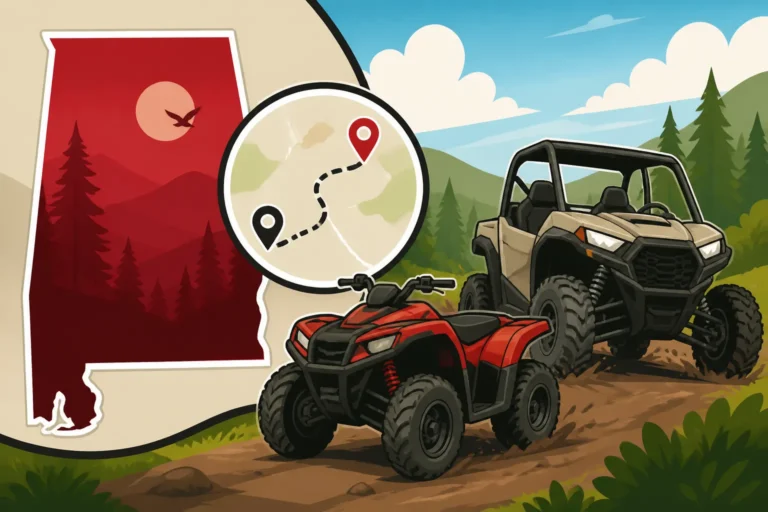
Minooka Park is one Alabama riding destination to look into if you want both off-road recreation and time near a fishing pond. Its park information includes fishing ponds, so it may suit a family outing where some people want trail time and others would rather cast a line. Check the park’s current rules before treating fishing as part of the plan: access, permitted activities, and operating schedules can change.
It is also worth checking how the riding area and the fishing area relate to each other. A pond being on park property does not necessarily mean you can ride directly to its bank, fish during all park hours, or leave a machine unattended nearby. Ask whether the pond is open to day visitors, whether it has designated fishing areas, and whether riders need to park in a separate lot.
Minooka is also known as a substantial riding area, but that does not make every trail appropriate for every group or machine. Get current details about trail access, closures, and the park’s seasonal hours before you tow. For a closer look at the riding destination, see [Minooka Park Riding in Alabama]. If fishing is a priority, confirm that the pond and trails will both be available on the day you plan to visit.
Stony Lonesome and other riding destinations
Stony Lonesome OHV Park in Bremen is another destination to investigate when you are building a ride-and-fish weekend. Park information has described a pond as one of its amenities, including a 7-acre pond, but visitors should confirm the current fishing rules and access arrangements directly with the park. Do not assume that a pond’s presence means fishing is included with admission or allowed during every operating period.
A call ahead is especially helpful if you are bringing a trailer, staying overnight, or traveling with people who will not ride. Ask whether fishing is permitted for day visitors, whether campground guests have different access, and whether there are limits on where you can park or walk with fishing gear. If the riding area and pond have separate rules, get those details before you arrive rather than trying to sort them out at the gate.
For trail and park planning, compare the details for [Stony Lonesome OHV Park in Alabama] with the arrangements at Minooka. They are not interchangeable destinations: schedules, camping options, terrain, and amenities can differ. Even if an online listing mentions a pond, treat the park’s own current instructions as the deciding information for whether you can fish during your visit.
What to confirm before choosing a park
A pond can be a useful extra, but it should not be the only detail you check. Confirm whether fishing is allowed, whether it is open to all visitors, and whether you need a separate permit or must follow specific park rules. Ask whether the pond is stocked or managed in a particular way only if that matters to your plans; do not rely on a general description to answer a specific fishing question.
Also ask about practical access. Is there a marked path from the parking area? Can you reach the pond with children or someone who has limited mobility? Is there shade, a place to sit, or a restroom nearby? These details can determine whether a fishing break is relaxing or turns into a long walk back to the truck for forgotten gear.
Finally, line up the park schedule with your travel plans. A park may have limited operating days, seasonal hours, or trail closures that affect the ride, while pond access may follow separate rules. The park’s current information should guide your timing, not an old social post or a map pin. For more destination ideas, start with [Alabama ATV Trails: Where to Ride] and narrow the choices by the amenities your group actually needs.
How to plan a ride and fishing day
Decide which activity is the anchor
Before you choose a date, decide whether the ride or the fishing is the main reason for the trip. If riding is the priority, select a park based on the trail type, machine access, and operating schedule, then treat the pond as a bonus if it is available. If fishing is the priority, confirm pond access first and build the riding portion around the remaining time and park rules.
This distinction matters more than it may seem. Imagine arriving late after a long drive with a group that expects a full day of trail riding and a few hours by the water. If the park closes earlier than expected or the pond is not open to day visitors, the day can feel like a letdown even if the riding area is excellent. Confirming the primary activity helps you set realistic expectations.
A practical schedule might put fishing first for a quiet morning, followed by riding after everyone has eaten and checked their machines. Another group may prefer to ride early, return to camp, and fish later. Neither approach is automatically better; the right order depends on park hours, weather, your group’s energy, and the rules for moving between activity areas.
Check access, admission, and park rules
Ask the park what admission covers. A riding fee, camping reservation, or day-use admission may not automatically cover every amenity or activity. Confirm whether fishing has an extra charge, whether non-riders can enter, and whether day visitors can use the pond without paying for an overnight stay. If your group includes people who will not ride, this is a particularly important question.
Then confirm the basic rules for both activities. Parks may set requirements for helmets, passengers, machine types, trail use, pets, alcohol, quiet hours, and minors. Fishing rules may separately address permitted locations, gear, access times, or catch practices. Do not assume that a rule for one part of the property applies to the other, and do not assume that a public fishing rule overrides a private park’s own restrictions.
Write down the name of the person or office that gave you the information and the date you called. That small step can save confusion if different pages or online listings give conflicting details. For campsite and facility considerations, [Alabama OHV Camping With Trail Access] and [Alabama Parks With Bathhouses] can help you think through what your group needs beyond the trail itself.
Build in transition time
A ride-and-fish visit involves more transitions than a simple trail day. You may need to unload machines, check in, secure helmets and riding gear, change clothes, collect fishing equipment, and walk to the pond. If children are coming along, add time for snacks, bathroom breaks, and the inevitable search for the one missing tackle box.
Plan a clear place to keep equipment. Fishing rods and open tackle containers should not be loose in a moving UTV or piled where they can shift during transport. Keep hooks secured, especially around children and pets. If the park requires machines to stay in designated riding or parking areas, carry your gear to the fishing area rather than assuming you can drive right to the bank.
A little flexibility helps, too. Mud, heat, crowds, or a trail closure can change your timetable. Keep the fishing part of the day low-pressure: if the ride takes longer than expected, a shorter visit by the pond can still feel worthwhile. If fishing is the main event, set a cutoff time for trail riding so the group does not have to rush through the activity they came to enjoy.
Compare the park features that matter
A practical comparison before you book
The table below is a planning aid, not a substitute for a park’s current rules. It separates the general destination question from the details you should verify directly.
| Planning question | Minooka Park | Stony Lonesome OHV Park |
|---|---|---|
| Is it an Alabama riding destination to consider? | Yes; known as an off-road riding destination | Yes; known as an off-road riding destination |
| Is fishing mentioned among park amenities? | Fishing ponds are associated with the park | A 7-acre pond has been described as a park amenity |
| What should you confirm first? | Whether fishing is open to your visitor type and where access is allowed | Whether fishing is allowed during your visit and how pond access works |
| What else affects a combined trip? | Current trail access, seasonal hours, and facility rules | Current operating schedule, camping arrangements, trail access, and pond rules |
| Best next step | Contact the park and confirm details for your planned date | Contact the park and confirm details for your planned date |
Use the table to decide which park deserves a closer look, not to assume that either destination has the exact experience your group wants. If fishing rules are unclear, ask specifically whether you may fish rather than simply asking whether the park has a pond. Those are different questions.
You should also consider how much trail time your group expects. A park with a pond is not necessarily the best choice if the riding terrain is too challenging for a new rider or unsuitable for a particular machine. Likewise, an excellent trail destination may not provide the quiet, accessible fishing setup a non-rider in your group has in mind. Match the place to the people coming along.
Match the park to your group
For a mixed-age family, think about the distance between parking, trails, restrooms, and fishing access. A pond that is enjoyable for an adult may be a difficult walk for a small child after a hot ride. Ask whether there are safe places to sit and whether children must remain with an adult near the water. Carry drinking water and sun protection even if you expect to spend only a short time fishing.
For a group of riders, ask about machine and trail restrictions before you make a reservation. A side-by-side group may need to check width limits, permitted routes, passenger rules, and any park-specific requirements. Riders arriving with different machines should not assume that everyone can access the same trails. A little advance checking helps avoid splitting the group at the entrance.
For a group with non-riders, look for a plan that gives them something enjoyable to do without asking them to wait beside a trailhead all day. Fishing may be a good option, but only if the pond is open to them and the park has clear access arrangements. If the park’s fishing setup is uncertain, consider another nearby activity or plan a shorter ride-and-fish day rather than promising an amenity you have not confirmed.
Use maps as a planning tool, not permission
A map can help you understand the general location of a park, nearby roads, and the distance between a campground and a trail area. Tools such as onX Offroad can be useful for reviewing off-road routes and organizing a trip, especially when your group is comparing destinations or trying to understand the surrounding area. Still, a digital map does not establish that a trail is open or that a pond is available for fishing.
Use mapping tools alongside the park’s own current information. Check that the route you plan to ride is approved for your machine and open on your visit date. If you are unsure whether a line on a map is a public trail, private road, or closed route, ask the land manager rather than relying on the display alone. Property boundaries and route conditions are not always obvious from a screen.
It also helps to save the park address, check-in instructions, and a phone number before you leave. Cell reception can vary in rural and wooded areas, and a map app may not replace posted signs or staff directions. For broader location planning, [Alabama Trail Map Downloads] can be a useful starting point, but always verify access and rules with the park managing the land.
Prepare for Alabama weather, trails, and fishing
Check the trail surface and recent conditions
Alabama trail conditions can change quickly after rain. Red clay may become slick, ruts can deepen, and low areas may hold water. A route that felt straightforward during a dry weekend can become more demanding after a storm. Before towing, check whether the park has closures or warnings and ask whether recent weather has affected the trails you intend to use.
Think about how trail conditions affect the whole group, not just the rider in the lead. A novice may find slippery climbs stressful, and a long route can become tiring if everyone is fighting for traction. If the park reports difficult conditions, consider shortening the ride, choosing easier routes, or postponing the trip. Avoid leaving designated trails to get around mud or a closure; that can damage the property and create a safety problem.
Mud and wet gear also change what you need for a comfortable fishing break. Bring spare clothes, towels, and a way to keep muddy boots away from clean fishing supplies. Pack gear in closed containers so it stays dry and does not collect grit. For additional planning guidance, [Alabama Trail Conditions Before You Tow] and [Alabama Trail Closures After Rain] cover the kind of checks that can prevent an avoidable drive to a closed or unsuitable riding area.
Pack separately for riding and fishing
Riding gear and fishing equipment have different storage needs. Keep helmets, gloves, eye protection, and other riding essentials together so they are easy to find at check-in. Store fishing hooks, lures, knives, and other sharp items in a secured tackle box. If you are carrying rods in a vehicle, arrange them so they cannot interfere with passengers or become a hazard during a sudden stop.
For a hot day, bring drinking water, sun protection, and breathable spare clothing. A shaded fishing spot can still feel hot and humid, especially after a ride. If rain is likely, pack a waterproof layer and protect phones, keys, and any printed reservation details. Keep a simple first-aid kit accessible, and make sure everyone knows where it is.
Think through food and waste as well. Some parks have designated picnic areas or rules about food near trails and campsites. Do not leave bait containers, line, packaging, or food scraps behind. Fishing line and hooks can injure wildlife, pets, or other visitors, so collect them and dispose of them properly. A clean campsite or pond area makes the outing better for the next group, too.
Keep safety and courtesy in view
A day involving both machines and water calls for clear supervision. Set a meeting point and make sure children know who is responsible for them near the pond and on the trail. Keep non-riders informed about when the riding group expects to return, and do not let someone walk alone through unfamiliar park areas without knowing the route and rules.
Follow posted speed limits and trail directions, and give other users room. A park may host different activities or have designated areas for walking, fishing, camping, or riding. Do not ride along a pond bank or through an area that is not marked for vehicle use. If you are uncertain where a route ends, stop and ask staff rather than following tracks made by another visitor.
Respect the park’s noise, pet, and cleanup rules. A fishing area is often a quieter place than a riding trail, and visitors may be there for a calm break. Keep machines in authorized areas, lower noise when required, and pack out trash and fishing line. For more on sharing space responsibly, see [Alabama Trail Etiquette Locals Expect].
Make a dependable trip plan
Use a simple confirmation checklist
A quick call before departure can settle the questions that tend to cause the most frustration. Ask whether the park is open on your intended date, whether the riding area and fishing pond will both be accessible, and whether there are any reservations or entry steps to complete. If your party includes non-riders, ask whether they can enter and use the pond without joining the riding portion.
Confirm machine restrictions and trail conditions, too. Ask whether your specific type of ATV or UTV is allowed, whether any trails are closed, and whether recent rain has changed access. For fishing, confirm whether you need a license or other authorization and whether the park imposes additional rules. Make a note of the answers rather than relying on memory after a long call.
Before leaving home, check that everyone has the address, arrival plan, and any required reservation details. Pack documents and essentials where they will not get wet or covered in mud. If the park has limited cell service, save information for offline use or write down key details. onX Offroad can help organize route planning, but the park’s directions and official access rules remain the final word.
Have a backup plan if fishing is unavailable
Even with careful preparation, fishing access can be interrupted by weather, maintenance, private events, or a change in park rules. If fishing is a major part of the day, identify a backup before you travel. That might mean choosing a different confirmed fishing location nearby or adjusting the trip so the ride itself is still worthwhile if the pond is closed.
Be careful about assuming a nearby lake or stream is open to the public. Access may depend on land ownership, a boat ramp or day-use area, local rules, or required permits. Check the managing agency or property owner before making a detour. A water body visible from a road or trail is not automatically a place where visitors may stop and fish.
A backup plan also helps when the trail conditions are poor. You might shorten the ride and spend more time at an approved fishing area, or choose a different park with confirmed access. The key is to make the decision based on current information rather than trying to improvise around a closure after unloading machines. That flexibility can turn a disappointing change into a manageable adjustment.
Leave the park in good shape
At the end of the visit, check the trail or pond area for gear, trash, and fishing line. Make sure tackle is packed away before loading machines and that muddy equipment is secured for the drive home. If you used a campsite, follow the park’s checkout and waste instructions. These small habits reduce the chance of losing equipment and help keep shared areas usable.
If conditions changed during your visit, share useful, factual feedback with the park. For example, you can report a blocked route, damaged sign, or pond access concern to staff. Avoid treating one visit as a guarantee of future conditions; schedules and access can change. When you recommend a destination to friends, encourage them to confirm the details for their own dates.
A successful Alabama ride-and-fish outing is less about finding a park that promises everything and more about matching your expectations to the park’s actual rules and conditions. Confirm access, plan around weather, keep riding and fishing gear organized, and give your group a backup option. That preparation makes it easier to enjoy both the trail and the time by the water.
Disclaimer
This article is for general informational purposes only and does not constitute professional advice. Laws, prices and regulations vary by location and change over time. Consult a qualified professional for guidance on your specific situation.