Minooka Park’s Seasonal Hours in Alabama
Minooka Park’s seasonal hours can make a ride easy to plan—or leave you arriving just as the gate is closing. If you’re towing a quad or side-by-side to Jemison, the key is to check the schedule for the season and day you plan to visit, then leave room for check-in, unloading, and the ride back to the staging area.
How Minooka Park’s seasonal hours work
Why the closing time changes
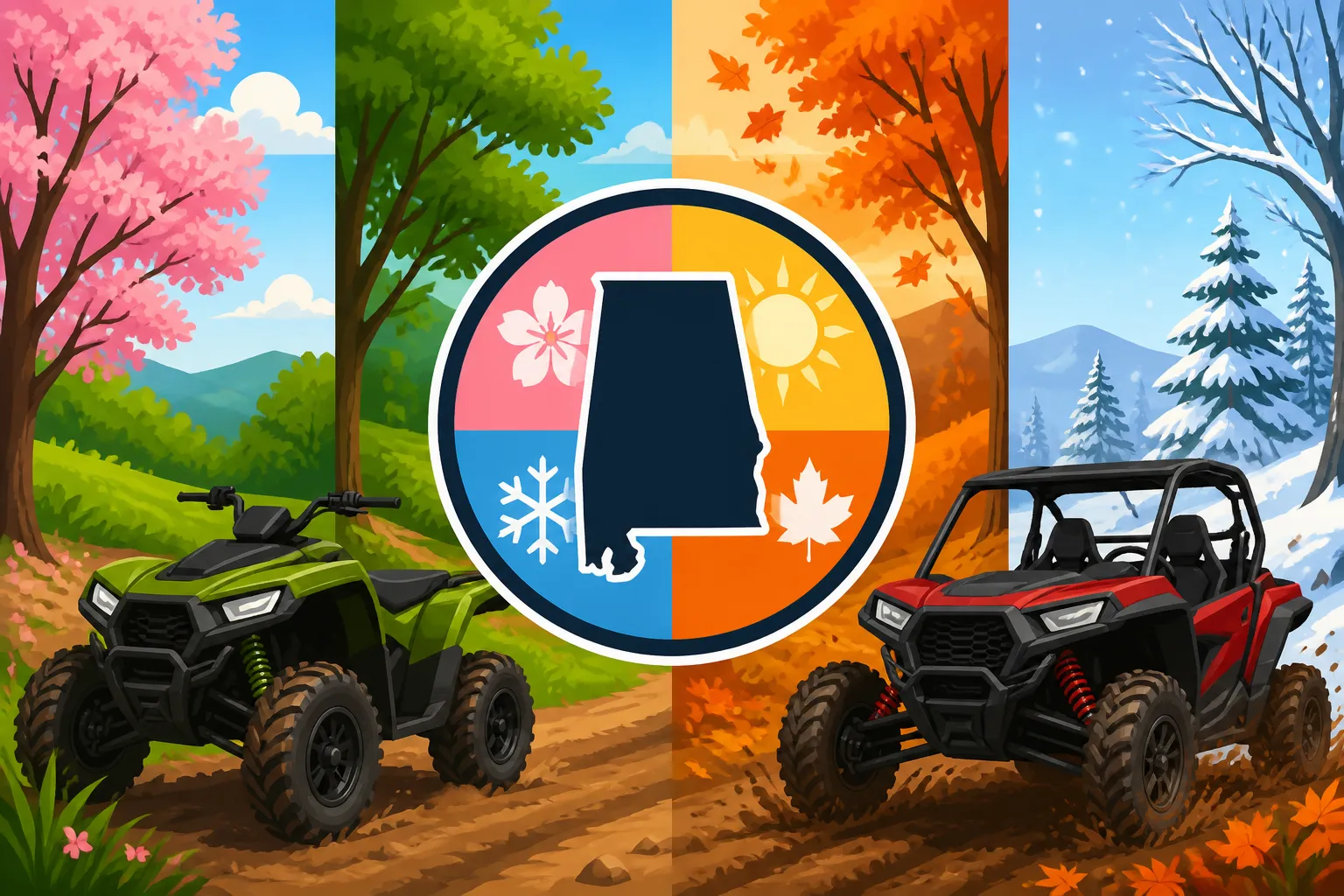
Minooka Park uses seasonal hours, so a schedule that worked during one part of the year may not fit another. The park’s listed pattern has included an earlier winter closing time and later summer hours: reference information for Minooka describes a 5 p.m. winter close and an 8 p.m. summer close. Treat those as planning clues, not a substitute for checking the park’s current posted schedule before you leave.
There’s a practical reason seasonal hours matter so much at an off-highway vehicle park. In summer, daylight stretches later, giving riders more time to arrive, unload, and get onto the trails. In winter, shorter days and changing conditions can make an earlier finish more sensible. Even if you’ve visited before, don’t assume that your last trip’s closing time still applies.
The hours also affect more than the amount of time you can ride. They shape when to arrive, whether you can fit in a longer loop, and how much buffer you have if someone in your group needs a break or a minor repair. If you’re planning around a specific seasonal schedule, [Minooka Park Closes at 5 p.m. in Winter] and [Minooka Park Stays Open Until 8 p.m. in Summer] are useful related topics to review.
Opening hours and riding hours are not quite the same thing
A posted opening time doesn’t mean your group is riding the instant you pull in. You may still need to check in, complete any required park procedures, unload machines, put on helmets and protective gear, and make sure everyone understands the route and meeting point. The same goes for the end of the day: the useful riding window ends before the gate closes if you still need to return, load up, and leave the grounds.
This matters most when you’re visiting with a trailer or a group. One person may unload quickly while another is sorting out tie-downs, adjusting a helmet, or helping a young rider get comfortable. A family that arrives near opening time can lose a noticeable chunk of its ride window to preparation. Build those tasks into the day rather than treating them as an afterthought.
It’s also worth distinguishing the park’s public operating hours from any specific rules about when riders must be off the trails. Follow posted instructions and staff directions; don’t interpret the closing time as permission to start a long ride at the last minute. For more on park schedules and changing operating days, see [Alabama Parks Closed Midweek] and [Minooka Park's Seasonal Hours in Alabama].
Plan your arrival around the season
Give yourself a realistic unload and check-in window
A smooth visit starts before the first trail. If you’re driving from Birmingham, Montgomery, Huntsville, or elsewhere in Alabama, estimate the road trip with a buffer for fuel, traffic, and trailer stops. Then work backward from the time you want to be riding. A group that hopes to hit the trail soon after opening should have machines secured and gear organized before reaching the gate, instead of discovering at the entrance that helmets, gloves, or paperwork are buried under camping supplies.
Once you arrive, keep the staging area orderly and give other visitors room to maneuver. Unload in a way that doesn’t block lanes or occupy more space than your setup needs. Have a clear plan for where keys, phones, water, and first-aid supplies will go while riding. Those small choices save time when the group is eager to get moving—and help avoid a rushed departure later.
If your party includes children, new riders, or several machines, allow extra time. A beginner may need a short explanation of the route and basic hand signals. A youth rider may need help checking controls or adjusting protective gear. A larger group may need a head count and a clear rendezvous point. Planning for those ordinary delays is more useful than arriving with an unrealistic minute-by-minute schedule.
Leave a buffer before the posted close
The final hour at a riding area can disappear quickly. A trail may take longer than expected, someone may need to stop, or a group may choose a different route after seeing the terrain. Rather than riding until the last possible moment, set a turnaround time that gives everyone enough daylight and time to return to the staging area before closing.
For example, if you’re visiting in winter and the posted schedule indicates an earlier close, avoid starting a long route late in the afternoon. If you’re riding in summer with a later closing time, don’t assume that you can use every extra minute on the trail. Heat, fatigue, changing weather, and mechanical problems can all make a ride slower than the map suggests.
A simple group rule helps: agree that no one changes the route or continues past the turnaround point without checking with the rest of the party. That’s especially useful when riders have different experience levels or machines with different fuel ranges. For more help thinking through the size and layout of the park, read [Minooka Park's 420 Acres in Alabama] and [Where to Stage a Big Group at Minooka].
Check the schedule before you tow
Confirm the date, day, and seasonal schedule
Before setting out, check the park’s own notices or contact the park directly to confirm the hours for your intended visit. Look for the date of the notice, not just a search result or an old social post. Seasonal schedules can change, and special closures, events, maintenance, or weather may affect normal operations. A schedule found in an older article may still describe a typical pattern but not necessarily the hours for your particular day.
Check the day of the week as carefully as the season. A park may have operating days that differ from its seasonal closing times, and holiday or event schedules can be different again. If you’re traveling a long distance, consider confirming whether reservations or advance arrangements are needed for any part of your visit. [Calling Ahead for a Reservation] offers a useful reminder to confirm the details before making the drive.
A direct check is especially valuable when your trip depends on a narrow window. If you’re leaving after work, meeting a group at a set time, or hauling a rental machine, one unexpected closure can unravel the plan. Confirming the schedule the day before—or the morning of a trip when conditions are uncertain—can prevent a long tow to a closed gate.
Use maps as planning tools, not as official operating notices
A map can help you understand where Minooka Park sits relative to roads, services, and nearby towns, but it doesn’t always show whether the park is open today. Trail maps and navigation apps are useful for route planning; they are not replacements for official hours or closure announcements. Keep the distinction clear when you’re planning a ride.
Tools such as onX Offroad can help riders review off-road mapping and orient themselves before a trip. That can be handy when a group is comparing routes or trying to understand the surrounding area, but a map app should not be treated as confirmation that a particular trail is open or that the park’s gates are operating on a usual schedule. Check the park’s posted information for those decisions.
It’s also smart to save the address and important contact details before leaving home. Cell service can be unreliable in some rural or wooded areas, and relying on a fresh search from the parking area may not work as expected. A saved map, a charged phone, and a paper note with the park’s contact information give you backups if your signal disappears.
Make the most of your riding window
Match your route to the time available
A good ride plan starts with the time you actually have, not the number of trails you hope to cover. If you arrive late, choose a shorter outing and make sure everyone knows the route. If you have a full day, you can take breaks, explore at a comfortable pace, and leave time to regroup without feeling pressured to race the clock.
Consider who is riding. A confident adult group may move faster than a family with young or inexperienced riders, but speed alone doesn’t determine how long a ride takes. Stops for water, navigation, photos, minor adjustments, and trail obstacles add up. Agree on a pace that keeps the group together, and avoid letting the fastest rider set a schedule the rest of the party can’t safely follow.
Trail difficulty also affects timing. A route that appears short on a map can take longer if the terrain is challenging or conditions are muddy. Before choosing a route, review the park’s guidance and posted trail information. [Alabama Trail Difficulty Ratings] can help you think through how terrain and rider experience affect a day’s plan. If you use onX Offroad to look at route information, combine that planning with local park guidance rather than assuming the app reflects live closures or trail conditions.
Prepare for changing weather and trail conditions
Alabama weather can shift during a riding day. Rain can make clay slick, reduce visibility, and slow travel; hot, humid conditions can leave riders tired sooner than they expect. Check the forecast before loading up, but also be ready to adjust if conditions change after you arrive. The best schedule is one that allows you to stop early when the ride is no longer comfortable or safe.
After heavy rain, trail conditions may be more difficult and the park may have restrictions or closures. Don’t assume that a route is open simply because it appears on a map or because you rode it on a previous visit. Check for notices before traveling and follow any signs or instructions on site. For additional planning, see [Alabama Trail Closures After Rain] and [Alabama Trail Conditions Before You Tow].
Bring water, suitable clothing, and basic supplies for the conditions. Keep a charged phone in a secure place, but don’t let navigation distract the driver. If you’re using a mapping tool such as onX Offroad, review the route while stopped and make sure the group has a shared understanding of where to meet if riders become separated. That preparation can turn a schedule change into a manageable adjustment instead of a stressful scramble.
Seasonal visit checklist
What to confirm before leaving home
A short checklist can prevent the most frustrating trip-planning mistakes. Confirm that Minooka Park is open on your chosen date, verify the seasonal hours, and check for notices about weather, events, maintenance, or trail access. If you’re visiting with a large group, ask whether any additional arrangements are needed and make sure everyone knows the meeting location.
The details below are worth confirming because they can affect the entire day:
| What to check | Why it matters | A practical step |
|---|---|---|
| Seasonal opening and closing times | The available riding window changes during the year | Confirm the posted schedule for your visit date |
| Operating days | A seasonal schedule may not mean the park is open every day | Verify the day of the week and any holiday changes |
| Weather or trail notices | Rain and other conditions can affect access or ride difficulty | Check for current park notices before towing |
| Arrival and check-in procedures | Unloading and preparation take time | Have gear and required information ready |
| Group plans | Larger parties need clear communication and meeting points | Set a turnaround time and regroup location |
| Navigation and phone service | Coverage may be limited in wooded areas | Save maps and important contact details in advance |
If a detail is unclear, ask the park rather than relying on assumptions. That is particularly important if you’re bringing visitors who have never ridden there, arranging a youth outing, or towing from far away. A few minutes spent confirming information can spare your group a wasted drive and a disappointing day.
What to do if the schedule changes
Sometimes the park’s hours or access conditions won’t fit your plan. If the closing time is earlier than expected, shorten the ride and choose a route that gives the group a comfortable return margin. If the park is closed, don’t try to enter through an alternate access point or ride onto nearby land. A closed gate or posted restriction is a clear signal to change plans.
Have a backup option in mind before you leave. That doesn’t mean assuming another riding area will be open; check its rules and hours separately. If another venue is too far away or unavailable, rescheduling may be the safer and less frustrating choice. In either case, avoid making a rushed decision while towing or while riders are already on the trail.
The goal is not to squeeze in every possible minute. It’s to arrive prepared, enjoy the time available, and leave with enough margin to load up safely. Keep the official park schedule as your source for operating details, use maps for orientation and route planning, and build your itinerary around the season rather than a memory of how the last visit went.
Disclaimer
This article is for general informational purposes only and does not constitute professional advice. Laws, prices and regulations vary by location and change over time. Consult a qualified professional for guidance on your specific situation.