Alabama Parks With Cabins
A cabin can make an Alabama ATV weekend much easier: no tent to pitch after a muddy ride, less gear to pack, and a warm place to dry out after rain. The tricky part is knowing whether a cabin is actually at the riding park, how close it is to the trails, and what to confirm before you reserve. This guide helps you plan around those details.
Alabama ATV parks with cabin options
Minooka Park in Jemison
Minooka Park in Jemison is one place to investigate if you want a cabin and trail riding in the same general destination. The park is known for off-highway vehicle riding, and cabin lodging is listed among its amenities. Because lodging inventory, access arrangements, and operating details can change, confirm directly with the park before building your trip around a particular cabin.
The key question is whether the cabin is inside the riding property and how riders get from the door to the trails. “At the park” can mean a cabin within the grounds, a cabin elsewhere on the property, or lodging nearby that requires you to load up and drive to the trail entrance. Ask whether you can ride from the cabin area, whether machines must be trailered to a staging area, and where trailers can be left overnight.
Also check what the cabin includes. A roof and beds do not necessarily mean there is a kitchen, cookware, linens, a private bathroom, or room for a larger group. If you are travelling with children or arriving after a long drive, those details can matter as much as the trail system itself. You can also read [Minooka Park Riding in Alabama] for more context on planning a visit.
Stony Lonesome OHV Park in Bremen
Stony Lonesome OHV Park in Bremen is another destination to check when you are comparing trail access with overnight lodging. Before reserving, ask whether a cabin is available on the property, what amenities it has, and whether its location works for the kind of trip you have in mind. Treat current availability as something to confirm directly rather than assuming a cabin will be open on your chosen weekend.
The distance from the cabin to the riding area is especially worth clarifying. A family may be happy with a short drive between lodging and the trailhead, while a group hoping to ride several times a day may prefer a setup that minimizes loading, unloading, and moving trailers. Ask about parking for both tow vehicles and trailers, and whether you can leave a machine securely while you take a break or head into town.
Stony Lonesome is in the Bremen area, so it can also work as a base for a trip focused on the park rather than a multi-stop tour. Check the park’s current rules and operating arrangements before you go, especially if your plan depends on arriving late, riding on consecutive days, or camping with a group. [Stony Lonesome OHV Park in Alabama] offers additional destination context.
How to tell park cabins from nearby cabins
A listing that says “cabins near an ATV park” may describe lodging several miles away, not accommodation on the riding property. That can still be a good fit, but it changes the day: you may need to trailer the machine back and forth, coordinate check-in around park hours, and find a secure place to store equipment overnight. Ask for the actual location and the route between the cabin and trail entrance.
If the cabin is at the park, ask whether the lodging area has separate quiet hours or restrictions on parking and machine use. Some properties may allow a machine to be parked near the unit but not ridden around the cabin loop. Others may have designated staging areas. Get a clear answer before you book, rather than discovering after arrival that your group’s machines need to be moved each morning.
When a park cabin is unavailable, widen the search to cabins, campgrounds, or other lodging within practical driving distance. A helpful starting point is [Alabama Trails With Cabins Nearby], but confirm that the lodging is currently operating and that the route to the riding area suits a truck and trailer. A small map check can prevent a “nearby” cabin from adding a long, awkward drive to every riding day.
| Option | What to confirm | Best fit |
|---|---|---|
| Cabin at the riding park | Location, trail access, parking, and current availability | Riders who want to minimize daily driving |
| Cabin near the riding park | Distance, road conditions, trailer parking, and machine storage | Families or groups willing to drive to the trailhead |
| Campground cabin or similar lodging | Amenities, check-in rules, and whether riding is allowed nearby | Riders who want basic shelter with a camping atmosphere |
| Cabin farther from the park | Travel time, late arrival arrangements, and secure parking | Trips where comfort matters more than being close to the trails |
Choosing a cabin that works for your riding group
Match the cabin to your group size
A cabin that looks roomy online may feel tight once everyone brings riding gear, helmets, coolers, wet boots, and bags. Ask how many people the unit is intended to sleep comfortably, not just how many sleeping spaces are listed. A group of four adults sharing one small room may have a very different experience from a family with young children using separate sleeping areas.
Think through the evening routine, too. After a full day on the trails, people often want to shower, charge phones, dry clothing, and prepare food at the same time. If the cabin has a limited bathroom or no indoor dining space, the group may need to stagger those tasks. For a larger party, reserving more than one unit or choosing a cabin with a useful common area may be more comfortable than squeezing everyone into one space.
Group size also affects the vehicles and machines you bring. Ask how many trucks and trailers can be parked at the cabin or nearby, and whether overflow parking is available. A cabin may fit the people but not the group’s hauling setup. If you are arranging a larger trip, [Alabama Riding With a Group of Ten] is a useful companion topic for thinking through shared logistics.
Check the amenities you will genuinely use
Make a simple list of must-haves before comparing cabins. For one group, that might mean a private bathroom, a refrigerator, and enough beds. Another group may be fine with basic sleeping space if there is a bathhouse nearby and a place to cook outdoors. The important thing is not to assume that a cabin has a feature just because it is described as comfortable or family-friendly.
Ask whether bedding, towels, cookware, dishes, and cleaning supplies are provided. If you are driving several hours, it is frustrating to arrive tired and discover that you need to make an unplanned store run for basic items. Clarify whether the unit has heat or air conditioning, what cooking equipment is available, and whether guests may use a grill or campfire area. Follow the property’s posted fire rules rather than assuming a fire is allowed.
A cabin can also change what you need to pack for wet weather. You may not need a tent, but you still need a plan for muddy boots, damp jackets, and gear that should not be stored in the sleeping area. Ask whether there is an outdoor hose, a covered porch, or another practical place to leave dirty equipment. Pair this with [Alabama Parks With Bathhouses] if your group is comparing cabins with other park lodging.
Consider children, pets, and mobility needs
If children are joining the trip, confirm the cabin’s layout and any property rules that could affect supervision. Ask whether stairs, lofts, balconies, or nearby vehicle traffic are part of the setup, and whether children can safely move between the unit and shared facilities. A cabin stay may feel simpler than camping, but the adults still need a clear plan for trail time, rest time, and supervision.
Pet policies should be checked directly. A cabin may have rules about pets, unattended animals, cleaning, or access to shared areas. If a pet is coming along, ask whether there is a suitable outdoor area and whether the riding park has separate restrictions. Do not assume the cabin’s pet policy and the OHV park’s rules are identical.
For anyone with mobility or access needs, ask precise questions rather than relying on a general label such as “accessible.” Find out about parking distance, steps at the entrance, door width, bathroom layout, and the route to common facilities. If the cabin is not close to the riding area, ask what transportation or vehicle access is available. These details can make the difference between a restful trip and a stay that is much harder than expected.
Booking and planning around cabin logistics
Ask the right questions before reserving
Before paying or committing to travel dates, contact the park or lodging provider and confirm the basics in one conversation. Ask whether the cabin is available for your dates, what the listed lodging includes, and how check-in works if you arrive after the office closes. Then confirm the riding park’s schedule separately if lodging and trail operations are handled by different offices.
Be specific about your machines. Tell the property how many ATVs or UTVs you are bringing, whether you have a trailer, and how many tow vehicles need parking. Ask whether machines can be parked overnight at the cabin, whether there is a designated staging area, and whether the park permits riding between lodging and trails. If there is any doubt, get the rule in writing or save the relevant message.
It also helps to ask about cancellations, weather, and maintenance closures before choosing dates. A rainy weekend may still be enjoyable if the cabin is comfortable and you have flexible plans, but not if your reservation is difficult to change and the trails close. Read [Alabama Trail Closures After Rain] and check directly with the park for conditions and operating status before you tow.
Plan for food, fuel, and supplies
A cabin stay does not guarantee that groceries, fuel, or riding supplies are close by. Before departure, identify the nearest practical places to fill up the truck, pick up food, and buy essentials. This matters most when you arrive late, are travelling with children, or plan to spend the whole day at the park. Do not rely on a quick stop being available near the trail entrance.
If the cabin has a kitchen or cooking area, ask what equipment is provided and plan meals around it. Bringing simple food that needs little preparation can make the first evening easier, especially after a long drive. If you plan to cook outdoors, confirm that the property allows it and learn what equipment you need to bring. A cooler, water, and a few backup snacks can be useful even when a kitchen is available.
Keep riding supplies separate from household items so that a missing strap or tool does not derail the morning. Pack basic repair items, protective gear, water, and a way to keep muddy equipment from soaking the cabin. For a broader overview of lodging styles and riding access, see [Alabama OHV Camping With Trail Access] and [Alabama Parks With Full Hookup Sites].
Use maps to check the drive and nearby access
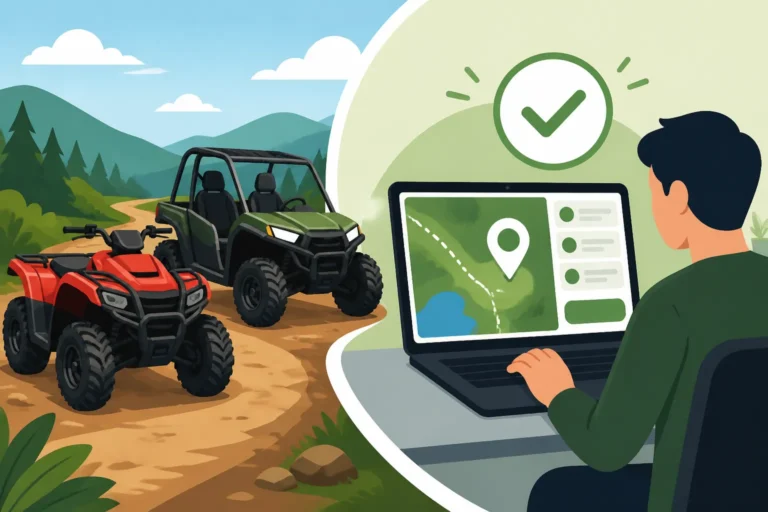
A quick map search can help you understand the distance between the cabin, park entrance, fuel stops, and food options. But route planning should not stop at the straight-line distance. A narrow rural road, a long gravel approach, or a route that is awkward with a trailer can make a short-looking trip feel much longer. Check the actual driving route and ask the property if there are road restrictions or arrival directions to know about.
A mapping app such as onX Offroad can be useful for organizing your trip notes and reviewing routes and nearby riding context. Use it as a planning aid, not as a substitute for the park’s own rules, official access information, or a direct confirmation that a route is open to your machine. Save the park’s address and contact details in advance, especially if you expect weak cell service.
For public land or trails beyond a private riding park, verify access, permits, and route rules with the relevant land manager before setting out. A line shown on a map does not by itself mean riders are allowed to use it. onX Offroad may help you orient yourself, but cross-check access information and carry a backup plan for navigation. [Alabama Trail Conditions Before You Tow] is also worth reviewing before a long drive.
Making the cabin and trail trip safer and more comfortable
Keep lodging rules separate from riding rules
A cabin reservation does not automatically grant permission to ride everywhere on the property or on nearby roads. The lodging provider’s rules, the OHV park’s trail rules, and public-road laws may all be different. Ask which trails are open to your machine, where you may unload, and whether the route from your cabin to the riding area is approved for OHV use.
This matters particularly when a cabin is near public land, timber roads, or a hunting area. A nearby route may look inviting on a map but could be private, seasonally closed, or restricted to authorized users. Confirm access with the responsible land manager or landowner. If you are considering forest riding, [Can You Ride an ATV in Alabama's National Forests?] explains why checking the designated route and current rules matters.
Carry the information you need while riding, including the park’s contact number, a trail map if available, and any required permits or proof of permission. Establish a meeting point in case your group gets separated. A cabin gives everyone a known place to return to, but it is still wise to agree on a plan before the group leaves the trailhead.
Prepare for Alabama weather and trail conditions
Rain can turn Alabama clay into a slippery, sticky surface and can affect trail access, vehicle cleanup, and the drive back to the cabin. Check conditions before leaving home and again before unloading. If trails are wet or closed, respect the park’s decision; riding through a closure can damage the route and create trouble for other visitors.
Pack clothes that can get dirty and a separate set of dry clothes for the cabin. A pair of shoes reserved for indoors helps keep mud out of sleeping areas, and a bag or bin for wet gear keeps the rest of your belongings cleaner. If you are riding during hot weather, bring plenty of drinking water and allow time to cool down between rides. A cabin is a comfortable place to recover, but it does not replace preparation on the trail.
Use onX Offroad or another mapping tool to keep your group oriented where appropriate, while checking current trail status with the park. Conditions can change after storms, and a route that was passable on a previous visit may not be suitable now. Read [Alabama Trail Etiquette Locals Expect] for practical reminders about sharing trails and minimizing damage.
Build a backup plan for the weekend
A good cabin trip should still work if the weather changes, a machine needs repair, or the park’s schedule does not line up with your plans. Identify a nearby place to eat, a supply stop, and an alternative activity before you leave. If your group is travelling with non-riders, ask whether the park or nearby area offers anything they would enjoy while riders are on the trails.
Keep your first day flexible. Arriving, checking in, unloading, and learning the layout can take longer than expected, especially when several people and machines are involved. Rather than planning a full day of riding immediately after a long haul, consider using the first evening to settle in, check the equipment, and confirm the next day’s trail plan.
For a multi-day visit, lay out a simple itinerary with riding windows, meal plans, and a departure time that leaves room for cleanup. [Alabama Weekend Riding Itineraries] can help you think through how to pace the trip. A map saved in advance, a charged phone, and contact details written down can also help if cell service is limited.
A practical checklist before you go
Confirm lodging and park details
Call or message the property before you finalize your plans. Confirm the cabin’s location, sleeping arrangements, amenities, parking, check-in instructions, and any restrictions on pets or outdoor cooking. Ask whether the cabin is at the riding park or merely nearby, and whether machines can be stored there overnight.
Confirm the park’s operating schedule, trail access, current conditions, machine restrictions, and any required waivers or permits. Ask where trailers should be parked and whether your group can unload at the cabin or must use a designated area. Keep the answers together in a trip note so the whole group has the same expectations.
If you are travelling with several households, decide who is responsible for reservations, food, vehicle parking, and trail maps. Share the address and arrival instructions with everyone. This avoids the familiar headache of one truck going to the cabin while another waits at the wrong entrance with a trailer.
Pack for both the cabin and the trail
Use separate packing lists for riding and lodging. Trail items may include helmets, protective gear, water, tools, first-aid supplies, and any permits or documents needed for the destination. Cabin items depend on what the property provides, so confirm linens, towels, kitchen equipment, and toiletries rather than packing by assumption.
Bring bags or containers for muddy clothing, wet boots, and dirty equipment. A simple doormat or old towel can help keep the cabin cleaner, but follow the property’s rules about washing machines, hoses, and outdoor cleaning. If the park has a wash station, check whether it is available and what its rules are before relying on it.
Finally, leave room in the plan for the realities of a riding weekend: weather, tired riders, minor mechanical issues, and the time needed to load out. A cabin can make the trip easier, but the best experience comes from matching the lodging to your group, confirming access, and avoiding assumptions about what is included.
Disclaimer
This article is for general informational purposes only and does not constitute professional advice. Laws, prices and regulations vary by location and change over time. Consult a qualified professional for guidance on your specific situation.