Reserving a Site Through an Online System
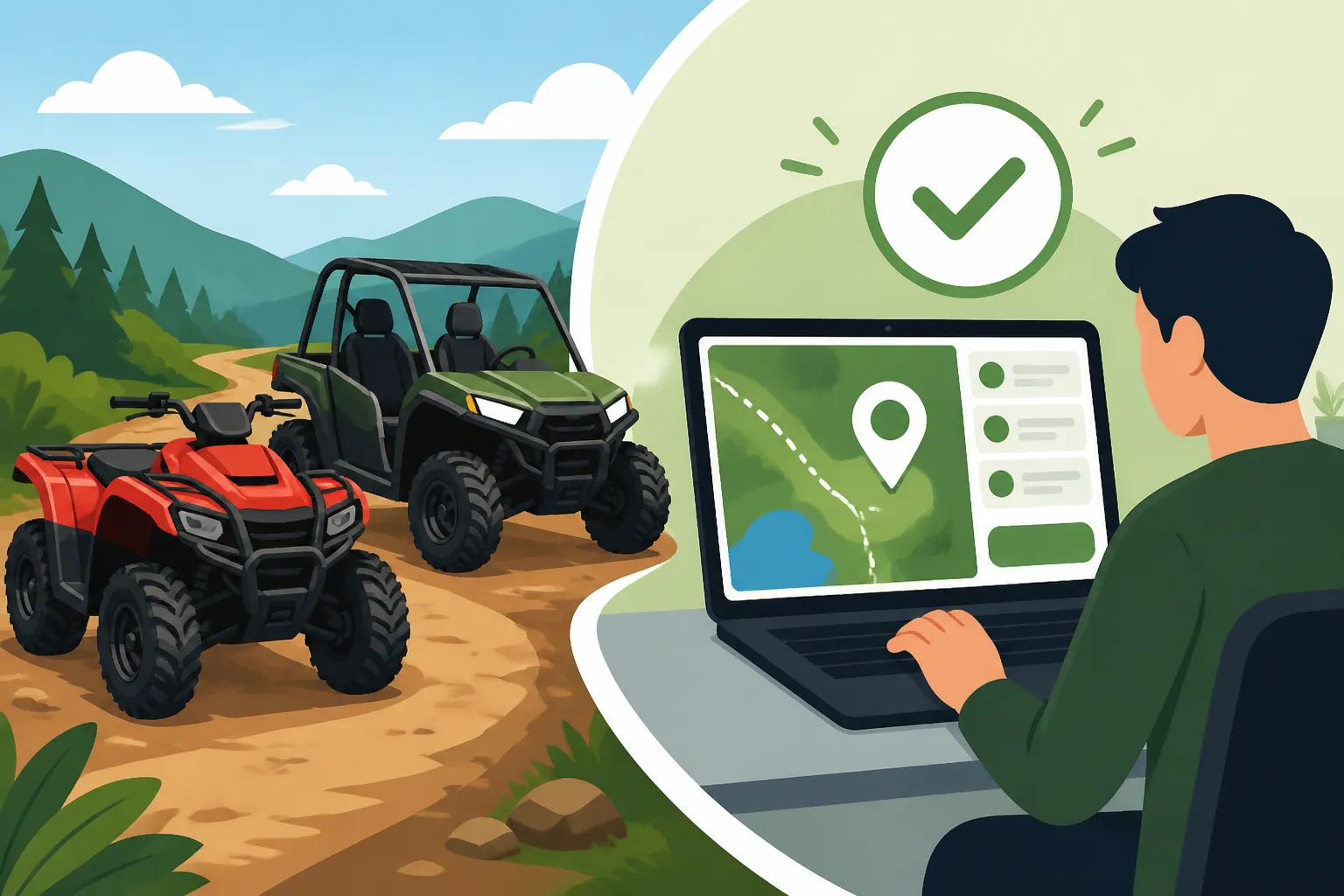
Booking a campsite for an Alabama ATV weekend can feel like a second trip to plan: the reservation calendar may be separate from the trail information, and the site you choose may not fit your trailer or riding group. This guide explains how to use an online reservation system, what to check before paying, and how to avoid arriving with the wrong site or missing paperwork.
Start with the park’s own reservation system
Find the official booking page
Begin with the riding area’s official website or the managing organization’s page, rather than a general campground listing. Third-party directories can be useful for discovering places to stay, but details may be incomplete or out of date. The park’s own system is the best place to confirm whether a site is actually available and what the operator requires to reserve it.
Alabama riding areas do not necessarily share one booking platform. A campground beside a county park may use a different system from a privately operated OHV park, and a park that takes reservations online may still handle certain questions or exceptions by phone. The broad overview in [Alabama Park Reservation Systems] can help you understand why you may need to navigate a park-specific system instead of expecting one statewide calendar.
If you are looking at places such as Stony Lonesome OHV Park in Bremen or Minooka Park in Jemison, treat each park as its own booking process. Check that you have landed on the page for the campground or site you actually want, not just the park’s general information page. Save the official page and the confirmation email so you can return to the right details later.
Know what you are booking
A “reservation” can mean different things. You might be booking a campsite, a cabin, an RV hookup, or admission for a riding day. Some parks may handle camping and riding access separately, so a campsite confirmation should not be assumed to include every permit, fee, or admission requirement for your group.
Read the description on the specific site listing. Look for what is included, whether the site has water or power, and whether the booking is for one site or one unit. If your plans depend on having electricity for an RV or a cabin for family members who do not ride, compare the options in [Alabama Parks With Full Hookup Sites] and [Alabama Parks With Cabins] before choosing a date.
A listing can also use terms that sound interchangeable but are not. “Primitive” may indicate a more basic camping setup, while “full hookup” usually describes an RV site with more services. Do not rely on a general label alone. Check the site’s own description and contact the park if the listing does not clearly say what is provided.
Choose dates and a site that fit your trip
Check the calendar before building the weekend around it
Online calendars make it tempting to select the first open dates and move on. Before booking, compare the available dates with the park’s riding schedule, seasonal operating information, and any closures or restrictions. A campsite may be available even when the riding area is not operating as you expect, so confirm both parts of the trip.
This matters especially if you are planning a short weekend around work, school, or a group ride. Some Alabama riding parks may have days when they are closed or operate on a seasonal schedule. Review [Alabama Parks Closed Midweek] and confirm the specific park’s current calendar before you arrange a long tow or invite riders who are traveling from out of town.
Rain can affect the ride even if the campground remains open. Before you commit to a plan that depends on particular trails, check the park’s notices and [Alabama Trail Closures After Rain]. If the reservation system lets you book far ahead, understand the park’s change or cancellation rules before you click through. Availability is not the same thing as a guarantee that every trail will be open on your selected weekend.
Match the site to your vehicle and group
Choosing the right site is about more than finding an empty square on a calendar. Think through what you are bringing: an RV, tent, toy hauler, truck and trailer, or a combination of vehicles. A small site that works for a tent may not suit a long trailer, and a site description may not explain the turning room or parking layout in enough detail for your setup.
Make a quick inventory before searching: number of people, number of vehicles, trailer length if relevant, whether you need hookups, and whether you need separate sleeping arrangements. If the online listing does not say how many vehicles can park at the site, ask the park rather than assuming the whole group can stage there. A separate trailer parking area may be available, but you should verify its location and rules.
The [Alabama Trailheads With Trailer Parking] topic can help you think about the hauling and staging side of a ride. Planning where your trailer goes is particularly important when you are bringing a side-by-side, support vehicle, and gear. A campsite can be comfortable yet inconvenient if your trailer cannot fit or if you have to move equipment repeatedly between the camping area and the trail access point.
| Booking detail | What to check | Why it matters |
|---|---|---|
| Site type | Tent, primitive, RV, hookup, or cabin | The label affects the facilities and the equipment you need |
| Site capacity | People, vehicles, and camping units allowed | Avoid arriving with more occupants or vehicles than the site permits |
| Parking and trailer space | Length, turning room, and permitted staging | A tow vehicle and trailer need more room than a passenger car |
| Riding access | Whether camping and riding admission are booked separately | A campsite confirmation may not cover every part of the trip |
| Dates and operation | Riding days, closures, and seasonal notices | An open campsite does not necessarily mean all trails will be available |
| Change policy | Cancellation, date changes, and weather terms | Know your options before plans shift |
Compare camping styles honestly
Primitive camping can be a good fit for riders who want a simple base and are prepared to bring the equipment they need. It can be less convenient if your group expects power, water, or a nearby bathhouse. Ask what facilities are on site and what facilities are shared elsewhere in the park. The overview of [Alabama Parks With Primitive Camping] can help you compare the kind of camping experience you are looking for.
Hookup sites and cabins can make a family weekend easier, but they do not automatically solve every logistics problem. A cabin may have limits on occupancy, pets, or parking. An RV site may have a utility setup that does not match your rig. Review the details for the exact unit, not only the general category shown in a search result.
It also helps to separate “nice to have” from “must have.” A group may be able to manage without a cabin, but not without enough space for two trailers. Someone traveling with young children may consider convenient facilities essential, while experienced tent campers may prioritize trail access. Making that distinction before searching keeps you from paying for features you will not use—or choosing a site that cannot support the trip.
Complete the online booking carefully
Enter the details consistently
Reservation forms often ask for the lead guest’s name, contact information, arrival and departure dates, site type, and the number of people or vehicles. Enter those details carefully, especially if someone else in your group is paying or arriving first. A typo in an email address can keep the confirmation from reaching you, while an incorrect vehicle count can create an avoidable question at check-in.
Use a phone number and email account you can access while traveling. If the system asks for a mailing address, enter it as requested rather than substituting the park’s address. Keep a note of the reservation holder’s name and booking reference, and share the relevant arrival information with the people in your group.
If the page appears to freeze during payment, pause before submitting the same reservation again. Check for a confirmation email or a booking record first. Duplicate bookings can happen when a browser gives no clear response. If you cannot tell whether the reservation completed, contact the park using the official contact details rather than repeatedly entering payment information.
Read the policies before paying
Do not treat the final checkout screen as a formality. Look for rules on cancellation, date changes, late arrival, pets, quiet hours, generators, fires, occupancy, and additional vehicles. The campground’s policies are part of the reservation, even if they appear in a separate page or a link near the checkout button.
Weather is a practical concern in Alabama, where rain can change trail conditions and affect travel on red clay. A wet weekend does not necessarily mean a campsite booking will be refunded or moved. Read [Alabama Park Refund Policies] before you pay, and note whether the policy distinguishes between a guest cancelling and the park closing or restricting access.
If a policy is unclear, get an answer before booking and keep a record of it. A short call or email can settle questions such as whether you can transfer the reservation to another person, whether an extra vehicle is allowed, or what happens if a site is inaccessible. For broader planning, [Calling Ahead for a Reservation] offers a useful reminder that a quick confirmation can prevent a frustrating arrival.
Save the confirmation and prepare for check-in
After completing the booking, save the confirmation in more than one place. Keep the email on your phone, take a screenshot of the booking details, and note the reservation number somewhere you can find without a strong cell signal. If you are traveling with a group, share the arrival instructions with whoever is driving or checking in.
Read the confirmation rather than assuming it only repeats your dates. It may include check-in instructions, a gate procedure, a site number, a contact method, or reminders about required documents. If the name on the reservation differs from the person arriving, ask the park whether that is acceptable before departure.
A reliable arrival plan should include the park address, the route to the campground entrance, and a backup way to contact the operator. Cell service can be inconsistent in some rural riding areas. Use a map or navigation tool before you leave, and do not wait until you reach a weak-signal stretch to discover that you cannot open the confirmation or find the entrance instructions.
Coordinate camping with the ride itself
Confirm riding access and trail conditions separately
A campsite reservation answers where you will stay; it may not answer whether you can ride, which areas are open, or what requirements apply to your group. Confirm the park’s riding access rules, hours, admission process, and any required waiver or permit. If your trip involves public land rather than a private riding park, verify the land manager’s rules separately because a campground reservation does not provide permission to ride on nearby public or private property.
Trail access can also depend on weather, maintenance, events, or seasonal restrictions. Check the park’s own notices close to departure and use [Alabama Trail Conditions Before You Tow] as a reminder to verify the ride before loading the machines. That last check can prevent the disappointment of arriving with a trailer full of equipment only to learn that the route you planned to ride is closed.
For route planning, onX Offroad can help you review mapped roads and trails and understand the general area around a ride. Treat mapping information as a planning aid, not as a substitute for posted rules, the park’s current trail status, or landowner permission. Before following a mapped route, confirm that it is open to your machine and that you are authorized to ride there.
Make sure everyone understands the plan
Group trips often go sideways because one person assumes the booking covers the whole party, while another assumes everyone has their own riding admission or paperwork. Share a simple plan that covers arrival time, campsite location, check-in requirements, riding access, and who is responsible for contacting the park if something changes.
If several households are attending, appoint one reservation contact and one backup. The reservation holder should know who is arriving in each vehicle and whether the site has room for the group’s equipment. Riders who arrive separately should know the park’s entrance procedure and what to do if the lead party has not yet checked in.
Planning a weekend around riding, meals, and camping also helps avoid rushed decisions after arrival. [Alabama Weekend Riding Itineraries] is useful for thinking through how to balance travel time, setup, and trail time. If you are using onX Offroad to plan possible routes, agree on a route before the group spreads out, and make sure everyone understands that the park’s rules take priority over a line shown on a map.
Avoid the most common reservation problems
Do not assume the first available option is the best one
A calendar may show one open site that appears to solve the problem, but availability alone does not establish whether it fits your trip. Check the site’s dimensions or equipment limits if provided, confirm the permitted number of vehicles, and ask about space for the trailer. If you have a large group, booking separate sites may be more realistic than trying to make one site accommodate everyone.
Likewise, do not assume a campsite includes access to every nearby attraction. A riding park, campground, public forest, and wildlife management area can each have different rules and operators. Confirm exactly what your payment covers and whether any additional registration, permit, admission, or waiver is required. For a public-land ride, review the relevant agency requirements directly instead of relying on the campground’s location as proof that riding is allowed.
If a booking system uses a map of the campground, treat the map as a selection aid, not a precise survey of site conditions. Look at the written description and ask the park about slope, surface, shade, and access if those details matter to your setup. A site that looks close to the trail entrance online may still require a walk, vehicle move, or separate staging arrangement.
Have a backup plan for technology and changing conditions
Online systems are convenient, but they can be difficult to use on a phone, especially while traveling. Make the reservation before you leave home when possible, save the confirmation offline, and write down the park’s contact information. If the booking page will not load or gives conflicting information, avoid making assumptions based on an old search result. Contact the park and ask how it handles reservations.
Keep a backup plan for weather or trail closures. That might mean identifying another open riding area, choosing a flexible travel date, or deciding in advance whether your group would still enjoy the trip if riding is limited. onX Offroad can be useful for reviewing nearby mapped options, but verify access, current conditions, and permission with the responsible park or land manager before changing destinations.
Finally, remember that a reservation is only one piece of preparation. Check the machine, trailer, tie-downs, riding gear, fuel plan, and any documents the park asks you to carry. A little extra checking at home is far easier than trying to solve a booking, access, or equipment problem at the entrance after a long drive.
Disclaimer
This article is for general informational purposes only and does not constitute professional advice. Laws, prices and regulations vary by location and change over time. Consult a qualified professional for guidance on your specific situation.