Alabama Trails for Kids
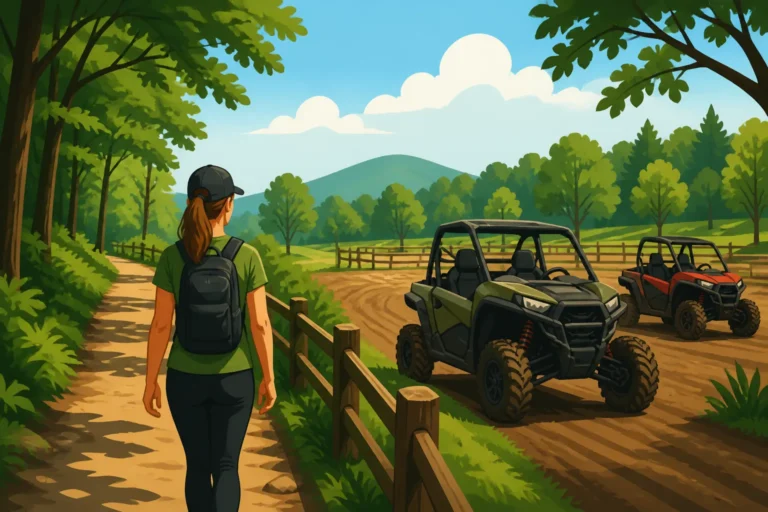
Taking children on an Alabama ATV or UTV ride can be a great family day out, but a trail that feels easy to an adult may be intimidating—or unsafe—for a young rider. This guide explains how to choose a suitable riding area, check access and rules, prepare children for the terrain, and make the day manageable for everyone.
How to choose an Alabama riding area for kids
Start with the child, not the trail map
A child’s age matters, but it is only one part of deciding where and how they should ride. Think about their height, strength, attention span, coordination, confidence, and experience with the particular machine. A child who is comfortable on a small quad in a familiar field may feel overwhelmed by a narrow wooded trail with ruts, roots, hills, and other riders.
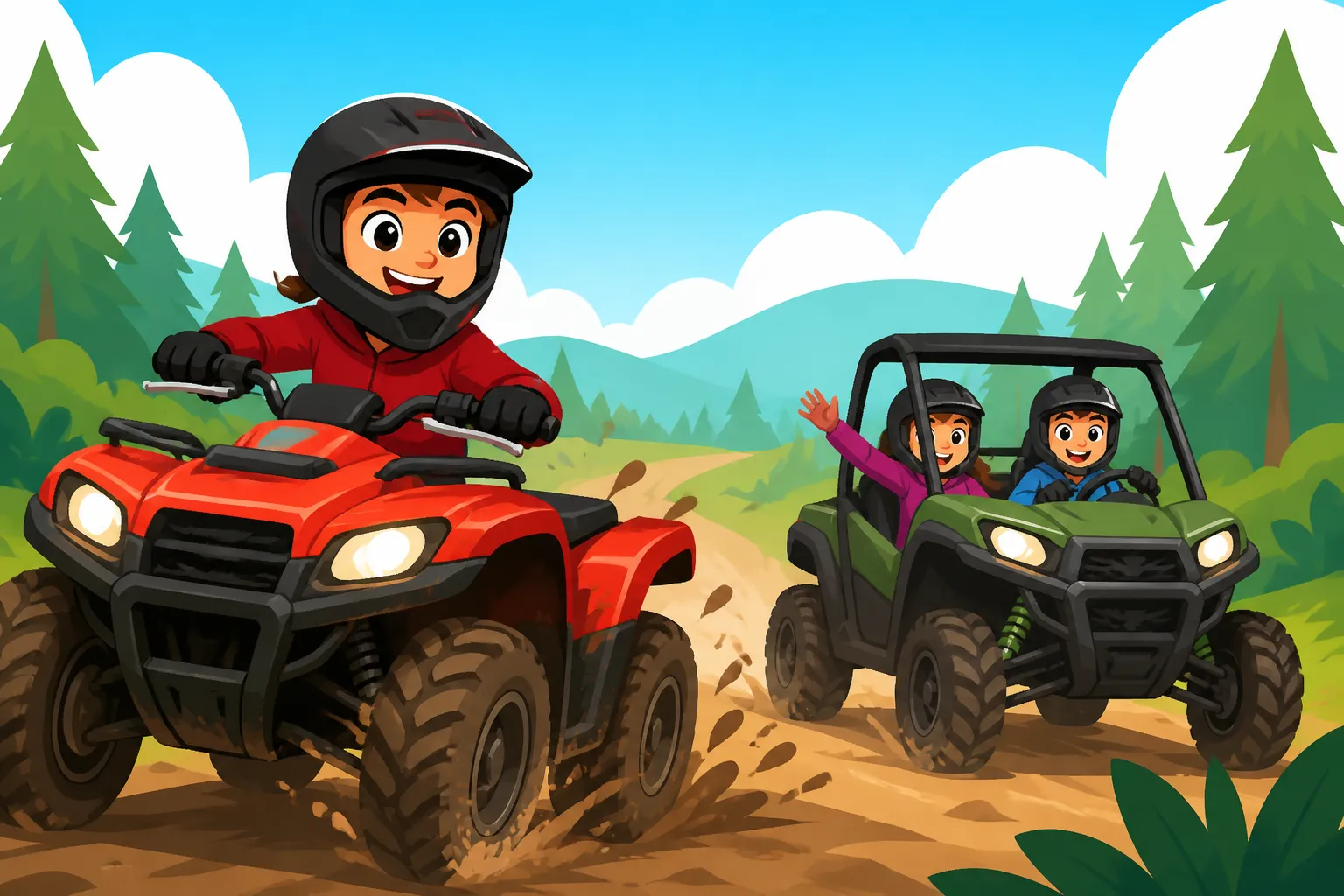
Match the machine to the rider, too. A youth-sized quad is usually easier for a child to control than an adult machine with more power, a heavier frame, and controls that are difficult to reach. For a child riding as a passenger in a UTV, check the manufacturer’s passenger requirements and make sure the child can sit securely, use the seat belt properly, and keep arms and legs inside the vehicle. A helmet and other protective equipment should fit the child—not just be borrowed from an adult.
Be honest about what “easy” means for your family. A short, smooth loop with room to stop can be a better first outing than a long route with steep climbs. If a child is already nervous, the goal is not to persuade them through a difficult section. It is to give them a ride they can enjoy and learn from. For practical preparation and safety ideas, see [Alabama Rules for Young Riders] and [A Voluntary Safety Course Worth Taking in Alabama].
Look for features that make a first ride manageable
When comparing riding areas, look beyond the total trail mileage. A park with many miles of trails is not automatically a good fit for a beginner. Ask whether there are easier routes, short loops, places to take a break, and clear ways to return to the staging area if a child becomes tired or uncomfortable.
The following comparison is a starting point, not a guarantee that any specific route will be open, easy, or suitable for every child. Trail conditions and park rules can change, so contact the riding area before traveling.
| What to check | Why families should care | Question to ask before leaving |
|---|---|---|
| Beginner or less difficult routes | Helps you avoid committing to terrain beyond a child’s comfort level | Which routes are most suitable for a first-time young rider? |
| Route length and return options | Tired children may struggle to finish a long loop | Can we turn back or return to the staging area early? |
| Machine size limits | A park may restrict vehicle width or type | Is our quad or side-by-side allowed on the routes we plan to use? |
| Hours and operating days | A long drive is frustrating if the park is closed | What days and hours is the riding area open? |
| Youth rules and supervision | Parks may set their own age, passenger, or supervision requirements | What rules apply to children riding or riding as passengers? |
| Facilities and parking | Restrooms, shade, and a place to park a trailer can make the day easier | Is there a suitable staging area, and what facilities are available? |
| Weather and trail conditions | Alabama clay can become slippery and rutted after rain | Are any trails closed or especially difficult today? |
For places to begin your search, look into [Stony Lonesome OHV Park in Alabama] and [Minooka Park Riding in Alabama]. Their names are useful starting points, but do not assume that a particular route is open or appropriate for a child without checking directly. Ask about current conditions, permitted machine types, and any family or youth policies before you load the trailer.
Plan the ride around Alabama terrain and conditions
Treat red clay, hills, and water crossings with respect
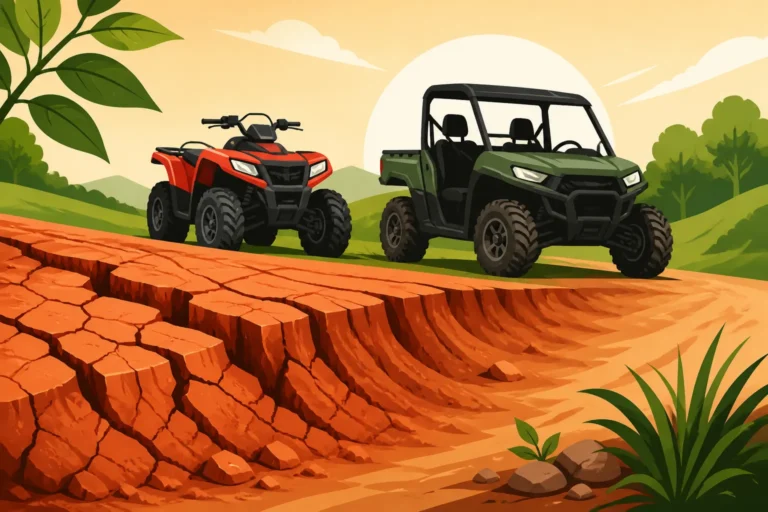
Alabama trails can be very different from one another. Depending on the riding area and recent weather, you may encounter red clay, loose soil, rocks, roots, steep grades, standing water, or creek crossings. These features can be challenging even for experienced riders. For a young rider, a short muddy section can become stressful if they do not know how to respond when a tire slips or the machine starts to slide.
Rain deserves special attention. Wet clay can lose traction quickly, while ruts and puddles may hide rocks or deeper holes. A route that seemed reasonable during a dry visit might feel much harder after a storm. Before the trip, ask park staff whether recent rain has affected beginner routes. If the answer is unclear, plan to stay near the staging area and skip any section that looks beyond the child’s ability.
Avoid treating water crossings as an exciting test for a new rider. Water can hide changing depth, soft banks, rocks, and debris. A child should not be sent into a crossing simply because an adult has already made it through. If you are unsure what a route involves, ask the riding area or choose another path. For more preparation ideas, [Alabama Trail Conditions Before You Tow] and [Alabama Trail Closures After a Storm] can help you think through the questions to ask.
Use maps as planning tools, not permission to ride anywhere
A map can help you understand where trails appear to go, how they connect, and where a group might stop. It cannot guarantee that a route is currently open, suitable for children, or legally available to your machine. OnX Offroad can be useful for reviewing mapped routes and planning a ride, but check the riding area’s own rules and current information as well. A line shown on a map should not be treated as permission to cross private property or use a closed route.
Before leaving home, choose a simple plan: where you will unload, which approved route you hope to take, where you can turn back, and what you will do if the group gets separated. Save or carry useful map information in a form you can access if cell service is weak. OnX Offroad may help with route planning, but a paper map or other backup is sensible when you are unfamiliar with the area. Do not rely on a phone screen as your only navigation plan.
If the outing includes public land, confirm that motorized riding is allowed on the specific route and on the day you plan to visit. Access rules can differ between parks, forests, and wildlife management areas. Some public areas may require a permit or limit riding to designated roads or routes. Start with [Alabama WMA Riding Rules for Quads] and [Which Forest Roads in Alabama Are Open to ATVs], then verify any area-specific conditions with the managing office before setting out.
Prepare children before the wheels start moving
Agree on simple riding rules
Children do better when the rules are explained before they are excited, tired, or already on the trail. Keep the briefing short and concrete. Explain where they must stay, how far behind the lead rider to travel, what to do if they cannot see the group, and what signal means “stop.” Have each child repeat the plan in their own words rather than asking only whether they understand.
Establish a conservative pace and make clear that adults set it. A child should not be encouraged to race, keep up with a faster rider, or attempt a hill because others have done it. Keep enough space between machines to avoid dust, sudden braking, and collisions. On a narrow route, stop in a safe place before discussing a problem; do not crowd a child while they are trying to control the machine.
Set a firm rule that no one rides onto an unfamiliar trail, road, or property without an adult’s approval. This matters around forest roads, private timberland, hunting areas, and trail junctions. A gate or worn track does not necessarily mean motorized riding is permitted. Read [Alabama Public Land Rules Compared to Private] and [Alabama Landowner Permission Letters] if your plans involve land beyond a managed riding park.
Pack for a shorter, more comfortable day
A child may be ready to ride long before they are ready to stay comfortable for several hours. Bring properly fitting helmets and protective gear, water, snacks, sunscreen, weather-appropriate layers, and a basic first-aid kit. Pack extra gloves and a dry layer if the weather or terrain could leave clothing wet or muddy. For a passenger, check that the seat belt fits correctly and that the child can remain seated safely throughout the ride.
Plan frequent breaks, especially in warm, humid weather. Watch for signs that a child is overheated, thirsty, frustrated, or losing focus. A child who stops paying attention may need a longer break or an end to the ride, not a reminder to try harder. Avoid building the day around a fixed mileage target. A shorter ride that ends on a positive note is usually better than pushing until everyone is exhausted.
Tell another adult where you are going, especially if the group is unfamiliar with the area. Charge phones, keep emergency contact details accessible, and identify the park office or other point of contact before riding. OnX Offroad can assist with planning and orientation, but it does not replace telling someone your route or following the park’s directions. For a broader checklist, [Packing for a Humid Day Out] and [First Aid on a Long Stony Lonesome Loop] are useful related reads.
Make the first outing low-pressure and flexible
Start small and adjust as you go
For a first visit, arrive with enough time to ask questions and look over the staging area without rushing. Check in with staff, confirm the route options, and ask which areas are appropriate for a child’s machine and experience level. If the child is riding their own quad, let them get comfortable in an approved, open area before entering a busier or more technical route.
Use a gradual progression. Begin with a short, familiar-feeling section and pause to see how the child is doing. If they are relaxed, following instructions, and controlling the machine well, you can consider another easy section. If they are tense, repeatedly stopping, or struggling with a feature, turn back. Changing the plan is not a failure; it is good judgment.
Set a turnaround point before you start. That might be a time, a trail junction, or the moment a child says they are ready to stop. Do not pressure them to continue just because the group has already traveled partway along a route. A calm return to the staging area is safer than trying to finish a loop at any cost.
Let the child help shape the next ride
After the outing, ask what felt fun and what felt uncomfortable. A child may remember dust, noise, a steep hill, or a long stretch without a break more vividly than the trail itself. Those details can help you choose the next visit. If they enjoyed a short loop but disliked following a large group, consider a quieter time or a less crowded area, if the park allows it.
Keep a simple record of what worked: the machine used, how long the child rode comfortably, weather and trail conditions, and any route they would like to try again. That makes it easier to build experience gradually rather than guessing from memory. OnX Offroad may help you revisit planned routes, but confirm that the area’s current access and route rules still allow the ride.
Most importantly, let the child’s comfort guide the pace of progression. Some young riders want to try a little more each time; others prefer repeating the same easy route until it feels familiar. Both are normal. A good family ride is not measured by distance or difficulty—it is one where the child feels supported, follows the rules, and wants to come back.
Disclaimer
This article is for general informational purposes only and does not constitute professional advice. Laws, prices and regulations vary by location and change over time. Consult a qualified professional for guidance on your specific situation.