Alabama’s 49 CFR 571.500 Standard
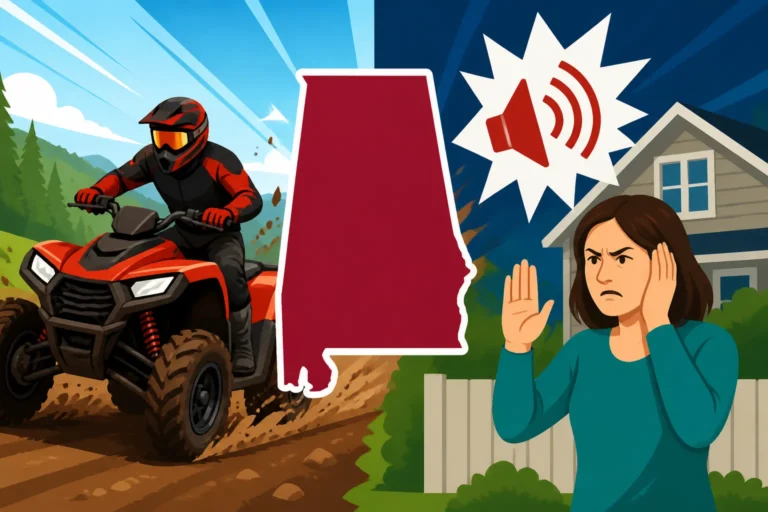
It’s a common fantasy for many of us who love our ATVs and UTVs: imagining cruising down a quiet county road, heading straight from our property to a nearby trail without having to load up the trailer. But in Alabama, that dream often crashes head-on with a tangled web of state statutes and federal regulations that make true "street legal" conversion incredibly difficult, if not impossible, for most off-road machines. This guide will cut through the confusion and explain why Alabama’s legal framework, especially the critical federal standard 49 CFR 571.500, acts as a significant barrier to riding your quad or side-by-side on public roads.
The Dream vs. The Reality: Why Alabama Roads Are Tricky for ATVs
We’ve all been there, standing next to our shiny quad or powerful side-by-side, looking at the asphalt road just beyond our driveway, and wishing we could just hop on and go. The convenience, the freedom from hauling, the sheer joy of it – it’s a powerful pull. But that pull often leads to a lot of questions and, unfortunately, a lot of misinformation swirling around the internet and among riding buddies.
The Core Frustration: Wanting to Ride Freely
The desire to ride your off-road machine on the road isn't just about convenience; it's about extending the adventure. Maybe you want to run to the corner store, visit a neighbor, or access a different part of your property that's split by a public road. Perhaps you've heard stories from other states where "street legal" kits are common, and you wonder why Alabama seems so different. This frustration is completely valid because, at first glance, the rules can seem overly strict or even arbitrary. You've invested good money in your machine, and you just want to enjoy it, sometimes just a little bit further than your private land allows.
Many riders invest in accessories – things like turn signals, mirrors, and even windshields – thinking they're halfway there. While these additions are great for safety and usability, they often don't address the fundamental legal barriers in Alabama. It's disheartening to bolt on all these helpful components, maybe even from a reputable aftermarket company like SuperATV, only to find out they don't change the underlying legal classification of your vehicle for road use.
Alabama's Stance on Off-Road Vehicles on Public Roads
Alabama's approach to off-road vehicles (ORVs) on public roads is quite clear, even if it feels restrictive to riders. The state’s primary concern is public safety, and this is reflected in its adherence to federal motor vehicle safety standards. Essentially, unless a vehicle was manufactured to meet these stringent federal standards, it’s generally not considered street-legal for operation on public roadways. This isn't just about whether it looks street legal; it's about fundamental design, crashworthiness, emissions, and a host of other engineering specifications.
This strict interpretation means that your typical ATV or UTV, designed for rugged off-road terrain, simply doesn't fit the bill. They lack many of the safety features and design elements mandated for on-road vehicles. While some states have created specific carve-outs or registration categories for converted ORVs, Alabama has largely chosen a more conservative path, prioritizing the federal definition of a motor vehicle for public road use. This is why when you ask [Are ATVs Street Legal in Alabama?], the answer is almost always a resounding "no" for traditional off-road machines.
The Difference Between County Roads and Highways
It’s tempting to think that a less-trafficked county road or a dirt road might have different rules than a busy highway. And while there can be subtle distinctions, when it comes to the fundamental legality of operating an ATV or UTV, the same general principle applies across all public roads in Alabama. A public road is a public road, whether it's a four-lane interstate or a gravel lane maintained by the county.
The key distinction isn't the road's surface or traffic volume, but its classification as a "public highway" or "public road" under Alabama law. This means that if a machine doesn't meet the legal requirements to be on any public road, it doesn't matter if it's Highway 280 or a secluded dirt path in rural Lowndes County. Both are generally off-limits for unregistered, non-compliant off-road vehicles. Understanding this fundamental concept is crucial for avoiding costly citations and potential accidents. For a more detailed look, you can check out [Alabama ATV Road Rules Explained].
Unpacking Federal Motor Vehicle Safety Standard 49 CFR 571.500
This is where the rubber meets the road, or rather, where the lack of compliant rubber keeps your ATV off the road. The federal standard 49 CFR 571.500 is the bedrock of why most off-road vehicles cannot simply be converted to be street legal in Alabama. It’s not a state law created just for ATVs; it's a federal mandate for all vehicles that wish to be registered for general public road use.
What the Standard Actually Requires for Road Use
Federal Motor Vehicle Safety Standard (FMVSS) 571.500, specifically part 571.500 of Title 49, Code of Federal Regulations, lays out the requirements for a vehicle to be classified as a "low-speed vehicle" (LSV) and thus be eligible for operation on public roads where allowed. This standard is incredibly detailed and covers far more than just headlights and turn signals. It mandates things like specific types of tires (not non-highway tires), brake performance, occupant protection, crash-testing, lighting configurations, seat belts, and even the vehicle's maximum speed.
The vehicle must be certified by the manufacturer to comply with these standards at the time of its initial sale. This isn't something that can typically be retrofitted by an owner or even a dealership after the fact. The vehicle needs a Vehicle Identification Number (VIN) that indicates it was built to these standards and safety labels confirming its compliance. When you see a vehicle with a proper license plate, it means the manufacturer has certified it meets all applicable federal safety standards for that class of vehicle. This is the [Alabama's Federal Standard Barrier to Road Use] that off-road vehicles struggle to overcome.
How a Standard ATV/UTV Fails the Test
Think about your typical ATV or UTV. They are designed for mud, rocks, hills, and rough terrain. Their tires are aggressive, their suspension is long-travel, and their steering is often very responsive – all characteristics that are fantastic off-road but potentially dangerous on high-speed asphalt roads shared with heavier traffic.
Here are some key areas where a standard ATV or UTV typically falls short of FMVSS 571.500:
- Tires: Off-road tires are not designed for sustained highway speeds or optimal traction on asphalt. They often lack the proper speed rating and tread pattern.
- Brakes: While off-road brakes are strong, they may not meet the specific stopping distance requirements for on-road vehicles.
- Occupant Protection: ATVs and UTVs lack the crumple zones, airbags (for many), and robust safety cages found in cars. While UTVs have roll-over protection structures (ROPS), these are not equivalent to automotive crash-protection systems.
- Lighting: While many off-road machines have headlights and taillights, they often don't meet the exact photometric and placement requirements for turn signals, brake lights, and marker lights on a street-legal vehicle.
- Speed: ATVs can often exceed the 25 mph maximum speed limit set for LSVs by the federal standard. UTVs can go much faster.
- Emissions: While not directly part of 571.500, federal emissions standards for on-road vehicles are another hurdle.
Without the manufacturer's certification that the vehicle meets all applicable FMVSS at the time of manufacture, it simply cannot be titled and registered as an on-road vehicle in Alabama, regardless of how many aftermarket parts you bolt on. This is why [Alabama Machines That Cannot Be Plated] include virtually all standard ATVs and UTVs.
The Role of Manufacturers and Certifications
When you buy a new car or truck, it comes with a Vehicle Identification Number (VIN) and a certification label (often on the driver's side door jamb) stating that it complies with all applicable FMVSS. This certification is a complex, costly process that manufacturers undertake during the design and production phase. They crash-test vehicles, verify component strength, and ensure every detail meets federal requirements.
Off-road vehicle manufacturers, like the makers of your favorite Polaris RZR or Can-Am Defender, design their machines to be off-road vehicles, meeting standards relevant to that classification, not necessarily on-road FMVSS. If they do produce a vehicle intended for road use, it will be certified as such from the factory and will typically look much different, like a dedicated low-speed vehicle or even a specific utility vehicle built to different standards. This is the fundamental difference: the certification comes from the manufacturer for its intended use, not from an aftermarket modification.
Understanding "Low-Speed Vehicles" (LSVs) in Alabama
So, if traditional ATVs and UTVs can't make the cut, what kind of vehicle can be driven on some public roads in Alabama without being a full-fledged car or truck? That's where the "Low-Speed Vehicle" (LSV) comes into play. It’s a very specific category, often confused with golf carts or converted side-by-sides, but it has its own strict definition.
Alabama's Definition of an LSV
In Alabama, a low-speed vehicle is defined by state law largely in congruence with federal standards, including the aforementioned 49 CFR 571.500. An LSV is typically a four-wheeled vehicle whose top speed is greater than 20 miles per hour but not greater than 25 miles per hour. It must also meet specific safety equipment requirements to be operated on public roads.
This definition is critical because it draws a clear line. A traditional ATV or UTV that can exceed 25 mph (which most modern ones can, easily) immediately disqualifies itself as an LSV under this particular standard. Furthermore, an LSV must be manufactured to meet the federal safety standards, as discussed, and carry a VIN that reflects this compliance. This is a topic explored in more detail in [Alabama Low-Speed Vehicle Rules].
Key Equipment Requirements for LSVs
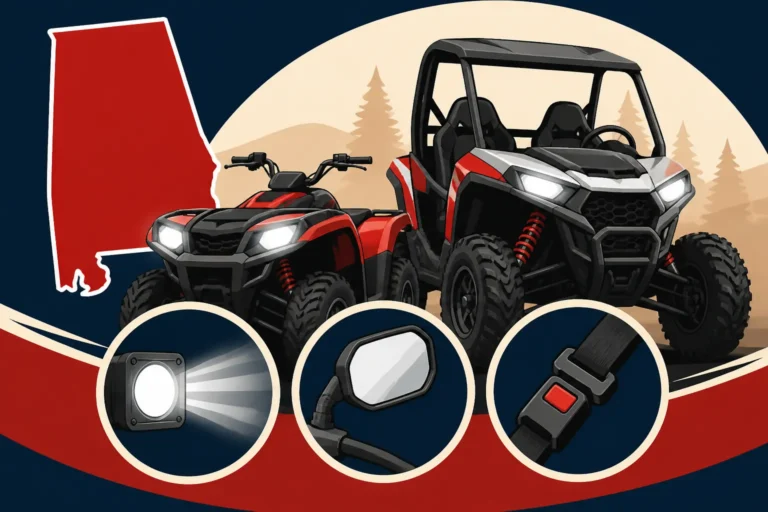
To be considered a true LSV and qualify for potential street use (where allowed by local ordinance, on roads with speed limits of 35 mph or less), a vehicle must be equipped with several key safety features straight from the factory. These aren't just suggestions; they are mandates under the federal standard:
- Headlamps: Capable of illuminating the road effectively.
- Stop Lamps: Functional brake lights.
- Turn Signal Lamps: Front and rear, clearly visible.
- Taillamps: Rear lights for visibility.
- Reflex Reflectors: Strategically placed to enhance visibility.
- Parking Brake: To secure the vehicle when stationary.
- Rearview Mirrors: Typically one on the driver's side and either a passenger side mirror or an interior mirror.
- Windshield: Made of safety glass.
- Seat Belts: For all designated seating positions.
- Vehicle Identification Number (VIN): Certified by the manufacturer to meet FMVSS.
This list highlights how extensive the requirements are and how few standard off-road vehicles could ever hope to meet them all through aftermarket modification alone. This also explains [What a Low-Speed Vehicle Standard Requires].
Why an LSV is Different from a Converted ATV/UTV
The fundamental difference lies in when and by whom the safety standards are met and certified. An LSV is a vehicle that was built from the ground up by a manufacturer to comply with 49 CFR 571.500 and other relevant FMVSS. It rolls off the assembly line as a street-legal, low-speed vehicle.
A converted ATV or UTV, on the other hand, starts life as an off-road vehicle. No matter how many street-legal accessories are added later – turn signals, mirrors, a horn, even a windshield from a company like SuperATV – it still fundamentally remains an off-road vehicle that was never crash-tested, certified, or designed to meet the rigorous federal safety standards for on-road operation. The VIN for an ATV or UTV identifies it as an off-road vehicle, not an LSV or other on-road vehicle. This is the core reason why [Why a Street Legal Kit Will Not Make It Legal]. You can buy all the best aftermarket safety components, but if the original manufacturer didn't certify the base vehicle as road-worthy under federal law, it won't pass muster for a street-legal title and registration in Alabama. This distinction is critical for riders to understand to avoid legal trouble.
The Pitfalls of Aftermarket "Street Legal" Kits
The allure of an "all-in-one" kit promising to make your ATV or UTV street legal is strong. You see advertisements, maybe even online retailers showing slick packages with everything from turn signals to license plate brackets. For some riders, this seems like the perfect solution to their road-riding dreams. However, in Alabama, these kits are typically a trap that can lead to fines, impoundment, and even legal liability.
What These Kits Typically Include
Aftermarket "street legal" kits usually contain a collection of components that mimic the visible features of a road-legal vehicle. These commonly include:
- Turn Signal Kits: Often with LED lights and a control switch.
- Horn: A simple button-activated horn.
- Side and Rearview Mirrors: To comply with visibility requirements.
- License Plate Mount and Light: To properly display a plate, assuming one could be obtained.
- Windshield Wiper Kits: For UTVs, to clear the windshield.
- DOT-Approved Tires: Sometimes included, but even these aren't enough on their own.
These components are certainly useful for safety and visibility, even when riding purely off-road. Having turn signals on a busy trail or a horn to alert other riders is a smart move. But the presence of these parts does not magically change the classification of your vehicle in the eyes of Alabama law or federal regulations.
The Legal Gap These Kits Can't Bridge
The crucial problem with these aftermarket kits, when it comes to true street legality in Alabama, is that they cannot provide the manufacturer's certification required by federal law. As we've discussed, FMVSS compliance is about the vehicle's fundamental design, engineering, and crashworthiness, certified by the manufacturer at the point of origin. An aftermarket kit simply adds accessories; it doesn't re-engineer the vehicle, nor does it bestow federal certification.
Think of it this way: putting a "police" sticker on your personal car doesn't make it an official patrol vehicle. Similarly, adding turn signals to your ATV doesn't make it an LSV or a street-legal automobile. The legal gap is the missing factory certification that the vehicle meets all applicable safety standards, not just a few visible ones. This distinction is paramount in Alabama and is why the state does not generally recognize these "street legal" conversions for regular public road use. This directly relates to [Alabama's Federal Standard Barrier to Road Use].
Real-World Consequences for Alabama Riders
Riders who ignore these legal distinctions and attempt to drive their "converted" ATVs or UTVs on Alabama public roads often face severe consequences.
- Traffic Citations: Law enforcement officers are well aware of the state's regulations regarding off-road vehicles. You could receive a ticket for operating an unregistered vehicle, an uninsured vehicle, or a vehicle not suitable for highway use. These fines can be substantial.
- Vehicle Impoundment: In some cases, officers may impound your vehicle, leading to towing fees, storage fees, and the headache of recovering it.
- Insurance Issues: If you get into an accident on a public road with an illegally operated ATV or UTV, your insurance policy might not cover damages, leaving you personally liable for repairs, medical bills, and other costs. Standard off-road insurance policies are typically not designed for on-road incidents. [Does Alabama Require Insurance on an ATV?] often reveals that it's typically for off-road use unless specifically tailored otherwise, which is hard to do for an illegal road conversion.
- Safety Risks: Beyond the legal and financial repercussions, operating an off-road vehicle not designed for roads poses significant safety risks to yourself and others. The handling characteristics, braking, and lack of occupant protection are simply not adequate for sharing the road with cars and trucks at higher speeds. It's a risk not worth taking.
Exceptions and Local Ordinances: A Glimmer of Hope?
While the general rule in Alabama is clear – ATVs and UTVs are not street legal – there are very specific, limited exceptions and situations where they might encounter public roads. These exceptions are often misunderstood, leading to further confusion.
Farm Use and Road Riding in Alabama
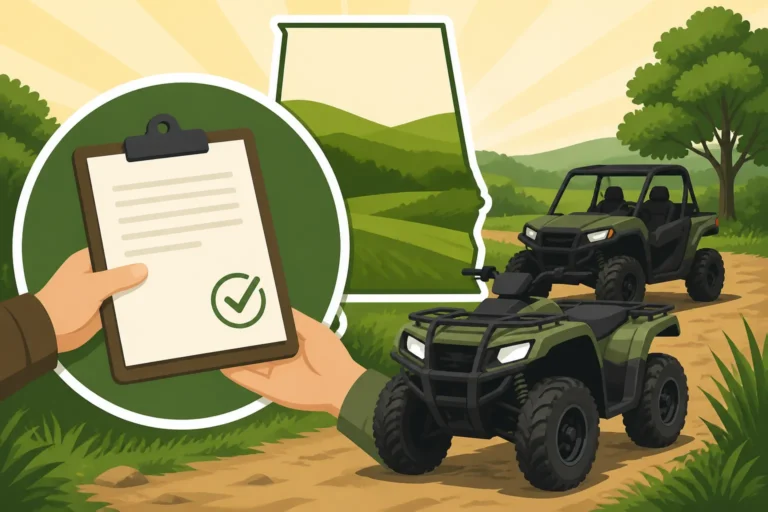
One of the most significant exceptions in Alabama is for farm use. Alabama law provides for the operation of certain agricultural machinery on public roads for agricultural purposes. This can sometimes extend to ATVs and UTVs when they are being used directly for farming, ranching, or timber operations. For example, driving a UTV from one field to another across a low-traffic county road, or using it to check fences on adjacent properties, might fall under this exemption.
However, this is not a blanket "farm tag" that allows you to joyride. The use must be directly related to the bona fide agricultural operation. If you're just heading to the store for groceries, even if you own a farm, that generally won't qualify as "farm use" in the eyes of law enforcement. This is a very specific exemption with strict interpretations. You can find more clarity on this in [Alabama Farm Use and Road Riding]. It's always best to have clear documentation of your agricultural activities if you intend to use this exemption.
Crossing a Road on an ATV in Alabama
Another common scenario is needing to cross a public road to get from one section of private property to another. Alabama law generally allows an off-road vehicle to cross a public road or highway, provided certain conditions are met. Typically, this means:
- The crossing must be at approximately a 90-degree angle to the roadway.
- The crossing must be made safely, yielding to all oncoming traffic.
- The shortest distance across the roadway should be taken.
- The operation must be from one parcel of private land to another.
This is a very brief crossing, not driving along the road. It's about traversing a barrier, not using the road as a travel lane. You cannot drive a mile down the road to get to another field, even if it's your land. This narrow exception is specifically detailed in [Crossing a Road on an ATV in Alabama] and should be understood thoroughly before attempting.
When Local Towns Allow Limited Street Use (Golf Carts vs. ATVs)
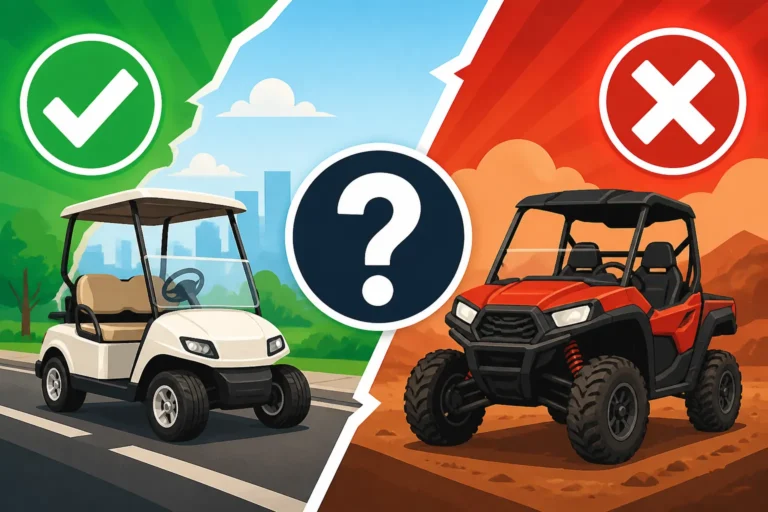
Here's where a lot of confusion arises, often conflating golf carts with ATVs or UTVs. Some cities and towns in Alabama do have ordinances that permit the operation of golf carts or even certain types of low-speed vehicles (LSVs) on specific public streets within their municipal limits, often with speed limits of 25 or 35 mph or less. These ordinances are usually designed to facilitate local travel in communities or resort areas.
However, it is absolutely crucial to understand that these local ordinances almost never extend to regular ATVs or UTVs. A golf cart is a specific type of vehicle, often meeting different (and typically less stringent) safety and speed requirements than an ATV. If a town allows golf carts, it does not automatically mean they allow your side-by-side or quad. These are usually limited to factory-made LSVs or golf carts.
Always, always check the specific local ordinances for each town you plan to ride in. Do not assume. A town's rules might differ significantly from its neighbor's. Many towns that have golf cart ordinances have explicitly excluded ATVs and UTVs. This area of law is covered in [Alabama Local Ordinances on ATV Riding]. The key takeaway is: do not assume your UTV is covered by a "golf cart ordinance." They are distinct categories of vehicles in Alabama law.
| Feature | Standard ATV/UTV | Low-Speed Vehicle (LSV) | "Street-Legal Converted" ATV/UTV |
|---|---|---|---|
| Federal FMVSS 571.500 Compliant | No | Yes (Manufacturer Certified) | No (Aftermarket kits don't certify) |
| Designed Max Speed | Typically 40+ mph | 21-25 mph (by design) | Typically 40+ mph |
| Manufacturer Certification | Off-road use only | Road use (LSV class) | Off-road use only |
| Primary Intended Use | Off-road recreation/work | Local street travel | Off-road recreation/work |
| Tires | Non-highway, aggressive tread | Highway-approved, lower speed rating | Can be non-highway or DOT-approved (doesn't change legal status) |
| Occupant Protection | ROPS (UTV), rider only (ATV) | Seat belts, basic safety structure | ROPS (UTV), rider only (ATV) |
| Alabama Street Legal | Generally No | Yes (on roads < 35 mph, where allowed by local ordinance) | Generally No |
| Plate/Registration Eligibility | Voluntary Off-Road Registration | Yes (LSV registration) | No |
Navigating the Rules: What Alabama Riders Need to Know
Given the complexities, what's a responsible Alabama ATV or UTV owner to do? It's about being informed, understanding your machine's legal limitations, and knowing how to enjoy your off-road vehicle safely and legally within the bounds of the law.
Essential Checks Before Riding Near Public Roads
Before you even think about putting a tire on pavement that isn't your own private driveway, you need to conduct a thorough check of the rules that apply to your situation:
- Know Your Machine's Classification: Is it a standard ATV, a UTV, or an actual factory-built Low-Speed Vehicle (LSV)? Most likely, it's the former two, which means it is not street legal in Alabama.
- Verify Local Ordinances: If you live in or plan to visit a specific town, search for their local ordinances regarding "golf carts," "low-speed vehicles," or "off-road vehicles." Do not just ask a neighbor; get official documentation or contact the city clerk's office. Remember that [Alabama Golf Cart Rules Compared to ATVs] usually show significant differences.
- Understand Exceptions: If you're using it for farm work, ensure your use falls squarely within the definition of "bona fide agricultural purposes." If you're crossing a road, ensure it's a direct, perpendicular crossing to another private property.
- Registration Status: While voluntary, [Alabama's Voluntary ATV Registration Through ALEA] is for off-road use, not street legality. Having an ALEA registration decal doesn't make your machine street legal.
- Insurance Coverage: Confirm with your insurance provider what your policy covers and, more importantly, does not cover when it comes to riding on or even crossing public roads.
The Importance of Knowing Local Laws
Alabama is a state that grants significant authority to local jurisdictions regarding vehicle operation within their boundaries. This means that while state law sets the overarching framework, a city or county can, in some limited circumstances, enact ordinances that allow for specific types of vehicles (like LSVs or golf carts) on certain local roads.
The critical phrase here is "specific types of vehicles." As previously mentioned, these ordinances rarely, if ever, apply to traditional ATVs or UTVs. Ignorance of the law is not a defense. Therefore, if you believe there's a possibility of legal street use, it's your responsibility to confirm it with the local authorities. A simple phone call to the city clerk or sheriff's department can save you a lot of trouble. This is why [Alabama Local Ordinances on ATV Riding] is such an important topic to research thoroughly. Don't rely on hearsay; get it from the official source.
Protecting Yourself: Insurance and Awareness
Even if you meticulously follow every rule and only ride where permitted, accidents can happen. This is why having proper insurance for your off-road machine is so important, regardless of whether it ever touches a public road. Ensure your policy covers theft, damage, and liability for your intended use, which for most will be strictly off-road.
Beyond insurance, your best protection is awareness.
- Be a Responsible Rider: Always wear appropriate safety gear, ride sober, and know your machine's capabilities.
- Respect Private Property: Always have permission before riding on someone else's land.
- Understand Your Machine's Limits: Your ATV or UTV is an incredible machine for off-road adventure, but it's not a car. It lacks the safety features and design for road use.
- Avoid the Temptation: The temptation to ride on public roads can be strong, but the risks – legal, financial, and physical – almost always outweigh the convenience. When in doubt, always default to the side of caution and keep your off-road machine where it belongs: off the road.
If you ever find yourself wondering [Can You Drive an ATV on the Road in Alabama?], remember the strict federal standard and Alabama's conservative approach. The safest and most legally sound answer for nearly all ATVs and UTVs in Alabama is: no, not unless it's a very specific, limited exception like a direct crossing or bona fide farm use, and even then, with extreme caution and full knowledge of the law.
Disclaimer
This article is for general informational purposes only and does not constitute professional advice. Laws, prices and regulations vary by location and change over time. Consult a qualified professional for guidance on your specific situation.