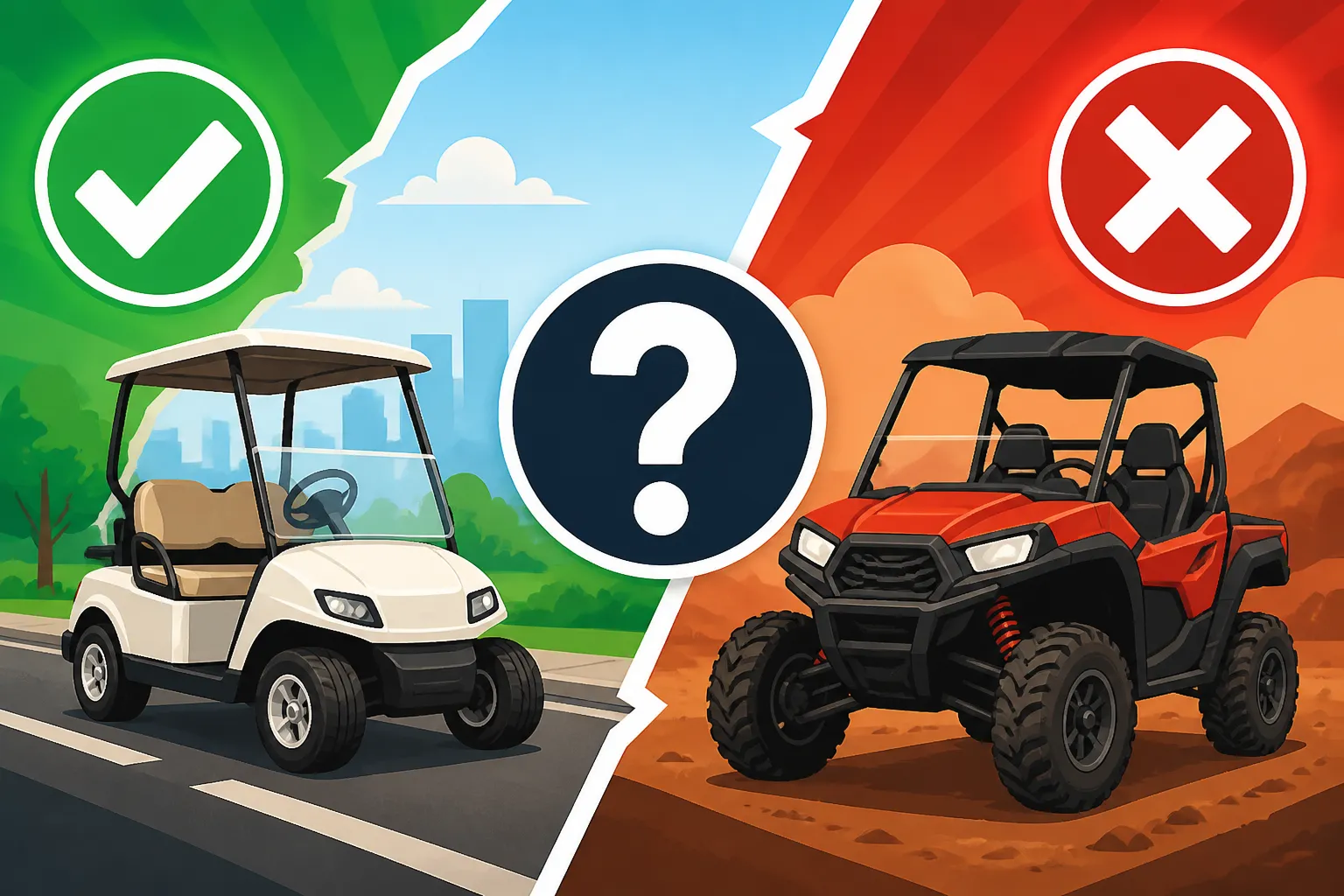
Can You Drive a Golf Cart on a Public Street?
It's a common sight across Alabama: golf carts zipping through neighborhoods, campgrounds, and even rural areas. It’s hard not to wonder, especially when you see one crossing a paved road or heading down a country lane, "Can you really drive a golf cart on a public street here?" This question often brings a mix of confusion and frustration, as the rules aren't always clear-cut and can even change depending on where you live. This comprehensive guide aims to untangle Alabama's laws regarding golf carts on public roads, helping you understand when and where it's permissible, and what kind of machine actually qualifies.
The Core Question: Are Golf Carts Street Legal in Alabama?
Let's get right to the heart of the matter because this is where a lot of folks get tripped up. Generally speaking, a standard golf cart, fresh off the sales floor or pulled from the back of the shed, is not street legal in Alabama. This might feel counterintuitive, especially if you've seen them used on roads in certain communities, but there's a critical distinction to be made between a typical golf cart and a vehicle specifically designed and classified for road use. The state of Alabama, like many others, follows federal guidelines for what constitutes a "motor vehicle" eligible for public road travel, and your average golf cart just doesn't meet the cut.
The Federal Standard and Alabama's Stance
The main reason your golf cart isn't automatically street legal boils down to a federal safety standard, specifically 49 CFR 571.500. This is the big hurdle. For any vehicle to be considered street legal and eligible for registration and tagging, it typically needs to meet these Federal Motor Vehicle Safety Standards (FMVSS). These standards cover everything from brakes, lights, and seatbelts to crashworthiness and emissions. Unfortunately, standard golf carts are manufactured for off-road use, primarily for golf courses or private property, and are not built to these rigorous federal automotive standards.
Alabama's state laws reflect this. While the state has specific rules for other off-road vehicles like ATVs and UTVs (which we’ll talk about in a moment), golf carts are often treated differently because they don't fall neatly into the existing categories for road-going vehicles. There's no blanket provision that allows a regular golf cart to be driven on state highways or county roads just because it has headlights or a horn. The state's primary concern is public safety, and a vehicle not designed for the speeds, traffic, and potential collisions of public roads is seen as a hazard. This is a common source of frustration for owners who just want to take their cart a short distance down the street to a neighbor's house or local store.
Why a Golf Cart Isn't an ATV or UTV for Road Use
It's easy to lump all small, off-road type vehicles together, but Alabama's statutes make clear distinctions. For instance, [Why a Golf Cart Is Not an ATV in Alabama] is a question many people have. The state's definitions for ATVs and ROVs (Recreational Off-Highway Vehicles, often called UTVs or side-by-sides) typically include specific width, weight, and tire requirements, and even then, their road use is severely restricted. ATVs and UTVs, while designed for varied terrain, also generally don't meet FMVSS for street legality, which is why [Alabama Machines That Cannot Be Plated] are a common sight.
Golf carts are explicitly excluded from these definitions in many parts of the Alabama code. This means they can't simply be registered as an "off-road vehicle" for public use under the same voluntary registration system that applies to ATVs and UTVs. The purpose of a golf cart is fundamentally different from an ATV or UTV designed for trail riding, hunting, or farm work. While some advanced UTVs might look like beefed-up golf carts, they are distinct classifications with different rules. Trying to register a golf cart like an ATV for road use simply won't work in Alabama, leaving many owners feeling stuck.
Understanding Low-Speed Vehicles (LSVs): The Exception to the Rule
Now, here's where the possibility of street legality comes in, but it requires a very specific type of golf cart, or rather, a vehicle that looks like a golf cart but is legally much more. We're talking about Low-Speed Vehicles, or LSVs. These are the machines you see in some communities that legally travel on public roads, and they are distinct from your standard golf cart because they are manufactured to meet a specific set of federal safety standards.
What Makes a Machine an LSV in Alabama?
An LSV isn't just a golf cart with a few extra bells and whistles; it's a vehicle that has been manufactured to comply with specific federal regulations (49 CFR 571.500). To be legally considered an LSV in Alabama, the vehicle must meet these federal requirements and generally have a top speed between 20 and 25 miles per hour. Critically, it must come from the factory meeting these standards. You can't just take your old golf cart, add some lights, and declare it an LSV. The manufacturer is responsible for certifying that the vehicle meets the LSV standard, and this certification is usually reflected on the vehicle's VIN and its Manufacturer's Statement of Origin (MSO).
Once a vehicle is certified as an LSV by the manufacturer, it can then be titled and registered in Alabama, much like a car or motorcycle. This is the key difference: an LSV has a proper VIN that indicates its federal compliance, allowing it to enter the state's vehicle registration system. Without this factory certification, no amount of aftermarket parts will legally transform a regular golf cart into an LSV. This is an important distinction to grasp, as many people mistakenly believe they can "convert" their golf cart into a street-legal vehicle with a kit. While some aftermarket companies offer conversion kits, these kits typically don't change the underlying federal certification of the vehicle, which is the true legal barrier. [What a Low-Speed Vehicle Standard Requires] is much more involved than just bolting on a few accessories.
The Equipment You Need for LSV Status
For a vehicle to qualify as an LSV and be street legal, it needs to be equipped with certain safety features from the factory. These are not optional add-ons; they are integral to its certification. [Lights, Mirrors and Belts Required] are just the beginning.
Here's a breakdown of the typical equipment required for an LSV:
- Headlamps: Must be DOT-approved, capable of illuminating the road effectively.
- Taillamps: Red taillights that are visible from a distance.
- Stop Lamps: Brake lights that illuminate when the brake pedal is pressed.
- Turn Signal Lamps: Front and rear turn signals for indicating turns.
- Reflex Reflectors: Red reflectors on the rear, amber on the sides.
- Parking Brake: A reliable parking brake system.
- Rearview Mirrors: At least one exterior mirror on the driver's side and either an interior mirror or another exterior mirror on the passenger side.
- Windshield: Made of safety glass.
- Seat Belts: For all designated seating positions.
- Vehicle Identification Number (VIN): A proper 17-digit VIN that indicates LSV compliance.
Many aftermarket accessory companies, like SuperATV, offer a wide range of parts such as windshields, mirrors, and lighting kits for various off-road vehicles. While these components might superficially resemble what an LSV needs, the crucial factor is that the vehicle itself must be manufactured to meet the LSV federal safety standard from the outset. Merely adding these parts to a non-LSV golf cart won't make it street legal. If you're considering purchasing an LSV, always verify its manufacturer certification and VIN to ensure it actually meets these requirements for [Alabama LSV Requirements Explained].
| Feature | Standard Golf Cart | Low-Speed Vehicle (LSV) |
|---|---|---|
| Federal Certification | No | Yes (49 CFR 571.500) |
| Max Speed | Varies, typically <20 mph | 20-25 mph |
| VIN | Often limited, not standard 17-digit | Standard 17-digit, indicates LSV |
| Headlights | Optional, often basic | Required, DOT-approved |
| Taillights/Brakes | Optional | Required, DOT-approved |
| Turn Signals | Optional | Required |
| Seatbelts | No | Required for all seats |
| Windshield | Optional, plastic | Required, safety glass |
| Mirrors | Optional | Required (driver's side + interior or passenger) |
| Registration/Tag | No | Yes, like a car |
| Primary Use | Golf courses, private land | Public roads, specific areas |
Local Control: City and County Ordinances
Even if your golf cart isn't a factory-certified LSV, there's another layer to the street legality puzzle: local ordinances. This is where a lot of the confusion stems from, because what's allowed in one town or county might be strictly prohibited just a few miles down the road. Alabama law gives local municipalities and counties some leeway to regulate golf cart use on their specific roads, but this permission is typically limited.
Navigating Local Golf Cart Rules
You might live in a quaint beach town or a specific subdivision where golf carts are a way of life, freely cruising on certain streets. This isn't because the state has suddenly deemed all golf carts street legal. Instead, it's usually due to a specific city or county ordinance that permits their use on designated local roads under certain conditions. These conditions often include speed limits for the roads themselves (typically 25 mph or less), specific hours of operation (daylight hours only), and additional equipment requirements (like lights, mirrors, and sometimes even a slow-moving vehicle sign) beyond what a standard golf cart typically has.
These local rules are enacted to address the unique needs and character of a community. For example, a small coastal community might rely on golf carts for local transportation, while a bustling city center would likely ban them outright due to traffic concerns. The key takeaway here is that if you see golf carts on public streets, it's highly probable that a local ordinance is enabling it, rather than a broad state law. It's crucial not to assume that what's legal in one town applies to another. For a clearer picture, check out [Alabama Cities With Cart Ordinances] which highlights how local rules vary.
Steps to Check Your Local Ordinances
So, how do you figure out if your specific area allows golf carts on public streets? It’s not always as simple as asking a neighbor, as misinformation can spread like wildfire. The most reliable way is to go straight to the source.
Here’s how you can check:
- Contact Your City or Town Hall: For those living within incorporated city limits, the city clerk's office or the local police department are excellent resources. They should be able to provide you with copies of any ordinances pertaining to golf cart use. Be specific in your questions: Ask about permitted roads, hours, equipment requirements, and any special permits or decals needed.
- Reach Out to Your County Commission or Sheriff's Office: If you live in an unincorporated area of a county, the county commission or the county sheriff's office is the place to start. County ordinances may not be as common for golf carts as city ordinances, but it's always worth checking.
- Check Official Websites: Many municipalities post their local ordinances online. A quick search for "[Your City/County Name] golf cart ordinance" might yield results, but always try to verify the information with a live person if possible, as websites can sometimes be outdated.
Remember, if a local ordinance does permit golf carts, it will almost certainly come with its own set of rules. You'll likely need to ensure your cart has working headlights, taillights, brake lights, turn signals, a horn, and rearview mirrors. Some may even require a visible "slow-moving vehicle" emblem. Always obtain a copy of the actual ordinance to understand the full scope of what's permitted and what's prohibited. This proactive approach can save you a lot of headache and potential fines down the road.
Beyond the Road: Insurance, Enforcement, and Practical Advice
Understanding the legalities of driving a golf cart on public streets in Alabama isn't just about knowing if you can do it; it's also about knowing what else comes with that privilege or prohibition. This includes insurance, how law enforcement might view your cart, and some practical tips for responsible ownership.
Insuring Your Street-Legal Golf Cart
If you have a legitimate, factory-certified Low-Speed Vehicle (LSV) that is titled and registered, then insuring it is similar to insuring any other motor vehicle. You'll typically need to carry at least the state's minimum liability insurance coverage. This is crucial because if you're involved in an accident on a public road, you want to be protected from potential financial ruin. Insurers will treat an LSV much like a car, and you can get comprehensive, collision, and other coverages just as you would for your daily driver. [Alabama Insurance for a Road-Legal Machine] is non-negotiable for these vehicles.
However, if you're operating a standard golf cart under a local ordinance, the insurance situation can be a bit murkier. While the state may not mandate insurance for a non-LSV golf cart, it is incredibly wise to carry some form of liability coverage. Your homeowner's policy might offer limited coverage for personal property, but it's unlikely to cover liability when operating the cart on public roads. It's essential to speak with your insurance agent to clarify what your existing policies cover and to explore options for additional coverage. Some insurers offer specific golf cart policies that can provide the necessary liability protection for operation on public roads under a local ordinance. Don't assume you're covered; ask specific questions about [Why Your Policy Should Name the Serial Number] and clarify coverage for on-road use. Being uninsured, even if not legally required by state law for a non-LSV, can leave you exposed to significant financial risk if you cause an accident.
What to Expect from Law Enforcement
When it comes to golf carts on public streets, law enforcement officers operate under Alabama state law and any applicable local ordinances. If you're driving a standard golf cart on a public road where no local ordinance permits it, you could face penalties for illegal operation. This could range from a warning to a citation, and in some cases, your golf cart could even be impounded. Officers often have discretion, but they are also responsible for public safety. [Alabama Penalties for Illegal Road Riding] can be a harsh reality if you're caught breaking the rules.
For those operating a legitimate LSV, you should expect to be treated like any other motorist. An officer may pull you over for traffic infractions, and you'll need to provide your driver's license, registration, and proof of insurance. If you're operating a golf cart under a local ordinance, be prepared to explain the local rules and provide any required permits or documentation. It's always a good idea to have a copy of the specific ordinance with you, especially if you're in an area where local rules aren't widely known by all officers or if you're near a jurisdictional boundary. Being polite, cooperative, and knowledgeable about the regulations will always serve you well when interacting with law enforcement. [What an Alabama Officer Can Ask to See] includes your driver's license and proof of legal operation.
Key Takeaways for Alabama Golf Cart Owners
Here's the bottom line for anyone considering driving a golf cart on a public street in Alabama:
- Standard golf carts are generally NOT street legal. They do not meet federal motor vehicle safety standards.
- Low-Speed Vehicles (LSVs) ARE street legal. These are purpose-built vehicles that meet federal standards (20-25 mph, specific safety equipment) and can be titled and registered. You cannot "convert" a golf cart into an LSV yourself.
- Local ordinances can create exceptions. Some cities or counties have specific rules permitting golf carts on certain low-speed public roads, but these rules vary widely and come with their own equipment and operating restrictions.
- Always verify the rules. Before you ride, contact your local city hall or county commission to get definitive answers about golf cart legality in your specific area.
- Insurance is critical. Even if not legally mandated by state law for a non-LSV, liability insurance is strongly recommended to protect yourself financially.
- Be aware of the consequences. Operating a golf cart illegally on public roads can lead to fines, impoundment, and significant personal liability in the event of an accident. Consider [Alabama Accident Reporting for an ATV Crash] applies to any off-road vehicle accident, including golf carts if it occurs on public property.
Ultimately, navigating the world of golf carts and public roads in Alabama requires a good understanding of both state and local laws. Don't rely on assumptions or what you see others doing. Take the time to confirm the rules, equip your machine appropriately, and always prioritize safety to avoid any unwelcome surprises.
Disclaimer
This article is for general informational purposes only and does not constitute professional advice. Laws, prices and regulations vary by location and change over time. Consult a qualified professional for guidance on your specific situation.