Skid Plates for Talladega Rock
A rocky Talladega ride can turn into a long, frustrating recovery if a stone catches your engine case, skid plate, or vulnerable underside. Choosing the right protection starts with understanding what your machine exposes, where you plan to ride, and how the plate is fitted. This guide walks through those decisions so you can prepare for rock without adding needless weight or creating new problems.
Why skid plates matter on rocky Alabama trails
What the underside of your ATV or UTV is up against
Rocks can strike the underside when a tire drops into a rut, a machine crests a ledge, or the ground clearance changes under suspension compression. A hit may be a scrape rather than a dramatic impact, but repeated contact can wear through exposed components or damage parts that are difficult to repair trailside. The risk depends on the machine, its load, the terrain, and how it is driven.
Check what sits low on your particular ATV or UTV. Common areas to inspect include the frame rails, engine case, transmission or differential housing, and the floor or underbody panels. Some machines come with partial factory protection; others leave more of the underside exposed. A factory plate may be adequate for light use, but it is worth checking its coverage and condition instead of assuming every vulnerable area is protected.
Rock protection is especially useful when you ride slowly over uneven ground, where the chassis may contact rocks even if you are not traveling fast. It is not a substitute for picking a careful line. A skid plate can reduce the chance of direct contact damaging a protected component, but it cannot make every obstacle harmless or protect parts that the plate does not cover.
Why Talladega terrain calls for preparation
Conditions vary across riding areas and routes. A route that feels manageable when dry may become more challenging after weather changes, while rocks, roots, ruts, and uneven surfaces can call for different riding techniques. Before heading out, check the route’s status and rules rather than relying only on what a friend remembers from a previous visit. For planning around nearby options, start with Alabama Riding Near Talladega and Alabama Trail Conditions Before You Tow.
A map can help you understand the route and plan a ride, but it does not guarantee that every segment is open, suitable for your machine, or in the condition shown. Tools such as onX Offroad can help you review mapped routes and orient yourself before you leave. Pair that planning with current information from the riding area or land manager, particularly after a storm or when you are unfamiliar with the area.
If you are comparing routes, use Alabama Trail Difficulty Ratings as a prompt to think about your experience, machine clearance, and passengers—not as a promise that every section will feel the same on the day you ride. Take the conditions seriously, and be willing to turn around if the route becomes a poor fit for your group or equipment.
Choose skid plate coverage and material carefully
Match the coverage to the parts you need to protect
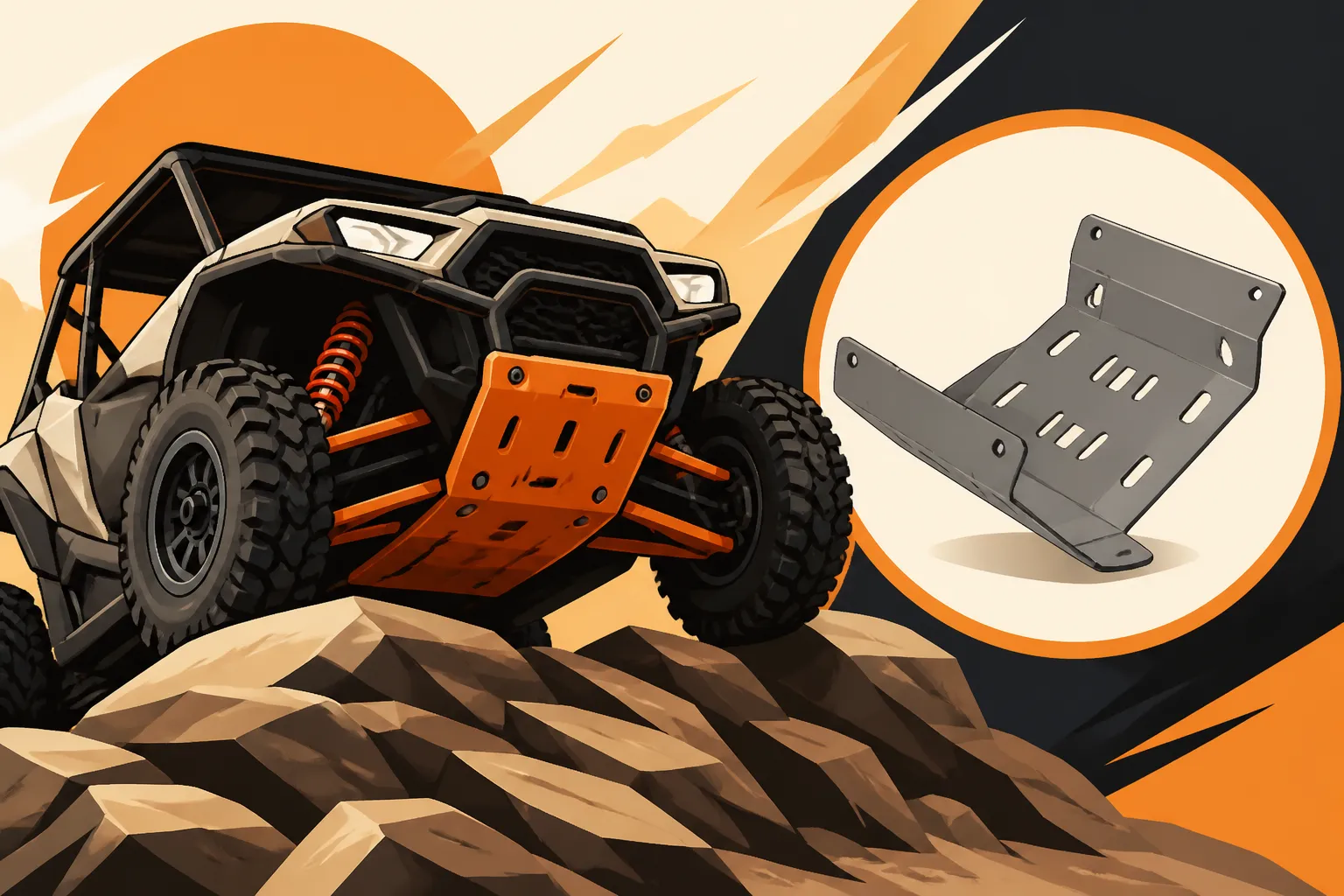
A belly plate covers some of the machine’s central underside, while a more extensive kit may add coverage for areas such as the front, rear, or sides. Coverage varies by machine and by kit. Before buying, compare the plate’s shape with the underside of your exact model and identify what remains exposed. A large plate is not automatically the best choice if it leaves a vulnerable component uncovered or makes routine service difficult.
Think about your usual riding, not just the hardest obstacle you imagine encountering. A rider who stays on smoother routes may need less coverage than someone who regularly travels over rock and rough ground. A UTV used for work may have different priorities from a sport ATV. If you carry a passenger or gear, remember that added load can affect clearance and the way the machine settles over uneven terrain.
It can help to make a simple checklist before shopping:
- Identify the machine’s make, model, and year.
- Inspect factory protection and exposed underside components.
- Decide which areas your riding most often puts at risk.
- Confirm that the skid plate is designed for your specific machine.
- Check access to drain plugs, service points, and mounting hardware.
- Review the manufacturer’s installation and maintenance guidance.
Compare common skid plate materials
Material affects weight, flexibility, abrasion behavior, and maintenance. The table is a starting point, not a universal ranking: thickness, design, fit, and mounting points all matter.
| Material | Potential advantages | Points to consider | Often considered for |
|---|---|---|---|
| Aluminum | Relatively light and rigid; can provide a solid barrier | May dent, and sharp impacts can leave damage that needs inspection | Riders balancing protection and weight |
| UHMW polyethylene | Slides over obstacles and resists corrosion | Can flex; fit and thickness matter, and it still needs regular checks | Riders who want a smoother surface against rocks |
| Steel | Strong and resistant to some forms of impact damage | Heavier, and damaged coating may allow corrosion | Machines where toughness is a priority and weight is acceptable |
| Factory plastic or composite | May fit neatly and preserve original clearances | Coverage and impact protection vary by machine | Light-duty riding or supplementing existing protection |
Do not choose on material name alone. A well-designed plate with secure mounting and useful coverage is more valuable than a material label that sounds tough but does not fit correctly. Ask whether the product is intended for your machine and whether it shields the components you identified during your inspection.
Also consider noise and heat. Some plates can transmit or amplify sound, while openings and fit can affect how mud, debris, and heat move around the underside. Follow the product instructions and machine manufacturer’s guidance. Avoid making unapproved modifications to critical components just to force a plate into place.
Install and inspect the plate before the ride
Fitment and installation checks
Start with a clean machine and the correct hardware. Mud packed around the frame can hide mounting points or make it difficult to seat a plate evenly. Compare the plate against the machine before tightening anything, and confirm that the holes and edges line up without forcing or bending parts. If the plate is misaligned, stop and check the fitment rather than using bolts to pull it into position.
Follow the kit’s installation instructions and the machine’s service guidance. Use the specified hardware and tightening method; do not guess at torque values. A loose fastener can allow movement or rattling, while an incorrectly tightened one can damage a mounting point. If the plate blocks a drain, inspection point, or service area, understand how to remove or access it before you are out on the trail.
After installation, check for contact with moving or hot components and make sure the plate does not interfere with steering, suspension travel, or other parts. If you are uncertain about fitment, have a qualified mechanic or dealer inspect it. This is a small job to verify at home compared with discovering a problem after the group has started riding.
A quick pre-ride and post-ride routine
Before a ride, look for loose fasteners, cracks, sharp edges, bent sections, and debris caught between the plate and machine. Pay particular attention after the first ride with a newly installed plate, since the initial outing is a good opportunity to notice movement or unusual noise. Carry the tools you reasonably need for basic checks, and know how to contact your group if a machine needs attention.
After riding, rinse off mud and inspect the underside when it is safe to do so. Do not crawl beneath a machine supported only by a jack or unstable ground. Look for new dents, scraped coatings, missing hardware, and trapped stones or branches. A plate may take visible wear while doing its job, but a severe bend or loose attachment deserves attention before the next trip.
Good route preparation matters as much as hardware. Use onX Offroad to review your planned route and keep track of where you are, then confirm access and closures with the relevant riding area before setting out. Keep a paper backup if you are concerned about battery life or reception; Carrying a Paper Map on a Talladega Loop explains why a second navigation option can be useful. For weather-related planning, check Alabama Trail Closures After a Storm and Treading Lightly on Erodible Alabama Clay.
Ride rocks with a careful line and a practical plan
Use skid plates as backup, not permission to push harder
Approach obstacles at a controlled pace and keep your attention on the front tires, ground clearance, and the path beneath the machine. If you are riding with others, leave room to stop and communicate before someone attempts a difficult section. A spotter can help identify clearance concerns, but should stand where the rider can see them and away from the machine’s path.
Do not assume that a plate lets you slide over every rock. A protruding edge can catch, and a plate may transfer impact to its mounting points. If the machine is hung up, avoid aggressive throttle that could turn a manageable situation into a damaged part or a loss of control. Pause, assess the obstacle, and choose a safer route or recovery method.
Route selection is part of protecting both the machine and the trail. Stay on routes open to your vehicle and avoid cutting around obstacles into vegetation or soft ground. A route map from onX Offroad can be useful for orientation, but confirm that the route is authorized and open before riding. Alabama ATV Trails: Where to Ride is a useful next step when you are choosing an appropriate riding area.
Build a trail kit around your machine and group
A sensible kit depends on the length and remoteness of the ride, the machine, and the group’s experience. Consider carrying basic tools, water, a first-aid kit, a charged phone, and a way to contact your group. For navigation, save relevant map information ahead of time and consider carrying a paper map as backup. Do not rely on having a usable signal throughout the ride.
If a plate takes a hard impact, stop somewhere safe and inspect it before continuing. Watch for leaking fluids, unusual vibration, steering problems, or a plate that has shifted into contact with another part. A minor scrape may not stop the ride, but a cracked case, fluid leak, or compromised mounting point is a reason to avoid making matters worse and arrange appropriate help.
Finally, let the machine and conditions set the pace. The right skid plate can provide a useful layer of protection on rocky ground, but sound preparation, a suitable route, and careful riding remain essential. For broader access and planning questions, see Alabama National Forest Riding Permits and confirm the specific rules for the land you plan to ride.
Disclaimer
This article is for general informational purposes only and does not constitute professional advice. Laws, prices and regulations vary by location and change over time. Consult a qualified professional for guidance on your specific situation.